Last updated on Friday, 19, June, 2026
Last Updated on 3 months ago by Ahmed Usman
Table of Contents
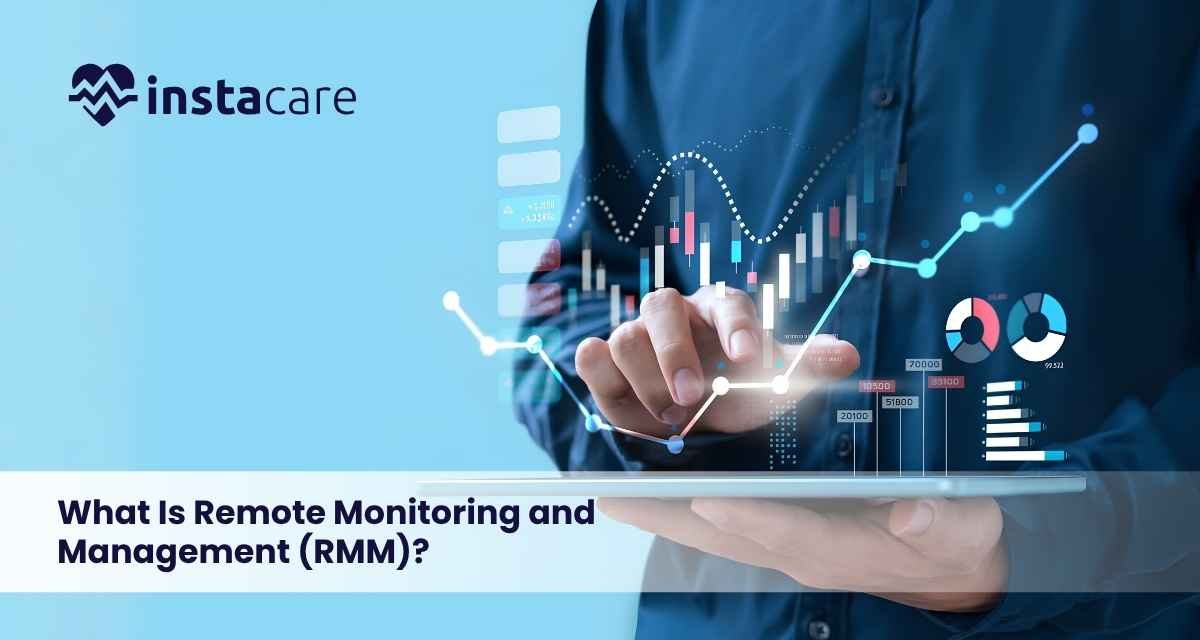
What Is Remote Monitoring and Management (RMM)?
Remote Monitoring and Management, or RMM, is a solution that empowers IT departments and Managed Service Providers (MSPs) the ability to effortlessly monitor, manage, secure, and maintain computer systems from a distance. Rather than waiting for an IT concern to impact business operations, RMM offers companies the ability to identify concerns in a timely manner, automate common IT tasks, and install updates, security patches, and other technical fixes without a physical site visit. For companies that have laptops, servers, and cloud systems, networks, and employees that work remotely, RMM is vital to the stability, security, and efficiency of IT systems.
What is Remote Monitoring and Management?
The purpose of Remote Monitoring and Management is to manage IT systems and networks from a distance. IT professionals that utilize RMM systems have the ability to analyze the health, performance, and security of multiple IT systems and networks simultaneously.
RMM is a tool primarily used by internal IT departments and Managed Service Providers (MSPs). A Managed Service Provider uses RMM systems to monitor and maintain the networks and systems of multiple clients.
RMM is a tool that assists IT departments in understanding the state of a company’s technological systems. This is achieved by the constant status updates provided by RMM systems.
How Does RMM Work?
RMM typically employs a software agent that runs on each monitored device. This agent gathers information about the device and sends it to a central dashboard. IT technicians use this dashboard to receive real-time updates on system performance and security, software and system updates, and the status of storage, memory, hardware, and network resources.
RMM has the capability of sending alerts to the IT team when an issue is detected. For example, RMM would notify a technician if a server is running out of storage, a laptop is due for an antivirus update, or a system update fails. In many scenarios, the issue is resolved remotely without the user being made aware.
RMM can automate the completion of various maintenance tasks. Examples include the restart of systems, the clearing of temporary files, the running of system updates and antivirus scans, and the generation of reports.
Why is Remote Monitoring and Management Important?
Businesses have many functions and areas that rely on technology. The performance and state of the IT environment directly affects business operations. An out of order server can prohibit employees from accessing business-critical files. An unaddressed security update can subject the business to a cyber attack.
RMM provides IT teams the capability to mitigate potential business interruptions before they become critical. RMM provides continuous oversight of systems and the ability to respond to issues more promptly.
RMM moves IT support away from the reactive model, which provides support after a problem has been reported, toward a model with IT support that is proactive. This allows the IT support team to find issues, confirm issues, and fix issues before a report is made.
Features of Remote Monitoring and Management Software
RMM provides a variety of flexible and helpful features that enhance the capability of IT teams.
Monitoring
RMM has the ability to constantly track the performance and the health of devices. This can include the performance and health of the CPU, memory, disk space, and even the uptime and any errors.
Patch Management
RMM systems let IT teams manage the risks from running applications and operating systems by enabling the remote installation of patches and updates.
Remote Access
RMM provides the ability for IT technicians to be remote when they need to troubleshoot, configure, or even install. RMM can provide the ability to instruct users as well.
Automated Maintenance
The routine systems maintenance and even routine systems administrative tasks can be automated by an RMM system. This can even include the removal of system debris.
Alerts and Notifications
RMM has the ability to send alerts to the IT teams when any out of the ordinary event occurs that is impacting the performance of the system. This includes failed updates, low storage, and even security concerns.
Reporting
RMM systems can create and generate reports on the status and health of devices and the patches and even the performance of the system and the routine maintenance that was performed. This allows the business to understand the IT systems it has and the infrastructure that supports it.
Book Your Free Marketing Consultation
Advantages of Remote Monitoring and Management
Swift IT Assistance
Problems can be dealt with quickly through RMM, since they can manage the Situations without being there.
Minimal Downtime
RMM takes measures to find problems that could affect operations, and gets them solved before they affect the users, thereby minimizing downtime.
Enhanced Cybersecurity
RMM assures that the systems are secured and fulfill the mandatory steps of the cyberthreats by monitoring the antivirus, and applying the security updates and patches.
Cost Effective IT
Having the ability to solve the problem without physically having to go onsite reduces the costs, and the tasks that are redundant are done through automation, which lowers the cost of IT services.
High Productivity
RMM facilitates IT Performance in a consistent manner, which reduces interruptions and disruptions, and helps employees to be more productive.
Consolidated IT Management
With RMM, managing multiple users located in different areas is facilitated. This is especially helpful for companies with branch offices or remote employees
Who Uses RMM?
Many organizations can benefit from RMM. It is used by managed service providers to give IT support to their customers. It is used by internal IT departments to support their systems and devices, and it is also used by companies that want to control their IT services. RMM is also useful for big companies because it helps manage a large and complicated technology infrastructure.
RMM is useful for businesses with remote workers and those who work in different locations as it provides the IT team the ability to monitor devices regardless of location.
RMM vs. Standard IT Support
Standard IT support is mostly a tedious, reactive, time consuming process for employees as they are the ones who report a concern to the IT support team and the team must then investigate the problem that is causing an impediment.
RMM eliminates this tedious process as it detects faults in systems and informs the IT support team before it escalates into a serious issue.
Standard IT support would address the issue of a laptop crashing due to low disk space after it occurs, but RMM would send a warning to the IT support team about the low disk space before it crashed.
Why Do Businesses Need RMM Today?
Most businesses today are using technology and the digital space to carry out their business operations and to optimize the productivity of their employees, who usually have a mixed use of several devices and IT business tools. RMM provides the visibility and control needed for safe, effective, useful, and ready IT business operations.
Conclusion
To keep your business secure, stable, and efficient, Remote Monitoring and Management is an essential IT solution. RMM allows IT teams to monitor devices, fix problems remotely, automate maintenance, manage updates, and reduce downtime.
RMM turns IT support from a reactive process into a proactive strategy by allowing businesses to spot and resolve IT issues before they disrupt business operations. RMM is great for businesses of any size to help enhance IT systems, improve cybersecurity, and enable sustained business growth.
FAQS
What is Remote Monitoring and Management mainly used for?
Remote Monitoring and Management is mainly used so IT departments can view and control devices remotely. It enables technicians to discover issues before they worsen, implement updates, fortify system security, and resolve support cases from a distance.
Can only large companies benefit from Remote Monitoring and Management?
No, Remote Monitoring and Management can benefit companies of all sizes. Smaller companies can use RMM to cut costs on IT and eliminate downtime; larger companies can use RMM to control multiple devices and oversight for multiple offices and remote staff.
What are some of the positive effects Remote Monitoring and Management has on cybersecurity?
Remote Monitoring and Management has a positive effect on cybersecurity since it allows IT departments to keep a watchful eye and maintain system health to rapidly respond to security issues, facilitate system updates and security patch implementations, and monitor for irregular activity and symptoms of threats.