
Last updated on Thursday, 16, July, 2026
Last Updated on 2 months ago by Ahmed Usman
Table of Contents
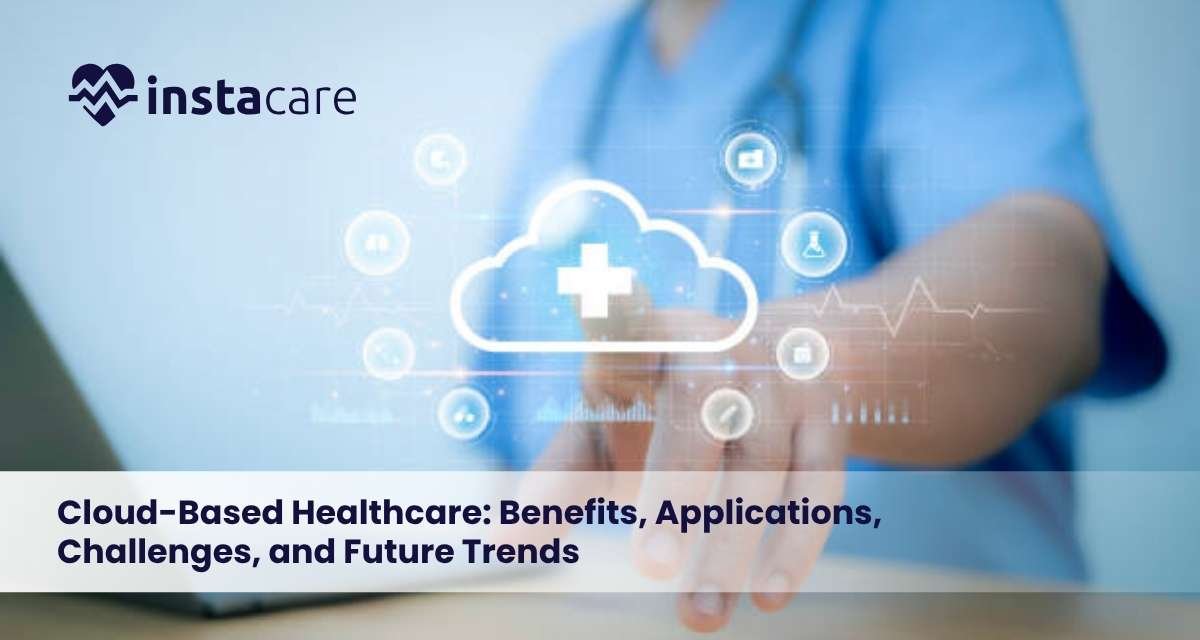
Cloud-Based Healthcare: Benefits, Applications, Challenges, and Future Trends
Cloud-based healthcare helps medical organizations simplify how they store, organize, and share patient information. Using cloud technology, a collection of hospitals, clinics, labs, and healthcare providers can access medical records safely, work collaboratively, and provide patient care more efficiently.
The digital transformation of healthcare means the industry needs solutions that most cloud providers offer, like operational and cost efficiencies as well as increased telemedicine and improved patient care. This guide provides information on cloud-based healthcare, its advantages, uses, drawbacks, and anticipated developments.
What Is Cloud-Based Healthcare?
Cloud-based healthcare is the application of cloud computing to use the internet for the storage, processing, and management of healthcare data, whereas, previously, there was an overreliance on both local and physical data storage.
Using a cloud system, healthcare organizations have the ability to view and manage EHRs, medical images, lab reports, clinical notes and schedules, and billing and other healthcare-related information virtually, safely, and system collaboratively. Cloud systems, however, provide the means to mobilize healthcare data and keep healthcare data systems secure.
How Cloud-Based Healthcare Works?
In a cloud healthcare system, medical data and information are stored in the healthcare system and secure on the data storage servers of the cloud providers. Healthcare system that have been authorized to view the data and information have the ability to do so via a secure Internet connection from a desktop computer, tablet, or mobile device.
In addition to being able to protect and keep sensitive healthcare data secured, modern cloud systems allow healthcare teams to record and synchronize data across multiple locations and departments.
Benefits of Cloud-Based Healthcare
Health care made available via the cloud means better accessibility. Staff at every level can access the patient record system securely and at any point in time. This drastically cuts the time needed for staff to formulate the next steps and further improves the overall patient care system.
Because of a cloud system, the need for time-consuming and costly in-house IT systems and services is eliminated. This makes the system financially accessible by even small town clinics. The major points are:
- Patient records systems have better security.
- The different health care staff levels work seamlessly.
- The costs for IT systems and services drastically drop.
- Data management systems have built-in recovery.
- Health data systems communicate rapidly.
- Data systems can be expanded rapidly and economically.
Common Uses of Cloud-Based Healthcare
- Cloud-based systems can be utilized in virtually every health care service and even some of the administrative services required.
- Health care systems that have electronic health records are more cloud-based. This lessens redundant tests and improves the quality and flow of health care.
- The cloud provides the basis for video-based health care, remote health care, and even follow up health care.
- Cloud networks aid health care imaging, lab and pharmacy systems, scheduling and billing systems, and inter-health care data systems.
Cloud-Based Health Care Improves Patient Care
Because the cloud makes patient data and health care services available in real time, health care staff are empowered to improve the timeliness, efficiency, and quality of health care.
Patient engagement is enhanced by the secure patient portals that support viewing of medical records, scheduling of appointments, access to test results, prescription refill requests, and the ability to message providers.
Remote patient monitoring with cloud-embedded care devices also allows providers to assess and manage chronic conditions, including diabetes, hypertension, and heart disease, without requiring as many office visits.
Book Your Free Marketing Consultation
Security and Data Protection
Protecting patient information is one of the highest priorities of cloud-based healthcare. The most advanced cloud systems provide multiple layers of protection for sensitive medical data. Some of the standard protective measures are as follows:
- Data encryption
- Multi-factor authentication
- Role-based access controls
- Security monitoring
- Data back up
- Auditing access to data
Healthcare organizations must also comply with the privacy regulations that are applicable to them, and have their own policies of limiting access to, the storage and sharing of, data.
Challenges of Cloud-based Healthcare
Even though there are so many advantages of cloud technology, healthcare organizations may face numerous challenges when implementing cloud technology.
Cybersecurity challenges will always be a concern since valuable data are of higher risk in the healthcare cloud. Failure to secure systems and educate staff of the possible threats will be the responsibility of the organization.
Also, reliable internet access is essential for utilizing cloud services. Uninterrupted access to medical records may be impossible if there are no adequate backup systems.
Additional challenges include integrating older healthcare systems with cloud systems, staff training, data migration and upholding healthcare regulations.
The Role of Cloud Computing in the Future of Healthcare
Alongside healthcare, cloud computing will develop with the rest of technology. AI, machine learning, the analytics of large data sets, and Internet-of-Medical-Things devices are all going to use cloud computing in the delivery of healthcare.
Cloud computing will also facilitate the development and deployment of predictive analytics, personalized medicine, and precision healthcare. Furthermore, robotic surgery and advanced clinical decision support systems will likely be enhanced through cloud computing. With the continued development of cloud computing, the healthcare systems of the world will appreciate benefits in efficacy, reach, and patient experience.
Cloud Strategies for Healthcare Organizations
Before the implementation of cloud computing, healthcare systems should have a thorough plan. The selection of an appropriate cloud computing vendor, an ongoing evaluation of the security posture, employee training, and a strong data governance framework are a few of the key areas for adoption.
Healthcare operations should also rely on the establishment of disaster recovery plans, the ongoing assessment of the safety of systems, and the assurance of optimal functioning of systems.
Conclusion
Cloud computing in healthcare offers a world of possibilities. The traditional approaches to the delivery of healthcare services are being made more efficient from the digitization of patient records and the use of cloud computing in telehealth, online patient monitoring, and advanced analytics.
With the necessary precautions in place for safety and compliance, the immense possibilities of cloud computing will bring the modern world of computing to healthcare. With the digitization and continued development of healthcare, cloud-based systems and services will be the backbone of safe and patient-centered healthcare solutions.
FAQS
What is cloud-based healthcare?
Cloud-based healthcare makes healthcare data easier to access, share, and collaborate on using internet based data storage. It improves skilled healthcare workers and makes patient care easier.
Is cloud-based healthcare secure?
Yes. Healthcare platforms that use cloud technology balance patient privacy and security. Like any company that handles personal data, Healthcare Companies must use security and privacy protections and comply with related laws.
How does cloud computing improve patient care?
Cloud computing gives real-time data to health care workers. It makes health care to patients easier using telehealth, reduces wait time by removing administrative tasks, and gives patients access to their health and monitors it remotely.