Last updated on Friday, 17, July, 2026
Table of Contents
AI in Drug Manufacturing: Transforming the Future of Pharmaceutical Production
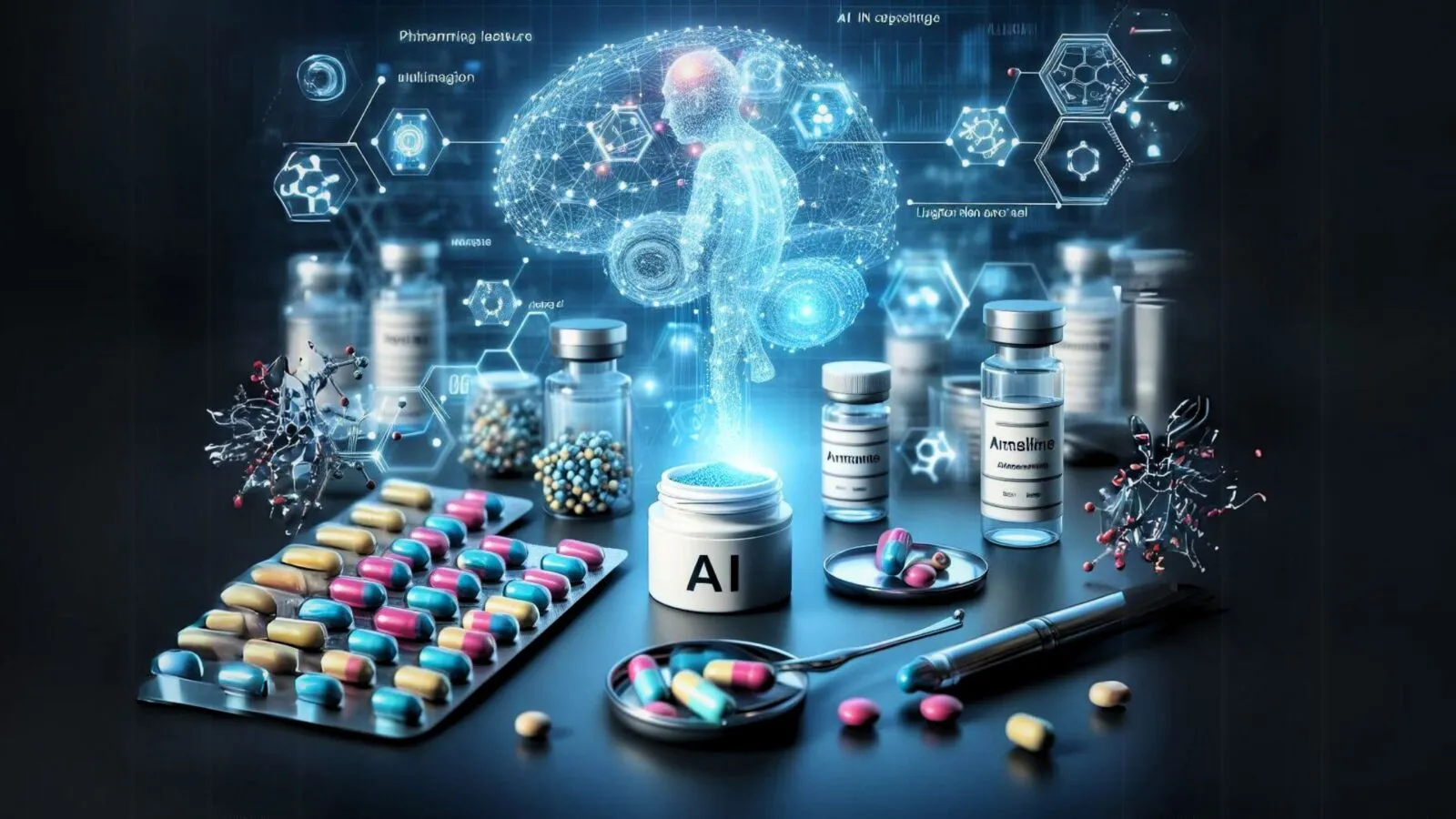
The center of several advancements now transforming the pharmaceutical industry is artificial intelligence (AI). Every stage of the pharmaceutical industry has required thoughtful raw material selection and quality control at every step for pharmaceutical safety, consistency, and effectiveness, making drug manufacturing a complex and weary process.
AI improves the processes undertaken by the manufacturer. AI mitigates the complexities of the drug manufacturing process by analyzing data and identifying trends. AI minimizes the complexities of the manufacturing process by making accurate predictions regarding the failure of the required tools and making the manufacturing process and the subsequent steps of the manufacturing process optimal.
Of the many transformations that AI has brought to various industries, Pharmaceutical manufacturing has been one of the most important, especially because the complex service of manufacturing drugs is becoming more accessible and efficient due to the global service demands in the industry.
What Is AI in Drug Manufacturing?
AI has brought many automated and intelligent systems to drug manufacturing that require the analysis of data for the automation of previously manual and repetitive tasks. What sets AI apart from the automation of the previous systems is the continuous learning and improvement from the production data and the recommendations from the previous iterations.
AI has brought the revolutionary change of the real-time monitoring of every stage of drug manufacturing. This has also improved the speed of identifying the challenges that may potentially impact the quality of the drugs that are being manufactured.
The combination of AI with Drug manufacturing has brought a paradigm shift of manual, rigid inspection, and adherence to procedures to a more data-driven and flexible approach to drug manufacturing.
Why Is AI Becoming Essential in Pharmaceutical Manufacturing?
Pharmaceutical manufacturing is an industry facing a number of challenges. Pressure from competitors increases the demand for faster delivery. The need to control production costs and the increasing volatility of global trade, along with a framework of greater regulation, have made manufacturing increasingly difficult.
AI has the potential to alleviate many of the aforementioned pressures by providing faster analysis of production, increased consistency of products and the performance of production equipment, and a reduction in both waste and cost, all whilst improving the assurance of product quality and the monitoring of processes.
AI Across the Drug Manufacturing Process
AI has the potential to help nearly every aspect of manufacturing medications.
Assessment of Quality of Raw Materials
In drug manufacturing, the process begins with raw materials. Variability in the quality of raw materials can lead to the same variability in the drug product.
AI has the capability to analyze supplier and laboratory and even production histories in order to select materials of sufficient quality, even if some level of inconsistency is present, that may not be detected by a more traditional inspection.
This ensures a higher level of consistency of product quality right from the start of the manufacturing process.
Process Control
The manufacturing of a drug requires an extremely fine control of temperature and pressure, mixing times and even the speed and duration of various chemical reactions.
AI is used to monitor the various parameters of Production and suggests the necessary control changes to keep all of the production conditions in an optimal state.
The continuous control of a manufacturing process aids the manufacturing of that process.
Predictive Maintenance
Manufacturing can be severely disrupted by the failure of a machine. The cost of that delay combined with the cost of the maintenance can be significant.
AI is used to monitor the performance of a machine along with the maintenance it has undergone in order to predict the future servicing of that machine.
Instead of waiting for equipment to reach the end of its useful life, manufacturers can now schedule maintenance to stop unforeseen problems.
Benefits:
- Less downtime
- Less time and money spent on repairs
- Maximizes lifespan of equipment
- More reliability of production
- More reliability on resources
Manufacturing production lines are maintained and run seamlessly through the process of predictive maintenance.
AI in Quality Control
Quality control in the pharmaceutical industry is very important.
Kelly outlines how the conventional way of inspections and tests controls quality through sampling and lab analysis. Here AI starts to help by testing and analyzing production control through data in the course of production.
AI developed the capability to spot small changes which may indicate quality issues, and this may be addressed in the early stages of the process, rather than the final inspection.
Common features include:
- Inspection of capsules/tabs
- Verification of packaging
- Inspection of labeling
- Detection of defects
All of the above help to improve product quality and also help to reduce the unnecessary rejection of products.
Intelligent Production Monitoring
AI helps manage the massive amount of production data in real time.
AI takes information from production units, sensors, lab instruments and helps monitor all manufacturing systems.
When abnormal conditions occur in production, AI alerts the concerned operators.
Some abnormal conditions are:
- Temperature
- Pressure
- Mixing
- Equipment malfunction
- Delay in production
AI established the capability to spot problems early in the production process.
Reducing Manufacturing Waste
AI assesses inventory quantities, analyzes supplier and production data, and gauges market demands to enhance resource planning.
This benefits producers by enabling the:
- Anticipation of shortages
- Balancing inventory
- Streamlining production
- Mitigating supply chain issues
- Estimating demand
An optimized supply chain means constant access to medications.
AI and Regulatory Compliance
Pharmaceuticals face some of the most stringent industrial regulations and requirements.
AI addresses some of these challenges through its ability to accurately capture and log production activities, monitor and adjust process variables, and create documentation on demand.
This leads to:
- Comprehensive logs of production
- Automated documentation
- Enhanced traceability
- Audits can be conducted in less time and with more accuracy
- Undocumented delays in production
- Documentation precision and time reduced per inspection increases
- Transparency in production logs
Book Your Free Marketing Consultation
Benefits of AI in Drug Manufacturing
AI integration in a drug production system improves every aspect of production.
Product Quality
AI systems evaluate production activities to ensure high standards of quality and to minimize variability in production.
Speed of Production
Safeguards for product safety, combined with the AI system, greatly reduce production times.
Cost of Production
Controlled resources, reduced waste, and maintenance done when needed reduced overall costs.
Quality of Production
AI systems evaluate and enhance workflows to increase productivity.
Challenges of AI in Drug Manufacturing
AI has many benefits, but the drawbacks have to be considered.
Data Standards
AI relies heavily on quality data. In a manufacturing process, if the data is not accurate, complete, and reliable, the predictions that are based on the data will also not be reliable.
Investment
There is a high cost associated with the initial implementation for AI, which includes the purchase of new software, integration of new equipment, and training the staff.
Workforce Adaptation
Employees will need to know how to interpret AI output and how to interface with AI systems.
Cybersecurity
As manufacturing increases in connectivity, the need to safeguard production systems and sensitive manufacturing data will grow.
Regulatory Validation
AI implemented in pharmaceutical manufacturing will need to show system reliability and compliance with relevant regulations prior to system rollout.
The Future of AI in Drug Manufacturing
The role of AI in the manufacturing of pharmaceuticals is set to expand even further and will likely incorporate:
- Complete autonomy of manufacturing facilities
- Sophisticated computerized production control
- Adaptive Real-time Manufacturing
- Advanced robotics
- Greater flexibility in manufacturing
- Better quality of on-demand personalized medicine
- Enhanced Sustainable initiatives
With the continuous advancements in AI technology, the pharmaceutical industry will be able to produce medicines faster, cheaper, and with greater Safety and quality.
Conclusion
AI technology is changing pharmaceutical drug manufacturing. It increases efficiency, reliability, and offers more data. AI can be integrated from the raw materials to the final quality control and assurance, and is able to manufacture with less waste and greater reliability.
The integration of AI offers large returns with improvements in production times, costs, and quality/assurance and compliance with regulatory frameworks. AI technology is one of the most important innovations in pharmaceutical manufacturing.
AI technology will help manufacturing facilities meet the growing demand for pharmaceuticals globally, while meeting safety and quality standards.
FAQs
In what ways does AI enhance the quality of drug manufacturing?
AI develops an understanding of production through analysis of the data, initiates close monitoring of the conditions involved, identifies deviations from quality and suggests adjustments to help the production teams maintain consistent quality of the products being manufactured.
Is AI technology capable of decreasing the overall cost of drug production?
The answer is yes. The overall cost of drug manufacturing can be reduced with the use of AI due to improvements of the production process with less waste of materials, less down time of equipment due to predictive maintenance, greater energy efficiency and elimination of mistakes during the production process that would otherwise be costly.
Is AI going to take over human jobs in drug manufacturing?
The answer is no. AI is developed to help the people who work in manufacturing, not to replace them. AI is able to take over repetitive activities, do analysis of complex data with suggestions of the results. Human workers will continue to do quality to the products being manufactured, and will continue to do the most critical and operational activities during production.