
Last updated on Wednesday, 22, July, 2026
Table of Contents
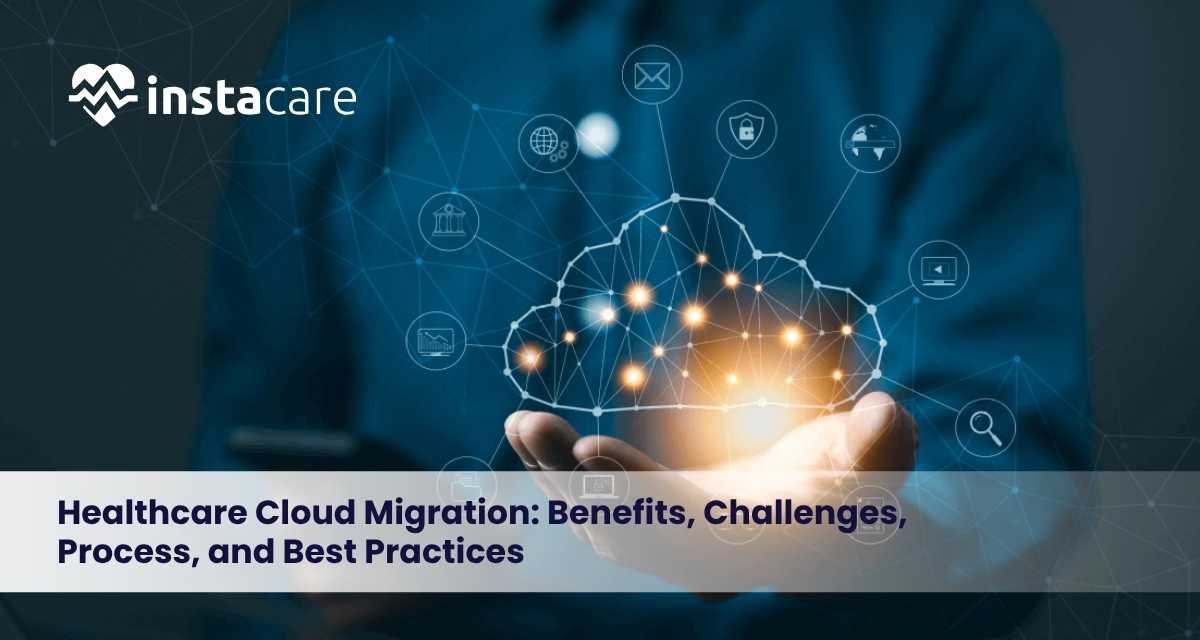
Healthcare Cloud Migration: Benefits, Challenges, Process, and Best Practices
Healthcare cloud migration involves relocating healthcare applications, patient records, and IT systems from data centers to the cloud. Digital transformations in healthcare help achieve greater scalability, data accessibility, collaboration, and operational effectiveness. After the careful design of the migration, the cloud can provide safe storage of data and aid the healthcare industry in speeding up the delivery of patient care.
What is Healthcare Cloud Migration?
The migration of healthcare data, applications, storage, and workloads to cloud systems from on-premises servers is called healthcare cloud migration. Healthcare providers can choose public, private, hybrid, or multi-cloud systems based on their needs.
Cloud migration can be defined as the relocation of data and the enhancement of application and system performance, the level of security, and compliance with healthcare regulations.
Why Are Healthcare Organizations Moving to the Cloud?
The healthcare cloud migration can help accommodate the massive amount of data generated by the healthcare industry on a daily basis. This data includes electronic patient records, images, lab results, prescriptions, insurance, and patient interactions.
Healthcare cloud migration can also facilitate the care of patients at a distance and the use of health services and telemedicine offered by digital technologies.
Types of Healthcare Cloud Migration
Public Cloud
A public cloud is a third-party managed, scalable, and flexible cloud system. It is an excellent choice for organizations with cost and time constraints.
Private Cloud
Private Cloud is for a single healthcare organization. More control over infrastructure and security and about sensitive patient information.
Hybrid Cloud
Hybrid Cloud is a mix of having some infrastructure on-site and some in the cloud. Sensitive information can stay in the Private environment while less important work can go to the Public cloud.
Multi-Cloud
Multi-cloud is a strategy that utilizes different clouds to improve flexibility, reliability, and business continuity.
Benefits of Healthcare Cloud Migration
Better Data Accessibility
With the ability to access patient information at the required locations, collaborative and timely clinical decisions can be made.
Better Scalability
Healthcare organizations can make better use of cloud computing, having the ability to scale up as necessary using external infrastructure.
Better Security
Using cloud computing and the internet, sensitive healthcare information can be protected using a variety of security techniques such as encryption and automated constant security.
Better Disaster Recovery
Using cloud computing, information can be restored faster after an unforeseen event.
Lower Infrastructure Costs
Using cloud computing, the costs of using and maintaining physical infrastructure is reduced.
Better Collaboration
Healthcare providers can collaborate more efficiently with access to real time information.
Better Supported Telemedicine
Using cloud computing, the full spectrum of healthcare services is better supported.
Faster Innovation
New technologies such as artificial intelligence (AI), machine learning (ML), predictive analytics, and Internet of Medical Things (IoMT) are becoming easier to implement within healthcare organizations after migrating to the cloud.
Applications of Cloud Migration in Healthcare
The healthcare cloud migration process enhances many different digital healthcare services including:
- Electronic Health Records (EHR)
- Medical Management Information Systems (MMIS)
- Image Management Systems (IMS)
- Laboratory Information Systems (LIS)
- Telehealth Solutions
- Appointment Booking Systems
- Pharmacy Management Systems
- Health Analytics Solutions
- Remote Patient Monitoring (RPM)
- Medical Billing Systems
- Insurance Claims Processing Systems
Common Challenges of Healthcare Cloud Migration
Data Security
Patient data is sensitive and protecting it during the migration process is paramount.
Regulatory Compliance
Cloud healthcare systems must comply with certain privacy, security, and data protection regulations.
Legacy System Integration
Older healthcare systems may need to modernize in order to integrate with the new cloud systems.
Downtime
Poorly planned migration projects that integrate new systems may bring healthcare operations to a standstill.
Data Migration
Healthcare systems contain a plethora of both structured and unstructured data that system migrations need to capture accurately.
Staff Training
Healthcare and Information Technology (IT) staff may need to learn how to properly and securely use the new cloud systems.
Book Your Free Marketing Consultation
Healthcare Cloud Migration Process
Assessment and Planning
An organization’s infrastructure, applications, and workloads, as well as security and migration requirements, are assessed prior to cloud migration frameworks being designed.
Prepare the Infrastructure
Cloud environments are designed with the appropriate storage, networking, security controls, backup systems, and access management policies.
Data Migration
We facilitate the secure transfer of patient records, applications, databases, and entire healthcare systems to the cloud with minimal impact to ongoing healthcare services.
Application Testing
Health applications undergo migration testing to assess their functionality, performance, security, and compatibility.
Security Validation
We maintain patient information protection throughout the cloud environment by validating security controls.
Staff Training and Deployment
Cloud systems become fully operational to healthcare teams when training for staff cloud system deployment is completed.
Continuous Monitoring
To enhance cloud system operations, organizations assess the effective delivery of services with an emphasis on system performance, security, expense, and compliance.
Best Practices for Healthcare Cloud Migration
Careful planning with the following best practices is essential for effective healthcare cloud migration.
- A migration roadmap is created.
- Data security is protected for patients.
- Security risks are assessed.
- Healthcare information is encrypted.
- Access is limited by user role.
- Backup and recovery plans are established.
- Systems are validated and deployed.
- Healthcare staff are trained.
- Cloud services are monitored.
- Security and compliance assessments are conducted.
Future Trends in Healthcare Cloud Migration
Developing and adopting new technologies bring valuable trends to healthcare cloud migration.
- Artificial intelligence
- Predictive healthcare
- The Internet of Medical Things (IoMT)
- Hybrid cloud computing
- The use of multiple clouds
- Edge computing
- Cloud-based healthcare applications
- Streamlining administrative tasks with greater security.
- Data Analytics and advanced security.
These trends focus on the customization of patient care and the development of efficient workflows.
Conclusion
Healthcare cloud migration is one of the initial steps focused on modernizing healthcare systems to make them more connected and efficient. Moving applications and data to safe healthcare cloud systems enables organizations to make services more accessible and improve collaboration within the system, all while reducing operational costs and providing innovative digital healthcare services. Healthcare cloud migration is certainly challenged by issues of security, compliance, and integration of legacy systems, but a good plan reinforced with experienced personnel can mitigate these risks while improving patient care and operational sustainability.
FAQS
What is healthcare cloud migration?
Healthcare cloud migration refers to transferring healthcare applications, patient data, and the IT infrastructure from on-premise systems to the cloud to make them more scalable, accessible, secure, and operationally efficient.
Is cloud migration safe for healthcare organizations?
Yes. Cloud migration offers a built-in level of security to healthcare organizations through systems of encryption, identity management, access controls, and backed up and monitored cloud systems.
What is the duration of a healthcare cloud migration undertaking?
The duration is defined by the healthcare organization’s scale, the existing systems’ complexity, the volume of data being moved, how the applications are interconnected, and the migration method. Smaller projects may take a few weeks. Larger enterprise migrations may take multiple months.