Last updated on Tuesday, 11, August, 2026
Table of Contents
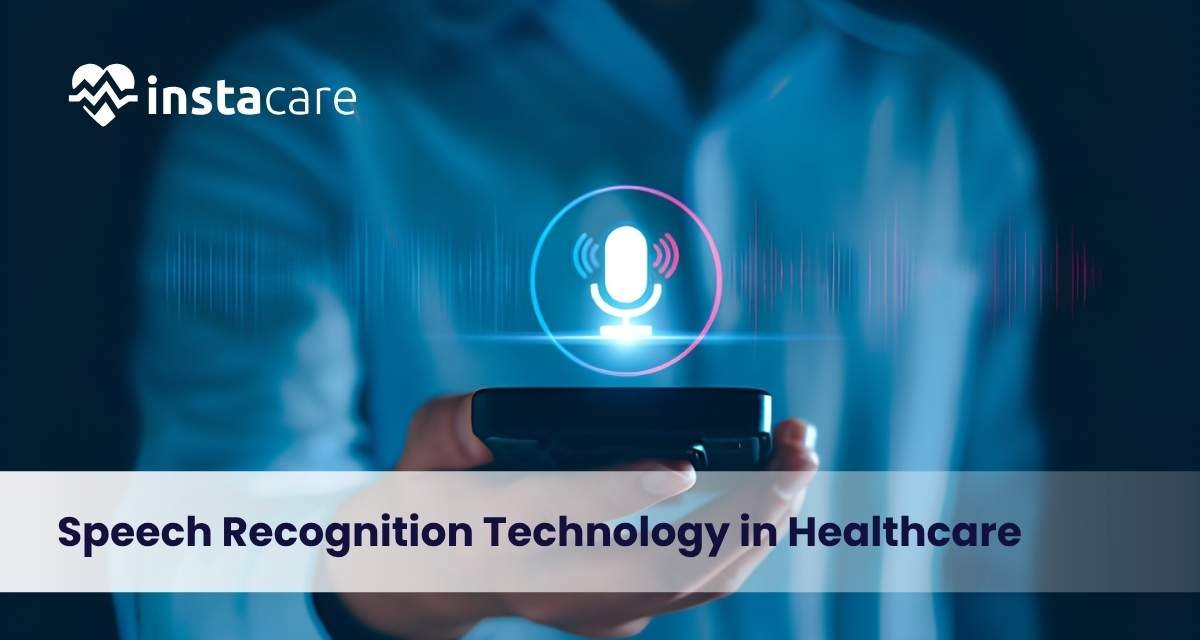
Speech Recognition Technology in Healthcare
Voice interfaces are modifying how clinicians engage with applications and the way they manage and manipulate data. As opposed to entering the comments or records manually, clinicians can verbally enter report data, search queries, and even document the data entry.
In tandem with the digitization of healthcare, speech recognition offers a means of reducing clinical administrative work and increasing the efficiency of workflows. It can also offer inclusive digital interfaces for individuals for whom keyboard/digital interface use is challenging.
Despite these benefits, the effective use of speech recognition technology necessitates a few concerns. These include system accuracy, adequate security protocols, and a manageable level of oversight.
What Is Speech Recognition Technology?
Speech recognition technology enables digital and computer systems to interpret what is said and convert it to written word or interpreted commands. Modern day speech recognition systems are capable of understanding complex, natural speech, different accents, and even medical terminology.
Used in conjunction with healthcare, the technology is adaptable with and can be implemented on computers, smartphones and tablets, or dedicated devices. From there, a clinician can verbally reference any patient information and have it converted to digitized, editable text.
Unlike standard voice to text tools, speech recognition technology for healthcare use can be adapted to directly understand medical terminologies, abbreviated words, and standard medical phrases.
How Does Speech Recognition Work in Healthcare?
In this context, the process is initiated with a clinician stating the information in a digitally compatible device equipped with a microphone. The system is then able to interpret the audio and process the words.
Tech converts digital sounds to text, word by word. This recognition can boost with added context to help identify sentence structure and interpret complex language. The drafted text can be modified, checked for accuracy, and added to its final position on an electronic document.
Perfection in this technology isn’t guaranteed which still justifies human review. Imperfections can still arise from a plethora of sources like surrounding noise, poor word pronunciation, word similarities, and complex language using unusual words.
Healthcare Applications
Medical Documentation
A key application of this technology in healthcare is assisting medical personnel with dictating and documenting patient care. This technology allows healthcare personnel to complete documentation with reduced time spent on typing. This technology empowers medical personnel to document patient care with improved focus.
Patient Records
This technology can assist users with documentation in patient records. Users can dictate data, which, once checked for accuracy, can be incorporated in the patient records. For accurate documentation, the dictated data must be verified.
Clinical Notes and Reports
Healthcare personnel are often required to draft and document lengthy reports. This technology can aid in drafting reports with the spoken text converted to written form.This technology can aid this documentation process.
Administrative Tasks
This technology can be used in other administrative tasks with voice commands to create digital content, dictate digital searches, or direct movement in controlled digital environments. Improving workflow means eliminating unnecessary, repetitive tasks.
Accessibility
Voice technology can improve usability of digital systems for the healthcare professional with temporary or permanent physical limitations. Voice technology can be designed to allow the users to interact with the systems by speaking.
Voice-enabled digital systems can be designed to allow patients to interact with the digital systems when appropriate.
Benefits of Speech Recognition Technology
Saves Time
Lengthy notes require a long time to enter. Dictation of long reports can improve documentation. This can be especially beneficial for professionals whose speaking speed is higher than their typing speed.
Reduces Repetitive Work
Dispensing care services require significant time for data entry. Speech recognition can be used to reduce some data entry work.
Improves Workflow
Easier documentation can be used to improve productivity of the services and the overall workflow, and to devote more time to other important issues like caring for the patients.
Supports Better Accessibility
Digital systems that can be operated by voice can be more accessible for many users who are limited by their inability to use traditional keyboard and/or mouse input methods.
Allows Hands-Free Interaction
When healthcare professionals need to use their hands for other activities, speech recognition can be of great help.
Book Your Free Marketing Consultation
Challenges of Speech Recognition in Healthcare
One of the greatest challenges of using speech recognition technology is the difference in how spoken words are understood as compared to the typed words.
Accuracy Issues
Due to the nature of the spoken words / names, speech recognition systems can misunderstand the pronunciations of words. Complex terminology or slang that is not used often can be mistakenly omitted. Healthcare professionals should always review speech recognized texts.
Background Noise
Healthcare facilities can be chaotic and noisy, which affects accuracy when recognizing background noises. The use of the appropriate microphones, as well as quieter surroundings, can yield better results.
Privacy and Security
The private nature of healthcare data makes it imperative that speech recognition systems have related privacy and security procedures. Organizations must be diligent in how voice data and the resulting text/data are collected, processed, stored, and used.
Training Requirements
It may take the healthcare workers some time to adjust to voice interaction systems. This can be mitigated through appropriate training. This training will help staff understand how to speak effectively and use the available commands and prompts to minimize errors.
Speech Recognition and Patient Communication
Care delivery is an interactive process. Digital solutions should be designed to support the delivery of healthcare services rather than substituting the processes of engagement and communication.
Tech solutions should support effective engagement while healthcare professionals should be active participants in the therapeutic process.
The Future of Speech Recognition in Healthcare
Improved voice-processing systems will have the ability to differentiate between various phrases and/or commands, support voice-activated command systems, and address the needs of peripheral, hard-to-reach communities with more capability to support language and social user nuances.
The ability to support data capture with voice prompts may improve the integration of digitally-based, personal healthcare services.
The focus should remain on enhancing the safety and integrity of systems while enabling control.
Conclusion
Healthcare professionals can reduce reliance on managing digital systems through tedious documentation by using speech recognition technology to more seamlessly interface with electronic systems. It offers the ability to automatically generate notes and reports, provide greater accessibility to digital information, and increase the overall digital and administrative efficiency of healthcare systems.
While it has the potential to improve access to and document management of healthcare data, efficiency remains dependent on the ability to maintain overall accuracy of speech-recognized input. Therefore, it should be implemented as a complementary technology.
This technology has the potential to rebalance the focus of healthcare professionals from administrative tasks to the needs of a greater population by both automating and improving the efficiency of digital systems.
FAQS
What is speech recognition in healthcare?
It is the use of voice-activated technology to document patient information using medical reports, notes, and digital records.
Is speech recognition correct enough for medical reports?
As of now, speech recognition technology is far from perfect and creates the potential for medical report/documentation errors. It is the responsibility of the healthcare professional to ensure the accuracy of all reports.
Would speech recognition reduce the burden of documenting in healthcare?
Absolutely. Speech recognition will decrease the time spent on mindless and repetitive documentation.