

Last updated on Thursday, 13, August, 2026
Last Updated on 2 months ago by Ahmed Usman
Table of Contents
Telemental Health: Making Mental Health Support More Accessible
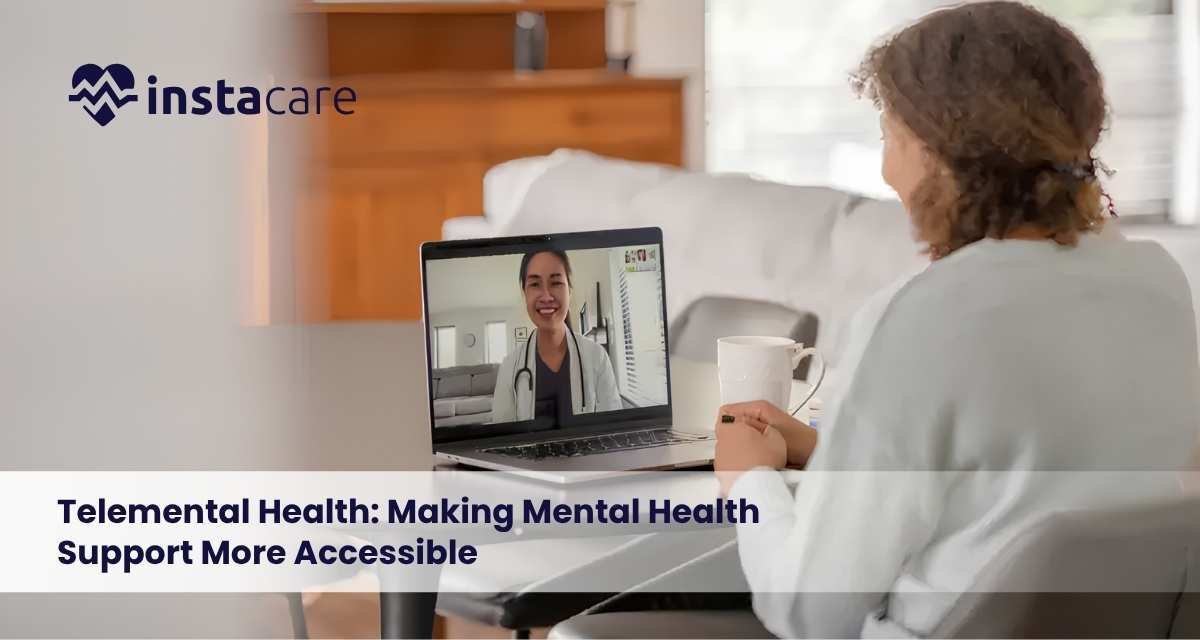
Thanks to advancements in technology, mental healthcare has changed and adapted in many ways, including how patients can connect with mental health professionals. Digital mental healthcare, also known as telehealth, allows patients to connect with providers via video communication to receive counseling, therapy, conduct mental health evaluations, and other supportive mental health services.
To those in rural areas without mental health services, or for those that have an inadequate schedule, or even those that struggle to attend mental health appointments, telemental healthcare may be a great way to receive professional support. While it also has its limitations for support (in-person care won’t be replaced), it has greatly expanded the mental healthcare services available.
What Is Telemental Health?
Telemental health describes mental healthcare that crosses geographic boundaries and uses secured video communications, phone calls, or other approved electronic communications to provide mental healthcare services.
Depending on one’s needs, remote mental healthcare can include:
- Individual Counseling
- Psychotherapy
- Mental Health Assessment
- Psychiatric Evaluation
- Medication Management
- Follow-Up Care
- Group or Family Therapy
- Behavioral Health Education
Symptom or Treatment Progress Monitoring
For some situations, video and audio-only appointments may be an option, however, availability and appropriateness may depend on individual conditions and healthcare requirements.
How Does Telemental Health Work?
- Telemental health appointments generally resemble standard mental healthcare appointments, except the patient is not physically present in the same location as the therapist. The patient uses a smartphone, tablet, or computer to connect for the appointment.
- The mental health professional will ask about emotions, behaviors, symptoms, relationships, sleep, stress, and other issues that may be concerning. Based on the issues presented, the session may involve guiding participation, teaching coping skills, behavioral interventions and exercises, designing a treatment plan, and/or offering progress updates.
- For video therapy sessions, you should choose a private, quiet location. Having a working camera, microphone, and internet as well as a working device would be very helpful.
- Telemental health has many advantages and the most notable is convenience. Those people that reside in rural underserved areas have limited access to mental health care. Remote therapy sessions can lessen the travel to you getting necessary therapy.
- Another advantage is convenience. Fitting your therapy sessions into your already busy schedule becomes much easier and less time is wasted on travel.
- Many people also feel more comfortable in their own space as they discuss things that may make them anxious.
- Telemental health also helps people continue care. Despite barriers like distance, mobility, and scheduling, people may continue to meet their Mental Health Care goals.
Conditions That Can Be Addressed With Telemental Health
Telemental health supports people with a variety of emotional and behavioral concerns. Depending on the assessment of the person, emotional and behavioral concerns may include (but are not limited to:
- Anxiety
- Depression
- Stress
- Relationship issues
- Grief
- Sleep issues
- Distress
- Workplace issues
- Behavioral issues
- Major changes in life
Not all virtual treatment is the same. Some people may be able to fully participate in remote treatment while others may need a mix of virtual and in-person treatment.
Telemental Health and Privacy
Privacy is very important when providing treatment for emotional and behavioral concerns because of the nature of the issues involved.
A focus for people providing telemental health is to ensure that the technology they use is designed to protect personal health information. People seeking treatment also have a responsibility to ensure their side of the conversation is private by, for example, going into a private space to participate in the telemental health session.
Prior to engaging in remote treatment, individuals should be informed of how the treatment will be provided, the expected limitations of the service, privacy concerns, the methods of communication that will be used, and what will happen if there are technical problems.
Book Your Free Marketing Consultation
Limitations of Telemental Health
While there are many benefits to telemental health, it is not the best option for every concern.
With telemental health, some people may not have access to good internet or even good devices. Additionally, some people do not have a private place they can use to talk comfortably. Distractions and unreliable internet can also be an issue.
It might be more difficult to notice things like body language and other forms of communication in a remote setting, making in-person meetings preferable in some cases. There are also some emergencies or situations in which one might need immediate intervention, for which virtual care also might not be appropriate.
In that case, mental health professionals offering remote services should describe the next steps in an emergency, as part of their emergency care planning, and verify the patient’s location and available local resources.
How to Prepare for a Telemental Health Appointment?
Some preparations can help ease the concerns about virtual mental health sessions. Decide on a room where distractions and interruptions will be minimal before the session. Also, test your internet connection, camera, microphone and speakers (if you will be using video).
Consider jotting down some reminders for yourself about the symptoms you are experiencing, the questions you want to ask, concerns you want to bring up, the medications you are taking, recent emotional changes, and important events you want to bring up with the mental health practitioner.
During your first appointments, you can ask about the focus of the treatment, the schedule of the sessions, the practitioner’s information privacy policy, how to contact the practitioner between sessions to request support, and the treatments provided to address your concerns if they arise.
Is Telemental Health as Useful as In-Person Care?
The utility of mental health treatment also can depend on the situation, such as the person’s preferences and engagement, the quality of communication, the practitioner’s methods and experience, the nature of the condition being addressed, and the approaches to the treatment.
For many kinds of counseling and behavioral health support, virtual appointments can work well for the ongoing portion of care. In contrast, remote care should not be seen as a replacement for all aspects of mental health care that must be done in-person.
Some care recipients may not like virtual care due to the lack of in-person connection. Others may like the care delivery flexibility and convenience of virtual care.
The best approach should be based on the case’s symptoms and needs, the case’s diagnosis and care pathway, and the elements of care that are most important to the case.
The Growing Role of Digital Mental Health Care
The use of digital technology to deliver care, including mental health care, is growing. Mental health care lends itself to a variety of remote encounters, since many types of care delivery involve talking, assessing, educating, counseling, and monitoring, and caring, but not a lot of procedures.
Virtual mental health care makes care more easily accessible and flexible to how the care delivery is consumed, but also helps care be delivered to those who live a great distance and/or have tremendous barriers to care. Technology should support care delivery, and never replace care delivery.
Final Thoughts
Telemental health makes care more accessible so the case need not travel to traditional care appointment locations. It also modernizes care delivery pathways to help create more continuous, convenient, and safe care.
Virtual mental health care has its limitations as well. For example, there may be technology issues, privacy concerns, needs that require more individualized forms of treatment, or emergencies that would warrant in-person care.
If you are considering mental health care via telehealth, choose a licensed mental health clinician, be sure to know how these care modalities work, and determine for yourself if remote treatment is appropriate given your needs.
Frequently Asked Questions
What makes telehealth different from telemental health?
When referring to remote delivery of healthcare services, telehealth is an all encompassing term. The term telemental health is used to describe the provision of mental and behavioral health services which may include psychotherapy, assessment, and treatment.
What do I need to prepare for a telemental health session?
If you can access a smartphone, tablet, or computer, and you have a reliable internet or telephone connection and a private location, you are usually ready for a telemental health session. Many sessions require a microphone and camera, but your health care provider should let you know if there are other special requirements.
Can anyone benefit from telemental health?
Telemental health is a convenient and safe alternative to care for many people, but there are various mental health concerns and emergencies that may necessitate face-to-face evaluation and care. Your licensed mental health provider can help you decide the best course of treatment for your situation.