

Last updated on Thursday, 20, August, 2026
Table of Contents
Teleradiology: Understanding Its Role, Benefits, Process, and Future in Healthcare
Teleradiology uses telemedicine to send radiology images for interpretation and report generation by radiologists from remote locations. This technology enables the electronic delivery of radiology images to a remote specialist, eliminating the radiologist’s physical presence at the site of the patient.
Teleradiology has gained great significance in medicine and healthcare due to the rapid growth of digital imaging, the internet, and secure information technology infrastructure. It improves the availability and timeliness of specialty diagnostic evaluations and expertise in areas lacking availability of healthcare personnel.
Teleradiology supports the delivery of timely diagnostic results for image evaluations performed as part of routine or emergency care. It has many beneficial impacts on care delivery.
What Is Teleradiology?
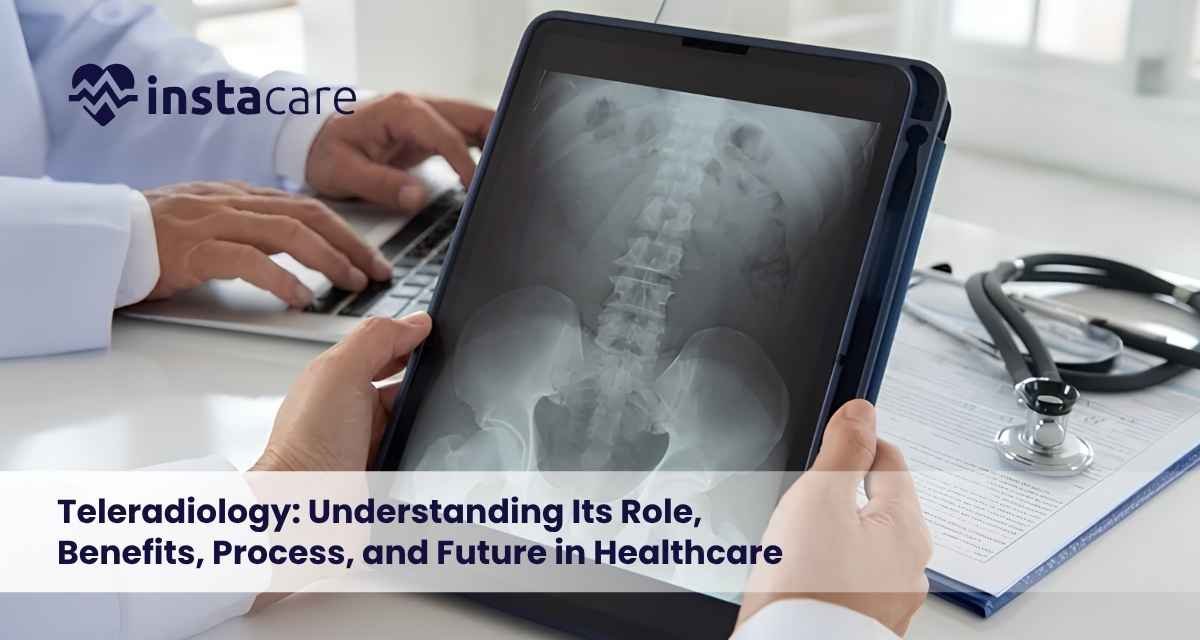
Teleradiology includes the transmission of an image such as an X-ray or CT scan, to a radiologist via the Internet or another information technology platform for interpretation.
Previously, radiologists had to be located in a hospital or an imaging clinic for the purpose of interpreting patient scans. With teleradiology, images can be sent for interpretation by a specialist in a secure manner to a remote location.
A radiologist is able to prepare a diagnostic report containing findings and interpretations of the images without being in the same location as the patient.
This is a valuable service in cases where the immediate interpretation of an image is needed or when the radiology specialist is not available locally.
What is Included in Imaging Reviews Through Teleradiology?
Medical Imaging types that can be reviewed through this system include:
- X-rays: Used to locate breaks or infections and assist in diagnosis of other health conditions in the chest.
- CT: A scan that creates detailed images of body sections and is used to identify injuries and other health conditions.
- MRI: Used to scan soft tissues in various body sections.
- Ultrasound: Used to scan blood flow and check on the health of various organs and pregnant women
Why is Teleradiology Needed?
With this technology, healthcare providers can clear many obstacles or challenges that are faced in the healthcare system such as:
Improved Access To Specialists
Smaller community hospitals often lack access to specialty radiologists. Teleradiology provides smaller community hospitals access to radiology subspecialty expertise remotely.
Faster Diagnosis
Time is a critical factor in emergency situations. Access to radiology specialty expertise rapidly streamlines decision making by healthcare providers.
24-Hour Radiology Support
Given that remote reviews of images are possible, teleradiology enables radiology support beyond the typical scope of the traditional work day.
Better Collaboration
Teleradiology incorporates healthcare workers from disparate locations, supports the review of images, and aids in the diagnostic process.
Book Your Free Marketing Consultation
Benefits Of Teleradiology
Increased Efficiency
Digital media transfers remove delays caused by waiting for a specialist to be available and erases delays caused from the transportation of physical films.
Support for Emergency Care
Urgent and critical care cases, such as time-sensitive trauma and unstable and critically ill patients, can be rapidly reviewed by qualified radiologists.
Reduced Geographic Limitations
Patients are no longer constrained to the local medical care resources when specialized medical care is needed.
Improved Use of Medical Expertise
Radiology subspecialists can provide care and perform a critical role across multiple healthcare facilities to reduce specialty care disparities.
Challenges Of Teleradiology
While advances in technology have made many things easier, including teleradiology, there are still some challenges to this evolving technology.
Data Security and Privacy
Privacy and security of patient information is of utmost importance with medical images and needs to be addressed for teleradiology services.
Technology Requirements
Secure communication, reliable high speed internet, and appropriate specialty radiology imaging equipment are requisite for high quality teleradiology service.
Communication Between Healthcare Teams
A report can only be considered a findings report when the radiologist has effectively communicated the findings and ensured the treating clinician has a full understanding of the report.
Maintaining Consistent Reporting Standards
Consistent reporting standards allow radiologists to practice in different locations and with different healthcare systems.
Artificial Intelligence and Teleradiology
AI-based technology in medical imaging is gradually developing and may assist radiologists by suggesting patterns, showing possible abnormalities, and prioritizing emergencies.
AI was developed to assist and not replace physicians. Complex cases require multiple factors and patient history to be fully appreciated, which is a task exclusive to physicians.
The advancement of technology and the addition of specialized knowledge may continuously improve diagnostic imaging.
Future of Teleradiology
Increased demand for fast accessible healthcare services will likely lead to advancements in teleradiology. These advancements will likely be:
- Better digital imaging tools
- More AI-based tools
- Smarter remote collaboration systems
- Faster communication between healthcare professionals
- Increased remote availability of specialized healthcare professionals
Within the expanding framework of interconnected healthcare, teleradiology will likely continue to be a premier diagnostic tool.
Conclusion
Teleradiology has been highly beneficial to the practice of medicine by allowing radiologists to offer their services remotely. It improves access to specialized services and enables a speedy diagnostic process, which leads to improved healthcare.Managing the challenges of teleradiology (i.e. security, technology, and communication) will be worth the benefits. Through increased digital and medical technologies, teleradiology will continue enhancing diagnostic systems and services.
FAQs
What is teleradiology?
Teleradiology is the ability to review and interpret medical images remotely by radiologists to improve access to diagnostics and timely reports.
What types of studies can be interpreted using teleradiology?
Teleradiology assists in the interpretations of many types of diagnostic images including X-rays, CT scans, MRIs, ultrasound images and others.
Does teleradiology eliminate the need for radiologist?
No. Teleradiology helps radiologists work from a remote site, and use technology to aid in the delivery of diagnostic services.