Last updated on Wednesday, 5, August, 2026
Table of Contents
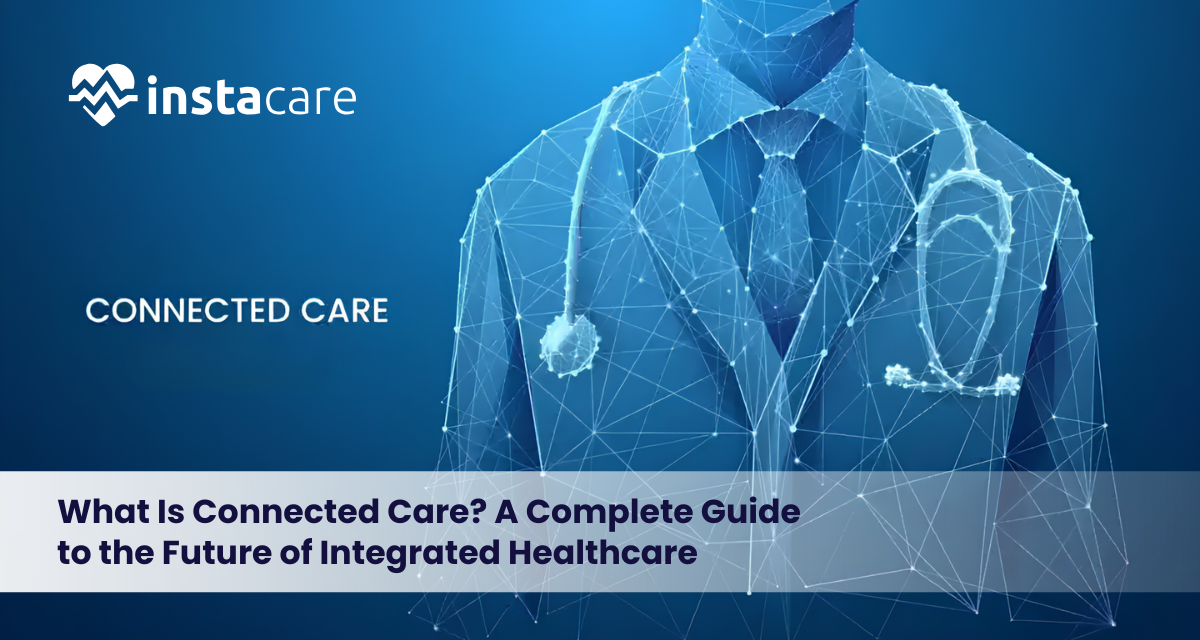
What Is Connected Care? A Complete Guide to the Future of Integrated Healthcare
The evolution of technology is pushing the boundaries of healthcare by making it more convenient, individualized, and digitized. One of the distinct features of this paradigm shift is connected care, a method that integrates patients, healthcare providers, medical apparatus, and health information systems.
Connected care promotes the active, safe, and unbounded sharing of health information and the provision of support beyond the traditional hälsocentralen or hospital visit. Connected care provides patients the support, guidance, and supervision they need no matter where they are.
The combination of remote monitoring, data sharing, integrated digital technologies, and patient-centered care allows connected care to build a system that is more efficient, individualized, and proactive.
Understanding Connected Care
Connected care is the digitization of the different, previously disparate components of the healthcare system. It enables the secure digital exchange and coordination of care for patients, doctors, nurses, and caregivers via healthcare systems.
Connected care resolves all the problems and enables the system and healthcare providers to be truly proactive by facilitating the constant, real time sharing of health information. The connected care system of healthcare providers is able to assess the health of patients, analyze medical data, and offer recommendations without the need for a face to face consultation.
For example, a patient with a chronic illness may use a measuring device that is part of a connected health system. The data is accessible to the patient’s doctor, who can monitor the doctor and offer help when the doctor notices a change.
How Does Connected Care Work?
Combining multiple components of digital health care and telecommunications systems makes connected care possible.
The steps are typically:
- Data Collection
- Health data can be obtained from:
- Health devices that are worn
- Smart medical devices
- Mobile health apps
- Electronic health records
- Remote monitoring systems
These various tools can capture data such as levels of activity, vital signs, medication schedules, and trending health data.
Data Sharing
Health care data can only be shared with authorized personnel within a secure environment. This helps doctors and care teams gain a more complete picture of the current state of a patient.
In addition to the data obtained during health care encounters, health care teams can now access a patient’s real-time health data.
Analysis and Decision-Making
Data can be assessed to identify trends, and define the best course of treatment.
Sophisticated digital systems can even identify evolving threats to a patient’s health and signal the need for critical intervention.
Continuous Support
Connected care makes it possible to maintain an open line of communication with a patient, and, as necessary, reinforce health care management through ongoing coaching and supportive check-ins that don’t require a trip to a health care facility.
Key Technologies Behind Connected Care
Connected care builds a networked health care system on a variety of foundational technologies.
Internet of Things (IoT) in Healthcare
In health care, the Internet of Things refers to the use of digital telecommunications to connect medical devices and health care tools.
Examples include:
- Smart monitoring devices
- Connected medical equipment
- Wearable health trackers
- Remote patient monitoring tools
Healthcare professionals understand patient conditions better through tools that collect information in real time.
Electronic Health Records
Electronic health records are a modern and organized way to keep and look up patient information.
They may include:
- Medical history
- Previous treatments
- Test results
- Medication details
- Allergies
Health Reports
Healthcare professionals have faster means to coordinate care and close communications gaps through connected health systems.
Telehealth and Virtual Care
Telehealth is a way for patients to conduct remote communications with healthcare professionals, and it may include:
- Remote visits
- Follow up appointments
- Health check ins
- Health and medical advice
Virtual care is especially useful to those who have challenges with making the visit to a healthcare facility, or to those who need regular health check ins.
Artificial Intelligence and Data Analytics
Health information systems enhanced with artificial intelligence and data analytics help to sift through the large volumes of health information to identify information that may be of value.
These systems may be used for:
- Identifying risk earlier
- Planning interventions
- Monitoring patients
- Making health care decisions
These systems act as information management aids.
Benefits of Connected Care
There are many benefits to connected care for patients, healthcare professionals, and the healthcare system.
Improved Patient Experience
Connected care leads to more patient centered and accessible health care. Patients are empowered to communicate with health care professionals, receive reminders, and manage their health information.
Healthcare professionals are in a better position to guide and support patients, which enables patients to avoid reaching a point of a health crisis and needing more intensive care.
Better Disease Management
Connected care is very effective for the management of health conditions that are chronic in nature.
Healthcare professionals can adjust care as needed based on the information readily available through regular monitoring.
This can help:
- Achieve better outcomes after treatments
- Minimize health complications
- Help people make positive health choices
- Improve engagement
Accelerate Healthcare Choices
Healthcare providers can make better choices more quickly when they have the most current information about the patient.
Real-time data helps find critical problems and helps support the most important response.
Less Healthcare Strain
Connected care helps prevent hospital visits and helps make the best use of available resources.
Using remote care and virtual visits helps reach and care for more people and helps relieve some of the burden on healthcare facilities.
Focused Healthcare
Every person has different healthcare needs, and connected care helps create different pathways to care.
More focused choices of treatment can be made by considering a patient’s specific condition and their lifestyle and health habits.
Book Your Free Marketing Consultation
How is Connected Care Used in Healthcare?
There are many uses of connected care in different areas of healthcare.
Remote Care
People are able to use connected devices to monitor their health at home. Healthcare teams are able to view the data and offer support.
Smart Systems for Medications
Digital systems can set reminders for people to take their medications and allow monitoring of adherence.
Post Care Follow-Up
After treatment or being discharged, connected care systems can be used by healthcare teams to follow and support care for ongoing recovery.
Connected care helps support prevention by locating health risk conditions sooner and promoting positive health choices.
What are the Obstacles of Connected Care?
Even with the drawbacks of connected care, there are many challenges it will face.
Patient Data Security
Patient data is sensitive and protecting it from unauthorized access and cyber intrusions is of utmost importance. There is value in optimal security and data protection.
Access to Technology
Not all patients have equal access to devices and the internet, or the skills to use them. Care systems must account for accessibility when they deploy connected care.
Integration
A variety of care systems and devices must be able to work together. Poor integration leads to data sharing and workflow issues.
Training
Both care staff and patients will need to be trained to use connected care technologies.
The Connected Care Landscape
The connected care of the future will aim to build systems that are more predictive, personalized, and designed around the patient.
Developments will most likely include:
- More sophisticated remote monitoring
- More accurate health prediction technologies
- Greater use of health wearables
- More personalized health interventions
- Improved integration of health systems
The focus of care will move from reactive, where care is provided after an event, to proactive, where care is based on prevention and ongoing wellness.
Conclusion
Connected care is redefining the delivery of health systems. By connecting the patient, the health care professional, the medical device, and the digital system, it promotes a more collaborative and efficient system.
Technologies that will support connected care, such as remote monitoring, Electronic Health Records, Telehealth, and analytics, enable much quicker and refined communication and intervention.
Although there are challenges of security, accessibility and the acceptance of new technologies, connected care will deliver a more responsive and patient-focused system.
FAQS
What is the purpose of connected care?
With connected care, the purpose is to elevate the level of healthcare coordination by integrating patients, healthcare practitioners, medical apparatus, and digital technology. The goal is to enhance health outcomes by utilizing continuous and enhanced communication.
What differentiates connected care from the traditional healthcare system?
Firstly, the traditional healthcare system consists mainly of care that is provided through face-to-face contact. This usually takes place after one has developed a health condition and/or is showing symptoms. On the other hand, connected care will incorporate the use of digital technologies to ensure health is managed outside the healthcare institution through constant contact and monitoring.
Is it only patients with long term health conditions who will benefit from connected care?
No. Connected care will benefit all patients to the extent that it will support the preventative aspect of healthcare, as well as the continuous monitoring and/or scheduled consulting, and the developing of individualized plans.