

Last updated on Monday, 1, December, 2025
Last Updated on 10 months ago by Ahmed Usman
Table of Contents
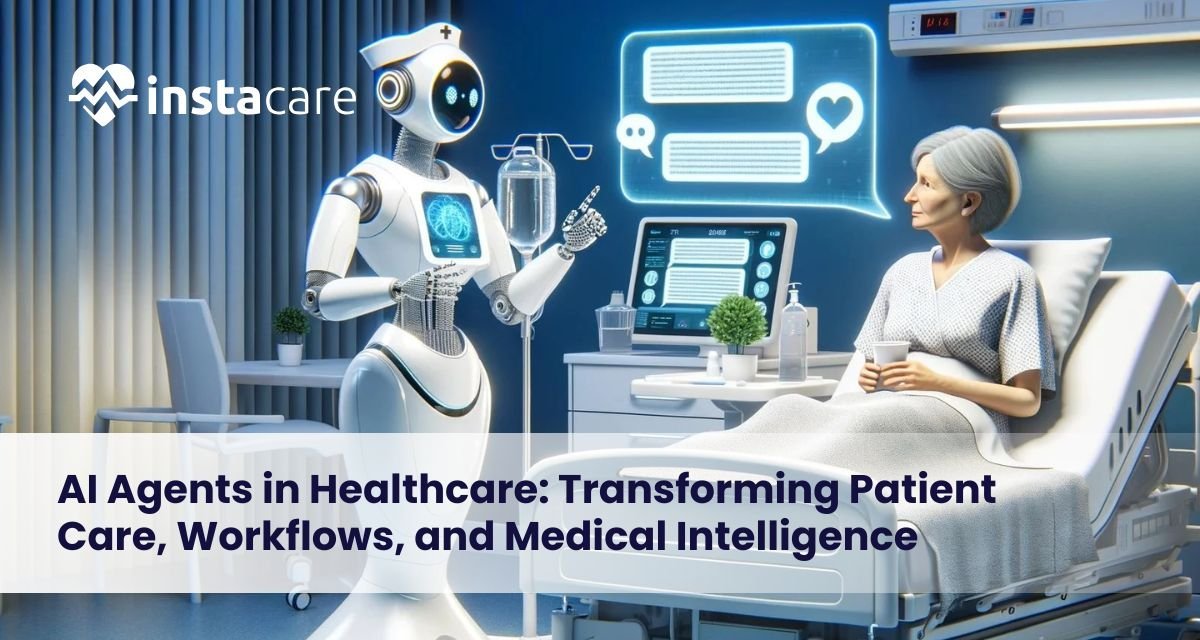
AI Agents in Healthcare: Transforming Patient Care, Workflows, and Medical Intelligence
Artificial Intelligence is changing healthcare step by step, bringing new ways to boost recovery results, make processes smoother, also assist doctors and nurses. Within this tech wave, smart AI helpers are becoming key players. Instead of people, these tools take on jobs like watching patients, handling records, organizing visits, either alone or with some guidance. When added into clinics, hospitals, or online health services, they speed things up, cut down mistakes, besides improve how patients feel about care. Thanks to them, medical staff spend less time on routine work; instead, attention shifts toward personal treatment, since machines manage complicated repeat actions accurately. These advances illustrate the potential of autonomous AI agents in healthcare to transform medical workflows.
What are AI Agents in Healthcare?
AI Agents work alone or with some guidance to get certain jobs done. When used in health settings, they rely on pattern recognition, text analysis, and forecasting tools to aid treatment processes and services for patients. Some examples are smart helpers that give physicians diagnostic advice, digital aides handling conversations with individuals seeking care, while others function as tech-based advisors assessing detailed medical records.
Some agents work alone using set rules; others assist medical staff by offering advice. Using several connected systems lets clinics improve operations in different areas at once. This includes clinical AI agents that support specialized departments, ensuring accurate, data-driven insights.
Types of AI Agents Used in Healthcare
Medical systems use various AI tools, each built for specific tasks. Some handle diagnostics while others manage patient records or support treatment planning
- AI Patient Monitoring Agents: AI tools watch patient health nonstop, notifying doctors at once when something seems off. Suitable for critical wards or checking patients from a distance.
- AI Agents for Diagnostics: AI tools help spot health issues by studying scans, test data, or records, supporting physicians with faster, clearer insights. They combine image reviews, lab values, and past cases while improving detection speed through pattern recognition. These systems work alongside clinics to reduce delays using digital analysis instead of guesswork.
- Generative AI Agents in Healthcare: Generate patient reports, summaries, or treatment suggestions using advanced natural language processing.
- AI Agents for Appointment Scheduling: AI helpers handle appointment scheduling, streamlining booking, setting alerts, or managing check-ins to free up team hours.
- Predictive Analytics Agents in Healthcare: Predictive analytics tools help healthcare by estimating how patients might worsen, using past records. These agents track illness patterns over time, giving insights into future demands. Hospitals use them to anticipate bed or staff shortages, not just react. Insights come from data trends rather than guesswork, supporting timely choices.
- Conversational AI Agents for Healthcare: Chat-based AI helpers in medicine work like bots or spoken tools, leading users through typical questions plus basic check-ups.
Such agents together create a digital environment that helps hospitals, as well as clinics and telehealth systems, offer timely and accurate treatment. They integrate seamlessly into multi-agent systems in healthcare for holistic operations.
Key Benefits of AI Agents in Healthcare
The use of AI agents in hospitals or clinics offers several advantages:
- Improved Patient Care: AI tools help patients by spotting issues fast, which means quicker care and fewer emergencies. Alerts go out sooner because systems watch closely, so problems get caught earlier instead of later.
- Enhanced Workflow Automation: AI automates hospital workflows, improving schedules, documentation, or back-office duties, so healthcare workers spend more time on patient care instead. This highlights the importance of ai workflow automation in hospitals.
- Data-driven Choices: AI tools analyze medical information, helping doctors decide with support from forecasting methods, this boosts accuracy in identifying illnesses while shaping care strategies through statistical insights.
- Operational Efficiency: Multi-agent setups in healthcare help separate units share info clearly, cutting repeats while speeding up workflows through smoother coordination instead of siloed actions.
- Custom Care: AI tools guide choices, using a person’s past health and wishes to shape treatments. Machine learning adapts plans, so each fits better.
Hospitals using such tools see better performance, lower expenses, alongside happier patients, showing how AI patient monitoring agents and analytics agents can shift operations meaningfully.
Book Your Free Marketing Consultation
Challenges & Limitations
Even though there are advantages, AI systems come with some difficulties:
- Data Privacy and Security: Managing confidential patient details means following rules such as HIPAA closely, yet care must stay consistent. While standards apply, adherence ensures trust; each step protects personal records without delay or error.
- Connecting to Old Systems: Outdated hospital technology might not allow modern AI tools to work properly, compatibility becomes an issue when upgrading is limited, some setups simply can’t adapt.
- Reliability Concerns: Although AI tools suggest solutions, mistakes can happen when information is inaccurate.
- Staff Training & Acceptance: Medical staff need proper guidance to work well alongside artificial intelligence tools, training ensures smoother adoption across teams.
- Ethical Considerations: The autonomy of AI brings up issues around responsibility, also, whether patients agree matters. Trust becomes a concern when machines make choices instead.
Addressing these constraints calls for thoughtful preparation; a strong technology setup also plays a key role. Meeting legal standards is essential, this supports secure, responsible implementation. Incorporating ai agents for medical data analysis ensures precise insights without compromising patient confidentiality.
Future of AI Agents in Healthcare
The future of AI agents in health care looks strong. Because of advances like automated systems in clinics, these tools are used more often in medical settings. As a result, treatments can be predicted ahead of time, stopped before they start, or tailored to individuals. When linked to online consultation services, smart helpers talk to people from a distance, so fewer go into hospitals while access improves.
Advanced multi-agent setups let AI work together across teams, keeping processes smooth, from diagnosis through care to check-ins. Since machine learning keeps advancing, these AIs should offer sharper advice, helping doctors act quicker with better accuracy. Also, stronger cybersecurity in healthcare safeguards private information, building confidence and encouraging broader use. Integration with autonomous AI agents in healthcare and AI-powered medical decision support creates intelligent, proactive hospital systems.
Conclusion
AI tools in health settings are changing how clinics, hospitals, and remote care apps work. Because they handle repetitive jobs, study detailed patient records, also support diagnosis, these technologies improve treatment quality, workflow speed, yet doctor choices. Even though issues like information security, linking old software, or team learning remain, advantages still exceed drawbacks. With tech progress, intelligent assistants will offer tailored, forward-looking, also proactive medicine, helping providers prioritize individual recovery results. Supporting AI-based medical systems leads to more secure, quicker, plus smoother care processes, forming tomorrow’s health service model. Healthcare virtual assistants are an example of practical AI adoption, enhancing daily hospital operations.
FAQs
Q1. How do AI agents improve hospital efficiency?
AI agents help hospitals work better by handling routine jobs like booking appointments, tracking patients, or managing files. Because of automation, paperwork stress drops significantly; fewer mistakes happen as a result.
Q2. Are AI agents safe for patient care?
AI agents can support patient care safely if used properly. They help through live tracking, diagnosis suggestions, or forecasting health trends.
Q3. Can AI agents replace healthcare professionals?
AI tools assist doctors instead of taking their place. While they improve choices, cut routine tasks, also offer useful data, judgment by people is still needed, especially for ethics, compassion, and ailored treatment.