

EPR Software (Electronic Patient Record): Features, Benefits, and Importance in Modern Healthcare EPR software, or Electronic Patient Records software, is a health record management system that allows healthcare workers to keep track of patients’ health records digitally. Unlike conventional patient health records that are stored on paper and are dispersed, EPR software creates a centralized system on which healthcare workers can capture and access patient health records at any time. EPR systems can document a multitude of patient information from identification to health evaluation and diagnosis, treatment and medication history, to laboratory records. With EPR software, health workers are able to provide comprehensive care to their patients in a timely manner. What is EPR Software? EPR software is a health records management system that allows the creation of a digital patient record system. The patient record system can be created and updated by healthcare workers (e.g. doctors, pharmacists, nurses, and administrative staff) at any time during the patient’s treatment. In comparison to patient health records that are stored on paper, electronic patient records can be updated and searched for in an authorized health care setting. This also mitigates the amount of time a health care worker spends searching for a document and minimizes the risk of patient information being misplaced or incorrectly recorded. The most important function of an EPR system is to make certain that healthcare workers can access patient information when it is needed to make a clinical decision. A comprehensive electronic patient record can also provide medical staff with health evaluation histories and health risk assessments. Key Features of EPR Software Patient Information Management EPR software provides the capability to capture and store patient personal information. When patient information changes, such as their contact information or emergency contact/s, staff are able to update electronic patient records. Medical History Documentation Healthcare workers record patient’s past illnesses, operations, hospital visits, chronic illnesses, and current problems. It also includes family history of illnesses. This helps clinicians assess the patient’s health status. Clinical Notes Consultation notes, symptoms, and observations with their respective diagnosis, orders, and treatment can be directly documented in the patient record by doctors and nurses. The use of structured templates improves the clinical documentation consistency. Medication and Prescription Management An EPR system documents all the past and present medications in the system. It can also show documented allergies, indicated dosages, prescribed dates, and flagged drug interactions. Having proper documented medication helps decrease prescribing errors, and proves safer treatment options. Laboratory and Diagnostic Results Diagnostic tests and their results, and lab and imaging records can be part of the electronic patient record. Unlike the previous system, the clinician can now find all the test results, both past and present, in one place. Appointment and Scheduling Support Most EPR systems come with scheduling modules. This allows the administrative team to manage patient appointments, cancellations, follow-ups, and the availability of clinicians. Automation of some tasks can help minimize no shows. Billing and Administrative Records EPR software may deal with services billing and invoicing, insurance documentation and tracking, payment processing, and clinical service coding. Having all clinical and administrative services connected in one system will help improve operational efficiency by reducing tasks requiring repeated data entry. Access Control and Security EPR systems use role-based access control to decide which users are permitted to view or edit specific data. For instance, clinical doctors have access to clinical data, whereas employees in admin have access to data on appointments and billing. Audit logs can record who viewed a given patient record, what data they modified, and the timestamps of all recorded actions. Book Your Free Marketing Consultation Benefits of EPR Software Improved Access to Patient Data EPR systems provide the ability to rapidly access patient data by authorized members of the health care team. Ready access to patient data is critical in the case of emergencies, follow up visits, or when making complex treatment decisions. Better Coordination Among Healthcare Staff A patient may be treated by a number of different health care providers. EPR systems facilitate the development of a shared database to aid the coordination of treatment by doctors, nurses, and even clinical pharmacists. When a staff member views the most currently updated record, the likelihood of communication errors and unnecessary repeats of a procedure is greatly reduced. Less Paperwork Compared to a paper-based system, EPR systems greatly decrease the amount of space necessary to store records and decrease the time necessary to complete and manage documentation. Challenges of Implementing EPR Software Implementing EPR software is a long, difficult, and complex process, despite the advantages of EPRs. Healthcare services need to select an EPR system that aligns with their patient volumes, clinical services, security requirements, and workflow. Important barriers to implementing an EPR system include training staff to properly input data, maintaining their privacy, controlling access, and resolving issues. Additionally, converting data from older or paper based systems can be a challenge. Data is often painstakingly reviewed to ensure there are no missing records, multiple copies, or inaccurate entries. Cybersecurity has become more important with the digitization of patient health information. Protecting patient information from loss or unauthorized access is imperative. Malicious software also leads to data loss and damage to infrastructure. Patient health data can be better protected through the use of complex passwords, encryption, access control, data backups, system updates, and training of staff. Choosing the Right EPR System An appropriate EPR System should be user friendly, protect data, and be adaptable to the needs of the organization. Healthcare providers should evaluate the EPR systems based on their clinical documentation, their reporting and appointment scheduling, data access and control, integration, and the support they will need. The EPR system should be infrastructure expandable. The healthcare organization may need additional users, sites, departments, and/or services. Organizations should assess the EPR system based on actual work flow. This includes the staff and healthcare professionals who will be the actual users of the system. The Future of EPR Systems EPR technology will
Rehabilitation Health Management Information System (HMIS): A Complete Guide Rehabilitation services aim to assist patients with recovering, regaining independence, and improving the overall quality of life after suffering from illnesses, injuries, surgeries, disabilities, or long-term health conditions. Patients may require different types of rehabilitation, such as physical, occupational, or speech therapy. Patients may also need rehabilitation for post-surgery, mental health, or wellness. The management of care is most vital in this instance. A Rehabilitation Health Management Information System (HMIS) provides a solution for the management of rehabilitation care. In contemporary rehabilitation health care, the need for a smart system is vital to improving accuracy, decreasing the time needed to facilitate all the services, and helping healthcare professionals to make efficient and timely decisions and assist in providing optimal patient care. Rehabilitation HMIS caters to all of these vital needs and serves the rehabilitation care services in an organized, clear, and constructive manner. What Is a Rehabilitation Health Management Information System? A Rehabilitation Health Management Information System is a specialized health care software system that provides all the management needs of rehabilitation-related health care services from a medical, administrative, and operational point of view. The software provides a system that can store patient data, track and manage therapy sessions, assess and monitor therapy progress, and facilitate communication between patients and employed heath care professionals. Unlike generic hospital management systems, rehabilitation HMIS manages long-term patient care, looks at functionality, therapy goals, and the tracking of progress. Rehabilitation involves multiple specialists. Some of them are: Physiotherapists Occupational therapists Speech therapists Psychologists Nurses Doctors Social Workers HMIS gives all these professionals the patient information they need to manage rehabilitation care. Importance of HMIS in Rehabilitation Healthcare Rehabilitation care and therapy are continual and require constant assessment. Patients may receive several therapy sessions in a matter of weeks or even months. The therapists involved in rehabilitation care need to assess progress, modify treatment and document results and communicate these to other members of the therapy team. In the absence of such a system, information may be lost, duplicated, or even delayed. These problems are alleviated by the Rehabilitation HMIS, which builds a comprehensive and centralized framework for the tracking of rehabilitation progress. The benefits of a Rehabilitation HMIS are seen by healthcare administrators as improved systems for: Staff Scheduling Resource Planning Managing Patient Flow Billing and Insurance Reporting and Analytics Monitoring Service Quality For rehabilitation centers, this means smoother operations and better patient care. Key Features of a Rehabilitation HMIS Patient Registration and Medical Records A core function of a Rehabilitation HMIS is patient registration. This feature stores comprehensive patient data. Electronic medical records allow doctors and therapists to quickly assess a patient’s medical history and treatment. As a result, care can be delivered faster and the need for redundant documentation is minimized. Assessment and Evaluation Management Most patients undergo a comprehensive assessment prior to the initiation of the rehabilitation process. This assessment can cover multiple dimensions, including the person’s physical condition, pain, range of motion, speech, mental health, as well as deficits in activities of daily living and function. HMIS allows therapists to conveniently document assessment results. This feature aids the construction of rehabilitation goals and treatment plans. Additionally, periodic reassessments are easily documented, and results are compared to track progress. Treatment Planning Each rehabilitation patient requires a unique treatment plan. HMIS Rehabilitation Modules allow therapists to create treatment plans based on the patient’s rehabilitation diagnosis, goals, type of therapy, number of sessions, and the anticipated outcome. A stroke patient, for example, could require the following therapies: Physiotherapy (for movement and balance) Speech therapy (for communication) Occupational therapy (for assistance with daily living activities) Psychological therapy (for the recovery of emotions) HMIS Rehabilitation Modules keep all the treatment plans integrated. Book Your Free Marketing Consultation Appointment and Scheduling Management Due to the numerous appointments handled daily, scheduling therapies manually can easily lead to missed sessions, overbooked schedules, or delays. HMIS Rehabilitation Modules provide therapy scheduling solutions to effectively manage: Staff availability for therapy sessions Patient therapy sessions and Follow up therapy sessions Automated reminders for scheduled therapy significantly improves patient attendance by decreasing missed appointments. Tracking Progress and Measuring Outcomes Tracking progress is vital to rehabilitation. An effective HMIS makes it easier for therapists to document patient progress each session. These may include positive changes to: Poor mobility Pain levels Strength Balance Speech Emotional wellbeing Activity of daily living Access to progress reports helps healthcare providers determine if a treatment plan is effective or if it requires modification. This process of tracking progress helps improve patient outcomes and centers around evidence-based care. Billing and Insurance Rehabilitation services can require many sessions and different types of therapy, sometimes resulting in multiple approvals and payment plans. HMIS Software provides a system that manages billing, invoices, insurance claims, payments, and financial reports. The administration burden is reduced, and new systems are more transparent for both the healthcare facility and the patient. Reports and Analytics A Rehabilitation HMIS can create a variety of reports for doctors, therapists, managers, and healthcare authorities. These reports may include: The progress of patients The success of different treatments Statistics on appointments The performance of staff Utilization of services Financial reports Patient satisfaction Analytics allow rehabilitation centers to improve their decision-making, service quality, and identify areas that require improvement. Benefits of Rehabilitation HMIS Better Patient Care Better patient care is the primary advantage of Rehabilitation HMIS. When patient data is consolidated to a single system, providers are better able to make informed decisions as the data is more likely to be current. Before each therapy session, providers can check a patient’s treatment history, progress notes, and the care plan. Enhanced Collaboration Between Treatment Teams Rehabilitation is typically a group effort. HMIS enables collaboration through the use of a singular patient database. This fosters an understanding of the patient’s barriers, objectives, and progress amongst every member of the team. Less Manual Labor HMIS eliminates much of the hardware and labor intensive paper
Patient Empowerment Software: Transforming Healthcare Healthcare is changing fast. The most notable aspect of this is the shift toward patient-centered care, in which patients are seen as partners in the care process rather than passive recipients. Bringing about this change is patient empowerment software, which includes digital tools to aid patients in taking control of their healthcare process. This software can help patients partake in their care process in many ways by allowing them to access their medical records, track and manage their symptoms and medications, and communicate and interact with their care providers. Patients want care to be as user-friendly and clear as the digital applications they use in their daily lives. The digital tools that empower patients help to close the gap between patients’ digital care expectations and the traditional medical systems. What Is Patient Empowerment Software? Patient empowerment software are the digital systems that aid patients in the management and decision-making processes regarding their own health. These systems can be digital applications in their own right or components of other systems, such as electronic health record (EHR) systems. These systems seek to turn the healthcare model that is predominantly controlled by providers into one that is predominantly patient-centered. This software gives patients the ability to improve their health outcomes by informing them and enabling them to take various healthcare actions. Patient empowerment software can include any or all of the following: Scheduling and reminder systems Messaging systems to care teams Self-assessment and symptom-tracking tools Condition specific educational content Medication management and telehealth systems Integrating all of these systems provides patients the ability to manage their health with clarity and confidence. Why is Patient Empowering Important? Patient empowerment is vital in contemporary care. Its advocates show increased: Compliance with treatment Understanding of their condition Involvement in the care process Managing chronic conditions Satisfaction with care Greater control of their lives to the extent that empowered patients make more rational decisions concerning their medication and lifestyle The active involvement of patients transforms the care process from a top-down approach to a relatively equal partnership. As a result, focus is shifted from the process to the outcomes, which include improved adherence to the care process and fewer complications. Characteristics of Empowering Patients Application Some of the patient empowerment tools found in most contemporary application software include: Personal Health Records Patients no longer have to rely on their health care providers to inform them of their diagnoses, lab tests, images, vaccinations, and summaries of their visits as they can now access them in one place. Patients can track their health and encourage them to engage in health-related discussions with their providers. Care Events Patients can now schedule, reschedule, and cancel their care events without having to make a phone call. Many patient empowerment applications have features that remind patients of their scheduled visits. Empowered Patients Patients can easily contact their care teams, receive answers to their queries, and get involved in the care process without visiting the health care facility in person. Many modern patient empowerment applications especially allow patients to engage in care virtually by tracking their symptoms and vital signs like blood pressure and blood glucose. Medications Automated alerts for scheduled medication times Requests to refill sent to the pharmacy/clinic Notifications for potential interactions or when a dose is missed Learning Materials Patients are able to access articles with supporting research, as well as videos and tutorials, to help them understand their illnesses, available treatments, and how to engage in preventive care. Integration of Telehealth To help those patients who live in rural areas, and to help the barriers of time and lack of transportation, an option for virtual appointments is available. Book Your Free Marketing Consultation How Patient Empowering Software Serves Users? Patients With patient empowerment software, an individual is able to: Understand their illnesses better Track their own health Decide on their own treatment and/or lifestyle Access help and answers to their questions in a direct manner. This helps to lessen anxiety Continue to stay involved in the management of their chronic illness (asthma, hypertension, diabetes, etc.) Healthcare Providers For clinicians, this software provides: Current patient information when it is time for an appointment Less time is spent on the phone doing follow up calls Better patient communication Greater compliance to care More time to dedicate to each patient for consultation Healthcare Systems For healthcare organizations, this software provides: Better patient compliance and satisfaction Better care coordination and operational care Better management of the health of the community and a decrease in readmissions An overall better quality of care with a positive impact on the cost of care This software engages patient care in a manner that is empowering for patients and helps provider care for patients. Real-World Applications Patient empowerment software is being used in many areas of healthcare to include the management of chronic illness and mental illness. For chronic illness management, patients can log and track their own vital signs and share with their provider. This allows for better and more timely interventions. In mental illness management, mood tracking and therapy reminders are helpful. Medication Adherence: Automated alerts reduce medication non-adherence and improve health outcomes. Post-Surgical Recovery: Daily check-ins catch complications earlier and reduce the risk for hospital readmissions. Preventive Care: Automated care alerts improve adherence to vaccinations, screening tests, and routine health visits. With actionable insights and proactive care management, patient empowerment software improves the quality of care. Challenges and Considerations A few challenges arise when introducing patient empowerment software: Digital Literacy Many patients lack comfort and/or experience using certain types of technology. Platforms must be simple and usable by patients regardless of comfort level with technology. Privacy and Security Health data are the most sensitive of all data. Platforms must use strong security protections, ensure only the most needed data are accessible, and comply with all data protection standards. Integration with Clinical Systems All patient empowerment software must integrate with existing EHRs to avoid data silos, duplicate data entry, gaping
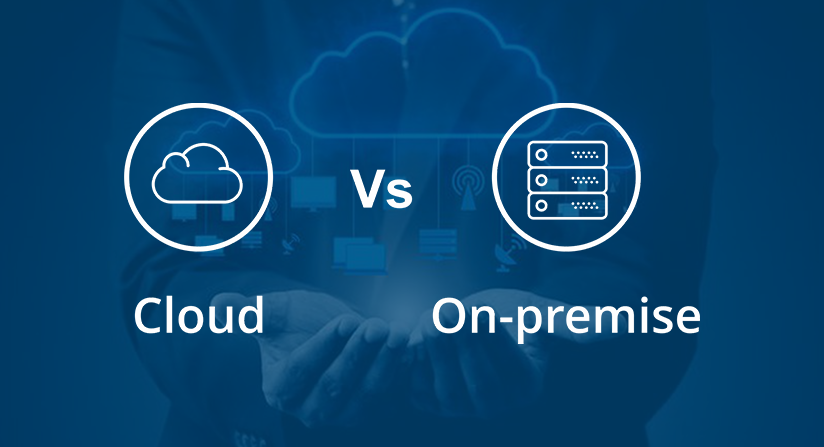
On-Premise vs Cloud ERP: Key Differences, Pros, Cons & How to Choose Enterprise Resource Planning (ERP) systems are necessary systems that would combine major business processes, which include finance, inventory, sales, and HR into one system. The modern business is in a serious dilemma on whether to use on-premise ERP software or cloud-based ERP systems. It is important to know their differences and advantages, as well as their limitations to make the best choice in favor of your organization. This manual contains a detailed discussion of Cloud ERP vs on-premise ERP comparison, which can assist companies to find out which ERP deployment models are best-suited. What Is ERP? ERP or Enterprise Resource Planning is a software that is meant to automate and simplify the main business processes. ERP systems integrate all data in a centralized system, which is available in real time, and thus has been used in financial management, supply chain optimization, and decision making. The ERP implementation may either be on-site on-premise systems or cloud deployment, both having advantages and challenges. What Is On-Premise ERP? On-premise ERP is the software that is physically located in the servers of a company, and is administered by the firms IT department. Hardware, software updates, security and maintenance are under the organization. This model gives complete data control, customization, and it can be integrated with the existing legacy systems. Advantages of on-premise ERP Complete control of information: Company sensitive data remain in-house. Customizability: Customize workflows and reports to business needs. Integration with legacy systems: Easier to be attached to other existing infrastructure. Long-term predictability of costs: Although not recurring subscriptions, fixed licensing costs. What Is Cloud ERP? Cloud ERP is available on servers of the vendor and is accessed through the internet. The service is subscribed by businesses and tends to be billed either on a monthly or annual fee, and the maintenance, security, and backups are handled by the provider. Cloud ERP systems are very flexible and scalable and thus gaining popularity in the contemporary business world. Benefits of Cloud ERP Reduced initial expenses: There is no requirement of expensive server hardware or IT professionals. Scalability: Modules and number of users can be easily added as the business expands. Accessibility: Anywhere, anywhere with a connection to the internet your ERP is accessible. Automatic updates: The provider deals with software updates and security patches. Quick implementation: Cloud ERP systems may be implemented faster than on-premise systems in some cases. Key Differences: On-Premise vs Cloud ERP Difference between cloud ERP and on-premise ERP is: Hosting On-Premise ERP: It is installed in company servers. Cloud ERP: This is hosted in the cloud of the vendor. Cost On-Premise ERP: Large initial license and hardware fees. Cloud ERP: Low cost initial and subscriptions. Maintenance On-Premise ERP: IT managed on-premise. Cloud ERP: Vendor controlled. Accessibility On-Premise ERP: Can only be limited to office network or in-house servers. Cloud ERP: Can be accessed anywhere as long as one has access to the internet. Customization On-Premise ERP: Highly tailored to meet organization business requirements. Cloud ERP: There are not all SaaS solutions with high customization. Updates On-Premise ERP: Hand updates and periodic maintenance. Cloud ERP: The provider does update automatically. Scalability On-Premise ERP: This is based on the available hardware and IT resources. Cloud ERP: It is easily scalable; adding users, modules, or storage. This explicit contrast between Cloud ERP and On-Premise ERP assists companies in determining control, flexibility, and cost variables in selecting the appropriate model of ERP deployment. Book Free Demo Which Businesses Should Choose On-Premise ERP? On premise ERP is suitable in those companies that: Are stringent with data security or compliance issues. Demand high levels of workflow customization. Like long-term predictability of cost, rather than subscription. Devoted IT units to handle servers and updates. On-premise ERP can be useful in such industries as finance, government, and manufacturing because of these needs. Which Businesses Should Choose Cloud ERP? Cloud ERP can be used by companies that: Desire low initial investment and fixed monthly expenses. Require mobile access and connectivity. Demand quick deployment and automatic application updates. Need to have scalable solutions to expand rapidly without IT overhead. Cloud ERP is flexible and easy to use, which is why it is more accepted by startups, SMBs, and companies that have adopted digital transformation. How to Decide the Right ERP for Your Business? In making a decision between on-premise and cloud ERP, one should consider the following: Budget: Are you willing to spend high at the beginning or do you want to use subscription? IT structure: Do you have an internal IT that handles servers and updates? Data security: Data security is there any strict compliance or regulatory requirement? Scalability requirement: Does your business require scalability and flexibility? Customization needs: Do you require any custom workflows or integrations? Implementation schedule: What is your hurry to get the ERP implemented? An attentive analysis of these factors will help you to select the most appropriate ERP deployment model to use in your organization. Conclusion On-premise ERP software and ERP cloud solutions have their pros and cons. On-premise ERP is more controlled, secured and customizable whereas cloud ERP is more flexible, scaled and less expensive to set up. The most important thing to do in order to choose the appropriate ERP system is to know what your business needs, budget, and long-term goals are. These factors can be properly considered to help the organizations simplify operations, improve productivity and facilitate growth with the help of the appropriate ERP solution. FAQs What is the primary dissimilarity between on-premise and cloud ERP? On-premise ERP is deployed and operated in company servers and gives complete control of it, whereas cloud ERP is hosted and accessed online and is scalable and incurs lower initial costs. Which is the most suitable ERP to use by small enterprises? Small businesses tend to find cloud ERP more suitable because it is cheaper to start up, more scalable and does not need much IT maintenance. Does the business

Labs need to be well managed in terms of equipment and inventory to ensure precision and efficiency. Asset management software in the laboratory is the central point where lab tracking, scheduling maintenance and resource management are handled. Laboratory equipment management system decreases time out, enhances efficiency, and compliance. Labs can track assets live with such features as the barcode and RFID asset tracking and equipment maintenance software. Digital lab asset management is essential in order to have painstakingly integrated and effectively managed laboratories as the operations become intricate. What Is Lab Asset Management Software? Labs need to manage equipment and inventory efficiently, and this needs to be accurate and productive. Laboratory asset management software is a centralized system that helps in tracking, scheduling maintenance, and management resources. Lab equipment management system minimizes any downtime, enhances efficiency and complies. The labs can track the assets in real time with such functions as barcode and RFID tracking of assets and equipment maintenance software. With the increase in the complexity of operations, digital lab asset management is essential with regard to managing laboratories in an orderly, productive way. Important elements of lab asset management system are: Whereabouts and application of tracking equipment. Checking on asset lifetime and depreciation. Arranging calibration and maintenance. Laboratory inventory and supply management. Production of audit reports and compliance. Through these capabilities, the laboratories can be able to ensure that equipment is always available, maintained as well as in accordance with industry regulations. Why Laboratories Need Asset Management? In the case of laboratories, hundreds or thousands of pieces of equipment are usually processed. The absence of an appropriate lab equipment tracking system may result in a chaotic state of the control over these assets. A digital lab management system allows the staff to monitor all the laboratory assets that they can use to avoid spending time on equipment downtimes and unnecessary acquisitions. The main reasons why laboratories require managing their assets are: Increased visibility of assets: Be aware of the equipment whereabouts at any point in time. Better spare part planning: Plan frequent calibration and services. Less loss of equipment: End up not losing or losing track of instruments. Compliance with the regulations: Keep proper records on inspections and audits. Cost control: To avoid re-buying and unjustified replacements. Through Asset tracking for laboratories, the organizations are in a position to streamline their operations through enhancing the accuracy and accountability. Key Features of Lab Asset Management Software A modern laboratory equipment management system offers a range of features that enable laboratories to effectively monitor and manage their equipment. Important Laboratory management system features include: Asset Tracking These details that are captured in the system are equipment name, location, its owner, purchase date, and history of usage. Barcode and RFID Tracking A large number of laboratory asset tracking systems combine barcode asset tracking of laboratories or RFID asset tracking in laboratories, where equipment can be scanned and tracked in real time. Calibration and Maintenance Arrangement Lab maintenance software assists in the planning of preventive maintenance, calibration, and servicing in order to make equipment accurate. Inventory Management By using laboratory inventory management software, laboratories will be able to track their consumables, reagents, and supplies to avoid shortages. Asset Lifecycle Management Monitor assets in a procurement to retirement process, such as depreciation and replace planning. Reporting and Analytics Produce documentation on asset use, maintenance record and performance to assist in making decisions better. Laboratory Systems Integration Most systems can be interconnected with other features of the laboratory management system like LIMS or quality management systems. Book Free Demo Benefits of Lab Asset Management Software There are several benefits to the use of laboratory asset management software across all laboratories regardless of their size. Key benefits include: Greater efficiency: Automates tasks of asset tracking and management. Less downtime: Makes sure not to postpone maintenance and servicing of equipment. Optimized resource utilization: Laboratories that are part of the Helps optimize their employment of equipment. Cost savings: eliminates unnecessary purchases and lowers maintenance expenses. Improved compliance: Keeps the proper records that are needed during audits and Regulatory Requirements. Decision making based on data: Gives information on the performance of assets and the patterns of their use. The organizations may enhance the effectiveness of operations and reliability of research through the mean of Laboratory asset tracking tools and laboratory equipment maintenance software. Who Uses Lab Asset Management Software? Digital lab asset management solutions have been utilized by many types of organizations to manage their laboratory equipment. Common users include: Universities and research institutes, research laboratories. Hospital and diagnostic center clinical laboratories. Drug research and testing companies. Biotechnology labs engaged in the higher-level scientific research. Laboratory tests of the environment studying samples and materials. Laboratories of food and quality testing. Such organizations rely on laboratory asset management systems that enable them to be sure that equipment is not spoilt, unavailable, or not of a certain standard that meets the industry requirements. How to Choose the Right Lab Asset Management Software? The appropriate laboratory asset management software is selected because it is crucial to have a smooth operation of the laboratories. Organizations are supposed to assess their needs and select a solution that is compatible with their workflow. Among the critiques that shall be considered are: User-friendliness: The software must be user-friendly. Scalability: It must be able to accommodate future expansion and other resources. Integration capabilities: The capability to interface with other laboratory management system capabilities or LIMS. Tracking technology: Barcode asset tracking of labs or RFID asset tracking of laboratories. Maintenance management: Inbuilt lab equipment maintenance software tools of service and calibration scheduling. Reporting opportunities: Advanced analytics and custom reports. Security and compliance: Make sure that the data is protected and that the regulations are met. Assessment of these factors allows laboratories to select a system that will be suitable to their operational needs. Challenges Without Asset Management Software Labs that use manual methods to track assets are usually prone to a number of operational issues. Common
What is Lab Billing Software? A Complete Guide for Diagnostic Laboratories Billing in diagnostic laboratories may be complicated because of a number of tests, insurance, and coding claims, and payment of patient. The manual billing systems usually introduce mistakes, payment delay and administrative burdens. It is at this stage that a laboratory billing system becomes very crucial. Lab billing software computerizes the process of invoicing, coding and insurance handling, and payment tracking to enable the laboratories enhance efficiency and accuracy in financials. This guide will discuss the functionality of billing software, its purpose, advantages, and reasons it is necessary in the present-day diagnostic labs. What is Lab Billing Software? Lab billing software is a dedicated software that is used to handle billing functions in diagnostic and pathology laboratories. It automates the process of invoice creation, test pricing, insurance claims and financial reporting. Also known as: Diagnostic laboratory billing program. Medical laboratory billing software. Pathology lab billing software The primary aim of these tools is to simplify the work of billing, without violating healthcare regulations and coding standards. How Lab Billing Software Works? Lab billing software is an integration with laboratory management systems, and it automates the billing cycle of the test order to payment collection. Typical workflow: Test data of patients is automatically imported. There is use of test pricing and billing codes. Invoices are created as soon as possible. Claims of insurance are handled. Payments are followed and accounted. The software reduces the manual error by automating lab billing and coding, accelerating the revenue cycle. Key Features of Lab Billing Software The current lab billing software has a diverse scope of capabilities aimed at efficiency and compliance. Automated Invoicing Creates invoices in real time. Accepts various billing types. Handles bulk billing Insurance Claim Management On-line filing of claims. Status updates and tracking claims. Denial management tools Coding Support Inbuilt libraries on medical coding. Healthcare billing standard compliance. Reduces coding errors Payment Tracking Follows up patient and insurance payments. Automated reminders Several support payment gateways. Reporting and Analytics Revenue reports Excellent payment monitoring. Financial dashboards These are the building blocks of Automated lab billing system. Benefits of Lab Billing Software The use of lab billing software has operational and financial benefits. Reduced Billing Errors The automation reduces the number of manual errors that are created when pricing and coding and enhances accuracy and compliance. Faster Payments Automated claim process saves time in payment and enhances cash flow. Improved Efficiency Employees have to spend less time in paperwork and more time in the main laboratory activities. Increased Financial Transparency The sophisticated reporting systems give an overview of revenue, pending payments, and dynamics. Scalability Software can expand with your lab requirements with hundreds of tests per day or thousands per day. The following Lab billing software benefits make it a must-have investment to the expanding labs. Who Can Use Lab Billing Software? Lab billing software belongs to the range of the healthcare providers and diagnostic facilities. Primary users include: Diagnostic laboratories Pathology labs Hospital labs Radiology centers Research laboratories Multi-location lab networks Diagnostic lab billing software can be used in both small clinics and large diagnostic chains based on their complexity in billing. Book Your Free Marketing Consultation Important Factors to Consider Before Choosing Lab Billing Software There is a variety of factors to consider when choosing the appropriate software to bill. Integration Capabilities Ensure compatibility with: Laboratory Information Systems (LIS). EHR/EMR platforms Accounting tools Compliance and Security Search to find software that can support: Medical data security regulations. Secure payment processing Audit trails Ease of Use The interfaces are easy to use and enhance the productivity of the staff. Customization Options Choose software that allows: Custom billing rules Flexible invoicing formats Pricing adjustments Cost and ROI Price lab billing software depending on: The subscription vs single cost. Hidden fees Long-term savings Challenges Solved by Lab Billing Software The paper-based billing systems pose some difficulties that can be overcome with the help of software. Common issues solved: Billing inaccuracies Delayed insurance claims Revenue leakage Manual data entry errors The absence of financial transparency. Complicated laboratory billing and coding. With automated workflow, labs would be able to get rid of administrative bottlenecks and improve financial results. Future Trends in Lab Billing Software Automation, AI, and integration are the trendsetters of the future of lab billing software. AI-Powered Billing Artificial intelligence will: Predict claim approvals Detect billing errors Automate denial management Cloud-Based Platforms Cloud solutions offer: Remote access Lower infrastructure costs Real-time updates Integrated Healthcare Ecosystems The next generation platforms will combine billing with: LIS and LIMS Patient portals Telehealth platforms Smart Analytics Sophisticated analytics will assist labs: Forecast revenue Optimize pricing Improve financial planning These innovations will transform the manner within which medical lab invoicing software works in the contemporary healthcare. Conclusion Lab billing software is an important application that can be used by diagnostic laboratories in order to optimize operations and enhance financial precision. These systems change the way laboratories manage billing and revenue cycles since they help automate invoicing, insurance claim management, and real-time analytics. Acting either as a small pathology laboratory or a network of multiple diagnostic centers, implementing a sound laboratory billing system can save mistakes, speed up the processing, and increase the efficiency of the work. With the development of technology, more intelligent and integrated billing systems will still define the future of health care finance. FAQs What is the primary objective of the lab billing software? The key aim of laboratory billing system is to automatize invoicing, insurance claims and payment follow-up and maintain correct lab billing and coding. Is the small diagnostic lab appropriate to use lab billing software? Yes, diagnostic lab billing software comes in scalable versions which can support small clinics and large laboratory networks. What is the price of lab billing software? Lab billing software pricing is offered in different features, deployment type (including cloud and on-premise), and the size of the lab and is usually priced at affordable monthly subscriptions to
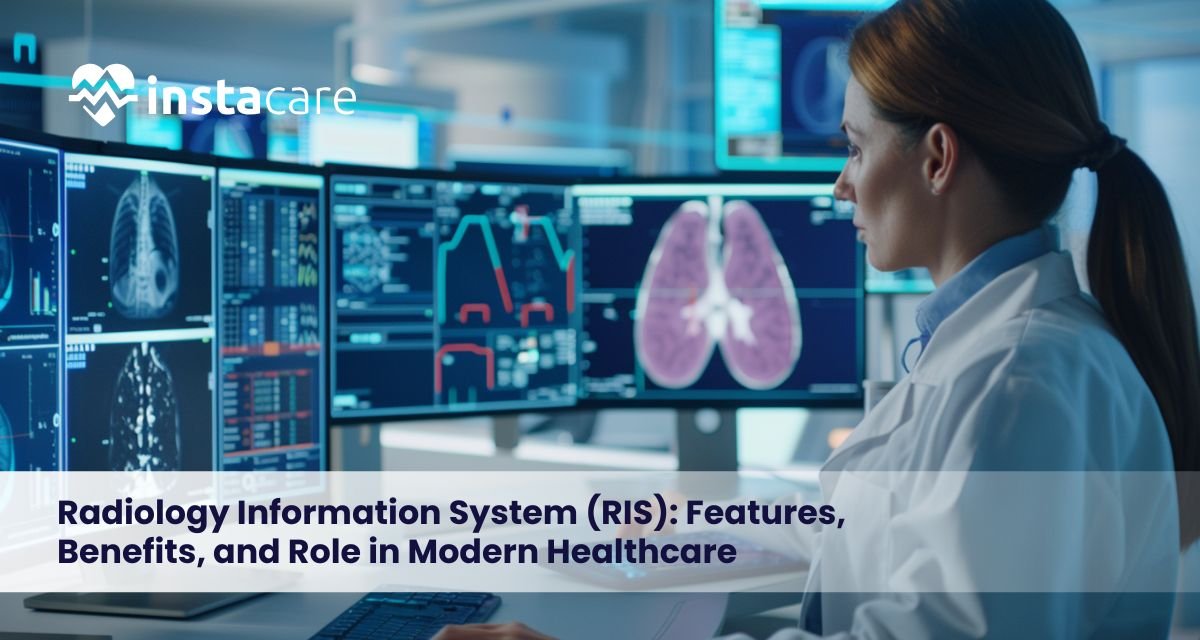
Radiology Information System (RIS): Features, Benefits, and Role in Modern Healthcare The way healthcare is conducted nowadays depends on effective imaging processes. With increased volume of diagnostic imaging, radiology departments require intelligent systems that coordinate, report, and store patient information. The Radiology Information System (RIS) is a key element in enhancing efficiency, precision, and productivity in imaging departments. The paper examines RIS software, its main characteristics, advantages, implementation issues, and its changing role in the healthcare of today. What is a Radiology Information System (RIS)? A Radiology Information System (RIS) refers to a special application that is used to organize and automate the work of radiology. It facilitates administration and clinical processes, such as scheduling, patient tracking, reporting, and billing. RIS in healthcare is the pillar of radiology workflow management since it provides smooth coordination among radiologists, technicians, and other healthcare providers. It combines patient records, imaging orders, and reports into a single system, thus lessening work by hand and enhancing accuracy. Key Functions of a Radiology Information System RIS systems deal with various activities that can improve the efficiency of operations. Key radiology information system features include: Registration and Demographics of patients. Scheduling and resource allocation of appointments. Radiology reporting system management. Status and workflow tracking. Billing and coding support The radiology department software is necessary to manage the large volumes of imaging using these functions. Core Features of RIS The current RIS software has advanced functionalities that aim at enhanced accuracy in the workflow and data. Workflow Automation and Scheduling Radiology scheduling software will make sure that imaging equipment and staff will be used optimally. Robotic scheduling ensures that there are no disputes and the patient wait period is minimized. Patient Data Management RIS modules are where patient history, imaging orders and clinical notes are stored. This centralized method eliminates duplication of data and enhances coordination. Reporting and Documentation Radiology reporting system facilitates a more systematic reporting, voice recognition, and template that can be used to achieve consistent results. Billing and Financial Integration RIS assists in coding, billing, and insurance processing that enhances the management of revenue cycle and hospital financial results. Analytics and Reporting High-tech dashboards assist administrators to research the trends in workflow efficiency and productivity to analyse healthcare investment. Cloud-Based RIS RIS solutions on clouds are scalable, accessible remotely, and less expensive in terms of the IT infrastructure, which is why they are the most suitable ones to display in the context of the modern healthcare organization. RIS vs PACS: Understanding the Difference RIS and PACS are frequently mixed and confused yet have other uses. RIS is concerned with the administrative and workflow. PACS is concerned with storage and retrieval of medical images. RIS and medical imaging information system such as PACS form an entire digital radiology ecosystem. RIS is in charge of data flow and scheduling whereas PACS is in charge of image storage and viewing. Benefits of Implementing RIS Greater Workflow Effectiveness RIS in healthcare automates routine operations and enhances interdepartmental communication to minimize delay and errors. Enhanced Patient Care Rapid scheduling and reporting enhance the diagnosis and treatment results. Better Data Accuracy The patient data is centralized, leading to less duplication and transcription mistakes. Financial Optimization RIS enhances the financial performance and cost-efficient operating of hospitals by simplifying the billing and use of resources. Regulatory Compliance RIS aids in audit trails, data protection and healthcare compliance. Integration with Healthcare Systems The ability to integrate with other healthcare platforms is one of the most important benefits of RIS. Electronic Health Records (EHR). Hospital Information Systems (HIT). Laboratory Information Systems (LIS) Clinic Management Software PACS and imaging tools Such integration establishes one cohesive ecosystem in which information moves through it smoothly enhancing clinical decision making and lessening administrative load. Challenges in RIS Implementation RIS implementation may be challenging despite its advantages. High Initial Costs Implementation of RIS needs to invest in software, training and infrastructure. Integration Complexity RIS requires technical integration with the existing healthcare systems. Staff Training Radiologists and technicians might need some time to adapt to new working procedures. Data Migration Risks When converting old data into a new system, it is necessary to plan on how to avoid the loss of data. Nevertheless, these issues can be addressed with minimal difficulties given correct planning and assistance of the vendor. Book Your Free Marketing Consultation Future Trends in Radiology Information Systems Innovation and digital transformation are the key to the future of RIS. AI-Powered Automation Artificial intelligence will boost the accuracy of reporting and optimization of the workflow. Cloud Adoption Scalability and cost economy will ensure cloud-based RIS keeps on growing. Interoperability Advancements The better integration standards will help exchange the data across the systems more smoothly. Predictive Analytics Supply-side analytics will assist healthcare providers to predict the demand of imaging and enhance resource allocation. Such developments will give RIS modules more strength and re-invent the software capabilities of the radiology department. Conclusion Radiology Information System is a very important part of the modern healthcare infrastructure. RIS software supports the management of radiology workflow and enhances clinical outcomes through the scheduling and reporting as well as billing and analytics. With the current digitization of healthcare, the optimal best radiology information system can be an important factor in improving operational efficiency, patient care, and financial performance. Organizations that invest in advanced RIS solutions will be better positioned to meet increasing imaging needs and evolving healthcare expectations. Frequently Asked Questions What is RIS software used for? Radiology workflow is controlled with the help of RIS software that provides scheduling, patient tracking, reporting, and billing that ensures the efficient operation of an imaging department. How does RIS differ from PACS? RIS it controls administrative and workflow operations whereas PACS has a store of medical images and displays them. The two systems collaborate to produce full imaging control. What does cloud-based RIS have to offer? RIS in the cloud also provides scalability, remote access, reduced cost of infrastructure, and enhanced data security.
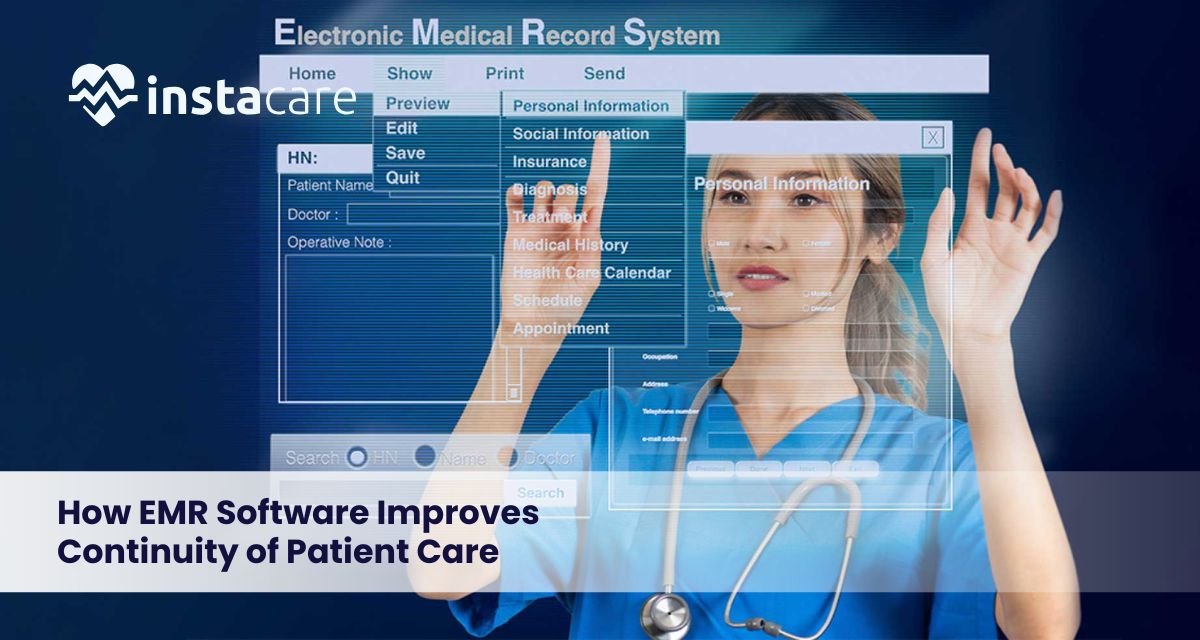
How EMR Software Improves Continuity of Patient Care Patient continuity of care is a critical aspect to provide safe, effective, and patient-centred care. When paper files or disparate systems contain medical information, gaps in care, delays, and errors are more likely to occur. In this respect, electronic medical records in healthcare have a transformative role. EMR software helps providers keep patient records complete, accurate, and accessible, facilitating transfers and improving coordination throughout the care process. What Is EMR Software? EMR (Electronic medical record) software is a system used to store, maintain, and update patient medical records in a medical institution. EMRs provide real-time access to clinical information, unlike paper charts, enabling informed decision-making. EMR software generally consists of: Patient demographics and medical history. Diagnoses and treatment plans. Medications and allergies Lab findings and imaging findings. Advancements and medical records. EMRs are the basis of enhanced patient care continuity through centralization of patient information. How EMR Software Supports Continuity of Patient Care Centralized Patient Records The development of a unique and single patient record is one of the most significant EMR software advantages. Up-to-date information is accessible to all providers involved in a patient’s care. This helps: Eliminate unnecessary tests and procedures. Minimise medical errors through absent data. Ensure there are consistent treatment plans across departments. Improved Care Coordination EMR and care coordination are synonymous. EMRs enable smooth communication in case of two or more healthcare professionals, which include primary care doctors, specialists, nurses, and pharmacists. The benefits of the coordination are: Referral and consultation note access. Real-time communication on treatment change. Improved transfers in an admission or discharge. This cooperation makes the care constant even in a case of change of providers. Better Clinical Decision-Making EMRs support clinical decision-making by providing patients with their full medical history in a short period. Practitioners can consult prior treatment, test results, and findings before making new decisions. This leads to: More accurate diagnoses Individualized care plans. Less risk of adverse drug reactions. Consequently, the EMR effect on the patient outcomes. Enhanced Patient Safety Continuity of care is closely linked with the patient safety. EMRs also contain inbuilt warnings and reminders that prevent clinicians to make errors. Safety features common to them are: Alerts on allergy and medication interaction. Preventive care reminders Unusual lab result reports. These tools assist the providers to provide safer and more reliable care in the long run. Faster Access to Information When there is an emergency or a situation that requires urgent care, time is an issue. EMRs provide the ability to get patient records in real time, even during off clinic hours. Benefits of faster access: Faster treatment and diagnosis. Less time wastage in care provision. Improved performance in the face of crisis. This instant accessibility enhances continuity, particularly in complex cases. Book Free Demo Benefits of EMR Software for Healthcare Providers and Organizations For Healthcare Providers Reduced administration and paperwork. Additional time on direct interaction with the patient. Enhanced interaction with care teams. Increased trust in clinical processes. For Healthcare Organizations Standardized processes of care. Enhanced efficiency of workflow. The improved adherence to regulations. Increased scores on patient satisfaction. Overall, these EMR software advantages can help healthcare systems deliver uninterrupted, high-quality care. Challenges and Best Practices for EMR Implementation Common Challenges Although EMR software benefits are numerous, it can be difficult to implement because it may be associated with the following challenges: Staff resistance to change. First training and training curves. Paper or legacy system data migration. Technical and cost requirements. Best Practices for Successful EMR Implementation In order to benefit the most and enable continuity of care, organizations must: Get clinicians involved in system selection and design. Conduct extensive employee education. Implement EMRs in phases Assure accuracy and security of data. On-going workflow optimization. These best practices enable the healthcare providers to realize the full value of electronic medical records in healthcare. Conclusion EMR software is important for enhancing continuity of patient care through accurate, accessible, and coordinated medical data. EMRs positively impact all phases of the care process by improving care coordination, patient safety, and clinical decision-making. When properly implemented, EMRs can enhance provider efficiency and improve health outcomes, among other benefits. Frequently Asked Questions What advantages does the EMR software have in enhancing continuity of care? EMR software enhances continuity and it offers benefits in that it centralizes patient records so that care coordination is possible between providers and also that it provides a consistent access to accurate medical information throughout the care journey of the patient. How can EMR be used in care coordination? EMR and care coordination collaborate as they enable various healthcare professionals to share real-time updates, referrals, and treatment plans to eliminate communication breakdowns and delays in care. Does EMR software have any effects on patient outcomes? Yes, the EMR impact on patient outcomes is important. EMRs minimize medical errors, assist the making of informed decisions, and improve the safety of patients, resulting in more efficient and consistent care.
Hospital ERP Software: Features, Benefits, and Why Hospitals Need It There are also enormous volumes of data, intricate processes, and high compliance demands that healthcare organizations have to deal with today. Lack of automation in the management of clinical, administrative, and financial operations or their functionality using disconnected systems are likely to result in inefficiencies and errors. ERP system in a hospital offers an integrated system which assists hospitals to stream down operations, enhance patient care, and uphold financial control. This guide describes the nature of hospital ERP software, its main features, advantages and why it has become a necessity to the current hospitals. What Is Hospital ERP Software? Hospital ERP software is a type of integrated healthcare ERP that is used to handle both clinical and non-clinical hospital activities. An ERP software does not concentrate on the patient records as in the case of the traditional hospital information system but integrates departments like finance, inventory, human resources, billing and procurement into one system. Hospital management ERP will enable instant exchange of data between departments to provide the administrators with the necessary insight to make a decision and minimize bottlenecks in operations. Key Hospital ERP Modules An effective ERP system is a hospital system that consists of several modules that operate in harmony. Typical hospital ERP modules include: Billing and Finance Module: Manages patient billing, insurance claims, revenue cycle and financial reporting. Inventory Management Module: Manages medical supplies, pharmaceuticals and equipment to prevent shortages or overstocking. Human Resource Management: It deals with the staff schedule, payroll, attendance, and performance tracking. Procurement and Supply Chain: Automates Vendors management and purchase orders. Patient Administration: Assists with registration, admissions and discharge. These are modules that make a hospital information management system work. Essential Hospital ERP Features ERP characteristics of modern hospitals are engineered to enhance efficiency, precision and conformity. Key hospital ERP features include: Data management of all departments is centralized. Real time reporting and analytics. Data security role access. Manual workflow automation. Healthcare regulations compliance. Clinical system integration. A cloud-based hospital ERP is also scalable, has access remotely and is automatic. Benefits of Hospital ERP Software The adoption of a hospital ERP solution provides quantifiable returns in the operations of the hospital. The key hospital ERP benefits are: Efficiency: Automation of operations saves on paperwork and administrative delays. Better Financial Control: Better billing and cost monitoring are good to minimise revenue leakage. Inventory management Hospital: hospital ERP for inventory management is the best that guarantees optimal inventory levels and minimizes wastage. Improved Decision-Making: Live dashboards and reports aid in strategic planning. Better patient experience: Reduced time spent by patients in waiting lines and streamlined processes. In sum, ERP software in the medical field aids in hospitals providing quality care and at the same time being financially stable. Hospital ERP for Billing and Finance hospital ERP for billing and finance are one of the most important applications. This module automates: Invoicing and tracking of payment to the patients. Claims processing of insurance. Revenue cycle management Compliance reporting and financial audits. Hospitals can enhance the cash flow and patient confidence by minimizing billing errors and delays. Hospital ERP Integration with EMR To ensure smooth healthcare services, hospital ERP software must be integrated with EMR systems. Integration enables administrative and clinical data to pass across systems without problems, which ensure: Proper billing of the patients associated with clinical services. Increased co-ordination of medical and administrative teams. Less duplication and errors of data. Such an integration overcomes the divide between patient care and hospital operations. Book Free Demo Cloud-Based vs On-Premise Hospital ERP Hospitals are left with the option of using the conventional on-premise system or cloud-based hospital ERP system. Cloud ERP benefits of hospitals include: Lower upfront costs Faster deployment Scalability and remote access. Backups and update automatically. Premises-based solutions can be more controlling, but usually more expensive to maintain and run infrastructure. Hospital ERP Implementation Challenges The hospital ERP implementation is also complicated, although positive. Common challenges include: High initial investment Staff resistance to change Migration of data in legacy systems. Training requirements These issues can be greatly mitigated through proper planning, support of the vendors and a gradual implementation. Hospital ERP Software Pricing The hospital ERP software pricing differ according to: Number of users and modules Cloud or on-premise deployment type. Customization requirements Vendor maintenance and support. Small hospitals can choose modular or cloud ERP solution in order to manage the costs whereas big hospitals tend to invest in the fully customized system. Why Hospitals Need ERP Software Today Hospitals are under pressure of providing quality care at low costs and make sure they comply. ERP system in a hospital assists in a health organization: Integrate disjointed systems. Enhance transparency of operations. Increase patient satisfaction. Support long-term growth ERP software is no longer a luxury in a competitive healthcare setting; it is a strategic requirement. Conclusion ERP software in hospitals is crucial in contemporary healthcare management. Hospital ERP solutions enable hospitals to operate more efficiently by combining finance, inventory, HR, and administrative functions on a single platform, improving patient care. ERP software can revolutionize hospital processes and help deliver healthcare sustainably with the appropriate implementation strategy. Frequently Asked Questions What does an ERP system of any hospital do? ERP system in a hospital is applied to execute administrative, financial, and operational management processes in a hospital. It combines billing, inventory management, human resources, and reporting functions into a single platform and assists hospitals in becoming more efficient, minimize errors, and have superior control over the daily operations. What is the difference between healthcare ERP software and a hospital information system (HIS)? Healthcare ERP software is primarily focused on non-clinical processes, such as finance, procurement, and workforce management, whereas a hospital information system is focused on clinical information, such as patient records and treatments. In case of hospital ERP integration with EMR or HIS, administrative and clinical workflow integrate with each other without any disruption. Should small hospitals use cloud-based hospital ERP software?
Pharmacy Automation: Transforming Medication Management and Patient Safety Pharmaceutical automation is transforming how medications are stored, dispensed, and managed in hospitals and retail pharmacies. As the need for precision, speed, and patient safety increases, automated pharmacy systems are becoming a vital component of contemporary healthcare. The integration of technology and pharmacy workflows could help healthcare organizations optimize workflows, minimize errors, and improve patient care outcomes. What Is Pharmacy Automation? Pharmacy automation is the application of technology and machinery in managing the routine pharmacy activities, including dispensing of medications, managing inventory and tracking workflow. The pharmacy automation software reduces human error and maximizes efficiency compared to the traditional manual systems, which have a high probability of human error. Some of the important pharmacy automation areas include: Dispensing of drugs automatically. Electronic health record (EHR) integration. Pharmacy inventory automation tracking and management. Tracking the drug use and expiration. Hospital pharmacy automation will help pharmacists be more involved with patient counselling and clinical services than help with repetitive, manual work. Types of Pharmacy Automation Systems Various automation systems can be implemented in pharmacies based on pharmacy size, workload, and patient needs. Common types include: Robotic Pharmacy Systems Medication dispensing, packaging, and labelling are performed with great precision by robots. This minimizes errors and does not lead to incorrect patient dosages. Robotic pharmacy systems are especially appropriate in hospitals and pharmacies with high volumes. Automated Medication Dispensing Cabinets These automated medication dispensing shelves are safe storage units and contain monitored access to drugs. They are common in the hospital wards so that the correct patient gets the correct medication. Automobile Pharmacy Software Prescription order, inventory tracking and generation systems which are digital. Automation of pharmacy workflow enhances communication between the pharmacy staff and other medical professionals. Inventory systems are being automated These pharmacy automation solutions keep track of the level of stock, expiry dates, and the reorders. Automation in pharmacy minimizes wastage, and maintains constant supplies of medication. Key Benefits of Pharmacy Automation Pharmacy automation benefits are several to both the patients and the medical professionals. Increased Accuracy: Automated systems reduce medication errors during dispensing. Time Saving: Activities such as counting, labelling, and stocking are completed more quickly. Better Patient Safety: Guarantees proper medication, dosage and timing. Simplified Process: Pharmacists spend less time attending to patients and more time on manual tasks. Inventory Optimization: Automated tracking helps prevent shortages and overstocking. Compliance with regulations: The systems support the process of maintaining accurate records for audits and reporting. All in all, pharmacy automation enhances the clinical safety and operational performance of the healthcare institutions. Book Free Demo Impact on Pharmacists and Staff The automation replaces pharmacists in performing repetitive functions but does not eliminate jobs. Staff can focus on: Counseling and medication education of the patients. Clinical decision support Safety control and quality control. The optimization of pharmacy activities. Through pharmacy dispensing automation, pharmacists will have more time to focus on the important activities, which results in increased job satisfaction and improved patient outcomes. Challenges and Considerations Pharmacy automation has its advantages, but man is also associated with difficulties: Large Start-up: Automated systems are not cheap to acquire and install. Training Needs: The personnel should be trained on how to use new systems. Technical Maintenance: Machines and software should be serviced and updated on a regular basis. Integration Problems: It may be difficult to make sure that the EHR is compatible with the existing hospital and EHR system. The choice of pharmacy automation options should consider costs, effect on workflow, and staff preparedness by healthcare providers. Pharmacy Automation and Patient Experience Direct patient experience improvements are achieved through automation by offering: Quick filling of prescription orders. Less time spent in the pharmacy lobby. Reduction of medication errors. Effective labelling and monitoring of drugs. Patients receive safer, more efficient service, and pharmacists have the opportunity to take a greater role in clinical care, which will increase trust and satisfaction. Future Trends in Pharmacy Automation Pharmacy automation has a bright future, and the innovations will improve the efficiency and safety of the patients. Emerging trends include: Dispensing and decision support based on AI. Remote management pharmacy automation software in the cloud. State-of-the-art robotics in customised medication packaging. Inventory optimization predictive analytics. Outpatient and retail pharmacy automation. These inventions will keep on advancing automation of pharmacy workflow as well as intensifying the role of technology in healthcare provision. Choosing the Right Pharmacy Automation Solution The appropriate system will be selected based on pharmacy size, patient volume, and clinical objectives. Consider the following: Automation required: dispensing cabinets, robots, or software. Interoperability with the current EHR and pharmacy management system. Reliability of the vendors, training and support services. Experience vs. anticipated cost-benefits of operation. Future growth: Scalability. By considering these aspects critically, healthcare organizations can select automated pharmacy systems that ensure the highest level of efficiency and safety. Conclusion Automation in pharmacy is transforming how medications are handled by improving accuracy, efficiency, and patient safety. Since the hospital pharmacy automation up to the small retail clinics, pharmacy automation software and robotic systems are adopted to decrease the errors, optimize workflow optimization, and relieve pharmacists to concentrate on patient care. With technology on the rise, automated pharmacies will be at a better place to support the increasing needs of modern healthcare and offer safer, faster, and more reliable services. FAQs What does automation of pharmacies offer? The primary advantage is enhanced patient safety via accurate automated dispensing of medication and minimized chances of a human error, besides the optimization of the pharmacy operations. Do small clinics need robotic pharmacy systems? Yes, but smaller clinics may choose smaller pharmacy automation systems or software-driven systems to manage inventory and prescriptions effectively without a large initial investment. What are the benefits of automating the pharmacy workflow? Prescription management, inventory tracking, and integration with EHR systems, pharmacy workflow automation enable staff to focus less on manual tasks and more on patient care.