

Last updated on Monday, 22, December, 2025
Table of Contents
Virtual Reality Exposure Therapy: A Breakthrough in Mental Health Treatment
There has been a rapid development in the field of mental health treatment through the incorporation of superior technologies. One of these new innovations has been the Virtual Reality Exposure Therapy (VRET), which has become a revolutionary way of treating anxiety-related and trauma-based conditions. VRET combines psychological principles with immersive digital worlds to provide clinicians with the ability to provide controlled, repeatable, and measurable therapeutic experiences. VRET is also transforming the models of delivering exposure-based interventions as part of greater Digital mental health therapies and is providing easier, more accurate, and personalized therapy.
What Is Virtual Reality Exposure Therapy?
Virtual Reality Exposure Therapy is a type of psychotherapy that involves the use of immersive and computer-generated environments to subject the patient to anxiety stimuli in a safe and controlled environment. It is a continuation of the old-fashioned exposure therapy based on cognitive-behavioral, and it is generally known as Exposure therapy using virtual reality.
In contrast to the imagination-based or in-vivo exposure, VRET allows patients to undergo realistic simulations, which are very similar to real-world situations. This is especially useful in mental health because Virtual reality therapy in mental health allows people to create an image of situations they fear or find themselves in unprotected locations, making it a recognized form of Virtual reality psychotherapy.
How Virtual Reality Exposure Therapy Works?
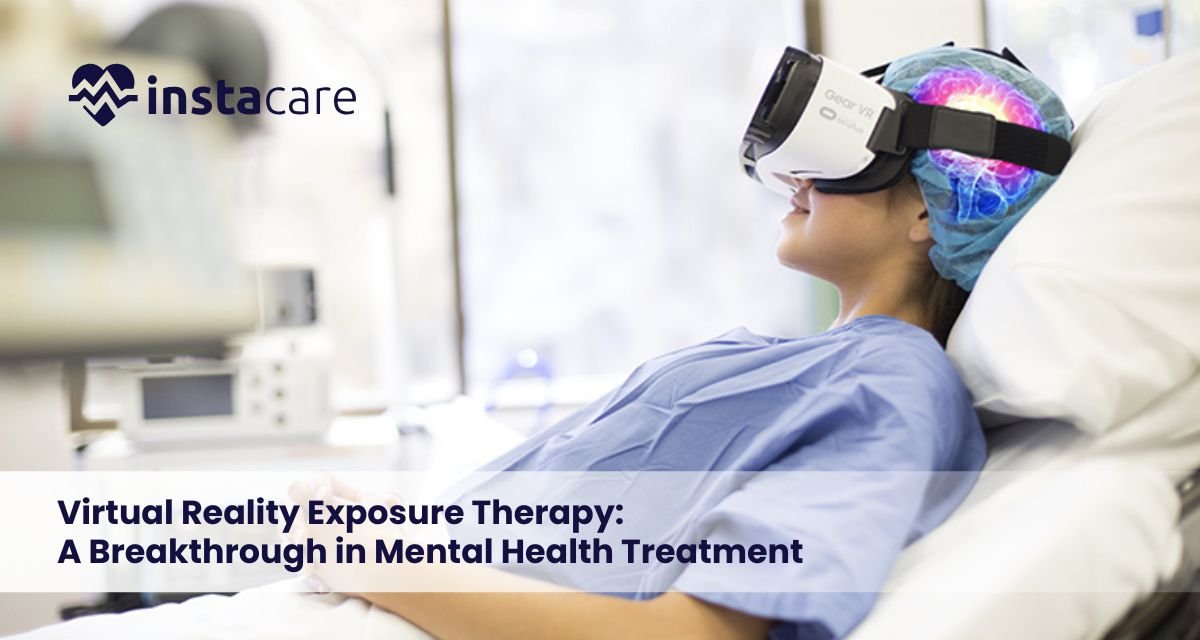
VRET is performed with the help of head-mounted displays and senses that make a patient experience virtual environments. In therapy, the clinicians progressively present fear-inducing stimuli as they take patients through coping mechanisms that include breathing, cognitive restructuring and emotional regulation.
The treatment is usually made on a hierarchy-based exposure model. Patients begin with lightly wrongful situations and as they become more tolerant, they advance to more difficult situations. This method corresponds to Technology-assisted exposure therapy, which provides clinicians with fine control of the intensity, duration, and repetition of stimulus.
Conditions Treated with VRET
VRET has proved to be effective in a broad scope of psychological disorders especially in anxiety and disorders related to trauma. Some of the common uses are:
- VR therapy for anxiety disorders, including generalized and situational anxiety
- VR treatment for phobias, such as fear of heights or flying
- Virtual reality PTSD therapy for trauma survivors, including veterans and accident victims
- Simulated social interactions through VR therapy for social anxiety
- VR therapy for panic disorder, focusing on exposure to physical sensations and triggers
Such applications illustrate the growing Clinical applications of virtual reality in psychology, particularly where avoidance behavior is prominent.
The Science Behind VRET
VRET is based on the neuropsychology and the theory of learning. Exposure therapy operates in the form of habituation, extinction learning and cognitive restructuring. The virtual settings stimulate the neuro-circuitry that is connected with the fear arousal in real life, allowing emotional processing and desensitization.
According to studies of functional imaging, VRET affects brain areas that are a part of fear regulation, including the amygdala and prefrontal cortex. This neurobiological interaction justifies its application in psychotherapy in virtual reality where therapeutic learning is generalized into real life.
Benefits of Virtual Reality Exposure Therapy
VRET has many benefits compared to conventional exposure-based interventions:
- Great degree of control over therapeutic stimuli
- Secure and non-confidential treatment setting
- Closer interaction with patients via immersion
- Recurrent and personalized sessions
- Less logistical hindrance than in in-vivo exposure
These strengths highlight the overall VR therapy benefits and effectiveness, particularly for patients who avoid or discontinue traditional therapy, and support discussions around VR therapy vs traditional exposure therapy.
Book Your Free Marketing Consultation
Effectiveness and Research Findings
The effectiveness of VRET in various disorders has always been supported by clinical research. The results of meta-analyses demonstrate similar or better results than those of traditional exposure therapy, especially in the field of phobias, PTSD, and social anxiety.
Research has shown that VR therapy, compared to conventional exposure therapy, will more likely lead to increased patient acceptance and reduced drop-out rates. Also, the benefits of treatment are long-term, implying lasting therapeutic effects. The accumulation of evidence makes VRET an evidence-based and valid intervention.
What a VRET Session Looks Like
One of the standard VRET sessions is assessment and psychoeducation. The therapist illustrates the virtual world, goals and coping skills. Patients next put on a VR headset and are taken into a simulated scenario in accordance with his/her treatment objectives.
In the process of exposure, therapists observe physiological reactions and emotions in real time. VR cognitive behavioral therapy (CBT) techniques are frequently used in sessions and are a combination of exposure and cognitive reframing and behavioral skills training. Debriefing after the session supports learning and monitors progress.
Challenges and Limitations
- The lack of access to VR tools and specialized software can be expensive, making it less available in specific clinical settings.
- A small group of patients may experience motion sickness, eye strain, or discomfort.
- Ethical concerns include the privacy of patient data within digital platforms.
- Informed consent is essential due to the immersive nature of exposure.
- Therapist training and technical competency are required.
- VRET may not be suitable for individuals with severe dissociation or neurological conditions.
These factors must be addressed to ensure the safe and ethical use of Immersive therapy for anxiety.
Future of Virtual Reality in Mental Health
The future of VRET is directly related to advancements in artificial intelligence, wearable sensors, and telehealth integration. Trends include personalized virtual environments and adaptive scenarios.
With greater accessibility, virtual reality therapy in mental health is expected to expand beyond specialty clinics, reinforcing its role in modern psychiatric and psychological care systems.
Conclusion
Virtual Reality Exposure Therapy represents a significant advancement in mental health care, integrating psychological science with immersive technology. It enhances treatment precision and patient engagement through controlled exposure experiences. As evidence grows, VRET continues to strengthen its position within digital mental health care, offering scalable and personalized solutions.
FAQs
Is Virtual Reality Exposure Therapy safe?
Yes, when delivered by trained professionals, VRET is considered safe and effective.
What is the duration of VRET treatment?
Treatment typically lasts between 6 and 12 structured sessions, depending on the condition.
Is VRET an alternative to traditional therapy?
VRET complements traditional approaches and is often integrated into comprehensive treatment plans.