Last updated on Wednesday, 8, April, 2026
Last Updated on 5 hours ago by Ahmed Usman
Table of Contents
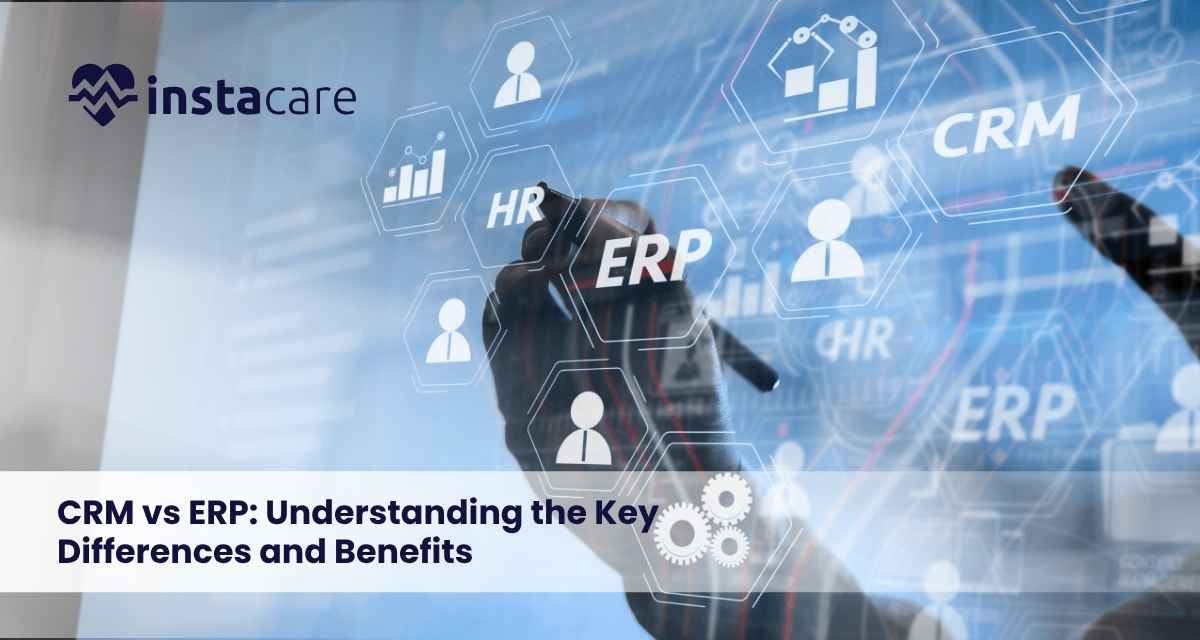
CRM vs ERP: Understanding the Key Differences and Benefits
Customer Relationship Management (CRM) and Enterprise Resource Planning (ERP) systems are two very important software systems that organizations are extensively using in the current business environment to facilitate operations and enhance productivity in the business environment that is rapidly changing. Though the two systems have common benefits, they are designed to address various business operations and are based on different aspects.
By being aware of the major distinctions between CRM vs ERP systems, businesses can make informed choices regarding which of the two systems fits the most in terms of their requirements.
What is CRM Software?
Customer Relationship Management (CRM) software is a program by which companies manage and analyze the interactions and data with customers during the customer lifecycle. Its primary aim is to expand customer relationships, increase sales and customer service. CRM systems are used to simplify business processes including the generation of leads, sales, customer support, and marketing.
Key Features of CRM Systems:
- Customer Data Management: This is the central storage of information about customers, including their contact details, purchases, and logs of their interactions.
- Sales Automation: Lead tracking, Sales follow-ups and sales pipeline automation.
- Marketing Automation: Marketing campaign, segmentation and email marketing.
- Customer Support: Customer service should be enhanced with easy access to customer information and tracking of the issues.
- Analytics and Reporting: Live sales performance, customer satisfaction, and campaign success.
What is ERP Software?
Enterprise Resource Planning (ERP) software is a program that is used to combine multiple business processes and functions into one system. It assists businesses in controlling and automating the business processes including inventory management, procurement, accounting, human resource, manufacturing and supply chain management. Enhancing efficiency, cost reduction, and the ability to have all departments of a business operating with accurate and up to date information is the primary goal of an ERP system.
Key Features of ERP Systems:
- Inventory Management: Real-time monitoring of inventory, suppliers, and shipment of products.
- Accounting and Finance: Financial record management, invoicing, payroll and reporting.
- Human Resources (HR): Human resources management deals with employee data, payroll, benefits and performance.
- Supply Chain Management: It is the observation and optimization of the movement of goods and services between suppliers, manufacturers, and distributors.
- Production Management: Scheduling the production, resources, and quality of products.
Key Differences Between CRM and ERP Systems
Here are some Key differences CRM vs ERP to know:
Focus and Purpose
- CRM: Customer relationship and sales-oriented primarily. It takes care of the contacts with current and prospective customers.
- ERP: It is aimed at streamlining the operations of internal business processes including finance, human resource, and supply chain management in order to enhance the efficiency of the business.
Core Functionality
- CRM: This is involved in the management of sales, marketing, and customer service in order to improve customer satisfaction and retention.
- ERP: Unites business critical functions of accounting, inventory, procurement and production into one system in order to streamline business processes.
Data Management
- CRM: Archives customer-related data, such as contact, purchase history and communication records.
- ERP: Handles business data like financial data, employee data, inventory data and supply chain data.
User Base
- CRM: This is mainly applied by the sales, marketing, and customer service departments to manage and analyze customer relationships.
- ERP: This is used in the finance, HR, procurement and operations departments to automate business operations.
Scope
- CRM: It is more of an external-facing activity, which concentrates on customer-facing interactions and activities.
- ERP: Internal, business-oriented, back-office, and internal processes.
Customization and Flexibility
- CRM: It is usually more adaptable and configurable to address the requirements of certain customer management procedures.
- ERP: Can be more rigidly configured because it involves the combination of different business functions and processes.
How CRM and ERP Work Together?
Although CRM and ERP systems do not serve the same purposes, they can be used complementary to each other and can collaborate with one another. The CRM system is customer facing whereas the ERP system deals with internal processes. With the combination of the two systems, business organizations can have a full picture of their operations including customer interactions to supply chain management.
To illustrate, as a customer makes a purchase, the CRM system logs the sale and monitors the customer interactions, whereas the ERP system changes inventory levels, receives payment and ships the goods. The connection that exists between CRM vs ERP will allow the sales, marketing, customer service, and operations teams access to the same real-time data, which will result in more informed decisions and overall improved performance.
Book Your Free Marketing Consultation
Benefits of CRM and ERP Integration
- Streamlined Processes: With the integration of CRM and ERP, companies are able to do away with duplicacy of data entry, minimize errors and make sure that similar information is available to all departments.
- Better Customer Service: Businesses are able to deliver a more efficient and personalized customer service because they have access to both customer data (CRM) and operational data (ERP), which leads to better customer satisfaction.
- Greater Efficiency: CRM and ERP integration will streamline a lot of business operations by automating them, eliminating manual operations, accelerating business processes, and enhancing productivity in different departments.
- Data Accuracy: Since the systems are integrated, the input from one system (CRM or ERP) is automatically refreshed in the other, so that all the teams are operating with correct and up to date information.
- Improved Decision-Making: With the availability of both customer information (CRM) and the performance of the business (ERP), companies will be able to make more informed, data-driven decisions.
Which System Should Your Business Choose?
CRM or ERP is a choice to make depending on your business needs and objectives. In case your business is more inclined towards establishing good customer relationships and making sales then a CRM system would best suit your business. Conversely, when you require streamlining and optimization on internal processes such as inventory management, accounting and HR, then an ERP system will suit.
In companies requiring both customer management through sales and operational efficiency, an integrated CRM and ERP solution could offer the best of both.
Conclusion
To sum up, CRM and ERP systems have dissimilar, but complementary roles. CRM systems are more oriented to improve customer relationships whereas ERP systems are oriented on simplification of internal business activities. Both systems have the potential to deliver great services to the businesses, either in terms of enhancing customer retention, or in terms of enhancing efficiency of businesses.
Knowing the variation between ERP vs CRM features, and how they can be used in harmony, businesses will be able to maximize their performance, facilitate growth, and increase customer satisfaction on the whole.
FAQs
1. What is the overall distinction between CRM and ERP systems?
CRM systems are more customer relationship management and sales oriented whereas ERP systems are systems that combine the main business operations like finance, human resource and inventory management to facilitate internal operations.
2. Can CRM and ERP systems work together?
Yes, it is possible to integrate CRM and ERP systems to have a single perspective on both customer interactions and business operations to make the process more efficient and effective in decision-making.
3. What is the most suitable system in the case of small business?
CRM software can be useful to small businesses that are concerned with customer interactions and sales development. Nevertheless, in case they need a more detailed management of business operations, an ERP system can be in demand. There are systems that provide CRM and ERP.