Last updated on Thursday, 12, March, 2026
Last Updated on 3 weeks ago by Ahmed Usman
Table of Contents
Emotion AI in Healthcare: Transforming Patient Care with Emotional Intelligence
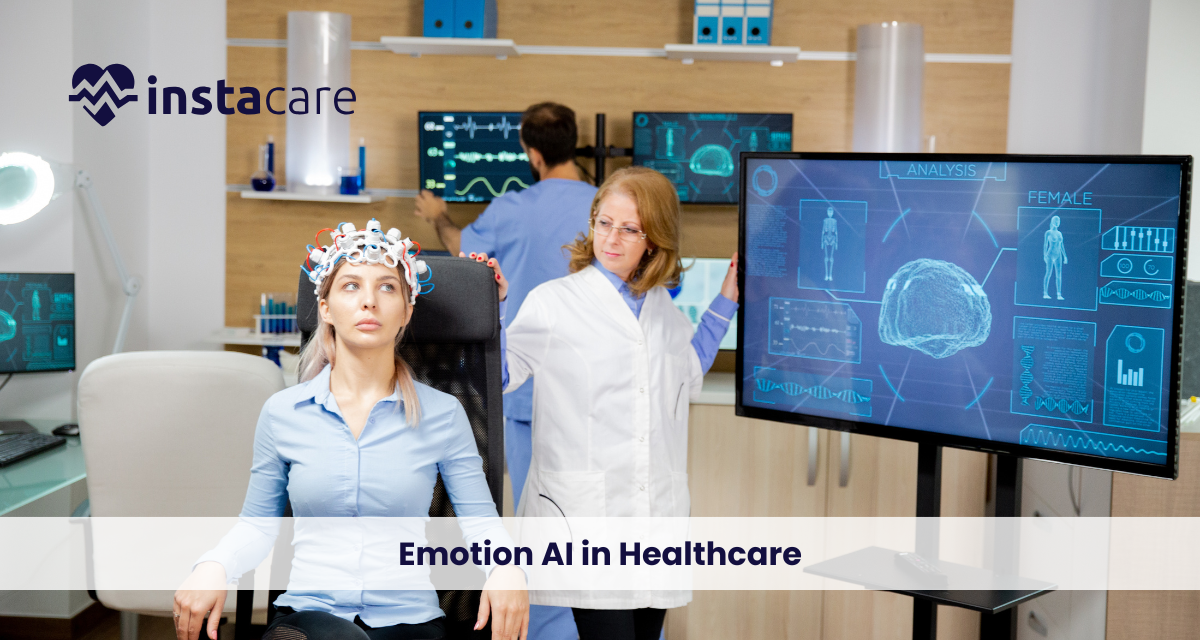
The field of healthcare is being revolutionized by incorporation of new and sophisticated technologies and Emotion AI in healthcare is a revolution that is taking shape. This is a technology that examines the emotions of humans based on artificial intelligence and this will allow the providers to comprehend the emotional condition of the patients in addition to their physical condition.
Emotional intelligence is able to be integrated with clinical data to enable healthcare providers to provide more individualized care, enhance patient interaction, and streamline clinical processes. Emotion AI can be used in mental health monitoring, patient communication and behavioral health interventions, which is why this technology is a force to introduce into the modern healthcare system.
What is Emotion AI?
Affective computing or emotion AI is an AI hominoid technology that detects, analyzes, and reacts to human emotions. It works by using algorithms to handle facial expressions, speech patterns, voice tone and physiological signatures. These systems are useful in the healthcare setting to detect emotional distress, anxiety, depression, or stress in patients. Contrary to the conventional AI that is solely concerned with clinical outcomes, Emotion AI integrates AI sentiment analysis in healthcare, enabling the practitioner to comprehend the psychological and emotional aspects of health, which are fundamental in the overall well-being.
How Emotion AI Works in Healthcare?
Emotion AI works with the analysis of various kinds of information gathered during the interactions with the patients:
Facial Recognition and Expression Analysis
AI algorithms read micro-expressions, eye movements, and facial expressions that reveal emotions.
Voice and Speech Analysis
Tone, pitch, and speech cadence may indicate anxiety or depression (or any other emotional state).
Behavioral and Physiological Data
Wearable sensor, Skin conductance, and Heart rate, information show the level of emotional stress.
With these inputs and the clinical records, AI for behavioral health monitoring can detect patterns that would have otherwise been ignored. The AI system then provides actionable insights to the physicians, therapists, and care teams, which enables prompt intervention.
Applications of Emotion AI in Healthcare
There are several applications of emotion AI in a healthcare environment:
Patient Engagement
AI emotion recognition systems may direct patient communication, changing to suit emotional responses to enhance comprehension and adherence.
Mental Health Monitoring
Patients who show emotions can be analyzed continuously, and the provider can identify the first signs of depression, anxiety, or stress in order to implement proactive measures.
Therapeutic Support
AI can be used to give feedback during therapy sessions to assist psychologists and counselors in designing treatment applications depending on how patients emotionally react.
Scientific Research
Emotion AI will be used in patient-centered science by measuring the emotional states enhancing the quality of research in behavioral health.
These applications also improve patient care and clinical effectiveness, and emotional health is monitored both with physical health.
Benefits of Emotion AI in Healthcare
Emotion AI in healthcare is associated with many benefits:
Better Patient Experience
By knowing how the patients feel, providers will be able to react empathetically, and they will be able to make their care environment more comfortable.
Early Intervention in Mental Health Problems
The constant observation will identify emotional disturbances before it degenerates into serious cases.
Data-Driven Insights
AI emotional analytics in healthcare empowers making evidence-based decisions to use an individualized treatment plan.
Improved Clinical Workflow
Automated emotional analysis lessens the need to resort to manual observation to enable the healthcare personnel to concentrate on treating patients.
Remote Patient monitoring
Emotion AI is useful in telehealth to analyze emotions during virtual visits and increases care quality without meeting in person.
All in all, Emotion AI enhances relationships between patients and providers and makes the medical services more efficient.
Book Your Free Marketing Consultation
Challenges and Ethical Concerns
Emotion AI presents numerous challenges, in spite of its potential:
Data Privacy and Data Security
Emotional information is sensitive and should adhere to the regulations to avoid abuse or violation.
Bias and Accuracy
There are some cultural, linguistic, and demographic variations that may affect emotion recognition and, therefore, accuracy.
Patient Consent
Patients should know how the data of their emotions are gathered and utilized.
Integration Complexity
Implementing Emotion AI into the current Electronic Health Records (EHR) systems needs technical skill and training.
To make AI-based patient care effective and ethical, healthcare organizations should take care of those problems.
Future of Emotion AI in Healthcare
Emotion AI for patient care has a bright future, and the new applications are improving not only diagnostics but also patient care:
Predictive Behavioral Analytics
Complex AI systems will anticipate emotional distress and mental health issues in advance.
Connection with Virtual Health Assistants
Emotion AI will complement AI assistants in the form of emotional responses upon interacting with a patient.
Individualized Therapy Advice
A combination of emotional feedback, cooperating with medical records, will enable highly personalized treatment plans in the field of behavior health.
Growth in Telehealth Services
Emotion AI will keep enhancing remote patient-emotion monitoring, adding to the access to mental health services.
With the advancement in the technology, AI psychology and healthcare technology will form a foundation of the comprehensive treatment of the patient in addition to the usual clinical approach.
Conclusion
The use of emotion AI in healthcare is changing the way patients are treated as it is offering emotional intelligence to the clinical decision process. To mental health tracking and enhanced interaction with patients, emotion recognition systems based on AI assist providers in offering personalized, sumpter, and effective care. Although issues such as data privacy and integration are present, the advantages of using Emotion AI are more significant, which makes it an essential tool in the healthcare delivery of the present day.
FAQs
What is the value of Emotion AI in patient care?
Emotion AI interprets and analyzes signs of emotion (facial expression, voice tone, and behavioral information) to deliver personal insights that allow the provider to react more empathetically and customize treatment plans.
Does Emotion AI jeopardize patient privacy?
Yes. With appropriate measures to safeguard sensitive emotional and health information such as patient consent and data security protocols, Emotion AI systems would be compliant with regulations.
Is Emotion AI applicable to telehealth consults?
Absolutely. Artificial intelligence of emotion can be used to track emotional reactions during virtual meetings to enable healthcare professionals to evaluate mental health remotely and provide quality care.