Last updated on Friday, 12, December, 2025
Last Updated on 3 months ago by Ahmed Usman
Table of Contents
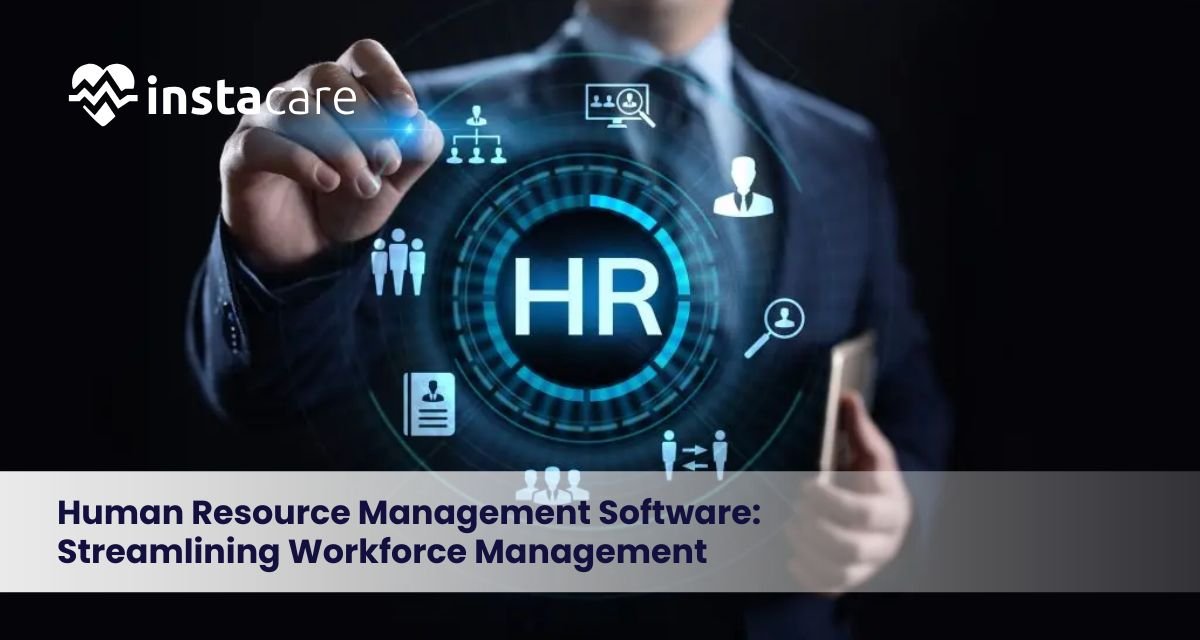
Human Resource Management Software: Streamlining Workforce Management for Modern Businesses
Human Resource Management Software (HRMS) is now a critical enterprise level technology, which organizations are looking to best automate, optimize and centralize their workforce related functions. Manual HR methods that are used as companies grow lead to inefficiencies like duplication of data, compliance risk, slow approvals, and false insights into the workforce. HRMS solutions address these problems by offering end-to-end digital ecosystems of employee lifecycle functions, real-time analytics, and policy-based automation.
Today, companies need a system that can accommodate distributed teams, high volume data processing and compliance with strict regulation. HRMS solutions are able to offer this and at the same time maintain cost-effectiveness, data integrity, and operational efficiency.
What Is Human Resource Management Software?
An integrated digital platform that provides management of the entire employee lifecycle including recruitment and onboarding, payroll, attendance, and performance analytics. An HRMS is a central human resource system that consolidates data on the employees, automates the processes, and allows HR teams to work more precisely and with less manual intervention.
Typical modules of comprehensive HRMS architecture are modules covering personnel management, document management, compliance management, time management, calculation of payroll, and benefits management. There are also cloud-native formations of remote accessibility, multi-location operation, and continuous scaling.
Key Features of HRMS
An effective HRM software has integrated several levels of functionality to facilitate the operations of the workforce. Key features include:
Single-point Employee Information Management
The company keeps employee records, contracts, digital documents and organizational structures in a safe database instead of paper methods of storage.
Automation of Talent Acquisition and Onboarding of HR
Companies automate formalities related to joining, documents submission, role allocation, and induction processes with the help of HR onboarding software, which saves time, and increases compliance accuracy.
Biometric Integration and attendance
HRMSs tend to incorporate HR attendance management that has time clocks, geofencing of field workers, and automated shift assignments.
Payroll Generation and Compliance
Since it has inbuilt HR payroll software, monthly payroll calculation encompasses overtime, deductions, insurance, EOS benefits, tax compliance and allowances.
Performance Monitoring Structures
HR performance management modules are the modules through which organizations monitor KPIs, OKRs, competencies, and appraisal cycles based on analytics and organized evaluation templates.
Cloud Infrastructure
Contemporary systems are implemented in the form of cloud-based HR software that guarantees their availability, portability, and low scalability.
Personnel Management Analytics and Dashboards
HRMS systems create real-time attrition, absenteeism, performance, training requirements, and workforce cost projection dashboard like.
Benefits of Using HRMS
Improved Operational Effectiveness
In this way, the HR departments automate repetitive processes in employee management like attendance validation, leave approvals, contract renewals, and payroll by use of employee management software.
Minimization of Compliance Risk and Red errors
Digitized workflows guarantee that the rules of labor law, policy limits and organizational SLAs are followed in an uninterrupted manner.
Data-Driven Decision Making
HR software solutions provide embedded analytics that allow leaders to evaluate the performance of the workforce, staffing requirements, trends in overtime, skills gaps, and inefficiency by department.
Better Employee Engagement
Workforce management software has self-service portals through which employees request leave, upload documents, receive payslips, monitor performance scores and file grievances.
Lean Recruitment and Retention
The automation saves time to hire, enhances the hiring experience, and offers HR an insight into attrition trends.
Growth Business Scaleability
Cloud-based architecture will guarantee easy growth to a new location and department without limitations on the infrastructure.
Book Your Free Marketing Consultation
Choosing the Right HRMS
When choosing an HRMS, it is necessary to consider the operational requirement as well as the long-term organizational strategy.
Key Criteria:
Functional Coverage See to it that the core services like payroll, attendance, performance and onboarding are not third-party add-ons.
Integration Capabilities Systems will have to integrate with ERP, financial platforms, access control devices, biometric devices and external identity systems.
Adaptability Flexibility Role-based workflows Approval matrices, leave policies, pay structures should be able to be customized to complex organizations.
Compliance Alignment The HRMS should facilitate the regional labor laws, the visa renewal process, labor working hours, and insurance policies.
Data Security Architecture Find ISO-certified hosting, password encryption, MFA, and role-based access controls.
Automation & AI Layer Solutions This provides HR automation tools solutions that would greatly cut down the HR overhead through predictive alerts, automated onboarding and anomaly detection.
Implementation Tips for Businesses
A successful implementation must have an organized implementation roadmap:
Conduct a Process Audit
Mapping the existing HR functions to determine manual bottlenecks, redundant processes, and compliance lapses.
Data Migration Strategy
Clean up and harmony employee data formats and integrity checks completed prior to uploading the HRMS.
Configure Custom Workflows
Consistent and align the policies of leaves, wage structure, overtime arrangements, and approval lines with the HR governance model of the organization.
Integration Phase
Integrate the HRMS and the ERP systems, biometric systems, email systems, and document management systems. This is necessary to have a smooth environment for the HR management system.
User Training
Train HRs, heads, and employees to make sure that the employees know how to use the systems.
Pilot Testing
Practice soft-launch rollouts to discern the issues with the system, delays in the workflow, and challenges at the user level.
Full Deployment & Monitoring
Implement organization-wide go-live and observe the system regarding compliance obedience and processes efficiency.
Future of HR Management Software
HRMS systems will keep on developing with highly automatized systems, analytics and cognitive computers:
Anticipatory Workforce Analytics
The high-tech models to predict attrition, drops in productivity, and staffing needs will be based on advanced forecasting methods of predictive analytics applied to healthcare but with an HR twist.
AI-Driven Recruitment
The AI-based engines will filter the resumes, detect skill deficiencies, schedule interviews and rank shortlisted applicants with AI-based healthcare-like reasoning but adapted to the HR.
Real-Time Decision Engines
The systems in the future will incorporate the enhanced algorithms of real time scheduling, dynamic workload balancing, and the proactive performance interventions.
Improved EHR-style Employee Profiles
Similarly to the medical systems that have clinical profiles, the HRMS will enhance the visibility of employee lifecycle through clinical data analysis logic on workforce data.
Unified HR Ecosystems
HRMS systems will become a full business intelligence business package, with advanced reporting applications in the form of a workforce dashboard software.
Conclusion
The HR Management Software has been a working requirement to every business regardless of its size. HRMS systems minimize the administrative workload and enhance accuracy and offer strategic workforce planning with onboarding, attendance, payroll, performance, and analytics modules. The trends of HRMS in future show their interest in more AI integration, real time decision automation, and total analytics ecosystems, which make HR more of a strategic driver than an administrative functionality.
Companies that may implement the new HRMS are more likely to establish a stronger organizational structure, efficient management of employees, and remain competitive in the data-driven world.
FAQs
1. Is HRMS suitable for small and medium-sized businesses?
Yes, modern HRMS platforms offer modular and scalable architecture suitable for SMEs. They allow small teams to automate payroll, attendance, and onboarding without large IT infrastructure investments.
2. How long does HRMS implementation take?
Implementation time varies between 4–12 weeks, depending on data migration volume, workflow complexity, number of user roles, and integration with existing systems.
3. Do HRMS platforms support remote and hybrid work models?
Yes, cloud-based systems support remote access, geolocation-based attendance, digital document management, and virtual onboarding workflows.