
Last updated on Tuesday, 17, February, 2026
Last Updated on 2 months ago by Ahmed Usman
Table of Contents
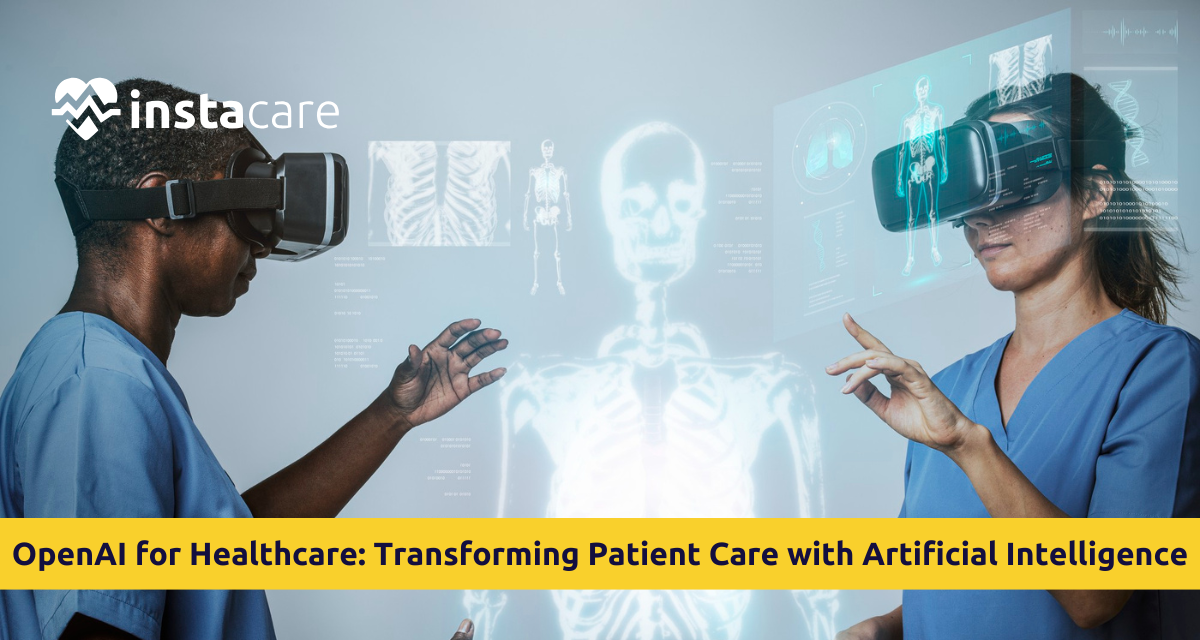
OpenAI for Healthcare: Transforming Patient Care with Artificial Intelligence
The future of healthcare is changing rapidly with artificial intelligence, which has allowed making diagnoses much quicker, smarter workflow, and patient-centred care. OpenAI is a leader in the transformation, as its advanced AI models are already being deployed in healthcare systems worldwide. AI tools are also assisting providers in providing more efficient and accurate care through clinical documentation to prediction analytics.
This paper will discuss the transformations that OpenAI is bringing to the field of modern medicine and its major uses, advantages, ethical aspects, and the future of AI-driven innovation in healthcare.
What Is OpenAI?
OpenAI is a research and technology company that creates more sophisticated AI models that could comprehend and produce human-like language, analyse data, and address sophisticated problems. Its tools are very common in all other industries such as education, finance and more so in healthcare.
OpenAI-driven models may be used in medical environments to support clinicians, carry out monotonous tasks, and enhance decision-making through profound data analysis. The tools are included in the wider trend of AI in healthcare, where automation and intelligence can be applied to improve care delivery and patient outcomes.
Why Healthcare Needs AI Solutions?
The healthcare systems are under increasing stress due to the increase in patients, clinician burnout, and the complexity of administration. Techniques of the past are typically unable to cope with data-intensive processes and decision-making that are time-sensitive.
The AI solutions can help overcome these issues by:
- Automating reporting and documentation.
- Clustering of big data.
- Improving the accuracy of diagnosis.
- Fostering distance and online health care.
With the expanding nature of medical data, AI-based systems are increasingly becoming imperative to the sustainable provision of healthcare.
Key Applications of OpenAI in Healthcare
Clinical Documentation and Automation
The results of conversations with patients can be structured and formed as a clinical note using AI models, which saves administrative overhead. This will enable physicians to enjoy more time with the patients as opposed to documentation.
Virtual Health Assistants
AI chatbot offer rudimentary triage, check-in of symptoms, schedule appointments, and drug notifications. It is among the most widespread OpenAI healthcare applications of telehealth technologies.
Medical Research and Literature Review
AI is able to review large volumes of medical literature, summarize results, and assist the researcher to draw patterns at a rate exceeding what can be achieved by human processing.
Patient Education and Engagement
Understanding of diagnoses, treatments, and how to take medications using simple language is done by AI-powered tools and enhances health literacy and adherence.
Clinical Decision Support
AI assists physicians to interpret complicated medical data and recommend evidence-based advice, which enhances Clinical decision support AI systems in hospitals.
Benefits of OpenAI in Healthcare
Improved Efficiency
The repetitive duties such as documentation, billing summaries, and patient intake are automated thus decreasing the usage of administrative resources.
Improved Diagnostic Accuracy
The AI models, which are trained on large datasets, are able to identify patterns that humans might miss and AI for medical diagnosis can be used, such as radiology and pathology.
Better Patient Experience
The chat systems powered by AI offer 24/7 service, making them more accessible and quicker to respond to.
Cost Reduction
Optimized processes and automation contribute to lowering operations and quality care.
Personalized Medicine
AI examines medical histories and genomes to aid in personalized care, which is becoming a trend in Artificial intelligence in medicine.
Real-World Healthcare Use Cases
Telemedicine Platforms
AI chatbot help with pre-triage and telehealth visits, particularly in underserved areas.
Radiology Support
Medical imaging AIs are used to identify abnormalities in medical images and allow radiologists to prioritize severe cases.
Electronic Health Record (EHR) Optimization
AI enhances the precision of documentation and provides pertinent details about patients in real-time.
Mental Health Support
AI-based conversational systems offer primary care to anxiety, depression and behavioral health, in addition to human care.
Hospital Operations
AI enables predicting the admission of patients, staffing optimizations, and supply chain management with the help of Clinic Management Software.
Challenges and Ethical Considerations
Data Privacy
Medical information is extremely sensitive and AI instruments have to meet stringent privacy laws.
Bias in AI Models
The biases of the AI systems that are trained on small data sets can be represented and, therefore, impact the quality of care among some population groups.
Transparency
It means that AI recommendations should be explained in a way that would allow clinicians to trust and validate the results.
Over-Reliance on Automation
Human judgment should be aided by AI and not replaced. It is necessary to have a balance between automation and clinical expertise.
OpenAI and Healthcare Compliance
Healthcare organizations should make sure that the AI tools are in line with the laws of the region including HIPAA (US), GDPR (EU), and additional local health data regulations.
Some of the compliance considerations are:
- Secure data encryption
- Audit trails and monitoring
- Patient consent management
- Model transparency
Ethical regulations and technical protection can only prevent irresponsible use of ChatGPT in healthcare.
Book Your Free Marketing Consultation
Future of OpenAI in Healthcare
The future of AI in healthcare is bright and it is unlikely to stagnate in various spheres:
- AI-powered drug discovery
- Prognostic disease modelling.
- Clinical decision tools in real-time.
- Individual simulation of treatment.
- Medical interfaces that are voice-activated.
With more refining of AI models, they will probably become a common and standard part of medical life and not an option that improves medical performance.
Best Practices for Healthcare Organizations
Start with Pilot Programs
Initial deployments, e.g. AI documentation assistants, can be scaled out.
Prioritize Data Security
Make sure that there is a strong encryption, anonymization, and access controls.
Train Healthcare Staff
The understanding of AI capabilities and limitations should be known to clinicians and administrators.
Maintain Human Oversight
Qualified medical professionals must always review the outputs of AI.
Concentrate on Patient Centric Design
The AI devices should help improve the quality of care, rather than make the interaction with patients harder.
Conclusion
OpenAI is leading a central role in changing the current healthcare system with enhanced artificial intelligence. AI is transforming the way the healthcare systems operate, be it in clinical decision support, patient engagement, or operational efficiency.
Although it is necessary to address issues like privacy and prejudice, the advantages of AI integration cannot be overrated. The application of OpenAI-powered technologies will keep on advancing smarter, more accessible, and personalized healthcare a global phenomenon as the adoption increases.
Frequently Asked Questions
What is the current use of AI in healthcare?
Applications of AI are in the fields of diagnostics, clinical documentation, virtual assistants, predictive analytics, and research support. It assists in streamlining the workflow and decision-making within the medical environment.
Do medical diagnoses with AI ensure safety?
AI has the potential to improve accuracy, although in combination with clinical expertise. Human supervision makes the use safe and reliable in diagnostic processes.
Is it possible that AI can replace doctors in the future?
No, AI is not aimed at substituting healthcare workers, it is created to support them. It improves productivity and decision making processes with the doctors still being at the center of patient care.