
Last updated on Wednesday, 10, December, 2025
Last Updated on 4 months ago by Ahmed Usman
Table of Contents
Virtual Reality in Healthcare: Transforming Diagnosis, Treatment, and Medical Training
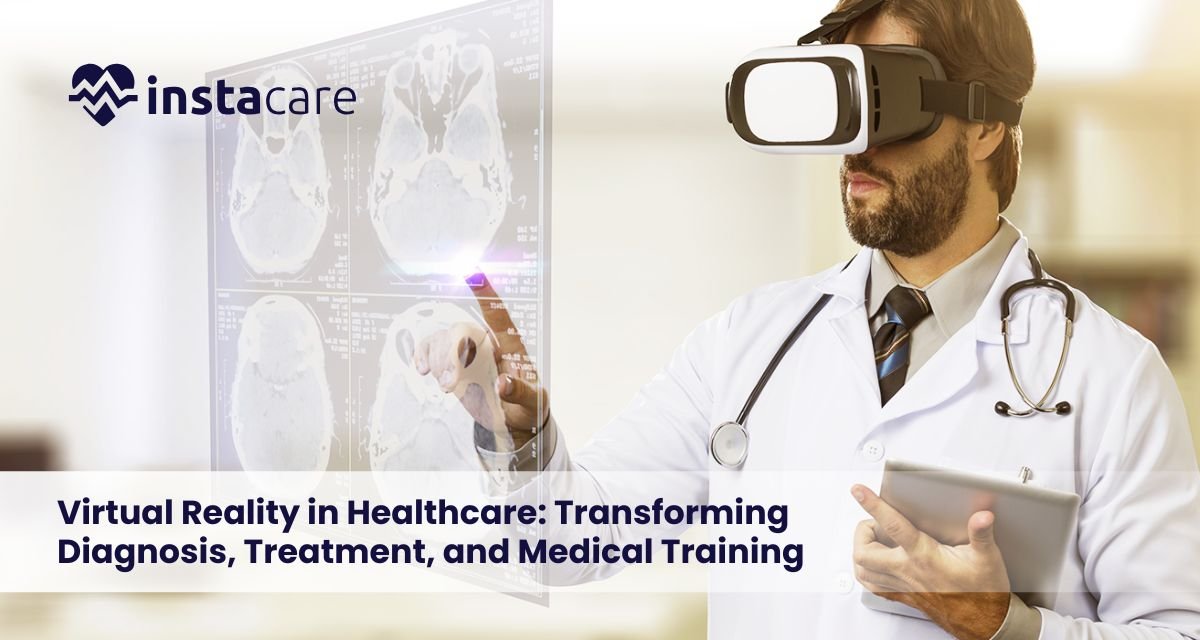
Virtual Reality (VR) is currently one of the most effective technologies that transform contemporary healthcare. It is no more gaming approach or entertainment tool, as currently hospitals, medical universities, and clinics implement VR systems to provide better patient care, better diagnosis, and support the making of clinical decisions and improve the level of medical training. Due to the development of simulation hardware, motion sensors and haptic feedback, medical VR technology is increasing the transition towards an immersive and data-driven delivery of healthcare.
VR provides a simulated digital setting, in which clinicians, trainees, and patients can communicate with realistic situations without any real-life hazards. Consequently, it is still being embraced in the fields of surgery, mental health, physical rehabilitation and patient education. In this blog you will know How VR is used in healthcare.
What Is Virtual Reality in Healthcare?
In healthcare, Virtual Reality is the application of real-like computer-controlled environments, which create a virtual replica of a medical environment or simulate a clinical scenario. These systems enable the users to visualize anatomy in 3D, practice surgery, simulate patient cases, and undertake complex procedures without taking risks. Its central goal is the improvement of VR-based medical learning, greater accuracy, and better patient outcomes.
VR is used more and more in hospitals to facilitate diagnostic imaging, pre-operative planning, and the individualization of treatment. Since clinicians start investigating the way VR can be applied in healthcare, it becomes evident that VR is helping to bridge the gap between theory and practice.
Key Applications of VR in Healthcare
VR in healthcare applications is also developing with each passing year, some of the most notable applications being:
Surgery Simulation and Planning
VR changes surgical practice as it allows organ, tumor, and vascular structure 3D modeling. Virtual reality for surgery simulation where the surgeons practice the complicated procedures before they enter the operating room. This minimizes errors, decreases the length of surgery and maximizes patient safety.
VR-Based Medical Training
VR medical training that simulates real clinical environments is used in medical schools and hospitals to engage students in medical practice and training. Students will be able to develop emergency response, visualization of anatomy and handling of patients, without compromising on the safety of the real patients. VR also has the benefit of repeatability, consistency, and fine-grained performance metrics, something that is not available in the traditional training.
Pain Management
VR for pain management has become a non-pharmacological intervention used by clinicians as part of the process in non-acute setting during procedures, childbirth, dressing changes, and chronic illness treatment. Immersive surroundings focus the brain, which decreases the perceived pain and the anxiety.
Mental Health and Psychological Therapy
Virtual reality is experiencing growing use in mental health treatment in the treatment of anxiety disorders, PTSD, phobia, and depression. VR-based exposure therapy enables clinicians to administer stimuli in a controlled and gradual manner, which provides safe and effective treatment directions.
Rehabilitation and Physical Therapy
VR rehabilitation in healthcare provides guided, interactive recovery channels. VR rehab systems in the medical field are used to aid recovery after a stroke, mobility training, balance and neuro-rehabilitation. The motivation and adherence of patients increases.
Patient Education
The immersive modules of Virtual reality in patient education that are utilized in clinics in patient education aid patients in comprehending the processes of surgery, treatment, medical procedures, and post-surgical care. Decision-making and fear of treatment before treatment are enhanced with visual learning.
Physical Therapy Enhancement
The advanced systems designed to be used in VR for physical therapy apply real-time motion tracking to allow patients to rehearse the movements patterns and restore their strength. The therapists can vary the level of difficulty, track progress and create individual routines.
Hospital Operations and Workflow
VR is often incorporated in modern facilities to train staff in hospitals on emergency protocols, infection control as well as equipment usage and high risk activities.
Book Your Free Marketing Consultation
Benefits of Using VR in Healthcare
The Benefits of virtual reality in medicine are numerous and can be measured, and those will become especially significant in the 2025s and further:
Improved Accuracy and Precision
Clinicians and surgeons are able to study anatomy, practice and simulate complications beforehand. This increases the levels of clinical confidence and minimizes the chances of errors.
Controlled, Risk-Free Training
There are no consequences of practicing on a particular case of trauma or a rare disease so that trainees can practice as many of them as possible. Medical educational VR is more effective in developing competence more quickly than conventional training.
Enhanced Patient Comfort
Virtual reality for anxiety treatment decreases the levels of anxiety among patients undergoing painful procedures. It also assists the pediatric patients as well as geriatric patients in keeping calm during the MRI scans, injections and treatments which are time-consuming.
Personalized Recovery
VR is used to provide customized exercises and therapeutic spaces in rehabilitation and mental health and make the treatment more interactive and successful.
Higher Efficiency and Lower Long-Term Cost
VR decreases surgical errors, shortens recovery time, accelerates training, and improves patient satisfaction, which results in reduced operational costs in the long term despite high initial set-up costs.
Challenges and Limitations
Along with its benefits, various issues affect the implementation of VR:
High Initial Cost
The investment in VR systems, haptic devices, sensors, and simulation that are medical-grade and high quality is very high. It demands significant resources to be invested, particularly in large hospitals.
Technical Complexity
Some platforms are delicate to calibrate and maintain. Healthcare workers do not necessarily feel comfortable using new technologies at once.
Weak Clinical validation
Although VR has potential, numerous applications are yet to undergo extensive clinical trials to be approved and evidenced.
Motion sickness and Discomfort
A very high percentage of the users might develop dizziness, fatigue or nausea in the immersive sessions.
Data Privacy Concerns
Medical VR is a sensitive type of data covering patient information, which needs a high level of cybersecurity and meets the requirements of HIPAA/GDPR.
Future of Virtual Reality in Healthcare
The Future of VR in the healthcare sector is very bright and it is likely to transform the medical processes in the year 2030. Key trends include:
AI-Integrated VR
Artificial intelligence will help to create real-time feedback, individualized treatment plans and predictive analytics to improve clinical decisions.
Haptic Enhanced Surgery Simulations
The VR gloves and the robotic feedback systems of next generation will enable the surgeons to touch the tissues and surgical tools in a virtual manner.
Remote VR Consultations
Patients will enter immersive telehealth settings in which doctors will evaluate them using 3D visualization instruments.
Digital Twins of Patients
In the near future, hospitals can even develop complete VR models of patient organs or bodies to plan their treatment and assess the risk of adverse outcomes.
VR Training Ecosystems Nationwide
It is anticipated that medical boards and universities come up with standardized VR training modules to get uniform education in regions.
VR will become a fundamental infrastructure part of hospitals similarly to imaging systems and PACS in the present day.
Conclusion
Virtual Reality is becoming an essential part of the modern healthcare–enhancing accuracy, training effectiveness, rehabilitation, and patient experience. The use of simulations has since been expanded in surgical simulation, medical education, Virtual reality in mental health therapy, physical therapy, and hospital operations. Despite the existing difficulties, current innovation is quickly consolidating the presence of VR in clinical settings.
Since the use of VR is growing, institutions that are early adopters of immersive systems will experience positive patient outcomes, enhanced operational effectiveness, and competitive edge in digital healthcare innovation.
FAQs
What is VR doing to enhance medical training now?
VR has offered simulatory experiences in which students in the medical field and professionals could learn about surgery, emergency readiness, and visualization of anatomy without any risk. It improves the learning rate, precision and memorization.
Is VR useful in chronic pain patients or anxious patients?
Yes. VR is popularly applied in distractions of pain, anxiety, and psychological treatment. These controlled environments assist patients to control symptoms without having to consult medications alone.
What is the most difficult part of applying VR in hospitals?
The three issues are high startup cost, technicality, and the requirement of trained personnel. Nevertheless, with decreased cost and ease of usability of technology, this is likely to be adopted on a scale.