

Last updated on Wednesday, 31, December, 2025
Last Updated on 3 months ago by Ahmed Usman
Table of Contents
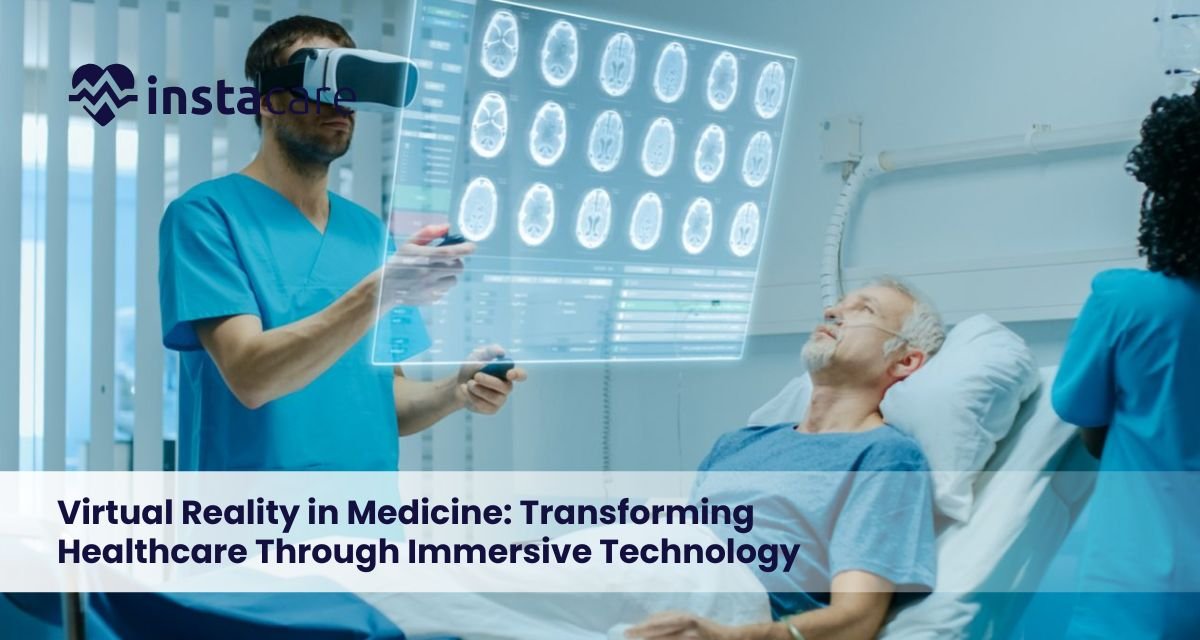
Virtual Reality in Medicine: Transforming Healthcare Through Immersive Technology
The medical field is experiencing the digital revolution, and the idea of immersive technology in medicine is the focal point of the revolution. VR has not been restrained to entertainment anymore, but is currently being implemented in hospitals, medical schools, and therapy centers. VR is transforming healthcare delivery, whether it is creating more accurate surgery or making the procedure more comfortable.
The use of modern medical virtual reality applications can provide healthcare workers with the opportunity to train in a safe manner, treat patients better, and increase clinical results thanks to real simulations.
What Is Virtual Reality?
Virtual reality refers to a three-dimensional environment and is a simulated environment created by computers and experienced by users through VR headsets and motion tracking devices. The major features of VR are:
- Complete involvement in an online world.
- Live communication with virtual objects.
- A great deal of visual and sensory stimulation.
Augmented reality vs virtual reality in healthcare is a common comparison in healthcare-related discussions. Whereas AR is used to overlay digital objects on the physical one, VR is more preferable for training, therapy, and simulation-based care as it is fully immersive.
How is Virtual Reality Used in Medicine?
Virtual reality has clinical uses in many spheres of healthcare and has been used to benefit both the practitioners and the individuals receiving care. VR is commonly used for:
- VR in medical training and skill building.
- Treatment and therapy of patients.
- Virtual reality surgery simulation and planning.
- Physical recovery and rehabilitation.
These applications indicate the way that VR for patient care enhances safety, accuracy, and involvement in the medical environment.
VR in Medical Training and Education
Medical training VR has altered the way medical workers understand complicated practices. Virtual reality medical education allows students to practice again and again without any risk in the real world. Perks to education include:
- Interactive 3D learning of anatomy.
- Simulation of emergency response.
- Procedural accuracy in a virtual reality simulation of surgery.
- Less use of cadavers and live patients.
This simulative method enhances self-esteem, decision-making and technical ability.
Virtual Reality in Patient Treatment
The use of VR therapy in healthcare as a therapeutic tool is gaining more and more use. In the healthcare sector, VR therapy is used to control physical and mental health. Some typical uses of the therapy include:
- Virtual reality for pain management.
- Lessening anxiety and stress.
- Diversion therapy of chronic pain.
- Preoperative emotional preparation.
The patients feel more comfortable, less dependent on medications, and their recovery is more successful.
VR in Surgery and Clinical Practice
VR promotes planning and execution in surgical settings. Virtual reality surgery simulation enables surgeons to practice complicated surgeries using patient-specific information. Clinical benefits include:
- Higher accuracy of surgery.
- Less risk of complications.
- Greater comprehension of the patients through graphic explanations.
- Improved cooperation between teams of medical workers.
The developments enhance credibility and overall quality of care.
Book Your Free Marketing Consultation
Benefits of Virtual Reality in Medicine
The benefits of virtual reality in the healthcare systems include:
- Increases learning experiences.
- Enhances the level of patient engagement and satisfaction.
- Embraces VR rehabilitation therapy.
- Reduces medical errors.
- Makes the process of treatment personalized.
- Increases medical education.
VR is transforming the field of modern medicine through its ability to bring together innovation and empathy.
Challenges and Limitations
Although it has potential, VR adoption has a number of obstacles:
- Expensive initial costs of setup and maintenance.
- Training and technical complexity.
- Dizziness or eye strain to others.
- Data security and privacy issues.
These limitations would have to be tackled in order to increase the use of medical virtual reality applications.
Future of Virtual Reality in Healthcare
The future of virtual reality in medicine is bright. VR will be combined with wearables, telemedicine platforms, and artificial intelligence with the advancement of technology. Possible future developments are:
- AI-based simulated personalized treatments.
- Remote VR-based medical training.
- High-level exposure to virtual reality therapy.
- More extensively used in mental and physical rehabilitation.
Such innovations will turn VR into a commonplace feature of healthcare provision.
Real-World Examples
Virtual reality is already changing patient outcomes across the globe. Examples include:
- VR in PTSD and anxiety
- Phobia virtual reality exposure therapy.
- Stroke rehabilitation therapy using VR.
- Immersive distraction programs for pain management.
These practical applications indicate the increased clinical effects of VR.
When VR Is Most Effective in Medical Settings?
VR would be best applied in a situation where simulation, visualization or emotional involvement is needed. It works best in:
- Healthcare education and training.
- Pain and anxiety management.
- Mental health therapy.
- Physical rehabilitation.
- Preoperative preparation and rehearsal.
Immersive and controlled digital experiences are very useful in such environments.
Conclusion
VR is revolutionizing the medical field by contributing to better education, patient outcomes, and clinical efficiency. Immersive technology in medicine is transforming the medical field with VR in medicine training, therapy, and surgical uses.
With an increasing number of issues addressed with virtual reality and increased accessibility, patient care, education, and clinical practice will remain redefined worldwide.
FAQs
What is the application of virtual reality in medicine?
Medical training, surgery simulation, pain management, rehabilitation, and mental health treatment are some of the areas where medical virtual reality applications are applied.
Does virtual reality work in the management of pain?
Yes, virtual reality for pain management is useful in decreasing the perception of pain, which distracts the brain and decreases anxiety.
What becomes of virtual reality in healthcare?
The future of virtual reality in medicine involves AI-driven simulations, customized therapy, and broader application in everyday clinical use.