

Last updated on Wednesday, 14, January, 2026
Last Updated on 3 months ago by Ahmed Usman
Table of Contents
Telemedicine Software for Online Consultations: Best Platforms & Benefits
Over the last ten years, the healthcare industry has experienced a digital revolution of colossal proportion with telemedicine being one of the most influential new technologies. Telemedicine software has transformed the path of care delivery through virtual doctor consultation to remote patient consultation. Patients do not have to spend their time in long queues or cover long distances to meet a medical practitioner. They will however, be able to reach the doctors immediately in safe online systems.
Telemedicine software is not about convenience only, it is a need of the contemporary healthcare system. It leads to increased access, lowers operational expenses, better patient outcomes, and allows the providers to effectively serve a larger number of persons. The given blog discusses what telemedicine software is, what its main advantages are, what its main characteristics are, which platforms are the most popular nowadays, and how to select an appropriate solution to address your healthcare needs.
What Is Telemedicine Software?
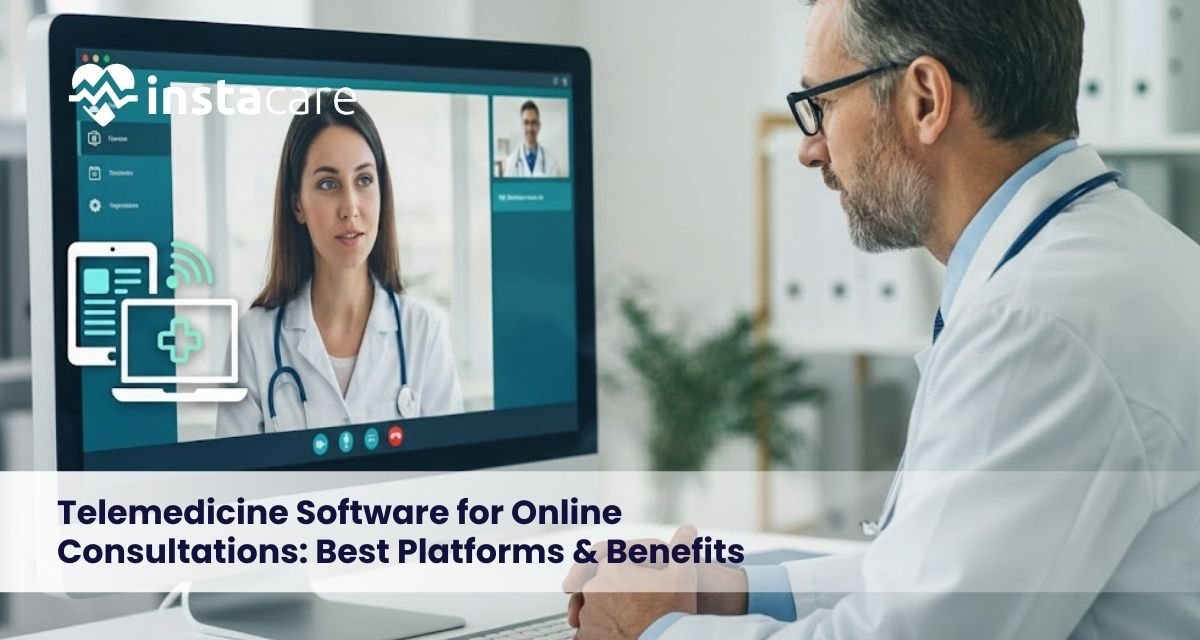
The telemedicine software is an online consultation software that assists healthcare professionals in providing medical services to patients at a distance through internet-driven devices. These channels support real-time video consultations, safe messaging, schedule appointments, e-prescription, and electronic medical record (EMRs) access.
Telemedicine also means that the patient can be treated in the comfort of his or her homes unlike the traditional method of visiting the physician face to face. The doctors can diagnose, create treatment plans, manage chronic illnesses, and follow up with patients-all viaa virtual interface. Virtual consultation tools in video conferencing.
- Secure patient data storage
- Electronic prescriptions and billing practices.
- Remote monitoring implementations.
- These communication tools include chat and email.
As more people are seeking more affordable and patient-centered medical care, telemedicine software has been integrated into the digital health ecosystem.
Main advantages of Telemedicine Software
1. Improved Accessibility
Telemedicine is a solution that helps to link patients and healthcare providers particularly in under served or rural regions. People who used to have a challenge in seeking medical services are now in a position to reach specialists without geographical restrictions.
2. Time and Cost Efficiency
Virtual consultations save time on traveling, minimize waiting time, and save administration costs. To providers, telemedicine software lessens the physical infrastructure requirement and enables the provider to treat more patients within the same amount of time.
3. Improved Interaction with the Patients.
Digital platforms provide patients with easy access to appointments, reminders, medical records, and treatment plans. The result of this level of convenience is improved patient compliance and satisfaction.
4. On-the-job Improved CDD Management
Remote monitoring tools assist physicians in monitoring vital signs, symptoms and medication compliance. This is a long-term care model that enhances the long-term health outcomes of patients with chronic illnesses.
5. Reduced Infection Risk
Telemedicine ensures that the number of in-person visits is minimized and contagious diseases are not spread. This gained particular significance when the world was going through a global health crisis such as the COVID-19 pandemic.
6. Data-Driven Healthcare
Telemedicine platforms could gather and process patient data, which allows medical practitioners to make decisions effectively, forecast health trends, and tailor treatment.
Key Features of Telemedicine Software
To select an appropriate telemedicine platform, it is necessary to know the essentials of these platforms. An effective telemedicine solution must have the following:
1. Secure Video Conferencing
Telemedicine has high-quality, real-time video communication as its basis. Find systems with consistent connections, screen sharing, and recording features.
2. HIPAA and GDPR Compliance
The security of data is essential in healthcare. Make sure that the platform is in line with global standards, such as HIPAA compliant(Health Insurance Portability and Accountability Act) and GDPR.
3. Electronic Health Records (EHR) Integration
The smooth connection with EHR systems will enable the doctors to retrieve patient history, lab results, and past consultations in real-time.
4. Appointment Scheduling
Scheduling software aids in the management of patients flow, minimizing the number of no-shows and time management.
5. E-Prescriptions
Prescriptions that are digital enhance ease in the medication process and minimize mistakes. Other sites also liaise with pharmacies to fulfill them directly.
6. Invoicing and financial transactions
An inbuilt billing system facilitates insurance claims, invoicing, and online payments hence simplification of financial management.
7. Multi-Device Compatibility
The software must also be compatible with the desktops, tablets, and smartphones so that all users can be able to access it.
8. AI and Analytics
High-tech solutions involve artificial intelligence to check symptoms, triage patients and predict analytics.
Book Your Free Marketing Consultation
Top Telemedicine Platforms
The following are some of the most reputed and used telemedicine portals at present:
1. Teladoc Health
Teladoc is an international provider of telemedicine. It provides virtual care, mental health, chronic care management and artificial intelligence (AI)-enabled healthcare. It is one of the best because of its user-friendly interface and extensive network of healthcare professionals.
2. Amwell
Amwell offers safe and scalable telehealth software options to hospitals, clinics, and insurance companies. It subsidizes emergency treatment, therapy, and specialty appointments.
3. Doxy.me
Doxy.me is an easy-to-use, web-based telemedicine device that commonly suits small practices. It does not need any downloads and is oriented on the ease of use.
4. MDLive
MDLive is a company that provides 24/7 access to qualified physicians and therapists. It is commonly utilized in urgent care, behavioral health, and dermatology.
5. Practo
Popular in Asia, Practo matches patients with doctors of different fields. It encompasses online booking, digital health records and online consultations.
6. SimplePractice
It is focused on small practices and mental health professionals. It provides scheduling services, billing, video, and client portals.
These platforms serve various healthcare requirements and therefore, the most appropriate one is based on your needs.
How Telemedicine Improves Healthcare Delivery?
1. Earlier Diagnosis and Therapy
Telemedicine ensures that patients do not have to wait days and weeks before getting an appointment. Faster treatment and diagnosis are made possible by quick consultations.
2. Continuity of Care
It is easier to make follow-ups and regular check-ins, which guarantees constant monitoring and an individual treatment plan.
3. Improved Collaboration
Telemedicine platforms enable healthcare professionals to work with people of different specialties. A second opinion with a specialist can be very easily obtained by a primary care doctor.
4. Patient-Centered Approach
Telemedicine gives patients the capacity to manage their health. They are able to view their records, contact doctors and monitor progress.
5. Scalability
The healthcare providers are able to increase their coverage without necessarily having to open more physical establishments. This is especially handy with new and expanding clinics.
How to Choose the Right Telemedicine Software?
The choice of appropriate telemedicine software is imperative not only to the provider but also to patients. Here’s a step-by-step guide:
1. Identify Your Needs
Do you practice as an individual, a large hospital, or a mental health clinic? The use cases contain different features.
2. Test Security Standards
Ensure that the platform is regulated by industry and encrypts data protection.
3. Check User Experience
With a complicated interface, both the doctors and patients will be frustrated. Select a site that has easy navigation.
4. Integration Capabilities
The software is expected to be connected with your current systems, including EHR Software, lab tools, and billing platforms.
5. Customization Options
Find the platforms that permit branding, customized workflows, and introduce customization.
6. Customer Support
Good technical support will guarantee fewer downtimes and faster resolution of issues.
7. Pricing Model
Choose subscriptions, transaction fees, and scalability before making a choice.
Conclusion
The telemedicine software has transformed the healthcare provision process to be more accessible, efficient, and patient-oriented. The benefits are hard to ignore, whether it is in the operation cost reduction or in the better patient outcomes. With the further development of digital health, telemedicine will become even more significant in determining the future of medical care.
FAQs
1. Does telemedicine work as well as a face-to-face consultation?
Yes, telemedicine is equally effective in case of most of the conditions like minor illnesses, mental health support, and follow-ups. There are however still instances where physical examinations could be necessary.
2. Is Telemedicine secure?
To secure patient data, most reliable telemedicine sites encrypt information and follow healthcare standards.
3. What are the requirements to do telemedicine?
A smartphone, tablet, or computer with camera, a microphone, internet that works well is usually required.