
Last updated on Monday, 16, February, 2026
Last Updated on 7 months ago by Ahmed Usman
Table of Contents
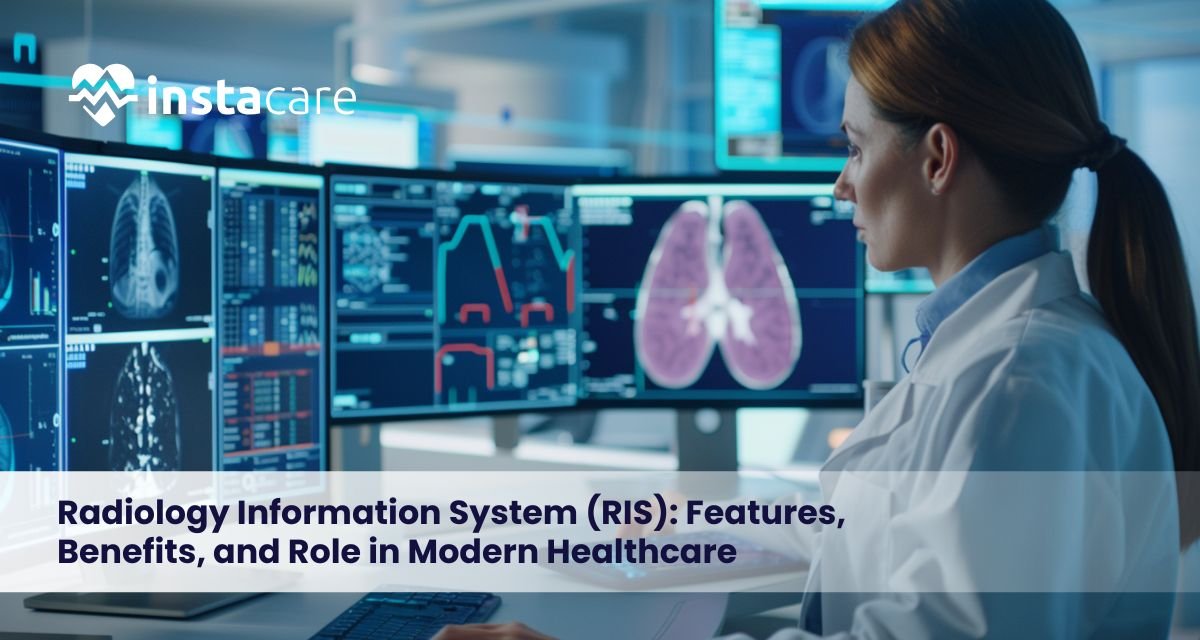
Radiology Information System (RIS): Features, Benefits, and Role in Modern Healthcare
The way healthcare is conducted nowadays depends on effective imaging processes. With increased volume of diagnostic imaging, radiology departments require intelligent systems that coordinate, report, and store patient information. The Radiology Information System (RIS) is a key element in enhancing efficiency, precision, and productivity in imaging departments.
The paper examines RIS software, its main characteristics, advantages, implementation issues, and its changing role in the healthcare of today.
What is a Radiology Information System (RIS)?
A Radiology Information System (RIS) refers to a special application that is used to organize and automate the work of radiology. It facilitates administration and clinical processes, such as scheduling, patient tracking, reporting, and billing.
RIS in healthcare is the pillar of radiology workflow management since it provides smooth coordination among radiologists, technicians, and other healthcare providers. It combines patient records, imaging orders, and reports into a single system, thus lessening work by hand and enhancing accuracy.
Key Functions of a Radiology Information System
RIS systems deal with various activities that can improve the efficiency of operations. Key radiology information system features include:
- Registration and Demographics of patients.
- Scheduling and resource allocation of appointments.
- Radiology reporting system management.
- Status and workflow tracking.
- Billing and coding support
The radiology department software is necessary to manage the large volumes of imaging using these functions.
Core Features of RIS
The current RIS software has advanced functionalities that aim at enhanced accuracy in the workflow and data.
Workflow Automation and Scheduling
Radiology scheduling software will make sure that imaging equipment and staff will be used optimally. Robotic scheduling ensures that there are no disputes and the patient wait period is minimized.
Patient Data Management
RIS modules are where patient history, imaging orders and clinical notes are stored. This centralized method eliminates duplication of data and enhances coordination.
Reporting and Documentation
Radiology reporting system facilitates a more systematic reporting, voice recognition, and template that can be used to achieve consistent results.
Billing and Financial Integration
RIS assists in coding, billing, and insurance processing that enhances the management of revenue cycle and hospital financial results.
Analytics and Reporting
High-tech dashboards assist administrators to research the trends in workflow efficiency and productivity to analyse healthcare investment.
Cloud-Based RIS
RIS solutions on clouds are scalable, accessible remotely, and less expensive in terms of the IT infrastructure, which is why they are the most suitable ones to display in the context of the modern healthcare organization.
RIS vs PACS: Understanding the Difference
RIS and PACS are frequently mixed and confused yet have other uses.
- RIS is concerned with the administrative and workflow.
- PACS is concerned with storage and retrieval of medical images.
RIS and medical imaging information system such as PACS form an entire digital radiology ecosystem. RIS is in charge of data flow and scheduling whereas PACS is in charge of image storage and viewing.
Benefits of Implementing RIS
Greater Workflow Effectiveness
RIS in healthcare automates routine operations and enhances interdepartmental communication to minimize delay and errors.
Enhanced Patient Care
Rapid scheduling and reporting enhance the diagnosis and treatment results.
Better Data Accuracy
The patient data is centralized, leading to less duplication and transcription mistakes.
Financial Optimization
RIS enhances the financial performance and cost-efficient operating of hospitals by simplifying the billing and use of resources.
Regulatory Compliance
RIS aids in audit trails, data protection and healthcare compliance.
Integration with Healthcare Systems
The ability to integrate with other healthcare platforms is one of the most important benefits of RIS.
- Electronic Health Records (EHR).
- Hospital Information Systems (HIT).
- Laboratory Information Systems (LIS)
- Clinic Management Software
- PACS and imaging tools
Such integration establishes one cohesive ecosystem in which information moves through it smoothly enhancing clinical decision making and lessening administrative load.
Challenges in RIS Implementation
RIS implementation may be challenging despite its advantages.
High Initial Costs
Implementation of RIS needs to invest in software, training and infrastructure.
Integration Complexity
RIS requires technical integration with the existing healthcare systems.
Staff Training
Radiologists and technicians might need some time to adapt to new working procedures.
Data Migration Risks
When converting old data into a new system, it is necessary to plan on how to avoid the loss of data.
Nevertheless, these issues can be addressed with minimal difficulties given correct planning and assistance of the vendor.
Book Your Free Marketing Consultation
Future Trends in Radiology Information Systems
Innovation and digital transformation are the key to the future of RIS.
AI-Powered Automation
Artificial intelligence will boost the accuracy of reporting and optimization of the workflow.
Cloud Adoption
Scalability and cost economy will ensure cloud-based RIS keeps on growing.
Interoperability Advancements
The better integration standards will help exchange the data across the systems more smoothly.
Predictive Analytics
Supply-side analytics will assist healthcare providers to predict the demand of imaging and enhance resource allocation.
Such developments will give RIS modules more strength and re-invent the software capabilities of the radiology department.
Conclusion
Radiology Information System is a very important part of the modern healthcare infrastructure. RIS software supports the management of radiology workflow and enhances clinical outcomes through the scheduling and reporting as well as billing and analytics.
With the current digitization of healthcare, the optimal best radiology information system can be an important factor in improving operational efficiency, patient care, and financial performance. Organizations that invest in advanced RIS solutions will be better positioned to meet increasing imaging needs and evolving healthcare expectations.
Frequently Asked Questions
What is RIS software used for?
Radiology workflow is controlled with the help of RIS software that provides scheduling, patient tracking, reporting, and billing that ensures the efficient operation of an imaging department.
How does RIS differ from PACS?
RIS it controls administrative and workflow operations whereas PACS has a store of medical images and displays them. The two systems collaborate to produce full imaging control.
What does cloud-based RIS have to offer?
RIS in the cloud also provides scalability, remote access, reduced cost of infrastructure, and enhanced data security.