Last updated on Monday, 15, June, 2026
Last Updated on 3 months ago by Ahmed Usman
Table of Contents
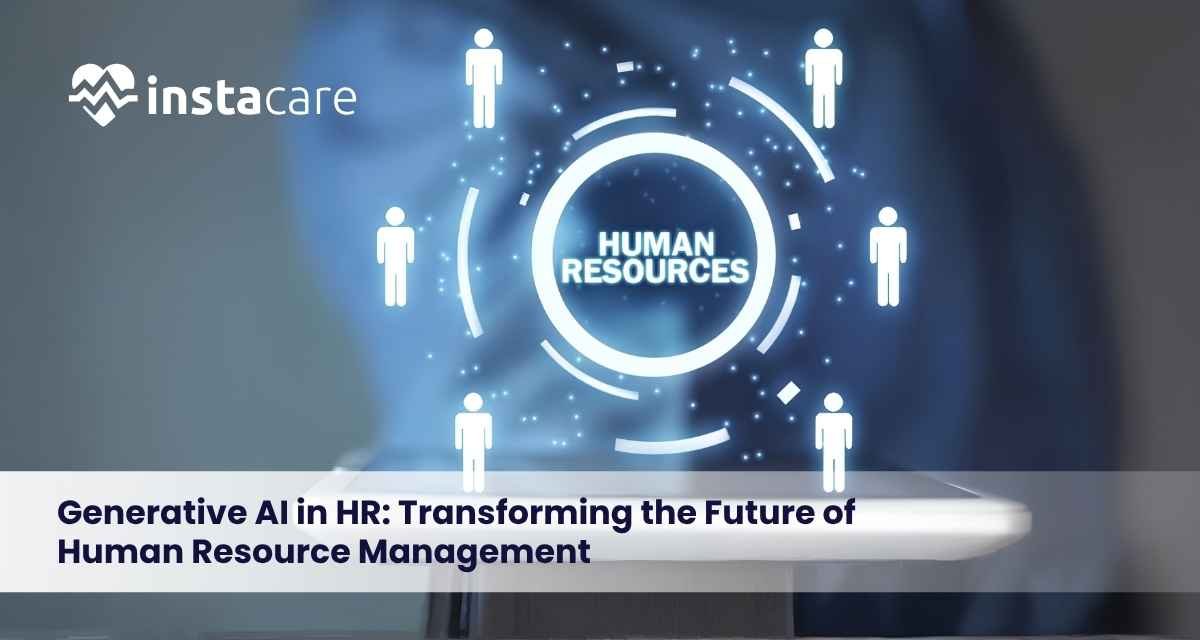
Generative AI in HR: Transforming the Future of Human Resource Management
Generative AI is disrupting employee-facing functions, including recruitment, training, support, and management. Fixed-rules-based legacy HR systems are inflexible. In contrast, generative AI is not. It can create novel content, generate information summaries, answer questions, write drafts, and conduct analyses. It can also assist with and drive informed decisions.
Within the context of HR, AI can perform any combination of the following: draft and create posting descriptions, filter and screen CVs, develop and generate questions to conduct interviews, create materials and conduct sessions for employee onboarding and training, engage and answer queries posted by employees, and generate and assist with workforce planning.
The rapid evolution of AI particularly applies to HR because the majority of functions performed by HR teams are repetitive and based on documentation and correspondence.
According to SHRM, AI is being used with increasing frequency to optimize and expedite the acquisition of talent, planning and administrating the workforce. Consequently, due to the nature of generative AI, it is particularly beneficial and provides greater value to HR departments and fulfills the goal of optimizing time spent in order to enhance the experience of employees.
What is Generative AI in HR?
Generative AI within HR is best described as the subset of tools that lead the generation of text, suggestions, summaries, reports, emails, policies, training and learning materials, and insights pertaining to queries and tasks of an HR nature. These tools are set within the framework of large language models that have the ability to understand prompts and provide outputs in the format of natural language.
For instance, an HR officer can prompt generative AI to create a job posting for a Marketing Manager, walk them through the process of simplifying a particular employee handbook policy, draft a set of questions for a Software Engineer interview, or even present a summary of the findings from an Employee Survey.
It is important to note that although generative AI has a wide range of functions supporting the HR team in the fulfillment of a particular task, it does not replace the value of the HR professional. These tools act as valuable assistants by increasing the efficiency and standardization of task completion.
Recruitment and Talent Acquisition
- Generative AI is becoming popular in recruitment. Hiring teams can edit AI created candidate communication, screening questions, and job descriptions, making application review much more effective as AI created summaries are reviewed by the team.
- AI created job spec messaging uses AI to personalize messaging to candidates throughout the application and review process. This completes a communication loop and improves the responsiveness and efficiency of the recruitment team.
- Generative AI is a great tool for the hiring process and develops a newfound focus in the market. Skills-based hiring is focused on the availability of the skills as opposed to the presence of job titles/degrees.
- AI-supported skills-based hiring is the new wave of hiring based on skills with a focus on ease and the absence of employment titles and degrees as a barrier. SHRM has identified AI and its role as a burgeoning recruitment and candidate engagement tool.
- Bias in AI and a lack of audit controls can create employment issues based on discrimination. Employment-related AI tools create legal issues with discrimination based on the Employment Decisions Act as per the EEOC.
- This makes bias in AI even more crucial, especially in hiring. While using AI is okay, the recruitment team needs to have the final say and review all AI recommendations.
Employee Onboarding
Generative AI has made great strides in developing an easier and more effective onboarding experience for new employees.
- During onboarding, new employees are sent welcome emails and beginning of the week/every week onboarding schedules and training tip checklists and guides based on the role and training frequently asked questions.
- All of these can be created by AI based on the generic sample. AI can help customize onboarding training material based on seniority, department, and location.
- AI chatbots can help answer recurring onboarding questions like “What is the Leave application process/How do I apply for leave?”, “Where is the company policy?”, or “Who is the Payroll contact?” AI chatbots can reduce HR workload and help new employees with fast responses.
Integration of Generative AI in Training, Learning and Development
Generative AI offers a recent application in learning and development in HR. AI has the capability to develop training programs, quizzes, case studies, learning role-play, and more. AI even suggests training programs to employees based on the employee’s role, performance, and skill deficiency.
For example, an employee in the sales department will receive AI-based training practice scripts, whereas a manager will receive training role-plays based on leadership. Learning using AI is more beneficial and purposeful, as Generative AI has the ability to ease complicated training material for understanding employees having varied learning styles.
Integration of Generative AI in Performance Management
- Generative AI can draft feedback organizable training performance reviews and training review comments. It even has the ability to analyze training objects and write training performance reviews based on feedback, thus clarifying training performance.
- Unlike training, learning and development which is more general, AI cannot make final calls on employee performance. This is due to the fact that employee performance has a role on promotions, pay, career advancements, and even termination.
- A study done in 2026 on the use of Generative AI in hiring practices assumed that the HR personnel would still be in control of the recruiting process, and that Generative AI would be silently shaping the information used for the AI.
- The same can be said regarding the performance review process. It is the responsibility of the HR professionals that the AI is used to support decision making and is not the primary factor.
Integration of Generative AI in Employee Engagement and HR Services
- Generative AI can be used to drive employee engagement through the analysis of employee surveys using AI to identify the issues as well as to develop HR action plans.
- Generative AI can even be used to summarize the responses to open-ended survey questions to identify the challenges employees face such as work overloads, communication gaps, inadequate leadership, and a lack of developmental opportunities.
- AI chatbots can act as constant HR assistants, available whenever employees want to know about leave, benefits and pay, remote work, and the procedures with the least friction in the system.
- However, employee data is sensitive, and HR teams have to protect privacy and ensure AI is not used in a way that can be perceived as surveillance.
- According to the NIST Generative AI Profile the relevant risk areas for generative AI systems are data privacy, and harmful bias, with special focus on the integrity of information and the human-AI interaction.
Policy and HR Document Automation
- An important part of the work done by HR teams is the preparation of policies, letters, contracts, warnings, announcements, and a variety of other internal communications.
- Generative AI systems can help with a first draft of any of these documents. They can also help rewrite policies using plain language, generate them in multiple languages, and help establish a tone framework for all HR communications.
- AI can formulate an employee attendance policy, a remote work policy, a reminder of accepted workplace conduct, or an internal communication about benefits enrollment. HR professionals should review each of these documents before using them.
Enabling Generative AI Systems in HR
- Generative AI systems may become the most disruptive technology aiding HR teams. They help save and automate routine batch work, ultimately giving HR professionals the time to emphasize the strategic aspects of the function.
- Additionally, they can improve the speed and consistency of HR communications, facilitate the completion of the hiring process, and help develop and deliver improved training and support to employees.
- Generative AI also has the potential to boost personalization. It can assist HR teams support the development of tailored employee training and development pathways, as well as personalized employee communication and engagement. This has the potential to help improve employee satisfaction by making HR services more responsive.
- Generative AI can enhance decision support systems. AI can summarize data so workforce trends, employee feedback, data about employee turnover, and gaps in employee skills can be analyzed by HR leaders.
Risks and Ethical Concerns
- Generative AI needs to be handled cautiously within HR.
- Bias, inaccurate data, and an over-dependence on AI data, as well as insufficient data oversight, are some of the risks involved.
- AI data is sometimes incorrect, but it can also reproduce patterns if it is trained on historical data that is biased.
- Under the EU AI Act, several AI systems, used in recruitment, candidate screening, employee management, promotion, assignment of tasks to employees, and performance assessments, may be classified as high-risk.
- This shows how important it is for HR to govern AI systems, as it will not only be an upgrade to the technology.
Best Practices for Using Generative AI in HR
- Setting up well-defined organizational policies regarding AI technologies is the first step organizations can take.
- HR departments need to specify how AI technologies can be used and if oversight is required for the review of AI systems. Human reviews are mandatory for the more sensitive decisions.
- Evaluate AI technologies for bias, data accuracy, data privacy, and data security. Make employees aware that AI technologies are being used for HR functions. Provide prompt writing and ethics-based AI training to HR employees. Train HR employees on legal risks and data protection.
- Generative AI is most effective when augmenting individuals rather than supplanting decision-making.
- Trust, empathy, and communication define the essence of HR. AI has a role to play in streamlining HR processes, but the onus of responsibility must always rest on people.
Conclusion
The potential of generative AI in HR is undeniably vast for contemporary organizations. It will refine HR processes, among others, in recruitment, onboarding and training, in support of employee engagement and policy drafting, in planning and aiding workforce initiatives. It will allow HR practitioners to deliver enhanced, tailored support and engagement to employees through improved, time-efficient communications.
That said, the HR function will always be an interface among people. The inept application of AI will erode engagement and create discrimination, bias, or result in the irresponsible exposure of confidential employee information. The fully automated HR function of the future will be a collaborative, human-centric function. The organizations that will attain the highest ROI from generative AI in HR will be those that blend efficiency through AI and ethical corporate responsibility.
FAQs
What are examples of generative AI applications in HR?
Examples of generative AI applications in HR are drafting job postings, resume screening, drafting interview questions, creating onboarding guides, drafting training materials, responding to employee queries, survey summarization, and assisting with HR-related documentation.
Can generative AI take the place of HR professionals?
The short answer is no. Though generative AI can perform a variety of tedious tasks and augment decision-making, there are multiple HR functions that require the application of human judgment, such as hiring, employee performance reviews, employee relations, managing conflict, and ethical considerations.
What are the risks of using generative AI in HR?
Key risks are bias, privacy issues, false information, opacity of the system, and dependence on automated recommendations. HR teams should be aware of AI under-defined policies, and human oversight, and protect data and conduct reviews.