

Last updated on Monday, 10, August, 2026
Last Updated on 2 months ago by Ahmed Usman
Table of Contents
Types of Virtual Care: Understanding Different Forms of Digital Healthcare
Virtual care has been a game changer by allowing the public and healthcare practitioners to meet via the internet. Rather than having to visit a healthcare institution many times, people can be given advice, carried out consultations, and even have their health monitored and supported from the comfort of their homes using video calls, phone calls, and even healthcare apps and websites. Virtual care offers ease of access to healthcare services especially for people residing in hard to reach places. This type of care is also very beneficial for people with chronic illnesses. There are many variations of virtual care.
What Is Virtual Care?
This type of care is healthcare service that is given remotely, beyond the four walls of a healthcare institution. Virtual care is made possible when healthcare practitioners are able to assess conditions, give advice and monitor health, without the patient being physically present.
Virtual care employs many forms of technology, some of them are:
- Video calls
- Telephone calls
- Health apps
- Monitoring device
- Message systems
- Health platforms
Virtual care cannot meet the demand for all type of healthcare services, however, it is an excellent alternative for many services, such as consultations, health teaching, follow-up visits, and management of health conditions.
Types of Virtual Care
Telemedicine
Of all the forms of virtual care, this is the most popular. This service is the remote provision of healthcare via the internet. Telemedicine is most frequently adopted for accessibility and convenience drives the popularity of these services.
Video Consultations
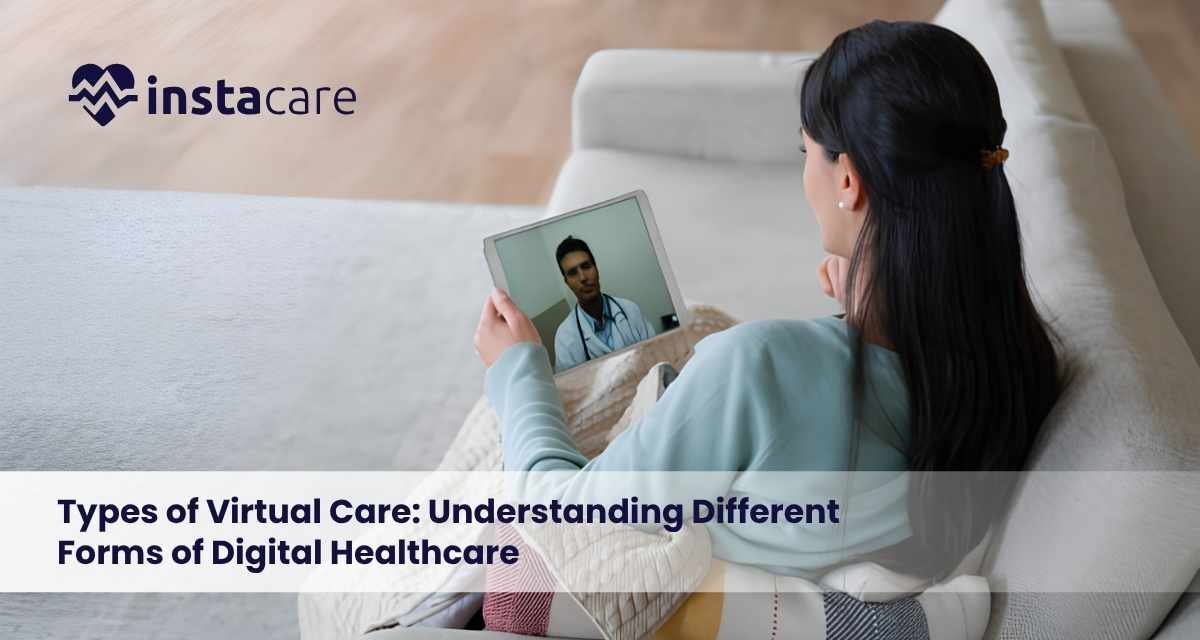
Video Consultations are secure, video-based, virtual communication that connects patients and healthcare providers.
Routine checkups, specialist appointments, and follow up visits are examples of healthcare services that are made easier and more personal when video communication is used, compared to voice only phone calls.
Telephone Based Care
Telephone Based Care is the most traditional and basic form of virtual care. It simply involves the healthcare provider and patient communicating via voice call.
Discussions about symptoms, advice and next steps for treatment, and questions about prescriptions are all examples of phone based healthcare services. Telephone based care is the most accessible and least sophisticated form of virtual care.
Remote Patient Monitoring
Remote Patient Monitoring involves the use of virtual care technology that allows healthcare providers to track and monitor the patient’s health from a distance.
This technology is used to monitor and collect healthcare data such as, but not limited to, blood pressure, heart rate, blood sugar levels, and weight. Virtual care is particularly useful for patients with chronic illnesses that require constant monitoring.
Mobile Health Applications
Mobile health applications are software that can be downloaded to a user’s smartphone or tablet and provide features that assist users in managing their health.
These applications may allow users to do the following:
- Log Symptoms
- Document Health Records
- Book Appointments
- Get Reminders for Medications
- Read Health Literature
- Set and Monitor Health and Wellness Goals
Mobile health applications empower health management.
Store-and-Forward Care
Store-and-forward care is the process of digitally sending health information to a health care professional to be reviewed at a future time.
This may include:
- Digital Images
- Laboratory Results
- Health Records
Health care professionals may view, analyze, and make recommendations based on the information, all without the need for a scheduled appointment.
This method of virtual care describes the absence of a need for real time communicative interaction.
Online Patient Portals
Online patient portals are secure websites that house patient health care information and allow for health care communication.
These portals may allow patients to do the following:
- Check Health Records
- Check Laboratory Results
- Schedule Appointments
- Message Health Care Team Members
- Read Descriptions of Treatments
Patient portals increase the ease of health care communication and access to health care information.
Virtual Mental Health Care
Virtual mental health care is the provision of mental health care via a digital platform.
This may include, but is not limited to, the following:
- Therapy Video Calls
- Therapy Text Messages
- Therapy Phone Calls
Virtual mental health care is an effective way to reach mental health care for people who cannot access traditional mental health care.
Digital Health Coaching
Digital health coaching is the provision of health coaching in a digital format.
Health coaches may guide clients with regard to:
- Nutrition
- Exercise
- Stress management
- Sleep
- Wellness
Digital coaching tools can help individuals remain inspired and keep track of their progress.
Virtual Second Opinions
A Virtual Second Opinion service gives patients the option to receive more medical counsel without an in-person visit.
This service is often used by patients who want to:
- Confirm a diagnosis
- Learn about other treatment options
- Obtain an expert opinion before a healthcare decision
Virtual Second Opinions gives patients more medical options to consider without an extensive travel requirement.
Book Your Free Marketing Consultation
Benefits of Virtual Care
There are several benefits of Virtual Care that impact patients as well as the healthcare system.
Greater Access
Virtual Care allows people to receive healthcare support regardless of their location, and is extremely beneficial to people who live in areas that lack adequate healthcare.
More Convenience
Patients can attend a consultation from their own home, which eliminates travel and wait time.
Better Management of Chronic Conditions
Remote care, as well as Virtual Care, allows patients to manage their chronic conditions better.
Fewer Healthcare Barriers
Virtual Care may improve access for people who have difficulty with transportation, mobility, or time.
Ongoing Health Support
Virtual Care allows communication and monitoring between support sessions.
Limitations of Virtual Care
Some Virtual Care benefits come at a cost.
Some of the cost may be:
- The inability perform a physical exam
- Technology Issues
- Concerns regarding the Internet
- Health Privacy Concerns
- Situations that require an immediate or emergency response
Some conditions require a physical examination, and/or laboratory testing.
The Future of Virtual Care
Given the right circumstances, alongside facilitating supportive policies, the development of telemedicine, eHealth, mHealth, virtual care, and integrated health systems will continue to change the healthcare system as we know it in the 21st century.
When these systems become the preferred method of service delivery, they can:
- Provide a solution to the health care challenge in isolated communities.
- Reduce costs of health service delivery.
- Provide real and measurable feedback on patient care.
- Create seamless channels for health care users and providers.
- Decrease the demand for and improve the efficiency of health care providers.
- Support self-care and patient empowerment.
Conclusion
Modern healthcare features an increasing reliance on virtual care options and their inherent accessibility and convenience built-in. There are multiple kinds of virtual care. These include: consults through video, remote monitoring of patients, applications of digital health, and virtual mental health services. Using this technology, patients have more control in managing their health. Virtual care does not address all healthcare needs, and as such, cannot and should not be used to replace in-person services.
FAQs
What is the most widely used type of virtual care?
Services in telemedicine, eHealth, and mHealth, including virtual consultations, are the most widely used forms of virtual care.
Can virtual care replace in-person healthcare visits?
Virtual care can never replace all in-person healthcare visits, as there are many healthcare needs that require physical examinations and health care-related tests. Nevertheless, virtual care can significantly reduce the need for many in-person visits to health care providers.
Is virtual care useful for managing chronic illnesses?
Virtual care is extremely useful for managing chronic illnesses as it provides the means to offer continual care to patients through the virtual monitoring of patients, medication management, and the provision of health education.