Last updated on Thursday, 8, October, 2026
Last Updated on 23 hours ago by Ahmed Usman
Table of Contents
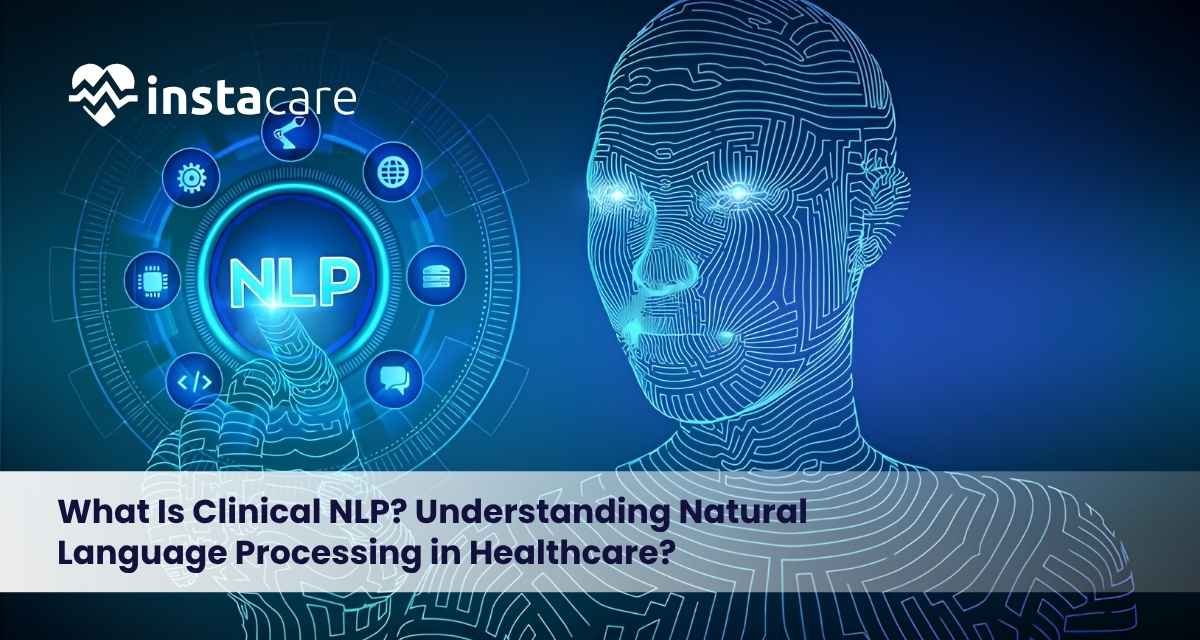
What Is Clinical NLP? Understanding Natural Language Processing in Healthcare
Clinical Natural Language Processing (Clinical NLP) is a subset of artificial intelligence (AI) that helps machines process, analyze, and comprehend medical terminology and conversational speech. Clinical NLP enables computers to access and interpret unstructured data, including medical records, notes, summaries, reports, and patient histories, within healthcare and related fields.
Medical professionals create huge volumes of written data every day. Much of this information is stored in free-text format, making it difficult to structure, retrieve, and evaluate using traditional software. Clinical NLP makes it possible to transform free-text data into structured information that can be used for various clinical and administrative purposes, including improving clinical decision-making and documentation.
How Does Clinical NLP Work?
Clinical NLP combines natural language processing with machine learning and medical terminology to analyze clinical text. The process generally involves several steps.
1. Text Acquisition
The system collects medical text from clinical notes, electronic health records, reports, and other healthcare documents.
2. Text Preprocessing
The system identifies sentences and words, expands medical abbreviations, and recognizes relevant medical terminology.
3. Medical Entity Recognition
Important clinical information such as medical conditions, symptoms, medications, procedures, and laboratory findings are identified.
4. Context Analysis
The system determines whether a medical condition is present, absent, suspected, historical, or related to a patient’s family history.
5. Information Extraction
Relevant medical information is extracted and organized into a structured format that can be used for further analysis.
6. Data Integration
The structured data can then be integrated into healthcare workflows, including reporting, clinical analysis, documentation, and decision-support systems.
For example, if a doctor writes, “Patient has a history of hypertension and denies chest pain,” Clinical NLP can identify hypertension as a historical condition and determine that chest pain is denied.
Applications of Clinical NLP in Healthcare
Clinical NLP has several applications across healthcare organizations and medical workflows.
EHR Management
Clinical NLP can extract relevant medical information from electronic health records (EHRs) and organize it into categories such as diagnoses, symptoms, medications, and treatment history. This information can also be presented in a summarized format to make patient records easier to review.
Clinical Decision Support
Clinical NLP can extract information from medical records that may be useful for clinical assessment and care planning.
Clinical decision support systems (CDSS) integrated with Clinical NLP can help healthcare professionals identify potential risks, medication concerns, and documentation gaps.
Automated Medical Documentation
Healthcare professionals spend a significant amount of time documenting clinical activities and patient information.
When combined with appropriate validation systems, Clinical NLP can assist healthcare professionals in capturing, organizing, and compiling relevant information while drafting summaries for final review.
Medical Coding and Billing
Clinical NLP can help identify and suggest medical codes based on documented diagnoses and procedures.
While this can improve coding efficiency and reduce the administrative burden on healthcare professionals, final verification remains essential to ensure accuracy.
Patient Risk Identification
Clinical NLP can identify potential risk factors for various medical conditions from clinical documentation.
For example, it can help identify patients who may require further assessment based on documented symptoms or medical history associated with a particular condition.
Population Health Management
By analyzing large datasets, Clinical NLP can help healthcare organizations identify health conditions across different population groups and support population health planning and management activities.
Book Your Free Marketing Consultation
Benefits of Clinical NLP
Clinical NLP can provide several benefits to healthcare organizations and professionals.
Increased Efficiency
Clinical NLP allows healthcare professionals to spend less time manually reviewing lengthy and detailed medical records.
Structured Healthcare Data
Clinical NLP transforms unstructured medical information into structured data that can be analyzed and used by healthcare systems.
Reduced Administrative Workload
Automating certain documentation, coding, reporting, and information extraction tasks can reduce the workload of healthcare personnel.
Easier Access to Information
Clinical NLP can make relevant information easier to locate within large volumes of clinical documentation, helping healthcare professionals access information needed for clinical decisions.
Improved Healthcare Analytics
Structured clinical data can be used for healthcare analytics, reporting, research, and quality improvement initiatives.
Improved Clinical Decision-Making
Clinical NLP can help bring relevant patient information to the attention of healthcare professionals, supporting informed clinical judgment and decision-making.
However, these benefits depend on the accuracy of the Clinical NLP system, appropriate implementation, and proper clinical oversight.
Challenges of Clinical NLP
Despite its potential benefits, Clinical NLP also presents several challenges that healthcare organizations need to consider.
Complex Medical Language
Medical records contain complex terminology, abbreviations, and expressions that can vary between healthcare professionals and organizations.
Interpreting Clinical Context
Clinical NLP systems need to distinguish between different types of information, including confirmed diagnoses, suspected conditions, previous illnesses, medical history, and negative findings.
Patient Privacy and Data Security
Healthcare records contain sensitive patient information. Clinical NLP systems must therefore implement appropriate security measures to protect patient data and maintain confidentiality.
Accuracy and Reliability
Clinical NLP models may misinterpret complex statements and produce incorrect information. Human oversight is therefore essential, particularly when NLP outputs may influence clinical workflows or decisions.
System Integration
Integrating Clinical NLP into existing healthcare IT systems may require changes to workflows, technical infrastructure, and professional processes. Healthcare organizations may also require specialized technical support during implementation.
The Future of Clinical NLP in Healthcare
Clinical NLP is becoming increasingly important as healthcare organizations adopt digital systems and AI-assisted workflows.
The rapid development of large language models and advanced machine learning technologies may improve the ability of Clinical NLP systems to interpret complex medical documents, summarize patient histories, and extract clinically relevant information.
Potential Future Applications
Future applications of Clinical NLP may include:
- More advanced clinical documentation
- Improved patient history summarization
- Better interoperability between healthcare systems
- Advanced healthcare data analytics
- More efficient medical coding
- Improved information extraction from clinical records
- Enhanced clinical decision-support capabilities
However, these developments will require reliable validation, strong patient-data protection, transparency, and continued oversight from qualified healthcare professionals.
Conclusion
Clinical Natural Language Processing (NLP) uses artificial intelligence to help healthcare systems understand the informal, complex, and often unstructured way medical information is recorded.
By extracting relevant information from physician notes, electronic health records, and other clinical documents, Clinical NLP can support better documentation, clinical decision support, healthcare analytics, and administrative efficiency.
Despite challenges related to accuracy, privacy, medical terminology, and system integration, responsible implementation of Clinical NLP can play an important role in improving health information management and supporting modern healthcare workflows.
Frequently Asked Questions About Clinical NLP
What Is Clinical NLP Used For?
Clinical NLP is used for various healthcare-related natural language processing tasks, including analyzing medical text, extracting patient information, structuring electronic health records, supporting medical coding, assisting with clinical documentation, and identifying relevant information for healthcare decision-making.
What Is the Difference Between NLP and Clinical NLP?
NLP focuses on understanding and processing general human language across different applications, while Clinical NLP is specifically designed for healthcare-related language and medical information.
Clinical NLP must understand medical terminology, clinical concepts, healthcare documentation, and medical context. It must also address important considerations such as accuracy, patient privacy, and confidentiality.
Can Clinical NLP Replace Healthcare Professionals?
No. Clinical NLP can process and analyze large amounts of medical information and assist healthcare professionals with documentation, information retrieval, and decision support.
However, clinical interpretation, diagnosis, treatment decisions, and other important healthcare decisions should remain under the responsibility of qualified healthcare professionals.