

Last updated on Thursday, 27, August, 2026
Last Updated on 2 months ago by Ahmed Usman
Table of Contents
Telenursing: What It Is, How It Works, Benefits, and Examples
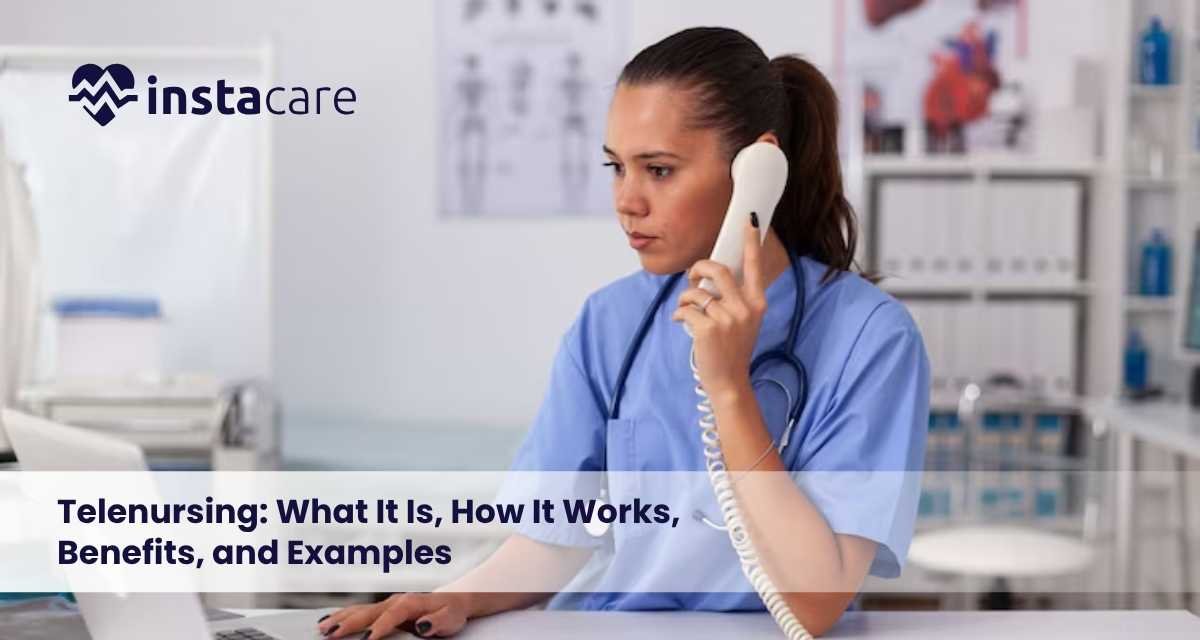
Healthcare has transformed traditional methods of delivering care. Technology creates new opportunities for patients to receive support outside of healthcare facilities. One of the most significant changes to modern healthcare is the development of telenursing. Telenursing is the ability for nurses to provide care and support via communication technology. Telenursing uses phone, video, messaging, and other digital communication tools to provide remote health services and support patients that are unable to travel to a healthcare facility or require ongoing health support.
This approach of healthcare delivery has proven to be useful for patients who have chronic health conditions, require health education, and need routine check-ups and support.
What is Telenursing?
Telenursing is the delivery of nursing services via telecommunication. Nurses use telecommunication in other ways than in-person visits to deliver healthcare services to patients which includes evaluating, giving advice to patients, monitoring patients, and offering extended services.
Telenursing is not a substitute for face to face healthcare. Telenursing is an added healthcare support service that improves care, convenience, and connectivity.
Telenursing allows patients to connect with nurses and receive much needed healthcare via telecommunication rather than requiring the patient to travel unnecessarily.
How Does Telenursing Function?
Telenursing allows patients to receive ongoing health support and connects patients to a nurse via any communication tool. The service is activated when a patient requires healthcare support or a follow up appointment. Prior to interacting with a patient via a secure communication tool, the nurse has been previously briefed to support the patient.
A Typical Telenursing Process Includes
Initial Assessment
A Talennurse collects the patient’s health concerns, symptoms, medical history, medications, and current needs over a phone call or video, or using a communication tool of their preference.
The telenurse may ask about pain levels, habits, and recovery progress. They may also ask about newly developed symptoms.
Health Monitoring
There are several health conditions that, once diagnosed, can be managed by a telenurse. Patients can send telenurses updates on their progress, relief, symptoms, or even changes in medications and recovery status.
This provides a nurse with key information that allows them to make an early assessment and encourage development of healthy routines.
Education and Guidance
One of the main roles of telenursing is to educate the patient about their condition. This can include education for the safe and effective use of medication and management of symptoms.
In some cases this will also involve patient education for the management of wounds, prevention of lifestyle disease, and detection of emergency changes. Information will empower patients to make informed decisions regarding their health.
Follow-Up Support
Of the main aspects of telenursing, follow-up support is the longest of these. Most healthcare scenarios involve a prolonged period of time before the desired goal is reached.
Telenursing is ideal support for this period as it enables the telenurse to progress assessments, provide support, and ensure constant adherence to the recovery goal.
Common Examples of Telenursing
Telenursing has uses across the entire spectrum of health care. Some of the more common examples of this are:
Chronic Disease Management
Healthcare conditions that have ‘high-risk’ patient groups, like diabetes, high blood pressure and cardiovascular cases, require chronic disease management.
Telenursing is invaluable for the management of these patients, allowing the nurse to assist with the routine of symptoms, the routine of medications and the self-management of a healthier choice.
Post-Surgery Follow-Up Care
Patients typically have lots of questions about surgery recovery, wound care, how and when to take prescribed medication, the types of activities they can engage in, and how to differentiate between normal vs. abnormal symptoms.
Through the process of telenursing, recovery progress can be assessed to offer guidance and/or determine if there are concerns that warrant medical attention.
Medication Management
Adults and seniors, in particular, can have difficulty with the management of multiple medications. Nurses can give medication reminders, as well as simple instructions and explain any medication concerns.
Elder Care Support
Older adults’ health status can be monitored and daily health needs managed.
Telenursing can offer more support to older adults who wish to have care delivered at home and who are unable to leave their homes.
Mental Health Support and Health Education
Nurses can offer health education, emotional support and guidance to those with stress and lifestyle changes and those with health-related concerns. Telenursing is unable to provide substitute therapy and counseling. It can offer employees emotional support and a temporary sense of peace.
Book Your Free Marketing Consultation
Advantages of Telenursing
Increased Accessibility to Care
Telenursing enables nurses to reach clients who would otherwise be inaccessible due to distance, physical limitations, or lack of mobility. This helps remove some of the barriers that prevent some individuals from seeking health care services.
Added Convenience
Telenursing minimizes the trips that patients might have to take to health facilities for routine and needed care. Patients can communicate with the nurse and receive care from the convenience of their homes.
Enhanced Continuity
Telenursing, through routine contact with the nurse, creates a connection that helps patients feel supported and helps the nurses to understand the needs of the patient at that moment.
Prevention and Assessment of Health Concerns
Telenursing can help actually identify an issue as it is developing by helping patients to recognize symptoms.
Improved Health Literacy
Patients must understand their conditions and the role they must play in order to attain their goals for health.
Family Caregiver Support
Family members of patients who are not healthcare providers must also be supported and educated about basic healthcare, especially for the elderly and those who need additional time to recover.
Challenges Associated with Telenursing
While the advantages of telenursing are numerous, there are areas of concern that need to be taken into account.
Technology Access
Use of some of the telenursing services requires the patient to have an internet connection, a device, and be able to make a call. Some individuals may lack one or all of these.
Communication
There are times when a health assessment calls for an in-person visit for a health care professional to do an on-site evaluation.
Privacy
Patient data needs to be encrypted in order to maintain security when utilizing digital services. Healthcare providers have to put in practices that maintain the privacy of patient data.
Healthcare Technology
Some individuals are not able to easily navigate video calls and health apps, so telenursing service providers can help patients with simple step-by-step instructions on how to communicate using various means of technology.
The Progression of Telenursing
Since telenursing is an aspect of nursing dependent on technological development, with advances in communication systems, one could imagine how telenursing could help nurses to modify or redesign the delivery of healthcare services in order to support patients in a holistic manner.
Telenursing seeks to provide healthcare and support in a more constructive, accessible, and preventive manner all while helping patients become better managers of their health.
Conclusion
Telenursing is an innovative nursing practice that seeks to offer healthcare and support remotely by means of digital technology. This ensures that patients receive the necessary support while keeping healthcare as convenient as possible.
Telenursing can be a useful approach to a variety of healthcare situations such as support for patients with chronic health conditions, post-surgical care, care for the elderly, education, and health monitoring. Although there are services that cannot be replaced, telenursing provides a safe and convenient way to deliver healthcare.
Healthcare has the potential to adjust to address the needs of its users, and within healthcare, so does telenursing.
FAQs
What is the difference between telenursing and telemedicine?
Telemedicine includes a variety of healthcare services rendered remotely by various health professionals, whereas telenursing comprises nursing services for the purpose of patient monitoring, guidance, teaching, and follow-up.
What can telenursing be utilized for?
Telenursing is a flexible approach and can be implemented in a variety of healthcare situations such as chronic health conditions, providing directions for medication, post-surgical care, care of the elderly, symptom care, and health education.
Can telenursing ever stand in for a physical visit by a nurse?
Telenursing does facilitate many aspects of nursing, but some things require hands-on. So, there are times when an in-person visit is required.
Can telemetry nursing replace an in-person nursing visit?
Telemetry nursing does facilitate many aspects of regular nursing care, but some aspects do require a hands-on approach that telemetry nursing cannot provide. Therefore, the practitioner should decide the need for an in-person nursing visit.