
How to Secure Patient Data from Ransomware? The advent of the era of technology in the healthcare sector has made it more vital now than ever to protect patient data from ransomware. Healthcare organizations are a key target for cyber attackers because they hold vast quantities of sensitive personal and health information. The impact of a ransomware attack can be financial loss, damage to reputation, HIPAA breaches, and most significantly, disruption of essential patient care. In this guide, we cover the nature of ransomware, why patient data is an attractive target, and how to have effective ransomware protection strategies in place to protect your systems and ensure healthcare cybersecurity. What Is Ransomware? Ransomware is malware that encrypts data and systems, holding the users at ransom until payment is received. Such attacks often begin with a phishing email, suspicious attachment, or exploit on old software. Ransomware in healthcare, minutes of downtime can result in loss of life, so organizations will pay. Types of Ransomware There are many different types of ransomware: Crypto Ransomware: It encrypts important data, making it unreadable unless a decryption key is generated. Locker Ransomware: It locks down the whole device , with the only exception being application and file access. Double Extortion Ransomware: It encrypts data and additionally exfiltrates it. Threat actors threaten to pay or publish stolen data, doubling the pressure on victims. Current Healthcare Ransomware Trends The healthcare industry remains under siege: Clinics and hospitals are being targeted with an overwhelming increase in targeted attacks, where most prefer to close emergency rooms. Phishing methods are becoming complex with AI usage. Remote desktop protocols (RDP) are being targeted heavily. Third-party vendors and their connected devices are currently the best attack surfaces. Why Patient Data Is So Valuable? High Market Value of Medical Records Medical records differ from credit card information since they hold fixed details: names, dates of birth, insurance policy numbers, and complex medical history. Due to this, they are worth a lot of money on the dark web, going for 10–20 times more money than other personal data. Exploitation of Stolen Information Cybercriminals use medical information in various ways: Insurance fraud: Filing incorrect claims based on stolen insurance information. Identity theft: Opening unauthorized accounts or seeking medical treatment based on data. Misuse of prescriptions: Acquiring drugs or controlled substances illegally. Consequences of a Violation of Healthcare Information Violation of healthcare information can have serious repercussions: HIPAA violation: Heavy penalties from regulating authorities. Legal proceeding: Class action lawsuits by harmed patients. Federal investigations: Leading to operational audits and loss of licenses. Impact on Clinical and Operations Ransomware cyberattacks induce system downtime that slows down diagnoses and treatments, with the risk of jeopardizing patient outcomes. Patients also lose confidence in healthcare organizations that fail to keep secure medical records. Top Tactics to Safeguard Patient Data Adopt a Cybersecurity Framework Formulate an overall plan incorporating: Risk assessments to define vulnerabilities. Well-articulated cybersecurity policies and governance. Cybersecurity guidance from consultants. Strengthen Access Control Mechanisms Adopt strong access control by: Adopting role-based access to limit unwanted exposure. Activated multi-factor authentication (MFA). Monitoring login activity and system use for anomalies. Keep Software Current Software updates minimize the risk of exploits: Patch serious software vulnerabilities in a timely fashion. Utilize up-to-date antivirus and endpoint protection software. Scan legacy systems for hardening or retirement. Implement a Zero Trust Policy Trust no system or user: Verify all access requests. Enforce least-privilege rules. Randomly monitor user activity on the network. Vendor Risk Management Vendors and third-party service providers share the same patient data security needs: Screen vendors based on cybersecurity best practices for clinics. Place cybersecurity terms in contracts. Audit their access to sensitive patient information. Book Free Demo Different Data Protection Techniques Encrypt Patient Information Encrypting patient data ensures that even if the data is stolen, it is not usable: Use an industry standard such as AES-256. Encrypt data in transit and at rest. Use encryption for backup, email, and portable devices. Backup and Disaster Recovery Good backup practice lessens the impact of attacks: Adopt 3-2-1 rule (three copies, two different types of storage, one offsite). Regularly test backup integrity. Maintain backups on offline or immutable storage platforms. Secure EMR Systems EMR data security is commonly targeted: Select EMR systems with inherent security features. Enable audit trails and access logging. Integrate EMRs into overall cybersecurity efforts. Cloud Security for Healthcare Cloud security for healthcare providers is frequently utilized for storage and operations: Partner with HIPAA-approved cloud vendors. Employ end-to-end encryption of data stored in the cloud. Audit access and configuration options regularly. Physical Security Controls Physical security is frequently neglected: Restrict data center access via biometric or keycard authentication. Perform surveillance and regular inspections. Lock down devices in patient areas and take unattended devices away. Endpoint Detection and Response (EDR) EDR tools assist in detecting and quarantining ransomware attacks: Automatically monitor behaviors and detect suspicious activity. Quarantine infected systems from the network.

Edge Computing in Healthcare: Transforming Real-Time Patient Care Modern healthcare depends heavily on digital technology to propel patient care and process automation. Of all those technologies, edge computing is arguably the most important. Edge computing processes data at or near its origin, near the patient or medical device, instead of having all of it routed to distant cloud servers. This edge computing enables low-latency healthcare applications, which are critical in real-time patient monitoring and remote patient monitoring systems. Healthcare providers can enable faster, safer, and more reliable data processing at the edge through the assistance of edge computing, with direct effects on patient outcomes. With growing numbers of medical IoT devices and connected health platforms, healthcare ecosystems are rapidly becoming more complex and edge computing offers solutions to volume, speed, and data privacy. This article here explains what edge computing is, why it is so important in the context of healthcare, its key applications, benefits, and upcoming trends shaping the future of healthcare delivery. What is Edge Computing? Edge computing is a distributed IT platform where the processing happens at or near the edge where the data is created instead of shipping it to a remote data center or cloud. “Edge” refers to the physical site at the network edge, like a ward in a hospital, a wearable, or an off-site clinic. In healthcare, edge computing enables processing at the edge, on nearby devices or intelligent devices, and carries computation to patients, introducing less latency for data transmission required by time-sensitive healthcare processes. The technology enables applications with secure real-time health data that can make medical decisions feasible in a timely and reliable manner. In contrast to bandwidth and latency-constrained traditional cloud computing, edge computing offers an appealing and real-time processing of immense amounts of health data that are generated by internet-connected devices. Applications of Edge Computing to Healthcare Healthcare is uniquely suited to adopt edge computing because of the demands of fast data processing and privacy safeguarding. Edge computing has a variety of its most important applications in the healthcare sector: Real-time monitoring of patients: Sensors and wearables monitor patients’ vital signs in real-time. Real-time analysis is done by edge computing, allowing healthcare providers to respond early to dramatic changes. Security and privacy of data: Personal health data is processed locally, reducing the likelihood of transmission breach. Conservation of bandwidth: No data is transmitted to the cloud; only processed or necessary data is sent, defragmenting the network. Better decision-making: Real-time analysis at the edge device enables timely, informed clinical decisions. Rural and remote healthcare: Edge computing ensures effective delivery of health even in areas with sparse or patchy internet coverage. As 5G and edge in healthcare continue to expand, data reliability and speed are enhanced, enabling more sophisticated healthcare applications. Major Applications of Edge Computing in Healthcare Edge computing enables different healthcare innovations and solutions: Remote patient monitoring systems: Medical devices that track important indicators like heart rate, blood glucose, and oxygen level remotely process them locally to trigger alarms on abnormalities. It is vital for the management of chronic conditions as well as post-operative monitoring. Edge AI in healthcare: Edge AI in healthcare algorithms to support early diagnosis, personalized treatment plans, and predictive analysis without ever relying on the cloud. Edge analytics in healthcare: Healthcare organizations utilize edge analytics in patient care to track machine performance, predict failures, and streamline processes. Medical edge devices: Intelligent medical devices such as infusion pumps, ventilators, and imaging scanners use edge computing to work at their best and in a secure manner. Processing data at the edge: Processing data close to the patient location, healthcare workers eliminate delays, optimizing response in the case of an emergency. Medical IoT and edge computing: Connected healthcare equipment produces continuous, fluid streams of data, processed by edge computing to enable real-time monitoring and control. Edge computing use cases in hospitals: From intelligent operating rooms to patient flow management automation, edge computing enhances hospital workflows. Book Free Demo Edge Computing in Healthcare Benefits Healthcare acceptance of edge computing is followed by an array of benefits: Decreased latency: Faster processing enables rapid, time-sensitive, critical decisions in emergency and critical-care situations. Enhanced data security: Local processing lowers exposure to cyber attacks and enables easy compliance with privacy regulations like HIPAA. Enhanced patient care: Real-time observations and rapid data analysis facilitate on-time intervention and enhanced treatment protocols. Reduced costs: Reduced data transmission and cloud storage requirements save healthcare centers on IT expenses. Business continuity: Edge devices can operate in isolation during network downtime, enabling uninterrupted healthcare services. Smart healthcare infrastructure support: Connecting with 5G networks increases data speed and dependability, facilitating pioneering health technology. Health organizations embracing the edge computing benefits in healthcare realize increased efficiency, patient satisfaction, and data security compliance. Edge Computing Innovations and Future Trends The future of healthcare edge devices is auspicious, with loads of innovation on the way: 5G adoption: 5G network rollout adds edge computing with low-latency healthcare solutions and super-high-speed connectivity critical to telemedicine and real-time health monitoring applications. Enhance edge AI: Edge device AI applications will continue to evolve and get better at enhancing diagnostics, patient risk stratification, and individualized care. Healthcare edge device innovation: Networked medical devices and intelligent wearables will fuel edge data generation and processing. Improved security: As more organizations move to the edge, encryption and strong defense mechanisms for protecting real-time health information will be critical. Cloud-edge hybrid models: Blending the elasticity of the cloud

Ethics of AI in Healthcare Artificial Intelligence (AI) is revolutionizing the healthcare sector with advancements in diagnostics, treatment planning, predictive analysis, and administrative effectiveness. Right from AI-enabled radiology to virtual health assistants, applications of intelligent systems are enabling doctors to render faster, more precise, and more customized care. Yet, these advantages are paired with stern moral issues. AI algorithmic discrimination, patient self-determination, patient data privacy, AI accountability, and transparency are some of the direct concerns. Healthcare AI ethics is not an add-on; it is an urgent framework demanded to inform responsible innovation. This blog acknowledges the AI bias in medicine and highlights significant ethical standards and best practices required for ethical use and deployment. The Role of AI in Healthcare The uses of AI in the healthcare sector are far-reaching and continuously changing. Here are some of the main areas where AI is making its mark, with potential and moral issues. 1. Diagnostic Imaging AI algorithms analyze X-rays, MRIs, and CT scans quickly than human radiologists. AI speeds up early disease diagnosis like cancer, stroke, and retinal diseases. This improves diagnostic accuracy and speed, yet bias in AI analysis is a problem if the training data are not representative and ends in misdiagnosis of minority populations. 2. Predictive Analytics Machine learning algorithms can predict patient decline, readmission to the hospital, or outbreak of epidemics. These systems enhance preventative treatment but can develop responsibility issues in AI systems when the prediction is wrong or induces unwarranted panic. 3. Personalized treatment AI can provide personalized treatment regimens based on patient history and international medical literature. These applications are excellent decision tools, but still require human supervision in AI-enhanced care. An entirely automated process risks dehumanizing care and reducing clinician autonomy. 4. Virtual Health Assistants Chatbots and virtual assistants enable activities such as scheduling appointments, symptom checking, and medication reminders. These are fashionable but raise ethical concerns in AI diagnostics and data security in AI healthcare tools. 5. Administrative Automation Paper is minimized to an absolute minimum, and billing, insurance processing, and record-keeping are accelerated through AI. Although it streamlines procedures, automated errors or biases can be disastrous, particularly for insurance claims and medical coding. Ethical AI Practice in Medicine Ethical AI practice in medicine relies on integrating novel technologies into fundamental values of medical ethics and artificial intelligence, beneficence, non-maleficence, justice, autonomy, and accountability in AI systems. 1. Beneficence and Non-Maleficence AI technologies must be designed to benefit patient health without harming them. Algorithms must be carefully examined for accuracy, safety, and representativeness. Failing to correct AI errors or admitting poorly trained models to practice contravenes this value. 2. Autonomy and Informed Consent Patients should be informed whenever AI is applied in their care and be capable of comprehending its use. Ethical AI must ensure informed consent and AI-informed care. This is achieved by providing transparent descriptions of how AI affects diagnoses or choices, possible harm, and information on what data is gathered. 3. Fairness and Justice There is fairness in healthcare AI algorithms in the sense of treating all patients equally, regardless of race, gender, or socioeconomic status. AI algorithms created from biased data may further aggravate existing biases. Algorithms have to be tested on heterogeneous populations by developers. 4. Transparency and Explainability One of the most controversial issues is the “black box” nature of AI. Clinicians and patients require transparency in medical AI so that they can trust its recommendations. Explainable AI (XAI) can enhance understanding and responsibility by demonstrating the mechanism by whereby conclusions were drawn. 5. Responsibility and Liability In medicine, if something goes wrong, there has to be clear delegation of responsibility. If a computer AI is giving a false diagnosis or advice, is the doctor, the hospital, or the programmer at fault? There has to be legal and ethical responsibility assigned to AI systems. 6. Privacy and Confidentiality Artificial intelligence systems need large quantities of health information, typically drawn from electronic health records (EHRs), imaging data, wearables, or mobile apps. Preserving data privacy in AI systems involves protecting consent, de-identifying data, and complying with policies such as HIPAA and GDPR. Greatest Challenges to Ethical Adoption of AI Despite the best efforts globally towards the ethical implications of AI in healthcare, some challenges are responsible for slowing it down: 1. Biased Training Data If AI models are trained mainly on information about specific geographic or demographic populations, what emerges won’t apply to others. This creates AI bias in healthcare, which exacerbates health disparities rather than enhancing results. 2. Flawed Regulation AI development is outpacing regulation. In many regions, there are no clear standards for clinical validation, deployment, or post-market surveillance of AI tools. As a result, developers may not be held accountable for flaws or misuse. 3. Lack of Explainability Deep learning models are often complex and difficult to interpret. If clinicians cannot understand or challenge an AI’s output, ethical problems arise, particularly in life-or-death scenarios where reasoning must be transparent. 4. Inconsistent Human-AI Collaboration AI must be employed to augment, not substitute for, healthcare professionals. But if not taught to engage with AI systems, clinicians will be likely to rely too heavily on buggy suggestions or ignore rich information. Managing human supervision of AI-driven care is crucial. Book Free Demo Best Practices for Ethical AI in Healthcare Software developers and healthcare providers should incorporate practices to maximize the application of AI for good and patient-oriented purposes. 1. Use Varied, Representative Data Training data must cover all ethnic backgrounds, ages, sexes, and histories to prevent AI diagnosis bias. Algorithmic bias can be identified and rectified over time through ongoing audits. 2. Use Explainable AI Use transparent and explainable models that offer justification for their suggestions to establish trust among healthcare providers and patients and enable AI decision-making in clinical settings based on informed information. 3. Design Oversight Mechanisms Hospitals and clinics should establish AI ethics committees that include a balance of ethicists, clinicians, patients, and data scientists as members. These committees can pre-screen tools before deployment

Dental Clinic Billing Software: Effective Invoicing & Payment Reminders Dental clinics today aren’t just where better patient care is provided, businesses; they must also be well at being well at acting like business enterprises. Billing, for example, can be tiresome, error-prone, and time-consuming when done manually. That’s when dental clinic billing software comes in. Whether you have a single dentist office or an entire chain of offices, specialist dentist billing software can turn your finances around. From creating bills to issuing Automated billing reminders and automatically submitting insurance claims, dental software with a bill module simplifies it all, getting you paid quicker and improving patient satisfaction. What is Dental Billing Software? Dental billing software is a computer application that can manage the sophisticated financial operations of a dental office. It is different from general billing packages in that it natively connects to patient records, calendars, and treatment planning to provide an end-to-end hassle-free process of billing. This can be a stand-alone single application or an integral part of an enterprise dental clinic management application with scheduling, charting, inventory management, and marketing features. It’s special in that it knows the billing codes, insurance protocols, and practice workflows of the dental practice. In plain terms, Dental software with a billing module implies quicker, quicker, and more efficient billing at the expense of reduced paperwork for your staff. Common Billing Problems Dental Clinics Encounter Billings in a dental clinic can look simple enough, but complications can spiral out of control and severely affect cash inflows. Such complications typically come from manual or antiquated systems. Some of the frequent billing headaches are highlighted below: Periodic Payment Delays: Payments for bills are made by patients after receiving treatments, particularly when reminders are not automated. Hand Errors: Billing mistakes in bill creation, i.e., improper billing codes or failed charges, miss revenue. System Errors: In the absence of appointment and billing coordination, front office personnel have to recreate items, and thus, there is wastage. Paper Billing: Paper invoices not only waste time and money but can very easily be misplaced and damage the environment. Ineffective Follow-Up Practices: Clinics are unable to follow up on late payments when they lack a special dental reminder system. With proper dental billing software, all such problems get eliminated and aid in achieving smoother runs and healthier cash flow. Key Features Of Dental Billing Software That Make Invoicing Easy Modern dental billing software is based on efficiency and precision. Below are five of the most salient characteristics of Dental software for invoicing, which make payment processes easy: Automated Invoice Production: After treatment, the system will then automatically produce bills with everything included in the treatment details, codes, and patient information, all without requiring typing. SMS and Payment Reminders via Email: The strong dental reminder system automatically sends follow-ups via email and SMS to remind patients of pending or due payments, enabling you to cut down on missed payments at dental clinics or Clinic software for patient follow-ups. Appointment and Billing Integration: This module combines the appointment module with billing, in that each appointment is a rightful, timely bill, which enhances patient experience. Insurance Claim Automation: Preauthorization, submission, and reimbursement notification are quicker and more precise with in-built functionalities of insurance claim automation. Secure Payment Gateways: Provide various modes of payment through secure, mobile-friendly payment gateways. Patients can pay online in real-time through debit cards, credit cards, e-wallets, or UPI modes. They are not only easy to implement from the internal perspective but also enhance patient convenience, resulting in increased patient satisfaction and loyalty. Book Free Demo Best Dental Billing Software Features Billing automation for dentists does more than provide convenience. It provides tangible benefits that directly affect the bottom line and efficiency of your practice. 1. Better Cash Flow Management Computerized reminders and billing ensure faster payments. Practices are paid on time, with greater liquidity and financial soundness. 2. Greater Accuracy and Fewer Billing Errors Automation ensures the elimination of errors like misplaced treatment or miscalculated fees. Reduce missed payments in a dental clinic, billing fosters trust and reduces conflict with patients. 3. Improved Patient Communication SMS billing reminders for dentists ensure timely patient communication. Email reminders can be accompanied by service breakdowns and payment alternatives for ultimate transparency. 4. Improved Staff Efficiency Front office and billing employees save hours weekly by eliminating manual entry and collections pursuit. Reducing time can be used to enhance the service for patients and to provide care. 5. Paperless and Centralized Workflow Patient, appointment, and billing information are stored in one database. Green business practice-compliant Paperless billing in dental clinics provides secure, lasting records. Why Dental Practices Today Need Billing Automation The business of dental healthcare is changing day by day. Patients today no longer require slow, analogue, and touch-based experiences. Clinics that are not willing to change from traditional billing methods will be out of the race. With the implementation of advanced dental practice software features, clinics can revolutionize their business and gain market advantage. Additionally, medical billing regulatory requirements are changing constantly. Automation of your billing stream assists in maintaining compliance, enhances audit preparedness, and decreases the possibility of claim denials. Selecting the Proper Software: What to Consider When choosing a clinic software for a dental practice with a billing module, the following should be your priority: Cloud-based access with updates Seamless integration with EHR, scheduling, and reporting software Simple setup and user-friendly interface Secure data storage and adherence to privacy Customer-friendly support and training resources Be sure to demo a few options and select one that best suits the size and workflow of your practice. The goal is not merely automation, but

Expiry Alerts in Clinic Management Software: Why They’re Crucial for Safe Healthcare Technology is no longer a nicety in today’s healthcare, it’s a necessity. Perhaps the most underappreciated but necessary feature of clinic management software is the medicine expiry notice system. What this feature does is allow medical supplies, vaccines, and medications to expire at the optimal time so clinics avoid health hazards and monetary loss. What Are Expiry Alerts in Clinic Management Software? An expiry reminder system operates based on tracking stock and providing reminders when a product is nearing expiry. These automatic expiry alerts in healthcare software can be set to provide reminders weeks, months, or even days ahead of time based on the configuration setup. If a Drug expiry notification feature or vaccine expiry remind is used, these reminders enable clinics to take preventive action before an issue occurs. The Risks Involved in Disregarding Expiry Dates in the Healthcare Industry Disregarding monitoring and maintenance of expiration dates has disastrous implications in healthcare units. Patient safety and expired medications go hand in hand; delivery of expired drugs lessens treatment efficacy or, worse still, induces toxic reactions. A few of the primary risks involved in disregarding expiry dates are: 1. Patient Safety Compromised Older medicines lose effectiveness or form toxic substances. They can cause treatment failure, allergic responses, or toxic side effects. 2. Legal and Regulatory Problems Medical facilities have a legal responsibility of adhering to usage and storage procedures for drugs. Noncompliance with Expiry date management for medicines may attract fine, prosecution, or license revocation. 3. Monetary Losses Wasted resources are expired drugs. Accurate Inventory expiry tracking in clinics would help avoid situations where stocks end up unused, leading to a build-up of financial losses. 4. Reputational Damage Trust underpins healthcare. Issuing expired medications would be severely damaging to a clinic’s reputation, with patients seeking alternative options elsewhere. These threats indicate the increased necessity for an expiry stock clinic software that guarantees a timely response and openness in handling medical stocks. Advantages of Expiry Warnings to Clinics Having an expiry notice system in your clinic processes brings immense advantages, ranging from process efficiency to enhanced patient care. 1. Enhances Patient Safety By discouraging expired drugs or vaccines from being used, inventory alerts ensure that all that is used during treatment is safe and effective. This is particularly important in pediatric and geriatric treatment, where drug reaction and immunity differ. 2. Simplifies Inventory Management Effective medication stock management software enables improved stock rotation. This prevents clinics from over-ordering and ensures first-expiry-first-out (FEFO) usage, reducing wastage. 3. Eliminates Human Error Manual tracking of inventories consumes a lot of time and is likely to be ignored. Expiry reminders in clinic software make it quicker, more effective, and less based on human memory. 4. Maintains Compliance with Regulations Regulatory agencies conduct expiry date and inventory audits at regular intervals. Pharmacy inventory reminders ensure clinics are audit-ready at any given time. 5. Maximizes Use of Resources Understanding when drugs are near expiry allows clinics to utilize them effectively, provide discounts, or donate them before they expire. Such control of drug expiry times enhances financial planning and ethical efficiency. Book Free Demo What to Look for in Expiry Alert Systems? It is important to have the right health IT expiry alert tools for proper implementation. The below are the functionalities making an Alert system for expiring supplies highly effective: 1. Real-Time Notifications The software must produce drug expiry reminders in real time when stock is approaching its expiry date. These must be displayed on dashboards, or even via email, or even as SMS alerts. 2. Timelines for Customizable Alerts Every clinic varies. Some will require a 30-day notice before expiration, others sooner. A decent system has the capacity for customization to suit your treatment cycle and turnover of inventory. 3. Batch-Level Tracking Batch-level expiry tracking is mandatory, particularly with vaccines or controlled substances. This identifies and dispenses only the affected batch, avoiding wastage. 4. Purchase & Billing Integration An ideal integrated medicine expiry notification system would seamlessly integrate with purchase orders, billing modules, and patient prescriptions of patients. The integrated system eliminates gaps in the process flow. 5. Simple Reporting and Audit Trails Being able to create reports on stock expiry alert clinic software is critical for auditing, internal examination, and supply chain refinement. 6. Mobile Accessibility Most clinics are more than one site or rely on staff working from the road. Cloud-based products with mobile access to expiry reminders provide greater mobility. How to Use Expiry Alert Systems for Maximum Effect Any system is only as good as its implementation. Here is how to implement clinic software expiry reminders within your clinic in an effective manner: 1. Conduct Inventory Analysis Start by charting your current inventory: what drugs you have, turnover, and how you’re currently tracking expiration. Mark gaps and areas for improvement. 2. Install the Right Software Choose software which has inherent expiry date monitoring of drugs and is suitable to the size and requirements of your clinic. Place it at the top with usability and with expandability. 3. Train Your Staff Even when there are automated systems, there will still be a need for monitoring. Educate your pharmacy and administration personnel to read alert notices, restock, and react on time based on alerts. 4. Set Alert Intervals Strategically Collaborate with suppliers and pharmacists to establish pragmatic notice periods. For instance, Expiry notification for vaccines may require notice time because of strict demands on cold storage. 5. Monitor and Audit regularly Take advantage of the reports and analysis produced by your clinic and use Expired stock alerts clinic software to track performance. Track expired stock trend analysis, staff response, and patient safety events involving expired stock. 6. Foster Open Communication Ask your staff to come forward with issues regarding alert reliability or system integration. Open communication will find its way to enhance the system ultimately. Conclusion Outdated stock must never be a case of chance within the current disorderly medical setting.
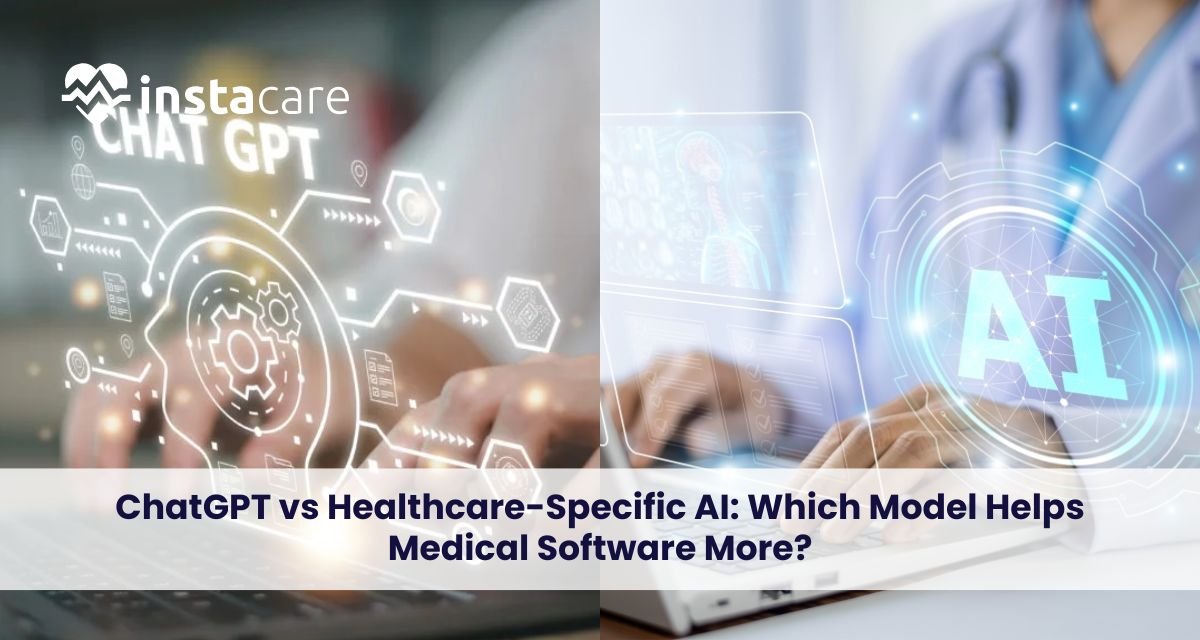
ChatGPT vs Healthcare-Specific AI: Which Model Helps Medical Software More? AI is making a positive impact on healthcare by boosting the performance and accuracy of medical software. AI tools today can be classified into two categories: those designed for broad use, such as ChatGPT, and those for use in healthcare. Discussions around ChatGPT vs Healthcare-Specific AI point out some important factors, for example, adaptability, compliance, and expertise in healthcare. Medical institutions and developers must decide on the model that best meets their planned improvements in diagnostics, managing tasks, or patient communication. This article compares ChatGPT with custom healthcare AI systems, detailing the main differences, highlighted strong points, potential challenges and their applications in software used in healthcare. Understanding ChatGPT and Healthcare-Specific AI? ChatGPT ChatGPT is a language model that OpenAI has developed for general use. It can handle human-style communication and is often applied for creating content, helping with customer support, and responding to basic questions. One use of ChatGPT in medical software is to assist in making simpler patient notes, listing instructions for patients, and making it easier to communicate with them. AI Designed for Healthcare Alternatively, AI designed for healthcare is prepared using the rules and standards found in medical data. In most cases, these models are tied to EHRs, diagnostic tools, and how clinicians work in their specialty. While there are more ChatGPT medical applications, their overall design has some restrictions. Sometimes, they cannot access the proper knowledge for their field, manage difficult terms in medicine and find it tough to deal with sensitive data of patients. The Main Differences Between the Two ChatGPT This technology is a general-purpose language model. It can handle different topics in text, though not specifically designed for medical language, procedures, or industry processes. ChatGPT does not meet HIPAA standards on its own. Dealing with patient information in general requires considerable changes, encryption, and updated healthcare privacy technology. Because ChatGPT does not explain its reasoning, it may be difficult to rely on it in making medical decisions. Healthcare Specific AI AI technology used in healthcare is made with medical areas in mind. With the help of medical information and guidelines, models in this field gain accuracy and dependability. The Healthcare-specific AI tools made for healthcare are all created with compliance to both HIPAA and other regulations in the sector. They always ensure that your data is private and secure. Specific AI models for healthcare often help explain the process behind a recommendation or diagnosis. This helps healthcare professionals trust each other and provide treatment based on research. Book Free Demo Use Cases In Medical Software While both types of approaches help, the results can depend on the chosen application. Here, we compare the use of different models in examples: AI Applications in Electronic Health Records: The purpose of using AI for electronic health records (EHR) is to lessen the amount of paperwork and improve the way data is accessed. Models used in healthcare often do data entry tasks, condense doctors’ notes, and discover errors in medical records with more reliability since their data is organized. Enhancing Healthcare with Natural Language Processing: Without NLP, interpreting doctors’ notes, radiology reports, or discharge summaries would not be practical. Although ChatGPT is effective in general NLP in healthcare, healthcare-specific NLP tools are more accurate at identifying elements in medical records and codes. Many times, these tools are included in decision tools and automated checking methods. Supporting Clinicians Through Decision Tools: With clinical decision support AI, physicians use patient information and get guidance based on evidence. An advantage of AI tools for healthcare is that they rely on methods and tools verified in real clinical settings. Forecasting Patient Outcomes: Predictive analytics in healthcare AI to predict a patient’s outcomes, the possible need for readmission, and the future stages of a disease. Custom AI models trained with hospital data are more accurate than others. Improving Telemedicine with AI in Patient Communication: It is becoming increasingly necessary to apply AI for patient communication in telemedicine and after leaving the hospital. ChatGPT can communicate with patients to respond to basic inquiries, remind people of their appointment,s or offer background information. Ensuring Patient Privacy: It is important to use HIPAA compliance and AI to ensure the privacy of patients is protected. The development of healthcare-related AI systems considers compliance issues and includes encryption, access control and audit logs. Automating Administrative Tasks in Healthcare with AI: It is helpful for healthcare to use AI to automate the repetitive duties of making appointments and issuing bills. But when it comes to AI integration in hospital software, using internal systems and rules for each patient, AI in healthcare does the work best. Comparing Medical Chatbots and Custom AI Solutions Unlike custom AI systems, AI chatbots in healthcare are simple to add and can handle a large workload, though they are less knowledgeable about medicine. Although it takes more time to build a custom AI system, the results are more accurate, conform better to rules, and keep patients more involved with their own health information and treatment plans. Role of OpenAI in Advancing Healthcare Technology OpenAI is being incorporated in healthcare by forming partnerships with healthcare technology firms and research teams, including its integration into Clinic Management Software to enhance administrative efficiency and decision-making. At the same time, there are still concerns related to protecting data, ensuring its accuracy, and maintaining regulatory compliance. To effectively use OpenAI in critical medical settings, additional safeguards and system enhancements are necessary. Conclusion Whether to use ChatGPT or a healthcare-specific AI depends on the organization’s plans, the amount of money available, and the rules they have to follow. While ChatGPT is convenient to use and covers many NLP tasks quickly, it may not meet clinical accuracy, compliance, or integration requirements. FAQs [sc_fs_multi_faq headline-0=”h3″ question-0=”Is there a difference between ChatGPT and healthcare-related AI?” answer-0=”While ChatGPT can be used for various applications, healthcare-specific AI is built
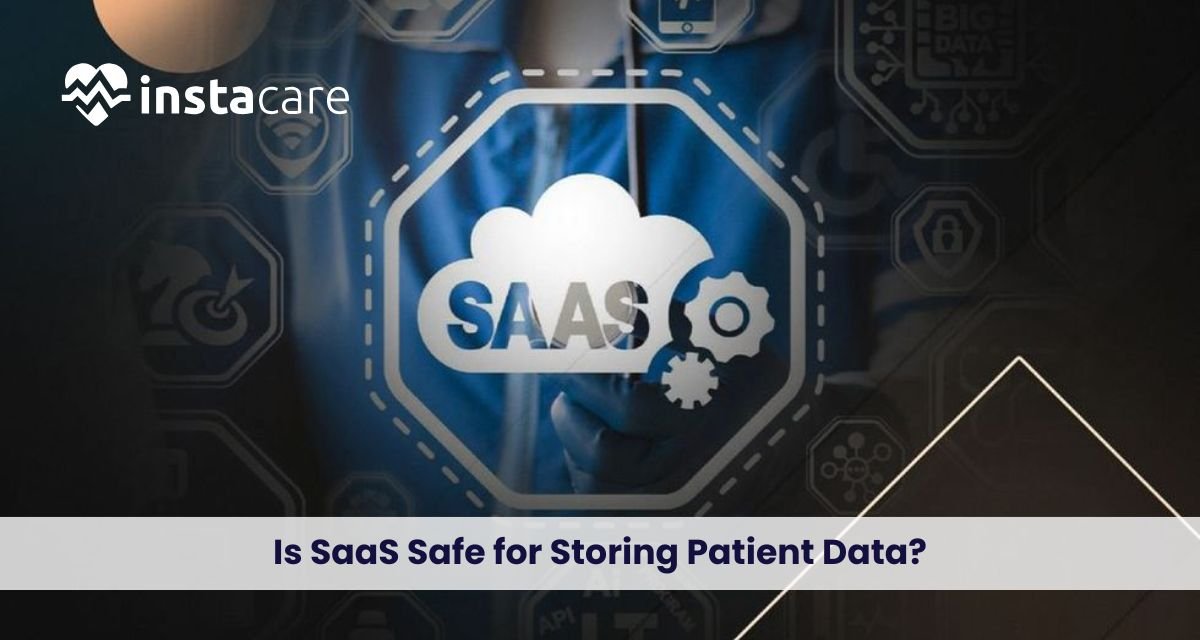
Is SaaS Safe for Storing Patient Data? With healthcare going digital, managing patients, using EHRs, conducting diagnostics, and offering telemedicine have come to rely on Software as a Service (SaaS) platforms. However, there are big concerns about the safety, privacy, and lawful handling of information when it is stored on a cloud platform. The key question arises: Are patients’ health records safe with SaaS software? This article discusses the effects of adopting SaaS healthcare compliance industry by exploring different SaaS risks in healthcare, legal issues, and best safety tips. What is SaaS in Healthcare? Software as a Service, or SaaS, makes it possible for users to run applications directly over the internet, without installing them on their own devices. SaaS is helping hospitals, clinics, and health tech startups to improve the way they function. This means providers can obtain and use medical software from anywhere, often paying a monthly fee. It is especially eye-catching due to its ability to grow, its low costs, and the simplicity of making updates. Some common SaaS applications in healthcare are appointment setup, patient portals, telehealth platforms, medical records software, and billing. The requirement for easy and instant access to information and integration of various applications is encouraging greater use of SaaS solutions by providers. Even so, saving patient records online raises issues about how safe the cloud is in healthcare and if these systems can meet strict information security regulations. Key Security and Privacy Risks With Saas Companies working with Protected Health Information (PHI) have to be aware of the special risks that come with SaaS adoption. Main problems include unauthorized users getting in, insecure APIs, not using encryption, and not requiring strong user authentication. Protecting patient data is a top priority, as Healthtech cybersecurity breaches or leaks can give rise to serious issues, for instance, legal issues and harm the company’s reputation. Because ransom ware and phishing are becoming more advanced, more healthcare data is being breached. As a rule, poorly configured Cloud security in healthcare and social engineering scams are often behind most data breaches. Besides, opening your system to third-party integrations can create security risks if they are not handled correctly. SaaS presents another problem in healthcare by not allowing full awareness of where or how medical data is managed, mainly in situations where many different customers share the same cloud infrastructure. If there are no strong security guidelines and accountability, important data could end up in the wrong hands. What Makes a SaaS Provider Secure for Healthcare? Not all SaaS vendors know how to keep healthcare data safe and secure. It is important for providers to check that vendors follow the laws such as HIPAA and GDPR. A Healthcare SaaS Solution should follow strict guidelines regarding encryption, activity logging, secure user access, and reliable data backup procedures. It’s essential to work with vendors who are willing to sign Business Associate Agreements (BAAs), ensuring accountability in handling PHI. Providers should also have clear conversations with SaaS companies about their data encryption methods, for both stored and transmitted data, to protect against unauthorized access. A safe provider will carry out routine security assessments and certify their actions by SOC 2 Type II, ISO 27001, or HITRUST. An audit of this type helps maintain privacy in the cloud and allows customers to trust that the provider will protect their data. When choosing a SaaS vendor, healthcare organizations also need to think about whether the SaaS services follow the GDPR compliance for SaaS healthcare rules if they are dealing with patients from the EU or process international data. GDPR also requires hospitals to meet certain standards on data access, consent, and reporting data breaches, along with HIPAA. Book Free Demo Best Practices for Healthcare Providers Using SaaS Healthcare providers need to implement multiple strategies, mixing technology and business processes, to protect themselves in SaaS. Following these steps helps lower the risk of threats and makes the company more compliant. Vendor Assessment: Make sure you fully check the compliance, certifications, and honesty of each SaaS vendor. Search for applications that are suitable for healthcare, with security and smooth Secure EMR software usage as priority. Encryption and Access Control: Ensure the SaaS data encryption systems in use are very reliable. Add multi-factor authentication, role-based access control, and make encryption standard throughout the systems. With these steps, PHI in Cloud-based EHR security is better protected from unauthorized people. Staff Training: A lot of Healthcare data breaches happen because of people making mistakes. Training regularly teaches staff why sharing patient data should be avoided and how to protect themselves from phishing and improper usage of sensitive data. Regular Audits and Monitoring: Regularly conduct inside evaluations and vulnerability scans to spot anything unexpected. Check system logs for unusual activities and choose vendors that carefully track and record every action done with patient data. Data Backup and Disaster Recovery: It’s important that your SaaS company automatically backs up its data and has a tested disaster recovery system in place. This is done to keep the system going if something like a fault or an attack occurs. Legal and Contractual Safeguards: Include in the agreement a description of who is responsible for the data, what the liabilities are, and how much time they have to report a breach. Being well structured, a Service Level Agreement (SLA) helps achieve accountability. Compare Deployment Models: Think about the differences in security when choosing between SaaS vs on-premise security options. Large organizations that have their own IT teams may find that on-premise models are a better fit for regaining more control. However, with the right provider, SaaS can be just as secure, if not more so—than on-premise alternatives. Data Residency and Local Laws: Look into whether the supplier stores your data in your region as required. In some countries, the rules say medical data must stay inside the nation’s borders, which affects how software-as-a-service companies can function. Conclusion Using SaaS platforms in healthcare, such as Clinic
Future of Chatbots in Healthcare: Transforming Patient Engagement and Medical Services Healthcare industry is undergoing a shift towards digitalization where AI chatbots in healthcare are being established as a revolutionary solution to healthcare delivery. These is how these high end tools, driven by natural language processing in healthcare, are changing the ways patients interact with medical providers. Virtual health assistants are at the forefront of using care by making it easier for appointments to be scheduled, among other things. As the Healthcare technology trends continue to evolve, chatbots will most likely be part of the modern medical systems and assist in getting better outcomes, become more efficient, and enhance patient satisfaction. What are Chatbots? Chatbots are applications that pretend to imitate a human conversation with the use of AI and machine learning. They are able to interpret and answer user queries in real time using text or voice. In healthcare, conversational AI in healthcare is a term used for these intelligent bots intended to communicate with the patients, medical staff, and healthcare systems. These chatbots learn from huge medical datasets and are capable of doing anything from answering simple health questions to triaging patients. With AI in patient support, chatbots are no longer restricted to roles of Q&A interactions but are emerging as active players in the delivery of healthcare. Applications of Chatbots in Healthcare It has as a result of medical chatbot applications, it has been into various use cases in the medical field. These are some of the most exemplary cases for healthcare chatbot use: Appointment Scheduling and Reminders: Patients’ engagement tools such as chatbots may schedule, reschedule or cancel appointments automatically without involving human beings. They also send reminders thus reducing no-show rates and increasing efficiency of the clinic. Triage and Symptom Assessment: Chatbots for medical diagnosis can analyse symptoms based on structured questions and provide an adequate solution as a next step. These bots employ AI algorithms in directing the patients to emergency care, at-home remedies, or follow-ups. Mental Health Support: Chatbots for mental health provide round the clock support for those with anxiety, depression, or stress. These bots are used to give coping strategies, monitor the mood of users, and link users to mental health professionals whenever necessary. Telemedicine Integration: Telemedicine chatbots facilitate distance consultations by acquiring patient history, recommending specialists, and instructing users to establish video calls. They make telehealth services easier to be accessed and less scary. Medication Reminders and Management: By connecting with pharmacy systems, chatbots can prompt patients to use medications, warn them of the probability of side effects, and arrange the refill of the prescriptions. It enhances better compliance and health outcomes. Health Education: Virtual health assistants are very good at delivering evidence-based information about diseases and preventative measure as well as betterment of ways of living. They are trained to offer accurate and comprehensible health education. Administrative Assistance: Chatbots can be useful to Insurance companies and hospital billing departments because they can be used to answer FAQs and facilitate the processing of claims and insurance verification. It is a key catalyst of healthcare automation. Benefits of Chatbots in Medical Services The advantages of application of the AI Chatbots in healthcare are far-reaching as they extend to the patients, healthcare deliverers as well as the health care administrators. Some of the most potent Benefits of AI chatbots include the following: Enhanced Patient Engagement: The patients of today demand instant answers and smooth communication. Patient engagement tools such as chatbots provide real-time interaction and as such enhance satisfaction, promote proactive health management, and yield trust. Round-the-Clock Accessibility: Unlike human staff, chatbots work 24/7. This availability at all times will help patients to obtain care information and/or support whenever they need to, which is essential for chronic conditions or mental health cases. Reduced Operational Cost: Automation through chatbots ensures that their tasks in the healthcare field include automating repetitive duties such as answering questions, making appointments, or simply processing paperwork, thereby minimizing administrative costs and the loads borne by the staff. Improved Accuracy and Consistency: Virtual health assistants, unlike human agents, do not tire and get distracted. They provide reliable information each time hence eliminating the chances of miscommunicating or human error on each patient encounter. Scalability and Flexibility: Hospitals can implement chatbots to facilitate high volumes of queries without straining in human resource. Whether in the flu seasons or pandemics, bots can scale themselves without compromising their quality. Data Collection and Analytics: Chatbots collect well-defined information about the behavior, preferences and feedback of the patient. This data is priceless in enhancing service delivery, patients’ needs and health care plans reorientation. Empowerment of Healthcare Staff: Taking over the redundant, non-critical tasks, the chatbots release doctors, nurses and the admin staff to engage in high-value patient-centered activities. This leads to improved care quality and staff satisfaction. Book Free Demo Chatbots vs. Traditional Healthcare Communication Conventional healthcare communication is based on human contact, whereby phone calls, physical visits, and emails are used extensively. Although personal, this method is time-consuming and only available during business hours and is subject to delays. Patients have to wait for a long period, face inconsistent information, and experience administrative bottlenecks. Unlike AI chatbots in healthcare that are instant, 24/7, they offer answers, appointments scheduling, symptom assessment, and even mental health support. Empowered by natural language processing for healthcare, chatbots guarantee consistent and correct responses and can process thousands of queries at the same time – something that traditional systems are unable to do. Besides, chatbots enhance patient engagement tools as they provide individual attention and tips while relieving the staff members. They also gather and analyze data to improve decision-making and services. Although not a substitute for human feeling, virtual health assistants enhance medical teams as they simplify communication and access. When it comes to the Future of digital health, efficient and accessible, it is clear that chatbots are shaping it as healthcare automation
15 Most Common Types of Healthcare Software The aspect of health industry is fast changing and technology is at the centre of this change. Since bettering patient care to simplifying administrative processes, contemporary health care is dependent on software solutions. As the expectation levels of the patients increase and with the compliance demands also growing and the necessity for being efficient, the hospitals and clinics are coming increasingly to relying on the digital facilities. Whether managing patient data or facilitating teleconsultation, healthcare software is creating the future of medicine. What is Healthcare Software? Healthcare software refers to specific digital products created to assist the medical field in clinical, administrative, and operational functions. Such tools support healthcare professionals in diagnosing, treating, and monitoring patients and facilitate internal workflow management in institutions. Healthcare software has a huge variation, from storage and scheduling software to much more intricate systems that include diagnostics, imaging, and decision support. Importance of Healthcare Software in the Medical Sector Getting software tools for healthcare in 2021 is not an option anymore – it is now a necessity. It enhances the precision of diagnostics; it improves the availability of the data, and optimizes patients’ experiences. In addition, healthcare software helps minimize manual errors, reduce operational costs as well and meet healthcare regulations. This technology also facilitates data-driven decisions that would result in better outcomes for the treatment process as well as efficient resource management. Types Of Healthcare Software You Must Know Let’s get into the top 15 most common types of healthcare software systems changing things up in the medical world nowadays: 1. Electronic Health Records (EHR) Software In the core of modern healthcare systems lays the Electronic Health Records (EHR) software, which contains the complete medico-history for patients. It enables access to such information by authorised personnel such as previous treatments, allergies, lab results, and imaging. EHR software helps to coordinate between departments, reduces paper work and allows doctors to make better clinical decisions with real time access to data. 2. Practice Management Software Practice Management Software is a special software system for facilitating management of everyday administrative activities for clinics and hospitals. This entails appointment scheduling, billing and reporting, tracking of patients’ related information. It makes operations easy, eliminates much of the manual labor and guarantees the medical professionals concentrate on the patients leaving them with less of back-end logistics. 3. Medical Billing Software Effective billing in healthcare is very important, and Medical Billing Software is a solution for automatic invoicing and the claim process. This software makes fewer mistakes in cash flow and precise financial records. It also upholds several health insurance laws, as well as dictates regarding health insurance. 4. Telemedicine Software Remote consultations are becoming the standard; therefore, Telemedicine software contributes to video calls, remote diagnostics, and patient monitoring. It is now essential for healthcare access in rural or underserved areas. With this software, the patients can gain medical advice without having to go to a clinic physically, hence convenience and provision of services via book internet is enhanced. 5. e-Prescribing Software A doctor can send prescriptions electronically to pharmacies through the use of e-Prescribing software. This extinguishes handwritten inaccuracies and hastens the prescription process so customers can get prescriptions faster. It also assists in tracking patient drug history and warns providers against any potential drug interactions. 6. Hospital Management Software Hospital Management Software is a comprehensive hospital operation solution including, but not limited to, modules such as patient registration, billing, inventory, pharmacy, and HR. It simplifies all processes and smooth flow of departmental communication. Such systems increase hospital efficiency and affect patient experience. 7. Laboratory Information Management System (LIMS) For clinical laboratories, Laboratory Information Management System (LIMS) software is meant to monitor samples, as well as wanting to store test results, control inventory, and manage quality. LIMS increases a lab’s efficiency; reduces error, hence improves conformity to the regulatory measures, which is vital in the case of diagnostic and research labs. 8. Radiology Information System (RIS) The point, in this case, is to use a Radiology Information System (RIS) for controlling medical imagery and data. Such software is utilised by radiologists in monitoring imaging orders, keeping reports, among other workflow management. It is typically integrated with PACS and EHR systems to see all the patients’ records in full and make diagnoses more expeditious. 9. Picture Archiving and Communication System (PACS) Picture Archiving and Communication System (PACS) archives and retrieves certain medical images, including X-rays, MRI, and CT scans. It eliminates use of film-based storage hence enabling healthcare providers view, share and analyse images in digital format. The PACS also interoperates with RIS and EHR for increased accuracy and efficiency of diagnosing. 10. Clinical Decision Support System (CDSS) The Clinical Decision Support System (CDSS) is a powerful piece of software intended to assist the clinician in making well-informed decisions. It works with the data of patients and alerts and reminds them, as well as offers treatment. CDSS will enhance outcomes and compliance with best practices as errors by humans will be eliminated as well and there is a standard level of care provided by CDSS. Book Free Demo 11. Pharmacy Management Software Pharmacy Management Software supports pharmacists with drug inventory, which automates refilling and answers billing and compliance with regulations. It enhances safe medication by alerting about potential interaction, contraindications and it frequently integrates with EHRs and billing systems to the purpose of making the functionality, as easy as possible. 12. Healthcare CRM Software Healthcare CRM software is aimed at enhancing patient interaction, communication and services. It captures and manages patient data, preferences and communication history. This assists healthcare providers in providing individualized services and send reminders as well as long term relationships with patients. 13. Healthcare Analytics Software Healthcare analytics Software sifts through stupendous amounts of clinical, operational, and financial data to create insights. Hospitals use this software to enhance the delivery of care and cost management, as well as cost projection. It facilitates predictive analytics, population health management, and performance benchmarking.
The Future of API Integrations in Healthcare Technology is changing the landscape of health. In technological advancement today, API integration of EHR systems is cited as the most important and the biggest impact of technological advancement in creating new chances for delivering quality care and improving operations as well as service provision. APIs are application programming interfaces that connect various healthcare systems for easy communication among hospitals, clinics, pharmacies, and laboratories, and payers, making it simple for all of them to share data. Unison of communication extends from the interfacing across the different platforms, allowing healthcare professionals to access all patient information in real-time, which is likely to affect developing better-informed and better quality services. As healthcare data evolves, and becomes increasingly complex, the demand for Health tech APIs, which can manage and work with high volumes of patient data, is exploding. Specifically, FHIR healthcare APIs have arisen as a strong tool for making this process easier. FHIR ensures the easy sharing of all kinds of medical data between different healthcare systems by promulgating standardized formats of sharing medical data interchange. Understand the Current Landscape of API Usage in Healthcare APIs or application programming interfaces are the things which connect different software applications, which allows good communication and exchange of the data between those applications or pieces of software. APIs for health care allow different systems like electronic health records and lab information systems to connect to billing systems more easily, even with health systems in insurance. One of the most promising developments is the FHIR Healthcare API trends (Fast Healthcare Interoperability Resources), which are helping in the standardization of data formats and Interoperability in healthcare. FHIR is a health information exchange (HIE) framework designed to facilitate data exchange and understanding from system to system under the auspices of HL7. Furthermore, integration of third-party health applications has expanded the scope of healthcare systems and is considered to uplift patient engagement and personalized care. When incorporated through APIs, these apps can access and add to patient records and are capable of scheduling appointments, sending medication reminders, and tracking health. Some Benefits of API Integrations in Healthcare The optimization of healthcare systems through integrating APIs into them brings a multitude of benefits: Enhanced Data Exchange: APIs allow patient information to be shared in real time over several different healthcare platforms, thus allowing better coordination between the providers. This results in better and more timely decisions, hence, delay in care is reduced and better care outcomes are achieved. By making sure that all the healthcare workers involved will have the same current information at their disposal, API integration reduces the chances of misunderstanding. Improved Patient Engagement: Through patient data APIs, it is possible for a patient to get hold of health records, lab test results, prescriptions, and their treatment plans with ease. This flexibility allows patients to become agents in their health management and establish a partnership with their medical caregivers. It encourages them to stick more closely to treatment plans and has better long-term health outcomes. Operational Efficiency: By automating administrative procedures, e.g., appointment scheduling, verification of insurance, and handling the billing cycle, the burden of manual workload is reduced on healthcare staff. Not only does this reduce people’s errors, but it also increases the rate at which administrative procedures are carried out, subsequently, the healthcare organizations will spend fewer resources and can concentrate more on looking after patients. Innovation and Flexibility: APIs set the infrastructure on which continuous innovation in healthcare is based. They enable Healthcare organizations to rapidly develop and incorporate new applications/services which would respond to the emergent needs. Whether it’s a telemedicine platform or a new mobile health application, or an AI-enabled diagnostic equipment, APIs provide the ability to change according to the changing dynamics of the industry. Secure Data Handling: The patient-sensitive nature of healthcare data calls for strong protocols for the security of patient privacy. The use of secure API healthcare techniques would allow healthcare entities to guarantee that data is encrypted and safely transmitted according to industry standards such as HIPAA. This is useful in protecting the patient information from cyber-attacks, building a relationship of trust between the patient and his/her healthcare provider, as well as adherence to legal and regulatory requirements. Adding these benefits results in more productive healthcare operations and higher satisfaction ratings for the patient, along with easier application of innovative solutions aimed at addressing the ever-changing needs of the sector. Book Free Demo Emerging Trends Of API Integration in Healthcare Shaping the Future Multiple tendencies are forming the future of API integrations in healthcare: Real-Time Data Access: The escalating demand for real-time healthcare data enables providers to make quick, knowledge-based inferences in case of emergencies or normal care, thus enhancing patient outcomes. Personalized Medicine: Now, APIs are facilitating the integration of genomics data, biometric readings, and history of a patient to form highly customized treatment plans with advances in personalized medicine. Telehealth Expansion: With increased mainstreaming of telemedicine, APIs become important to link everything, make the EMR API integration smooth, and ensure data sharing is secure between doctors and patients. This continuity of care improves accessibility of care, especially for remote populations. Integration with Wearables: As smartwatches and fitness trackers become popular, health data exchange APIs are now capturing real-time information such as heart rate, sleep patterns, and activity levels, providing a wider perspective into patients’ health. Artificial Intelligence and Machine Learning: APIs are making AI-powered tools be integrated into the healthcare system. This integration boosts the quality of predictive analytics, helps in early diagnosis, and also boosts the support of clinical decision-making. Systems can provide more accurate evaluations and tailored treatment suggestions by interfacing with algorithms in the form of APIs. Challenges Ahead Related to API Integration in Healthcare However, several obstacles keep APIs from being well-integrated in healthcare systems: Data Standardization: It is still a major barrier to getting uniform data formats on different systems, which affects the efficiency of the health