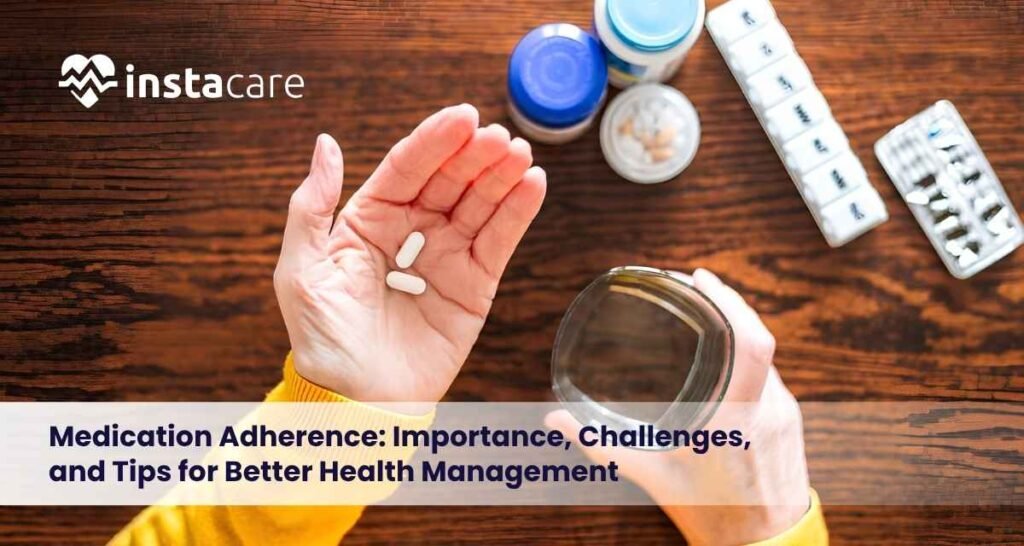
Medication Adherence: Importance, Challenges, and Tips for Better Health Management Medication adherence plays an important role in achieving successful health outcomes. Medicines can help manage symptoms, control chronic conditions, support recovery, and prevent complications. However, even the most appropriate medication may not provide the intended benefits if it is not taken correctly. Medication adherence refers to how closely a patient follows a healthcare professional’s instructions regarding their medication. This includes taking the correct medicine, following the prescribed dosage, taking it at the recommended times, and continuing treatment for the recommended duration. Missing doses, changing the dosage without professional guidance, or stopping treatment early can reduce the effectiveness of therapy and may sometimes contribute to worsening health conditions. Understanding the importance of medication adherence and identifying common barriers can help patients manage their treatment more effectively. What Is Medication Adherence? Medication adherence means taking medicines according to the instructions provided by a doctor, pharmacist, or other qualified healthcare professional. It involves more than simply remembering to take a pill. Proper medication adherence may include: Taking the prescribed medication correctly Following the recommended dosage Taking medicine at the appropriate time Following the recommended duration of treatment Taking medication with or without food as instructed Following specific instructions about fluids, activity, or other precautions Understanding what to do if a dose is missed There is an important difference between remembering to take medication and fully adhering to a treatment plan. A patient may remember to take a medicine but still take the wrong dose or stop treatment too early. Understanding why a medicine is prescribed can also help patients feel more confident about following their treatment plan. Why Is Medication Adherence Important? Following a medication plan correctly can contribute to better management of health conditions and improve the chances of achieving the intended treatment goals. Helps Control Health Conditions Many chronic conditions require medications to be taken regularly. Conditions such as high blood pressure, diabetes, asthma, and other long-term illnesses may require ongoing treatment. Taking medication as prescribed can help maintain better control of symptoms and reduce the risk of problems associated with poorly managed conditions. Supports Recovery Some medications are prescribed for a specific period to help the body recover from an illness or infection. Completing treatment as directed can support recovery and reduce the possibility of treatment failure. Patients should follow the instructions provided by their healthcare professional rather than deciding independently when treatment should end. Helps Reduce Health Complications Poor medication adherence can contribute to inadequate treatment and worsening symptoms. In some situations, it may also increase the risk of complications or additional healthcare needs. Taking medicines correctly can help ensure that the treatment has the best opportunity to work as intended. Improves Quality of Life Effective management of health conditions can make it easier for people to perform everyday activities and maintain their overall well-being. For individuals managing chronic conditions, consistent medication use may help control symptoms and support a more stable daily routine. Common Reasons People Miss Their Medications Medication non-adherence does not always happen because a person intentionally ignores medical advice. Several practical, financial, physical, and emotional factors can make medication management difficult. Forgetfulness Busy schedules, travel, changes in daily routines, or memory difficulties can cause people to forget a dose. This can be particularly challenging for individuals who take medication several times throughout the day. Complex Medication Schedules People taking multiple medications may have difficulty remembering different doses, timings, and instructions. Managing several prescriptions can become confusing, particularly when some medicines need to be taken with food while others need to be taken at different times. Medication Side Effects Some medicines can cause unwanted side effects. When these effects become uncomfortable, patients may be tempted to reduce their dosage or stop taking the medicine without consulting a healthcare professional. Discussing side effects with a doctor or pharmacist can help determine whether adjustments or alternative treatment options are appropriate. Lack of Understanding Patients may be less likely to follow a treatment plan when they do not understand why a medication has been prescribed. Knowing the purpose of a medicine, how it should be taken, and what to expect from treatment can improve confidence and adherence. Cost and Access Issues The cost of medication can become a barrier for some patients. Difficulty accessing pharmacies, transportation problems, limited availability, or financial challenges may also interrupt treatment. Patients experiencing these difficulties should discuss them with their healthcare provider, who may be able to suggest practical alternatives. Feeling Better Some people stop taking their medication once their symptoms improve. However, feeling better does not necessarily mean that treatment should be discontinued. Whether medication should be continued depends on the specific medicine and health condition, so patients should speak with their healthcare professional before making changes. Types of Medication Adherence Challenges Medication adherence challenges can occur at different stages of treatment. Recognizing these challenges can help patients and healthcare professionals develop more practical solutions. Starting Treatment Some patients delay starting a new medication because of concerns about side effects, uncertainty about the treatment, or a lack of understanding about why it is needed. Clear communication with healthcare professionals can help address these concerns before treatment begins. Taking Medication Consistently Once treatment has started, maintaining a regular schedule can be difficult. Missed doses, inconsistent timing, and accidental double dosing can all create medication-management problems. Establishing a consistent routine and using reminders can make regular medication use easier. Managing Long-Term Treatment Long-term treatment can be particularly challenging because it requires patients to maintain the same routine for months or years. People managing chronic conditions may benefit from regular medication reviews, simplified routines, reminders, and ongoing communication with healthcare professionals. Tips to Improve Medication Adherence Developing simple and consistent habits can make medication management easier. Create a Daily Schedule Around Your Doses Try connecting medication times with regular daily activities, such as eating breakfast, brushing your teeth, or going to bed. Creating these associations can make medication-taking part of an established routine and reduce
Medication Therapy Management: Improving Medication Safety and Patient Health Medication Therapy Management (MTM) offers a service-based solution to patients who struggle with the safe, proper, and effective use of their medications. With many patients taking multiple medications for different health conditions, managing them correctly can be confusing and distressing and may lead to negative health implications. MTM helps patients and healthcare providers determine how medications should be dosed and timed to improve patients’ health and safety. It also reduces the potential for medication-related issues to become serious problems. MTM is particularly beneficial for patients who take multiple medications, have multiple chronic health conditions, experience medication-related problems, or have difficulty managing their treatment. What Is Medication Therapy Management? Medication Therapy Management (MTM) involves analyzing all the medications a patient uses. These may include prescription drugs, non-prescription drugs, dietary supplements, and vitamins. MTM evaluates whether each medication is appropriate based on its indication, effectiveness, safety, and usefulness. The process aims to answer several important questions: Is the patient prescribed the appropriate medication for their medical condition? Is the dosage correct? Do the prescribed medications interact and cause adverse effects? Is the medication being taken at the correct time? Are there unnecessary or redundant medications that could be discontinued under medical advice? Identifying and addressing medication-related problems through MTM enables healthcare professionals to provide safer and more personalized care. Why Is Medication Therapy Management Important? Health concerns often involve multiple conditions and require complicated treatment strategies. Individuals with conditions such as diabetes, high blood pressure, heart disease, asthma, and similar illnesses may take several medications every day. Managing multiple medications can be particularly challenging for older adults. Medication Therapy Management helps address several common problems associated with medication use. Drug Administration Errors Some patients may take extra doses, skip doses, or take medications at the wrong time because they misunderstand the instructions. These mistakes can prevent patients from achieving the desired therapeutic effects. MTM provides patients with clear guidance and instructions to support proper medication use and adherence. Drug Interactions Certain medications can interact with one another and potentially alter their effects or cause adverse reactions. A comprehensive medication review can help identify possible interactions and allow healthcare professionals to recommend safer alternatives when appropriate. Avoidance of Unnecessary Medications Because healthcare can be complex, some patients may continue taking medications that are no longer necessary. MTM reviews the purpose and indication of each medication to help ensure that the treatment plan remains appropriate. Side Effect Management Some medications can cause unwanted or adverse effects. MTM helps healthcare professionals identify and manage medication-related side effects. Patients can also be advised about which adverse effects should be reported to their healthcare provider. Key Components of Medication Therapy Management Medication Therapy Management includes several important components that help patients use their medications safely and effectively. Comprehensive Medication Review MTM begins with a thorough review of the patient’s prescription medications, over-the-counter medicines, dietary supplements, and vitamins. During this review, a healthcare professional assesses the effectiveness, safety, appropriateness, and potential interactions of each medication. Medication Action Plan After reviewing a patient’s medications, a personalized, patient-centered action plan can be developed. This plan may include recommendations regarding the patient’s medication schedule, lifestyle modifications, health monitoring, and questions they should discuss with their healthcare provider. Medication Education Many medication-related problems occur because patients do not fully understand how their medications should be used. Therefore, medication education is an important part of MTM. Education may cover: The purpose of each medication Potential treatment side effects Proper medication storage Medication adherence What to do when a dose is missed When to contact a healthcare professional Follow-Up Monitoring Medication management is an ongoing process. Patients may need to be monitored at appropriate intervals to determine whether their medications remain effective and whether their treatment regimen requires modification. Regular follow-up can also help identify new medication-related problems as a patient’s health condition changes. Book Your Free Marketing Consultation Who Can Benefit From Medication Therapy Management? Medication Therapy Management can be useful for different groups of patients, particularly those who face challenges managing complex medication regimens. Elderly Patients Older adults may be more vulnerable to medication-related problems, particularly when they take several medications at the same time. MTM can help identify potential problems and support safer and more organized medication management. Patients With Chronic Conditions Patients with chronic conditions may follow medication regimens for many years. Regular medication reviews can help determine whether treatments remain effective and appropriate as their health status changes. Patients Taking Multiple Medications Patients who take multiple medications may have a higher risk of medication errors, missed doses, or drug interactions. MTM can help organize their medication schedules and identify potential problems with their treatment regimen. Patients With Medication-Related Problems Patients who experience unexpected side effects, difficulty following their medication schedules, or concerns about their treatment may benefit from a professional medication review. The Role of Healthcare Professionals in MTM Medication Therapy Management is a collaborative process involving patients and healthcare professionals. Healthcare providers review and discuss medications, identify potential problems, and provide recommendations based on the patient’s individual needs. Pharmacy Management Software can further support this process by helping healthcare professionals organize medication records, monitor prescriptions, and improve the accuracy and efficiency of medication management. Healthcare professionals may: Determine whether a medication is effective Identify medication-related safety concerns Explain how medications should be used Communicate recommendations to other healthcare providers Help patients work toward their health goals Effective communication allows patients and healthcare professionals to work together to manage medications safely and effectively. Benefits of Medication Therapy Management A well-developed medication management plan can provide several potential benefits, including: Better adherence to medication instructions More organized and understandable treatment plans Reduced risk of medication errors Improved adherence to therapy Earlier identification of medication-related problems Better management of chronic health conditions Greater confidence among patients and caregivers MTM can also empower patients by encouraging them to take an active role in healthcare decision-making. Challenges in Medication Therapy Management Although MTM
Medication Safety: Guidelines, Best Practices, Errors & Prevention Medicines have many uses, including treating diseases and illnesses, relieving pain, and managing symptoms of chronic conditions to improve or maintain quality of life. However, medicines can also cause adverse consequences when they are not used correctly. These consequences may range from worsening symptoms to causing further health complications. Medication safety helps prevent medicines from being prescribed, dispensed, administered, or taken incorrectly. Errors can occur at several stages of the medication-use process, including prescribing, dispensing, administering, and taking medicines. With simple habits, proper communication, and attention to safety practices, many medication errors can be prevented. Whether a person takes a single medicine occasionally or multiple medicines every day, understanding medication safety practices can help protect their health and well-being. What Is Medication Safety? Medication safety refers to the proper and careful use of medicines to reduce the risk of medication errors, harmful interactions, and adverse effects. When medicines are taken correctly, they are more likely to produce the desired health outcome. Safe medication use depends on several important factors, including: Taking the right medicine Using the correct dosage Taking medicine at the correct time Following the prescribed instructions Monitoring for potential side effects Storing medications safely Medication safety is a shared responsibility among patients, caregivers, pharmacists, doctors, nurses, and other healthcare professionals. Good communication between everyone involved can significantly reduce the risk of errors. Why Is Medication Safety Important? Medicines are designed to promote health, treat medical conditions, and manage symptoms. However, incorrect medication use can increase the risk of adverse effects and other complications. Using medicines incorrectly may result in: Accidental overdose Missed doses Reduced treatment effectiveness Harmful drug interactions Allergic reactions Unnecessary hospital visits Safe medication practices help patients avoid preventable mistakes and improve the likelihood that their treatment will work as intended. Common Medication Errors Medication errors can occur for many reasons. Understanding the most common mistakes can help patients, caregivers, and healthcare professionals identify potential risks and take steps to prevent them. Taking the Wrong Medicine Taking the wrong medicine can happen when medication packaging looks similar or when different medicines are stored together without proper labeling. Confusing similarly named medicines can also contribute to errors. Always check the medication name before taking or administering it. Taking the Wrong Dose Taking too much or too little medicine can have serious consequences, particularly when a medication requires a specific dosage. Patients should not increase, decrease, or change their prescribed dose without consulting a healthcare professional. Missing Doses Missing doses can reduce the effectiveness of some treatments, especially when maintaining a consistent level of medicine in the body is important. Using reminders, medication schedules, or pill organizers can help patients remember to take their medicines as directed. Taking Medicines at the Wrong Time Some medicines need to be taken at specific times of the day or in relation to meals. Taking a medicine at the wrong time may affect how well it works or increase the risk of side effects. Patients should carefully follow the timing instructions provided by their healthcare professional or medication label. Taking Medicines That Should Not Be Combined Drug interactions can occur when certain medicines are taken together. Interactions can involve prescription medicines, over-the-counter products, vitamins, supplements, and herbal products. Patients should inform their healthcare professionals about everything they take before starting a new medicine. Using Medicines Beyond Their Expiry Date Expired medicines may lose their effectiveness and, depending on the product, may not be safe to use. Always check the expiry date before taking medication and dispose of expired medicines according to appropriate disposal guidance. Best Practices for Medication Safety Following a few simple habits can make medication use safer and help reduce preventable errors. Keep Your Medication List Current Maintain an up-to-date list of all medicines and health products you use. This list should include: Prescription medicines Over-the-counter medicines Vitamins Supplements Known allergies Previous reactions to medicines Keeping this information available can help healthcare professionals make better-informed decisions during routine appointments and urgent situations. Check Medication Labels Always check the medication label before taking a medicine. Pay attention to: Medication name Strength Dosage instructions Timing instructions Expiry date Storage requirements Checking the label is particularly important for people who take several medicines. Follow Instructions Exactly Take medicines according to the instructions provided by your healthcare professional or medication label. Do not change the dose, take additional doses, or stop treatment on your own unless you have been advised to do so. Even if symptoms improve, some treatments need to be continued for a specific period. If you are unsure about how or when to take a medicine, ask a healthcare professional. Use One Reliable System to Organize Medicines Organizing medicines can be particularly useful for people who take multiple medications. Helpful strategies include: Keeping medicines in clearly labeled containers Setting reminders or creating a medication schedule Separating medicines that look similar Checking medication supplies regularly Keeping instructions easily accessible A consistent system can reduce confusion and help prevent skipped or repeated doses. Store Medicines Properly Improper storage can affect the quality and effectiveness of some medicines. General medication storage practices include: Keeping medicines in a safe location Protecting medicines from excessive heat and moisture Keeping medicines out of children’s reach Storing medicines in their original containers Following any special storage instructions Because storage requirements can vary between medicines, always follow the instructions provided for the specific product. Medication Safety for Older Adults Older adults may take several medications to manage different health conditions. Taking multiple medicines can increase the possibility of medication errors, interactions, and side effects. Age-related changes in the body can also affect how certain medicines work. Potential medication-related challenges for older adults include: Changes to medication routines Increased risk of side effects Confusion about instructions Communication problems between healthcare professionals Increased risk of interactions between medicines Caregivers can support medication safety by maintaining an updated medication list, helping organize schedules, and confirming instructions with healthcare professionals when necessary. Book Your
What Is Medication Reconciliation: Process, Steps, Examples & Importance For patients that interact with multiple healthcare systems and need to take many different medications, mistimed doses and unintended medication gaps can be deadly. The determination and correction of a patient’s medication status are known as medication reconciliation. This process provides clarification of the medication order and prevents adverse medication consequences. The objective of medication reconciliation is to list a patient’s current and new orders and to reconcile any discrepancies that may exist as a result of the care that was provided. Medication reconciliation is essential to the elimination of unwanted and unintended effects. Healthcare systems must ensure that patients receive the correct medications. What Is Medication Reconciliation? Medication reconciliation involves making sure the current medications a patient is taking line up with the medications a patient is being prescribed. It only includes medications and does not include procedures or other treatments. Reconciliation also does not include previous prescriptions or medications that are no longer needed. Listed below are some of the components that may be included in medication reconciliation: Prescription medications Over the counter medications Vitamins or supplements Herbal products Dosing information Frequency Method/route of administration By identifying the current and new medications, it may be possible to resolve any discrepancy. Reconciliation of medication is necessary for the following circumstances: Patient admission to hospital Patient discharge from hospital First time or established patient visit to a different healthcare provider Movement from one department, division, or branch of a healthcare system to another Changes in the patient’s health or medical conditions Why Is Medication Reconciliation Important? Medication reconciliation is critical to avoid problems caused by issues in medication administration. Errors in medication records lead to incorrect medication, incorrect dosage, and even medication duplication. Some primary benefits include: Decrease medication errors Medication reconciliation was designed to manage situations caused by gaps in medication records. The absence of or gaps in records leads to errors that ultimately harm the patient. Increase patient safety Aligned, complete records help health care professionals avoid adverse drug interactions and orders that may cause serious harm to the patient. Avoid duplication of medication Health care professionals, as a part of health care delivery, may order similar medications and duplicate what is in the health record. Improved communication The reconciliation process of medication helps the various participants in health care delivery communicate and share the most recent information. Educates patients to self-manage It improves patient self-manageability by answering their questions about their medications. When Is Medication Reconciliation Performed? Reconciliation of Medications typically occurs when patients are in transition from one level of care to another: Hospital Admissions Healthcare staff revise the current medications when patients enter the hospital to develop an admission medication list. Transfers between Care Settings Review of medications is critical to avoid errors when patients are transferred between different healthcare facilities. Hospital Discharges Reconciliation of medications for patients prior to discharge helps to ensure they know which medications they need to continue or stop, or if dosages need to be modified. Routine Clinic Visits Review of medications lists often happens when patients attend routing clinic examinations to ensure the accuracy of the medication lists. Book Your Free Marketing Consultation The Medication Reconciliation Process The process of medication reconciliation has several steps. Each step adds to the completeness and accuracy of the individual’s medication record. Step 1: Collect a Complete Medication History Healthcare professionals collect complete data about all medications a patient takes. This includes: the name of the medication, the dose, how often it is taken, the reason for taking it, recent changes, and any allergies. This information can be collected from the patient, their caregivers, or their medical records. Step 2: Create an Accurate Medication List A complete list of medications is made which includes all prescription and over the counter medications and supplements. Step 3: Compare Medications with New Orders The new orders are compared to the current list of medications to determine if any important medications are missing, if there are any duplicates, if any medications are excessive or unnecessary, if there are any gaps in therapy, and if there are any concerning interactions. Step 4: Resolve Medication Differences Any concerning issues are resolved by ensuring appropriate dosing of each medication, discontinuing unnecessary medications, restarting important medications, and/or changing the time of administration. Step 5: Communicate the Updated Medication List Final medication lists are reviewed and explained to the patient and the healthcare team. They are also informed of any changes, the dosing instructions, and the potential side effects. Step 6: Follow Up and Review Regularly Medication reconciliation is an ongoing process. Frequent reviews help ensure accurate records of medication and improve patient safety. Examples of Medication Reconciliation Example 1: Hospital Admission An old patient comes to the hospital where he mentions that he takes many medications at home. The healthcare workers perform reconciliation and find out two medications with similar effects are taken together. While reviewing the medication list, we eliminate the unnecessary duplication. Example 2: Discharge From Hospital After surgery, a patient is given new medications. Before the patient is discharged, the list of medications was reviewed to state which of the old medications should be continued and which of the old medications should be stopped. This prevents confusion when the old medications are stopped. Example 3: New Healthcare Provider Visit A patient goes to a new doctor’s appointment where the doctor reviews the patient’s complete medication history. The provider sees two medications that have the potential for an interaction and adjustments are made to that patient’s treatment plan. Common Challenges in Medication Reconciliation While there are notable advantages to medication reconciliation, a number of issues can make its implementation arduous. Imperfect Medication Data Patients struggle to provide a complete list of medications due to a failure to remember the names or doses of medications and of any supplements. Several Medical Practitioners When patients see many different medical practitioners, their medication information is often disbursed in many different records.
OpenAI for Healthcare: Transforming Patient Care with Artificial Intelligence The future of healthcare is changing rapidly with artificial intelligence, which has allowed making diagnoses much quicker, smarter workflow, and patient-centred care. OpenAI is a leader in the transformation, as its advanced AI models are already being deployed in healthcare systems worldwide. AI tools are also assisting providers in providing more efficient and accurate care through clinical documentation to prediction analytics. This paper will discuss the transformations that OpenAI is bringing to the field of modern medicine and its major uses, advantages, ethical aspects, and the future of AI-driven innovation in healthcare. What Is OpenAI? OpenAI is a research and technology company that creates more sophisticated AI models that could comprehend and produce human-like language, analyse data, and address sophisticated problems. Its tools are very common in all other industries such as education, finance and more so in healthcare. OpenAI-driven models may be used in medical environments to support clinicians, carry out monotonous tasks, and enhance decision-making through profound data analysis. The tools are included in the wider trend of AI in healthcare, where automation and intelligence can be applied to improve care delivery and patient outcomes. Why Healthcare Needs AI Solutions? The healthcare systems are under increasing stress due to the increase in patients, clinician burnout, and the complexity of administration. Techniques of the past are typically unable to cope with data-intensive processes and decision-making that are time-sensitive. The AI solutions can help overcome these issues by: Automating reporting and documentation. Clustering of big data. Improving the accuracy of diagnosis. Fostering distance and online health care. With the expanding nature of medical data, AI-based systems are increasingly becoming imperative to the sustainable provision of healthcare. Key Applications of OpenAI in Healthcare Clinical Documentation and Automation The results of conversations with patients can be structured and formed as a clinical note using AI models, which saves administrative overhead. This will enable physicians to enjoy more time with the patients as opposed to documentation. Virtual Health Assistants AI chatbot offer rudimentary triage, check-in of symptoms, schedule appointments, and drug notifications. It is among the most widespread OpenAI healthcare applications of telehealth technologies. Medical Research and Literature Review AI is able to review large volumes of medical literature, summarize results, and assist the researcher to draw patterns at a rate exceeding what can be achieved by human processing. Patient Education and Engagement Understanding of diagnoses, treatments, and how to take medications using simple language is done by AI-powered tools and enhances health literacy and adherence. Clinical Decision Support AI assists physicians to interpret complicated medical data and recommend evidence-based advice, which enhances Clinical decision support AI systems in hospitals. Benefits of OpenAI in Healthcare Improved Efficiency The repetitive duties such as documentation, billing summaries, and patient intake are automated thus decreasing the usage of administrative resources. Improved Diagnostic Accuracy The AI models, which are trained on large datasets, are able to identify patterns that humans might miss and AI for medical diagnosis can be used, such as radiology and pathology. Better Patient Experience The chat systems powered by AI offer 24/7 service, making them more accessible and quicker to respond to. Cost Reduction Optimized processes and automation contribute to lowering operations and quality care. Personalized Medicine AI examines medical histories and genomes to aid in personalized care, which is becoming a trend in Artificial intelligence in medicine. Real-World Healthcare Use Cases Telemedicine Platforms AI chatbot help with pre-triage and telehealth visits, particularly in underserved areas. Radiology Support Medical imaging AIs are used to identify abnormalities in medical images and allow radiologists to prioritize severe cases. Electronic Health Record (EHR) Optimization AI enhances the precision of documentation and provides pertinent details about patients in real-time. Mental Health Support AI-based conversational systems offer primary care to anxiety, depression and behavioral health, in addition to human care. Hospital Operations AI enables predicting the admission of patients, staffing optimizations, and supply chain management with the help of Clinic Management Software. Challenges and Ethical Considerations Data Privacy Medical information is extremely sensitive and AI instruments have to meet stringent privacy laws. Bias in AI Models The biases of the AI systems that are trained on small data sets can be represented and, therefore, impact the quality of care among some population groups. Transparency It means that AI recommendations should be explained in a way that would allow clinicians to trust and validate the results. Over-Reliance on Automation Human judgment should be aided by AI and not replaced. It is necessary to have a balance between automation and clinical expertise. OpenAI and Healthcare Compliance Healthcare organizations should make sure that the AI tools are in line with the laws of the region including HIPAA (US), GDPR (EU), and additional local health data regulations. Some of the compliance considerations are: Secure data encryption Audit trails and monitoring Patient consent management Model transparency Ethical regulations and technical protection can only prevent irresponsible use of ChatGPT in healthcare. Book Your Free Marketing Consultation Future of OpenAI in Healthcare The future of AI in healthcare is bright and it is unlikely to stagnate in various spheres: AI-powered drug discovery Prognostic disease modelling. Clinical decision tools in real-time. Individual simulation of treatment. Medical interfaces that are voice-activated. With more refining of AI models, they will probably become a common and standard part of medical life and not an option that improves medical performance. Best Practices for Healthcare Organizations Start with Pilot Programs Initial deployments, e.g. AI documentation assistants, can be scaled out. Prioritize Data Security Make sure that there is a strong encryption, anonymization, and access controls. Train Healthcare Staff The understanding of AI capabilities and limitations should be known to clinicians and administrators. Maintain Human Oversight Qualified medical professionals must always review the outputs of AI. Concentrate on Patient Centric Design The AI devices should help improve the quality of care, rather than make the interaction with patients harder. Conclusion OpenAI is leading a central role in changing the current healthcare system
Telemedicine Software for Online Consultations: Best Platforms & Benefits Over the last ten years, the healthcare industry has experienced a digital revolution of colossal proportion with telemedicine being one of the most influential new technologies. Telemedicine software has transformed the path of care delivery through virtual doctor consultation to remote patient consultation. Patients do not have to spend their time in long queues or cover long distances to meet a medical practitioner. They will however, be able to reach the doctors immediately in safe online systems. Telemedicine software is not about convenience only, it is a need of the contemporary healthcare system. It leads to increased access, lowers operational expenses, better patient outcomes, and allows the providers to effectively serve a larger number of persons. The given blog discusses what telemedicine software is, what its main advantages are, what its main characteristics are, which platforms are the most popular nowadays, and how to select an appropriate solution to address your healthcare needs. What Is Telemedicine Software? The telemedicine software is an online consultation software that assists healthcare professionals in providing medical services to patients at a distance through internet-driven devices. These channels support real-time video consultations, safe messaging, schedule appointments, e-prescription, and electronic medical record (EMRs) access. Telemedicine also means that the patient can be treated in the comfort of his or her homes unlike the traditional method of visiting the physician face to face. The doctors can diagnose, create treatment plans, manage chronic illnesses, and follow up with patients-all viaa virtual interface. Virtual consultation tools in video conferencing. Secure patient data storage Electronic prescriptions and billing practices. Remote monitoring implementations. These communication tools include chat and email. As more people are seeking more affordable and patient-centered medical care, telemedicine software has been integrated into the digital health ecosystem. Main advantages of Telemedicine Software 1. Improved Accessibility Telemedicine is a solution that helps to link patients and healthcare providers particularly in under served or rural regions. People who used to have a challenge in seeking medical services are now in a position to reach specialists without geographical restrictions. 2. Time and Cost Efficiency Virtual consultations save time on traveling, minimize waiting time, and save administration costs. To providers, telemedicine software lessens the physical infrastructure requirement and enables the provider to treat more patients within the same amount of time. 3. Improved Interaction with the Patients. Digital platforms provide patients with easy access to appointments, reminders, medical records, and treatment plans. The result of this level of convenience is improved patient compliance and satisfaction. 4. On-the-job Improved CDD Management Remote monitoring tools assist physicians in monitoring vital signs, symptoms and medication compliance. This is a long-term care model that enhances the long-term health outcomes of patients with chronic illnesses. 5. Reduced Infection Risk Telemedicine ensures that the number of in-person visits is minimized and contagious diseases are not spread. This gained particular significance when the world was going through a global health crisis such as the COVID-19 pandemic. 6. Data-Driven Healthcare Telemedicine platforms could gather and process patient data, which allows medical practitioners to make decisions effectively, forecast health trends, and tailor treatment. Key Features of Telemedicine Software To select an appropriate telemedicine platform, it is necessary to know the essentials of these platforms. An effective telemedicine solution must have the following: 1. Secure Video Conferencing Telemedicine has high-quality, real-time video communication as its basis. Find systems with consistent connections, screen sharing, and recording features. 2. HIPAA and GDPR Compliance The security of data is essential in healthcare. Make sure that the platform is in line with global standards, such as HIPAA compliant(Health Insurance Portability and Accountability Act) and GDPR. 3. Electronic Health Records (EHR) Integration The smooth connection with EHR systems will enable the doctors to retrieve patient history, lab results, and past consultations in real-time. 4. Appointment Scheduling Scheduling software aids in the management of patients flow, minimizing the number of no-shows and time management. 5. E-Prescriptions Prescriptions that are digital enhance ease in the medication process and minimize mistakes. Other sites also liaise with pharmacies to fulfill them directly. 6. Invoicing and financial transactions An inbuilt billing system facilitates insurance claims, invoicing, and online payments hence simplification of financial management. 7. Multi-Device Compatibility The software must also be compatible with the desktops, tablets, and smartphones so that all users can be able to access it. 8. AI and Analytics High-tech solutions involve artificial intelligence to check symptoms, triage patients and predict analytics. Book Your Free Marketing Consultation Top Telemedicine Platforms The following are some of the most reputed and used telemedicine portals at present: 1. Teladoc Health Teladoc is an international provider of telemedicine. It provides virtual care, mental health, chronic care management and artificial intelligence (AI)-enabled healthcare. It is one of the best because of its user-friendly interface and extensive network of healthcare professionals. 2. Amwell Amwell offers safe and scalable telehealth software options to hospitals, clinics, and insurance companies. It subsidizes emergency treatment, therapy, and specialty appointments. 3. Doxy.me Doxy.me is an easy-to-use, web-based telemedicine device that commonly suits small practices. It does not need any downloads and is oriented on the ease of use. 4. MDLive MDLive is a company that provides 24/7 access to qualified physicians and therapists. It is commonly utilized in urgent care, behavioral health, and dermatology. 5. Practo Popular in Asia, Practo matches patients with doctors of different fields. It encompasses online booking, digital health records and online consultations. 6. SimplePractice It is focused on small practices and mental health professionals. It provides scheduling services, billing, video, and client portals. These platforms serve various healthcare requirements and therefore, the most appropriate one is based on your needs. How Telemedicine Improves Healthcare Delivery? 1. Earlier Diagnosis and Therapy Telemedicine ensures that patients do not have to wait days and weeks before getting an appointment. Faster treatment and diagnosis are made possible by quick consultations. 2. Continuity of Care It is easier to make follow-ups and regular check-ins, which guarantees constant monitoring
What Is Teleconsultation? A Complete Guide to Modern Virtual Healthcare Teleconsultation, which was in the past an innovative idea, has now become a normal way of attending to patients by millions of people across the globe. It allows patients to contact the doctor at home, office, or during traveling, through smart phones, tablets, and computers. Teleconsultation helps save time, minimize expenses, and enhance patient satisfaction regardless of whether the medical consultations are urgent, covering long-term conditions, or regular follow-ups. Telehealth tools are becoming more and more popular in healthcare systems, hospitals, and clinics to manage the growing patient demand and provide ongoing professional assistance. With the current trend of the drive to digital healthcare, teleconsultation will have an even more significant role to play in influencing the way medical care would be in the future. What Is Teleconsultation? Teleconsultation is a health care provision service in which the patients are able to interact with the medical workers digitally through the use of communication devices rather than physically going to the clinic. It is an inseparable aspect of Virtual healthcare where doctors are able to assess symptoms, make a diagnosis, recommend treatment and prescribe medications without the need to see the patient physically. It does not match the usually available online medical content as teleconsultation is done with licensed doctors or specialists in real-time. It facilitates live video/audio consultation as well as asynchronous communication (text-based or recorded messages). Teleconsultation is very much associated with Telemedicine services, which involve diagnostics, remote monitoring, and medical advice using technology. How Teleconsultation Works Teleconsultation is generally organized and secure: Patient Registration or Logging in Patients use telehealth platforms or mobile health apps to build accounts, identify themselves, and enter basic medical data. Appointment Scheduling Customers choose a physician, specialty, or time of appointment. There are also numerous services with the instant Online video doctor appointments in case of an urgent situation. Medical Submission of Information Patients complete questions, submit past reports or present the symptoms. This move helps the doctors to be ready in advance of the consultation. Live Consultation Consultations may occur via: Video call Audio cal Chat messaging In the session, physicians evaluate symptoms, test results and discuss treatment. This is what Remote patient consultation is all about. Electronic Prescriptions and Recommendations Hospital physicians discuss the prescriptions, lab tests orders, and follow-up details electronically. Aftercare and Internet-based medical support The patients are provided with constant attention by messaging, check-ins, and reminders of medications or tests. Online medical support is where the long-term outcomes are enhanced. Key Benefits of Teleconsultation Teleconsultation is becoming one of the most desired nowadays since it introduces hitherto unknown convenience and effectiveness to the medical experience. Comfort and Saving of time No commuting, no time wastage, and no time constraints. Teleconsultation is convenient and suitable to hectic schedules and enables instant healthcare. Increased Availability of Experts Patients in rural and remote areas will have access to the best specialists regardless of their location in the world. Reduced Healthcare Costs The Benefits of teleconsultation include the expense reduced. Patients save in transportation, clinic cost and sick leave. Services will become cheaper as providers will be able to lower the operational expenses. Improved Chronic Disease Management Teleconsultation enables regular check-ups with the help of digital devices, which are more effective in controlling the status of diabetes, hypertension, asthma, and heart disease. Improved Privacy and comfort Virtual channels may help patients to feel more relaxed when talking about sensitive matters. After-Hours Care Teleconsultation offers the possibility to get medical advice during the time when a clinic is closed, and it allows the patient to obtain the help on time. Lower Risk of Infection Virtual consultations enable the safety of both the patients and the medical practitioners because physical contacts are minimized. Common Services Offered via Teleconsultation Teleconsultation helps in a large scope of medical requirements. Common services include: Consultations with general physicians. Mental health counseling Dermatology assessments Pediatric consultations Nutrition and diet guidance Chronic care follow-ups Second opinions Medication reviews Post-surgery monitoring Interpretation of laboratory tests. Most of the sites also feature Online doctor consultation of urgent but non-emergency cases like cold, fever, allergies, infections, stomach-related problems etc. Who Should Use Teleconsultation? Tele Consultation is appropriate in: Busy Professionals Patients that have busy schedules and cannot easily access clinics. Parents with Young Children The virtual care minimizes the burden of taking ill children. Elderly Patients Less effort to get regular follow-ups without having to drive far. People in Remote Areas Teleconsultation fills the unmet needs gap that exists between medical facilities. Patients who demand Long- term care. Virtual check-in is simpler to monitor. Travelers Staff access to licensed medical practitioners, 24/7. People Who Are Frightened by Exposure to Infection Virtual care decreases the exposure to congested health facilities. Teleconsultation should not be used in an emergency and there is an urgent need of care like bleeding, big injuries, a heart attack, or a problem breathing. Book Your Free Marketing Consultation Limitations of Teleconsultation Despite this, teleconsultation has some weaknesses: Absence of Physiological Analysis. Diagnosis of some of them needs physical examination like palpation, detailed auscultation, or imaging. Technology Dependency Needs consistent internet, compatible devices and digital literacy. Not Ideal for All Conditions Complex processes or emergencies cannot be addressed remotely. Data Privacy Concerns Patient information needs to be secured through secure platforms. Service Quality Fluctuation. The quality of care is based on the knowledge of the doctor, the reliability in the platform, and communication tools. The knowledge of such limitations enables patients to make an informed choice of when to use teleconsultation. Teleconsultation Trends & Future Digital innovation and expanding demand by patients keep the field of teleconsultation developing. Future trends include: AI-Powered Diagnostics Artificial intelligence will help in symptom analysis, providing potential diagnosis proposals, as well as determining the level of risk. Remote Monitoring Devices Smart medical sensors and wearable will enable real-time tracking of heart rate, glucose, oxygen, and blood pressure, etc. In-depth Digital Health Ecosystems There will be
Telehealth Training 101: A Beginner’s Guide for Medical Students The growth of online healthcare has turned telehealth into a key piece of today’s medicine. Because of it, doctors can treat patients from a distance through video chats or smartphone apps. As a result, medical students must now learn telehealth training for medical students, which is central to their training in digital health. As telemedicine grows globally, learners require organized instruction to develop basic telehealth abilities, such as online consultations, using digital tools, while managing clinical processes efficiently through guided practice. What is Telehealth Training 101? Telehealth Training 101 is never a single standardized course. Still, it is often used as the generic name under which numerous organizations (including the California Telehealth Resource Center (CTRC) and the Northwest Regional Telehealth Resource Center (NRTRC)) provide introductory training resources that outline the basics and best practices of providing medical care remotely through the use of technology. These orientation programs are generally supposed to prepare health practitioners with the background information they need to utilize and apply telehealth in their practice properly. Understanding telemedicine workflow Getting used to doing medical checks online Familiarity with basic telehealth tools Building abilities in online health talks Training modules usually feature web-based skill practice, scenario exercises, or live instructor feedback. Such courses help learners handle actual situations without compromising care standards or conduct. Key objectives of the introduction to telemedicine for students include: Improving how doctors talk to patients online Guaranteeing precise information gathering from a distance Understanding rules plus morals in online medical talks Finding out how telemedicine systems work, also exploring useful software options Various Telehealth Technologies Telehealth technology basics use various digital tools along with online systems. To deliver proper care, students need to adapt to such technology Video Conferencing Tools – Zoom, Microsoft Teams, and dedicated telemedicine tools and platforms Electronic Health Records (EHRs) – Systems for storing and accessing patient data remotely Remote Monitoring Devices – Wearable devices, home diagnostic kits, and patient portals Mobile Health Apps – For appointment scheduling, messaging, and patient engagement AI & Decision Support Systems – Assist in diagnosis, triage, and patient education Familiarity with these tools forms a core element of telemedicine learning, also vital for today’s healthcare delivery. Key Skills for Telehealth Consultations Future doctors need certain abilities to do well in online appointments: different tools help them connect clearly with patients using tech platforms designed for remote care Telehealth communication skills mean explaining things clearly. Also, paying attention when others speak matters a lot. At the same time, understanding how people feel helps build trust Clinical Reasoning Remotely – Interpreting patient symptoms without physical examination Skilled in managing video meetings, programs, or troubleshooting systems without hesitation Documentation Skills – Accurate recording in EHRs during virtual visits Managing time well, handling visits smoothly while covering every health question Learning these abilities allows learners to manage online clinical skills training well, also boosting care recipient approval. Telehealth Etiquette and Best Practices Being professional matters a lot when doing telehealth. Students should follow telehealth etiquette and professionalism rules for proper behavior during virtual care sessions. This includes acting appropriately on camera while representing themselves as future healthcare providers Dress suitably; keep your backdrop neat during video meetings Keep patient details private while using secure methods in online meetings Express ideas plainly; skip complex terms Verify who the patient is before beginning the session Adhere to the organized telemedicine workflow training phases Reply quickly to questions or notes Such methods support reliability while maintaining secure, fair, plus functional distant treatment. Book Your Free Marketing Consultation Challenges and Limitations Although telehealth provides several advantages, it brings certain difficulties Limited Physical Examination – Some conditions require an in-person assessment Connectivity Issues – Poor internet can affect consultation quality Patient Technology Literacy – Not all patients are comfortable with digital tools Data Security Concerns – Maintaining confidentiality is crucial Regulatory Barriers – Different countries have varying telemedicine laws Knowing these limits matters so learners can deliver proper care in distant areas, which means being aware, prepared, yet cautious at each step. While telehealth skills for beginners are key, judgment plays a bigger role when help isn’t nearby. Telehealth in Medical Education Telehealth is becoming more common in medical training. While some schools add it through digital health education for medical students, others include live virtual sessions; both methods teach students how to conduct virtual clinical exams. Curriculum updates now reflect this shift, preparing future doctors for digital care settings Getting started with remote healthcare for learners: Telehealth learning modules Interactive online medical assessments Simulated teleconsultations Online case discussions Digital health ethics and compliance These units let learners apply telemedicine best practices for students effectively, preparing them for real-world placements as well as evolving online health settings. Future of Telehealth Telehealth could change how care is given. Coming shifts involve: AI-assisted Consultations – Helping in triage and diagnostics Wearable Devices – Continuous monitoring of vital signs and chronic conditions Global Telemedicine Access – Connecting patients in remote areas with specialists Enhanced Training Platforms – Virtual reality simulations for clinical skills Integration with Traditional Care – Combining in-person and remote care seamlessly Future doctors who learn telemedicine can adapt easily to new tech, also deliver strong care online. Conclusion Telehealth education has become essential for future healthcare workers. Gaining basic telehealth competencies gives learners technical know-how, digital confidence, plus effective interaction techniques suited to today’s care environments. Through virtual patient consultations training, learners gain confidence in digital health tools. Because they train with simulated patients, they adapt more easily to real-world demands. While working through virtual cases, their decision-making improves under pressure. As workflows are practiced repeatedly, efficiency grows naturally. Since technology changes fast, this preparation matters more than ever. When guidance is clear, students perform better across settings. FAQs 1. What is telehealth training for medical students? Telehealth training for med students means learning to run online visits through organized courses. These classes show learners how to work with tech platforms while
The Importance of Patient Education in Modern Healthcare Patient education has emerged as an essential component of quality care in the current evidence-based, patient-focused healthcare system. As healthcare systems progress toward value-based indicators of success, patient education has never been more significant. Knowledgeable, well-informed patients intimately familiar with their condition, treatment, and Preventive care through education will most likely be active patients, adhere to physicians’ recommendations, and enjoy better health outcomes. Patient education is also a critical component of enhanced patient-physician communication. It creates trust, enables Informed decision-making in healthcare, and encourages long-term compliance with care plans. To health organizations, it translates to lower rates of hospital readmission, lower operating costs, and higher patient satisfaction scores. What Is Patient Education? Patient education is the process of teaching and informing the patient regarding his disease, treatment, drugs, disease prevention, and life alteration. It is conveyed in a way which can be easily understood, remembered, and implemented by the patient so that he is able to take proper decisions on his own account. Patient education is not merely the distribution of pamphlets. It is an ongoing, interactive process in which health practitioners, nurses, pharmacists, care coordinators, and websites work together to improve health literacy and involve patients. Why Patient Education Matters in the Modern Health Care Setting Increased chronic disease, aging populations, and more complicated treatments pose health care systems worldwide the challenge of providing effective and efficient therapy. At the center of this revolution is patient education. Patient Empowerment in Healthcare: Educated patients become more active and assertive concerning their care. Patient empowerment in healthcare is likely to adhere to treatment regimens and lifestyle changes that are in their best interest to heal. Health Literacy: Limited health literacy is a barrier to enhanced outcomes. Education in simple terms and patient-specific education fills that gap and instills trust. Informed Decision-Making: Patient education enables patients to be informed participants in their own health care decisions, increasing satisfaction and reducing legal liability for the provider. Key Benefits of Good Patient Education 1. Enhanced Health Outcomes Knowledgeable patients are more apt to follow treatment, adhere to medication as directed, and recognize early warning signals of complications. This translates into better disease control and more rapid recovery. 2. Improved Patient Compliance Patient compliance improvement is greatly done when patients know why a treatment is necessary and what steps to take. This is particularly important with chronic disease education. 3. Reduced Readmission Rates Hospitals with effectively established patient education programs have reduced readmission, especially in cardiac rehabilitation, diabetes, and recovery after surgery. 4. Improved Doctor-Patient Communication Patient education improves communication. Patients are listened to and heard, hence improving Communication between doctor and patient as being more personal. 5. Lowered Cost Informed patients use fewer emergency services and are less likely to be readmitted. This reduces the financial strain on healthcare systems and payers. Book Your Free Marketing Consultation Methods of Delivering Patient Education Education of Handouts Patient education can take numerous diverse forms, dependent on population, locale, and available resources. Some of the following effective ones, including the Role of doctors in patient education, are: 1. One-on-One Counseling Direct interaction between the provider and the patient is the norm. Individualized counseling, immediate clarification, and reassurance are offered. 2. Group Classes and Workshops Applicable to chronic diseases like diabetes, groups offer a peer-to-peer learning opportunity and interaction with each other. 3. Printed Materials Pamphlets, brochures, and teaching sheets are effective, presented in plain format and supplemented with visual aids. 4. Patient Education with Digital Tools Modern Technology in patient education has transformed Patient engagement strategies. Mobile applications, patient portals, teaching videos, and interactive questionnaires help deliver Personalized health education on demand. 5. Visual Aids and Models Anatomical diagrams, infographics, and models offer simplified definitions of complex medical terms. Challenges of Patient Education Patient education is not free from several challenges despite its benefits: 1. Low Health Literacy The majority of patients are unable to comprehend medical terminology, directions, or even basic health information. Misinterpretation or neglect of directions can be the result. 2. Cultural and Language Barriers Language and cultural variations might interfere with comprehension and education. Materials and approaches must be multilingual and culturally attuned. 3. Inadequate Time for Providers Doctors and nurses are generally under tremendous stress, and therefore, no time can be wasted on proper patient education during consultations. 4. Resistance to Change Patients will deny new facts or resist routine change if medical advice has already changed before. 5. Technological Accessibility Though technology is a great gadget, not all patients are owners of technology or technology-oriented, especially the disadvantaged or elderly patients. Strategies for Effective Patient Education To meet these challenges and deliver good results, healthcare organizations must adopt targeted strategies: 1. Customize the Education Adjust materials and messages to suit the patient’s age, literacy level, ethnicity, and condition. Customized health education is much more effective than delivering generic information. 2. Plain Language Avoid the use of jargon. Use clear, unambiguous language and define terms with illustrative examples. 3. Multimedia Tools Photographs, videos, and interactive resources support learning and make it more enjoyable, especially among low-literacy patients. 4. Involve Healthcare Teams Healthcare workers should be trained in communication and provided with resources that are easier to use. Physicians’ involvement in patient education is paramount, but the entire team needs to be involved. 5. Invite Patient Feedback Ask the patient what they already know, what is confusing them, and what they would like to learn more about. This individualizes the education strategy and establishes trust. 6. Facilitate Learning Repeat and reinforce. Educational messages must be reinforced on more than one visit or through more than one communication channel. 7. Use Technology for Patient Education Use telemedicine platforms, chatbots, and apps to take education outside the clinic. They can give real-time reminders and guidance. Conclusion Patient Management Software plays a crucial role in modern patient education—it’s no longer a luxury in healthcare, but
The Role of Internet of Medical Things (IoMT) in Remote Patient Monitoring The digital revolution, in general, has transformed the majority of industries, and the healthcare sector is no exception. Intelligent technologies and connectivity have given rise to telemedicine or telecare, which has also gained momentum like never before. Pervasive use of the Internet of Medical Things (IoMT) is one of the most important developments that enable care to be patient-centric and effective. In particular, in remote patient monitoring (RPM), IoMT is bringing new possibilities of real-time diagnosis, disease management, and patient engagement, bridging gaps for conventional care and producing new value in the era of medicine. Understanding IoMT Internet of Medical Things, or IoMT, is a group of networked devices for gathering, processing, and transmitting medical information over the internet. Examples include wearable monitors and sensors, advanced diagnostic equipment, and health apps on mobile devices. With their cloud-based and AI, IoMT enables seamless data transfer between patients and healthcare providers, ensuring continuity of care even if the patient is not physically near a clinic or hospital. This connected system of medical devices makes passive medical devices active participants in patient care. Advanced connected health technology enables clinicians to monitor patient patterns more intensively, personalize treatments, and reduce face-to-face contacts. The advantages are not just convenient but life-saving in cases of serious and chronic diseases. What is Remote Patient Monitoring (RPM)? Remote Patient Monitoring (RPM) is the process for gathering patients’ health data outside of regular clinical settings and transferring it to medical professionals for observation and comment. It most appropriately applies to patients with chronic disease, post-operative care patients, or those needing extended therapy. RPM most often uses remote patient monitoring devices such as automated blood pressure, glucose metering, and pulse oximetry that automatically report in real-time. RPM increases the patient’s experience through home care and ongoing monitoring of conditions by doctors and intervening simultaneously if necessary. A prospective model of care such as this lowers hospitalization and emergency room visits, thereby enhancing overall health outcomes. How IoMT Enables Effective RPM? IoMT integration with RPM has revolutionized the way healthcare is delivered. IoMT devices collect patient information automatically with minimal human intervention to offer a high level of accuracy. Devices are usually sensor-enabled and Bluetooth- or Wi-Fi-supported and send data into cloud platforms from where healthcare providers can see and analyze data. For example, smart medical devices such as digital inhalers, network electrocardiogram monitors, and blood glucose monitors provide real-time feedback regarding a patient’s status. They not only aid in diagnosis but also in treatment tailored to the patient without requiring face-to-face consultations. Another important feature is real-time patient status monitoring, which will ensure that any patient status loss is recorded in real-time. Warning and message alerts offered by IoMT platforms enable taking prompt action, which, in the case of emergencies, can save lives. Additionally, as telehealth and IoMT come with a greater priority, these technologies no longer function in isolation. They collaborate and form a robust virtual care network to enable improved communication and responsiveness of clinicians and patients. Book Free Demo Benefits of IoMT in RPM Enabled and Active Patients: Seeing individual measurements vary daily inspires lifestyle modification and adherence. Targeted reminders by smart medical devices encourage activity, hydration, or medication, turning passive recipients into active stakeholders. Operational Benefits for Providers: Capacity experience may be tuned with automated monitoring. Artificial intelligence triage of normal data allows clinicians to focus on high-risk presentations, reaping benefits of remote monitoring, such as lowered readmission penalties and staffing plans that are smarter. Public Health and Population Insight: Shared dashboards enable community trends, which support resource planning and disease surveillance. Such pan‑view IoMT apps convert discrete points of data into population‑level insight. Preserving Privacy and Trust: IoMT data security, end-to-end encryption, zero-trust architecture, and HIPAA-style global regulation for vast datasets. Transparent policies assure patients that their data is safe. Future of IoMT in Remote Healthcare With advances in technology, the future for remote healthcare is very bright. The future enhancement of AI, machine learning, and 5G will further enhance the value proposition of IoMT for RPM. It will allow clinicians to forecast complications, and care plans will be personalized by machine learning algorithms learning from enormous amounts of health information. Miniaturization of equipment and increased battery life will also make wearable healthcare technology even more efficient and convenient. It will no longer be health monitors, but wearables will be able to help individuals interact with other household systems, living space being smart and integrated for health. Additionally, healthcare IoT devices growth will lead to more innovative and diversified solutions for common and chronic health conditions. They include smart beds, imaging systems with AI, and robotic surgical systems within an active, predictive, and personalized healthcare paradigm. The integration of policy reforms and innovation will serve to bring IoMT into mainstream public health systems. Health organizations and governments are increasingly finding it worthwhile to invest in RPM facilities and infrastructure that can support IoMT on a larger level. IoMT evolution will become a decisive factor in global healthcare equity. With proper infrastructure, even rural and underserved populations will have access to high-quality medical care through RPM. IoMT overcomes geographical distances and shatters conventional barriers in accessing timely healthcare. Conclusion The IoMT applications of remote patient monitoring through IoMT cannot be overstated. IoMT possesses immense possibilities to revolutionize patient care and provide it in, streamlined and agile manner. Whether chronic disease care or IoMT for elderly care population management, IoMT-based RPM is revolutionizing healthcare to unprecedented levels. Despite certain data security and integration issues, so far, there has been encouraging progress. As the healthcare environment continues to digitalize, the importance of IoMT in healthcare will only increase. It is not merely about staying technologically current but also viewing care from a different angle—wellness rather than illness, prevention rather than cure, and person rather than process. Tools like Clinic Management Software