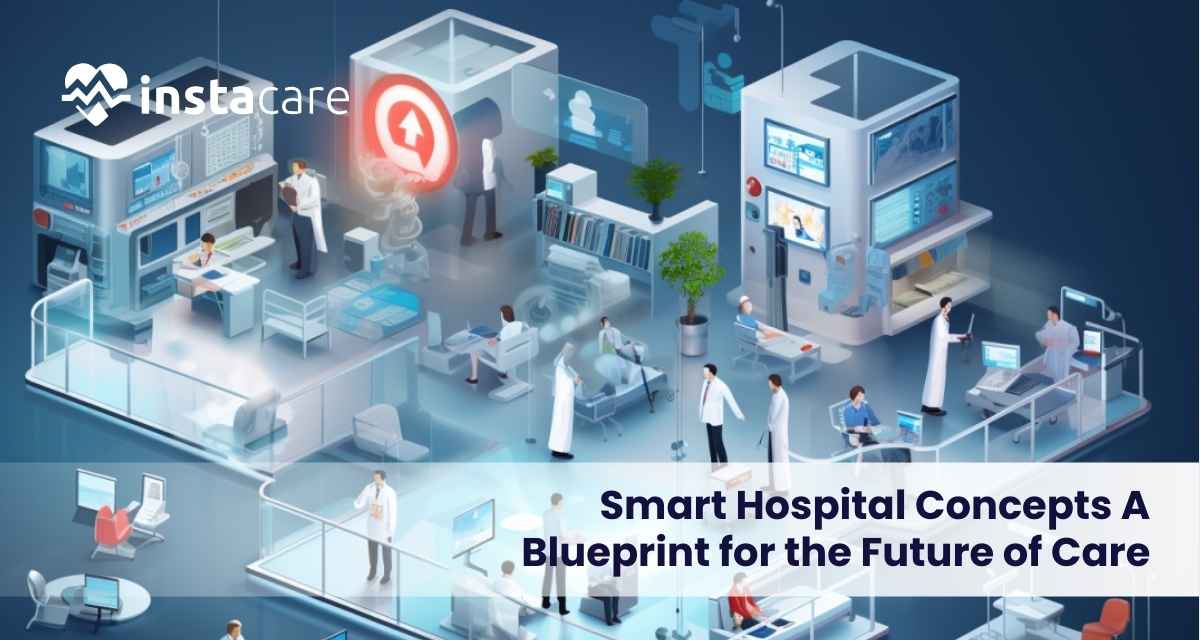
This is how this sector of health care is shifting in the age of fast-approaching technology expansions and the unrelenting pressure for better, more efficient patient care. Smart hospitals are transformational in delivering care by integrating IT support and data-chain drives with operational and practice advances to advance the quality of care in the delivery process. This article delineates the core concepts of smart hospitals, their benefits, challenges, and vision for the future of care. What is a Smart Hospital? A smart hospital leverages advanced technology and analytics to make possible improvements to all those activities involved in the delivering of health care. This includes integration of Internet of Things (IOT) devices, Artificial Intelligence (AI), telemedicine and electronic health record systems (EHR) to allow for efficient seamlessness from the patient end as well as from the health care provider’s perspective. This means better quality care at lower costs with greater patient satisfaction. Key Features of Smart Hospitals Connected Medical Devices: IoT-enabled medical equipment is used by the smart hospitals, so they can converse with one another and with central systems. Patient’s vital signs or medication adherence or any other health metrics can be monitored in real time using IoT. Advanced Data Analytics: Advanced data analytics tools are applied to patient data to identify trends and predict outcomes. It helps with proper clinical decisions and enhances operational efficiency. Telemedicine: Smarter Hospitals integrate remote consultations and telehealth services into their systems. This gives access to their medical care from the comfort of home, especially when they have chronic conditions or reduce a hospital visit. Automated Processes: It’s a big issue for workflow optimizing in hospitals. Automation can make administrative burdens that are associated with scheduling appointments and inventory management decrease and, hence, the risk of human error. It centers on the patient him/herself while designing spaces that better enhance the comfort and accessibility of patients. Features include navigation or wayfinding mobile apps, digital check-in kiosks, and patient portals-all aiming at a smooth healthcare journey. Environment-Friendly Practices: Most of the smart hospitals are constructed with sustainability as one of its prime objectives-the lesser consumption of energy, reduction of wastes, and using environment-friendly materials to reduce their ecological footprint. Advantages of Smart Hospitals 1- Excellent Patient Outcomes Smart hospitals use real-time data and analytics to ensure a better patient safety and effectiveness in the treatment. Monitoring would allow complications sooner that will lead to timely intervention so as to save life. 2-Improved Operational Performance Automation and data-driven decision help to automate the working processes of a hospital by removing delays and ensuring balanced resource allocation, which impacts the efficient usage of staff and facilities by a hospital, thereby reducing operational costs. 3- The New Patient Engagement The smart hospitals lead to patient involvement in the decision-making process on treatment through digital means of accessing healthcare information and educational inputs as well as communicating with healthcare providers. More active patients are more likely to adhere to the recommended lines of treatment and be involved in preventive care. 4- Cost Reduction Smarter hospitals could thereby significantly reduce the cost of healthcare by managing chronic conditions better and subsequently lowering hospital readmissions as well as operational efficiency. It also facilitates telemedicine, reducing in-person visits, which in turn cuts down on associated travel and expenses for patients. 5- Increased Collaboration Data exchange between various departments and external care providers facilitates collaboration and maintains continuity of care. Such an integrated approach will see much more effective treatment plans and better patient outcomes. Book Free Demo Barriers to the Implementation of Smart Hospital Concepts 1- Significant Start-Up Costs Implementation of smart hospital systems entails massive investment in infrastructure, software, and training. Many healthcare organizations lack adequate funds to finance such ventures. 2- Patient Information Confidentiality and Security Issue Greater reliance on digital systems also presents critical concerns about the privacy and security of patients’ information. The problem can only be fought with better cybersecurity incorporated into the IT system for protection of sensitive health information against breaches. 3- Inadequate Interoperability Seamless communication and data transfer among heterogeneous systems and devices are the essence of functionality in smart hospitals. The biggest issue with legacy systems is that most of them are not interoperable, which makes it challenging to integrate. 4- Change Management The transition towards the adoption of a smart hospital model calls for cultural and operations changes within the healthcare organizations. Even the staff may resist the new technologies or workflows and, thus, require all-inclusive training and change management strategies. 5- Regulatory Barriers Smart hospitals in healthcare settings face complex regulatory environments as one of the inherent challenges in their adoption. Observance of both national and local regulations tends to slow the adoption of such initiatives. Future of Smart Hospitals As technology advances, smart hospitals seem bright to shine forward. Some of the major trends that will delineate their evolution include: 1- Artificial Intelligence and Machine Learning This will be achieved with the help of machine and deep learning which will be the core platform for enhancing the probability of various diagnostic techniques and improving the treatment technologies and predicting the likely outcome of a patient. The technologies will process humungous data analysis to find patterns that even the human clinician misses. 2- Wearable Health Technology Plentiful wearables measuring health parameters will empower the patient to take control over his or her own health. Wearable device data may even be fed into intelligent hospitals to provide timely insights and interventions. 3- Virtual and Augmented Reality VR and AR technology can transform medical education, patient education, and even surgical practice. Already complex medical information can be visualized in new dimensions with this immersive technology to build better hands-on training for health practitioners. 4- Blockchain Technology in Health Data Management Blockchain will change how health information is handled by employing safe methods of storage and data sharing that decentralize patient data. Data privacies can be enhanced greatly while interoperability across health systems can be improved immensely. 5- Population Health Management Population