

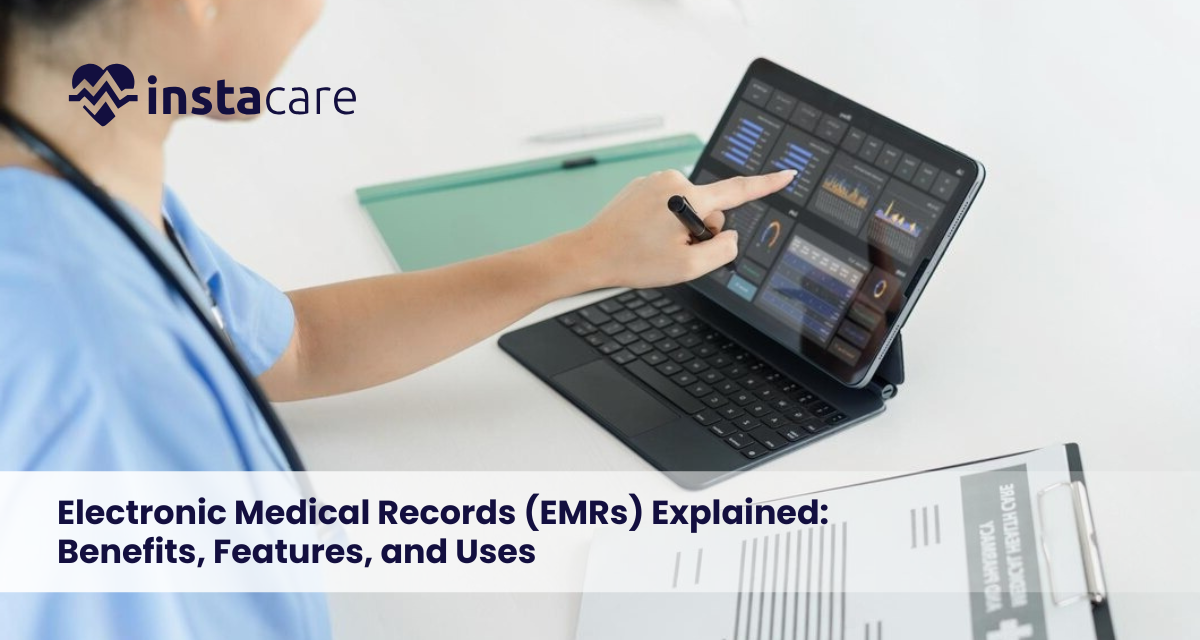
Electronic Medical Records (EMRs) Explained: Benefits, Features, and Uses The global healthcare systems are becoming more digitalized to enhance the medical care and patient records. EMRs are one of the most significant inventions in this sphere. These systems substitute the use of paper files with computerized medical records that enable the healthcare provider to store, retrieve, and process patient records more effectively. The increased adoption of EMR technology in the healthcare sector has changed the manner in which hospitals and clinics process patient data. With EMR software for hospitals, medical workers can enhance the accuracy of the documentation, simplify the work processes, and contribute to enhanced healthcare decision-making. The role of EMR in healthcare today can be emphasized by being aware of how EMRs operate, their advantages, and the role they play in contemporary healthcare. What Are Electronic Medical Records (EMRs)? EMRs are the computerized replicas of the paper charts of patients utilized in hospitals and clinics. These electronic medical records include the comprehensive data on the medical history of a patient, his/her diagnosis, medications, treatment plan, laboratory results, and physician notes. The use of EMRs is aimed at accessing the information required by the healthcare professional who is authorized to access the information in a particular medical facility. They assist in substituting manual records keeping and are critical medical record keeping systems that arrange and store patient information in a safe environment. EMRs enable the medical industry to be more efficient by ensuring that record accuracy is high and that health care information on patients is readily accessed when required. How EMRs Work? The knowledge of how EMR systems operate contributes to the understanding of their popularity in healthcare facilities. EMR systems act as digital repositories of patient information and are centrally located databases in electronic format. When a patient comes to a hospital or clinic, clinical specialists input data into the EMR system, such as medical history, symptoms and diagnoses, prescriptions, and test results. Such data is incorporated into the electronic record of the patient and can be viewed by the personnel. These systems also interconnect with other healthcare data management systems including the laboratory software, pharmacy systems and imaging equipment. It has integrated such that medical professionals can see the entire patient data in a single location to enhance coordination and decision-making. Key Features of Electronic Medical Records Current EMR systems comprise numerous tools that will enhance patient care and medical records. Knowledge on EMR features and functions can assist healthcare organizations be able to utilize their benefits to the fullest extent. Patient Information Management EMRs contain personal information, medical history, allergies, medication history and treatment records in structured electronic records. Clinical Documentation EMR software allows doctors and nurses to document the symptoms, diagnosis, and notes regarding treatment of patients electronically. Laboratory and Test Results Integration EMRs enable healthcare providers to retrieve the laboratory results and imaging reports in real-time with built-in healthcare data management systems. E-Prescribing Physicians are able to transmit prescriptions to the pharmacies electronically and save a lot of mistakes and enhance efficiency. Access control and Data Security The current EMRs have security measures like encryption and restricted access to ensure the safety of patient information. These EMR capabilities and functions contribute to find the way to simplify the medical records and enhance patient care. Benefits of EMRs in Healthcare EMRs have had a great impact on the operations and management of health care. The significance of EMR in healthcare is manifested through some benefits. Improved Accuracy The electronic records minimize the errors of handwriting, and enhance the accuracy of documentation. Quickter access of patients data Digital Medical Records enable healthcare providers to access their digital medical records in a short time, thus saving time when attending to patients. Better Coordination of Care EMRs enable different healthcare providers to access the pertinent information about the patient by integrating with the healthcare data management systems. Enhanced Efficiency Mechanized processes minimize the administration and enhance the productivity of the hospital. Better Data Analysis Patients Hospitals are able to use the data on patients to draw conclusions about trends and better treatment and aid in medical research. These advantages indicate the fact that EMR implementation in hospitals is increasing globally. EMR vs EHR What Is the difference? Electronic Medical Records (EMRs) and Electronic Health Records (EHRs) are the terms that many individuals mix though they are somewhat different. EMRs refer to electronic copies of patient records applied to one healthcare organization. They primarily facilitate medical documentation and clinical processes within a company. EHRs, in their turn, are more universal systems, ensuring the possibility of sharing the patient information with several healthcare organizations. Hospitals, clinics, specialists communicate much better with the help of EHRs. Both systems lead to the better management systems of medical records, but EHRs are more operable among healthcare providers. Book Your Free Marketing Consultation Challenges of Implementing EMRs Despite all the advantages of EMRs, there are some challenges that healthcare organizations can encounter during the implementation of EMRs in hospitals. High Initial Costs The installation of EMR Software is a costly activity in terms of software, hardware, and personnel training. Staff Training The use of EMR software in hospitals may require time and these professionals may need to learn how to operate it. Data Security Concerns EMRs contain delicate information about patients, and therefore hospitals should ensure they have excellent cybersecurity protections against breaches. System Integration Issues At times, combining EMRs with the current healthcare data management systems can bring technical issues. Nonetheless, the benefits of the strategies usually surpass the challenges in the long-term. The Future of Electronic Medical Records It can be predicted that the future of electronic medical records will also be characterized by more sophisticated technologies and better integration on a digital basis. EMR technology in the healthcare sector will probably improve with the help of artificial intelligence, cloud computing, and advanced analytics. The technologies can assist physicians in the more efficient analysis of patients data and aid in

Top Benefits of EHR Integration: Improving Care, Workflow & Data Sharing EHR integration is changing healthcare for the better by helping staff access info, smoothing out their routine tasks, and providing better care to patients. When different systems are linked, doctors can reach full information about patients and quickly make safe choices for their treatment. When EHRs are integrated, patient records are brought together, there are fewer administrative duties, and errors can be prevented with warnings and computerized documentation. Electronic health records make it easier for health experts and ensure that patients receive more customized and well-organized care. It is important for Patient data integration to exchange safely within a hospital’s internal network, and integration supports this function. Stronger EHR interoperability makes the healthcare system cheaper, quicker to respond, and puts the patient first. What is EHR? Electronic Health Records (EHR) copies the contents of the paper charts and puts them into a digital format. They consist of different data, such as the patient’s medical history, lab results, and what treatments are prescribed. EHRs are set up so that only authorized healthcare staff can access and edit them, giving a single, accurate picture of a patient’s health at any point. They are now the main part of healthcare infrastructure and have taken over the traditional method of keeping patient records in most hospitals and clinics. With the Advantages of EHR systems digital technologies, they ensure that vital records are easily accessed, well-coordinated, and can be stored over a long period of time. Importance of EHR Integration Although EHRs are useful separately, their biggest advantage is how well they speak to other tools and systems. With EHR interoperability, healthcare settings, groups, and specialists can easily share the necessary patient information. It ensures that healthcare providers can see the entire patient’s health information in one place. It makes it easier for healthcare workers to do their jobs, giving them more opportunity to help their patients. Because the health system is changing rapidly, making sure EHRs are incorporated with all our labs, pharmacies, imaging centers, and billing services is vital for coordinating care. Top Benefits of EHR Integration 1. Improved Patient Care and Coordination EHR systems help improve patient care by allowing staff to communicate more effectively. All medical information about a patient can be seen in one place by physicians, nurses, specialists, and technicians. Such Coordination of care helps to maintain consistent care, prevents using multiple medicines, and prevent unnecessary testing. Having a network connected to EHR allows doctors to offer better care, carry out follow-up patient care, and notice gaps in care. 2. Real-Time Access to Patient Information With EHR integration, providers have access to patient data at any time, regardless of the place of care. No matter where they practice, physicians are able to get reports, prescriptions, and past consultations immediately. Such quick access to patient’s information allows faster decision-making and quicker help in emergency cases. Doctors are able to access patient data faster than by waiting for it to be sent by fax or email. they quickly get access to the necessary information they need. 3. Reduction in Medical Errors EHRs are also important because they significantly reduce mistakes made in medical care. Common problems with paper-based systems include miscalculating a drug dose, neglecting to notice a patient’s allergy, or mistakenly reading medication plans. They make data consistent and depend on automation to address the most common human errors. If there is a chance for a drug interaction or allergy issue, or if lab results are unusual, the system will alert and remind clinicians. Such safeguards make sure that high care standards are maintained and mistakes that could be prevented do not happen. 4. Time-saving in clinics with EHR Workflows In older settings, it often takes a lot of time to write down documentation, retrieve charts, and collaborate between departments. EHR makes it quicker for clinics by keeping records up to date, allowing referrals to be sent electronically, and allowing instant access to the required information. Many projects can be done fast, but it once took hours. Healthcare staff can spend less time organizing documents and more time with the patients. The whole process from the first patient visit to the final paperwork gets faster, more efficient, and requires fewer errors. Book Free Demo 5. Enhanced Data Sharing Capabilities For people to receive collaborative care, health information should be able to be shared among those providing it. The use of secure sharing of information among different departments and specialists allows for quicker diagnoses and well-coordinated care. Using an integrated EHR system, patients’ data is kept safe and allows different healthcare teams to interact. Whenever a patient is transferred from one type of care to another, their information needs to move smoothly. Health data exchange has to be secure health data exchange so that there is compliance with HIPAA and the information is still accurate. 6. Cost Savings in Healthcare Practices Thanks to their single database and easy-to-use format, integrated EHR systems result in reduced business expenses. When all administrative tasks are managed using technology, smaller healthcare organizations have much Cost savings with EHR in this area. They can reduce expenses on storing files and paperwork, save time for their workers doing administrative tasks, and lower risks of financial loss due to claims and billing errors. These savings may be used to improve patient care or obtain more tools for diagnosis. 7. Support for Automated Clinical Documentation With EHR integration with lab systems, patients’ healthcare information is automatically put into the system and can be processed much faster and more correctly. These tools allow doctors and nurses to take notes about patients easily and quickly. Automation helps to detect any missing information or differences between records, making sure all documents are standardized. Automation helps medical professionals by reducing paperwork and saving time, while also making the documentation more comprehensive. Conclusion Access to electronic records is essential for top-quality and efficient healthcare today, rather than being just a dream for
AI in Telehealth: Transforming Virtual Care with Smart Technology With digital health taking off around the globe, Artificial intelligence in healthcare is introducing a new paradigm of customized, effective, and affordable virtual care. Telehealth, once a novelty relegated to rural or underserved locations, has now transformed into a mainstream healthcare practice, particularly during the COVID-19 pandemic era. AI has driven this growth much faster through automating workflows, improving decision-making, and supporting more preventative models of care. From Telemedicine AI tools that support physicians with diagnoses to AI-based healthcare apps empowering patients to manage chronic illnesses, artificial intelligence is transforming how care is delivered remotely. With the promise of cost savings, scalability, and better patient outcomes, AI is no longer something out of the future it is the future and present of telehealth. The Evolution of Telehealth Telehealth has existed for decades, with initial simple audio and video interactions between patients and physicians. As technology evolved with better internet connectivity, wearable devices, and cloud computing, the reach and availability of virtual medical services improved. However, a complete shift only occurred with the injection of AI technologies. The incorporation of Machine learning in telehealth enables systems to learn from patient information and get better with time, which helps providers deliver more accurate and effective care. The transition towards telehealth automation is also minimizing administrative weight, simplifying workflows for patients, and enabling healthcare professionals to concentrate more on important tasks Telehealth is not just video calls anymore. It now involves remote patient monitoring with AI, mobile health apps, and even AI-driven robots that engage patients. The convergence of telehealth and AI provides a more complete, interactive, and data-based solution for healthcare. Key Applications of AI in Telehealth AI-Based Diagnostics: One of the most compelling uses of AI in telemedicine is in AI-based healthcare apps diagnostics. Through patient history, lab tests, and image analysis, AI can assist clinicians in achieving faster and more accurate diagnoses. This reduces diagnostic error and reduces treatment time both essential in managing health outcomes. AI for Virtual Consultations: Virtual consultation AI leverages natural language processing (NLP) and machine learning to allow real-time doctor-patient interaction. Conversational speech may be transcribed by AI systems, provide possible diagnoses, or even alert providers to inconsistencies or left-out information within a patient’s clinical history. AI for Patient Triage: In crises or peak-demand cases, AI patient triage prioritizes cases according to severity. AI programs examine symptoms and medical histories to direct patients to the right level of care, self-care, virtual consultation, or emergency care. Remote Patient Monitoring: With the advent of wearables and IoT devices, remote patient monitoring using AI has also picked up much steam. Data from heart rate monitors, glucose meters, and other sensors is interpreted by AI algorithms to identify abnormalities and alert doctors in real time. Predictive Analytics in Telemedicine: Predictive analytics for telemedicine helps healthcare professionals anticipate complications even before they occur. AI can recognize trends and patterns in patient information to predict hospital readmissions, medication non-adherence, or impending disease outbreaks. Chronic Disease Management: For patients suffering from chronic diseases, AI chronic disease management offers sustained, individualized care. AI algorithms can observe vitals, modify treatment suggestions, and warn healthcare professionals about deteriorating conditions, allowing for more proactive intervention. Benefits of AI-Enhanced Telehealth Enhanced Accuracy and Efficiency: AI technologies automate processes involving the execution of routine tasks and enable informed decisions. Healthcare providers are given tools that learn and improve continuously in AI-based diagnostics and machine learning, which in turn leads to higher clinical accuracy. Increased Accessibility: By triaging and consultative services using AI, healthcare services are made more available through rural or underserved areas. 24/7 access to health care is offered by the Chatbots in telehealth and the AI-based virtual consultations, especially to people who have a limited mobility or no access to traditional clinics. Personalized Patient Care: AI analyzes overwhelming volumes of patient information in order to produce highly individualized recommendations. Healthcare apps based on AI can be adjusted to the peculiarities of each patient, making fitness, nutrition, and medication plans tailored to meet specific needs; this will increase engagement and outcomes. Cost Savings: AI automation lessens the necessity for in-office visits and eliminates excessive tests or procedures. Telehealth automation slashes administrative and operational expenses considerably, rendering healthcare more affordable. Early Detection and Prevention: With predictive analytics in telemedicine, possible health threats can be identified early. AI algorithms evaluate past and present data to raise warning flags about chronic conditions or acute illnesses, often before symptoms become apparent. Less Burnout for Clinicians: By handling routine questions, bureaucratic paperwork, and data entry, AI lets clinicians off bureaucratic duties. This enables them to focus on more relevant cases, therefore improving their job satisfaction and preventing burnout. Book Free Demo The Future of AI in Virtual Healthcare The prospects for AI in telehealth are huge. Advances in healthcare, Natural language processing in healthcare will make patients’ interactions with AI systems less formal and more sensible. NLP can not only be utilized to record consultations but also to monitor patient sentiment, mood, and mental health status. Another critical growth space is AI-powered healthcare applications, which will become smarter and more user-focused. Such applications will harness behavioral information and feedback to improve and evolve continuously, making health plans seamless. Telemedicine AI systems will continue to develop, whereby they will be multi-modal systems for diagnostics, treatment planning, and follow-up management. Interoperability will improve as AI systems will be able to draw and work with data from various e-health records, lab systems, and patient-generated sources. Conclusion The rollout of artificial intelligence throughout healthcare is revolutionizing the telehealth by facilitating more intelligent, faster, and personalized virtual care. From remote patient monitoring with help of AI to predictive analytics for telemedicine, AI is changing all patient touchpoints. Looking forward, the collaboration between clinicians, technologists, and policymakers will be important in actualising the full potential of AI in telehealth. Smart
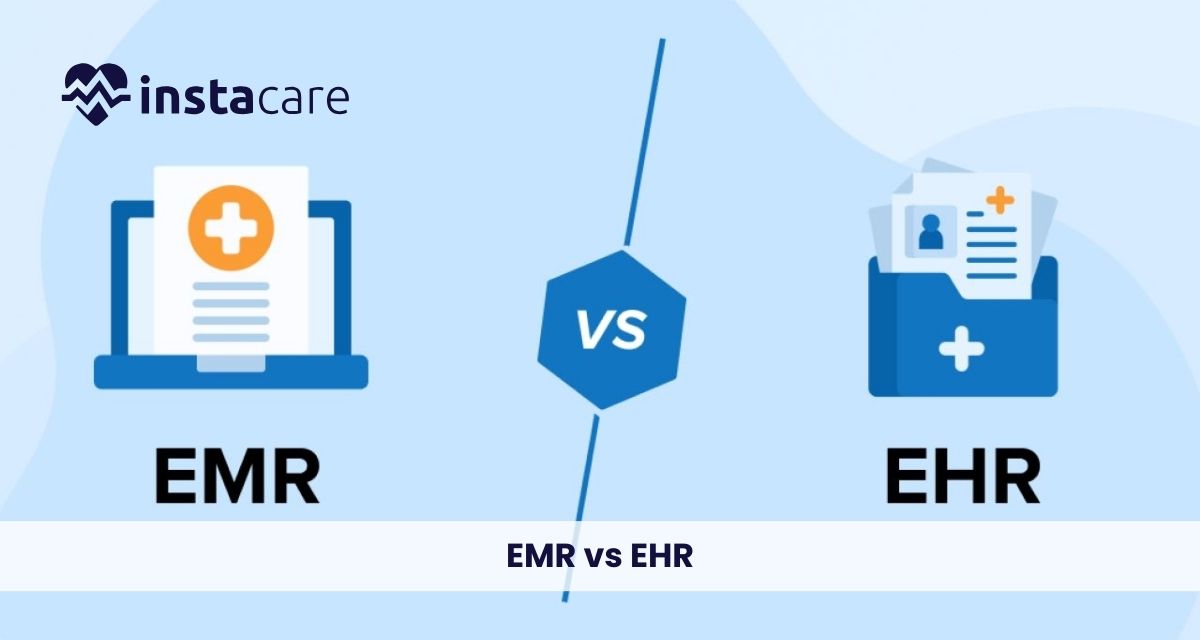
One of the terms that are used in the vibrant healthcare technology arena are Electronic Health Records and Electronic Medical Records. Although they look very similar in writing, they serve very different purposes and have very different impacts on the healthcare provider. Recognition of what constitutes EHR and EMR is the most critical way to improvement of care for patients and optimise operations for Pakistani healthcare providers in compliance with local laws. It digs deeper to identify the differences between them, the challenges, and benefits associated with each system, and which one might find better for the demands specifically posed by the Pakistani healthcare sector. Understanding EHR and EMR What are EMRs? Electronic medical records are the electronic versions of paper charts, which are popularly noticed in a clinician’s office. EMRs contain the medical and treatment history of patients under one practice. Its principal use is by providers for diagnosis and treatment, and it holds plenty of benefits. Reduce the chances of human errors caused by poor handwriting Allow access to the complete medical history of an available patient much faster, hence helping with faster decision-making. Easier Effectiveness: Applications related to administrative tasks like scheduling and billing are streamlined. It has its limitations, though. EMRs typically hold a siloed view within each practice as it is difficult to share information with other practices and providers. Coordination of care would prove tough in such a scenario all the more so given the fact that patients would most probably be treated at various providers’ facilities in Pakistan. What are EHRs? EHRs, however are more intensive. They involve much more than the medical histories and also permit exchange in other healthcare settings. EHRs are intended to be shared by a number of different healthcare providers and are meant to facilitate coordinated care. Some of the fundamental aspects of EHRs include: Interoperability. The EHRs will allow the sharing of patients’ information across several healthcare systems, thus facilitating coordinated care. Patient Engagement: Most of the EHRs include a patient portal to view and discuss personal health information, as well as interact with providers. Data Analytics: Aggregated data by EHRs can be used for research and quality improvement. While EHR systems bring many benefits, they also call for much investment and training. Hence, it remains out of reach to many of the Pakistani healthcare providers. EHR Vs EMR Scope and Functionality The most profound difference between EHR and EMR in their primary scope and functionality is as follows: EMR: More strict practice, which is followed within the organization. EHR: Only for a single practice, to share, integrative approach of health, that is, shared across multiple healthcare settings. Cost An EHR system would also be relatively more expensive to implement than an EMR system because it is much more complex and has interoperability. Most healthcare providers in Pakistan would find the budgetary cost of such EMRs is an attractive reason to use them, despite their many shortcomings, due to their lack of funds. Compliance and Regulation In Pakistan, the health care professionals should adhere to the requirements laid down by the Pakistan Medical and Dental Council (PMDC) and other similar agencies. EHRs are likely to meet this requirement because it can obtain data in a more detailed manner than EMR. However, EMRs are also likely to meet this requirement when all the features of an EHR are integrated. User Experience The user experience for both systems can be quite divergent. EHRs can be much steeper to learn and require more formally trained staff to deploy. For health care providers in Pakistan, whose shortage of training resources may impact the use of either system, the relative simplicity of EMRs makes them an attractive choice. Book Free Demo Benefits of EHR and EMR for Pakistani Healthcare Providers Benefits of EMR Cost-Effective: EMRs are relatively cheaper to deploy and to maintain Ease of Use: Their user-friendly interfaces will make them be embraced sooner by the health workers. Practice-based Data Management: EMRs are constructed based on the practice needs Benefits of EHR Coordinated Care: EHRs facilitate integrated care by providers and in settings, an aspect that is currently of higher value in Pakistan’s decentralized health system. Interoperability: EHRs guarantee a smooth flow of information and patient safety, as well as quality in care. Regulatory Compliance: EHRs are usually more functional in handling the regulatory compliance, which is always of importance for providers. Challenges of EHR and EMR EMR Challenges Limited Interoperability: EMRs can’t easily interact with other systems, thus coordinated care is limited. Data Silos: Patient data may be confined within a single practice, thus resulting in an incomplete health history of the patient. EHR Challenges Expenses: Such EHRs are highly expensive at first and pose a challenge for most providers in Pakistan’s healthcare sector. Training Requirements: Heavily, staff requires training before it can become functional with the application of EHR systems. Data Privacy Issues: Issues exist in connection with data security and data privacy related to patients’ care data, which needs to be addressed. Which one is Best suited for Pakistani Healthcare Providers? The best system for Pakistani healthcare providers will depend on several factors such as the size of the practice, constraints on budget, and the needs of the patient population. A few considerations are as follows: For Small to Medium Practices Smaller practices or clinics will favor the EMR option because of its low cost and ease of use. These systems will result in streamlined operations minus all the interoperability that EHRs require. For Larger Healthcare Systems EHRs are generally a better option for large healthcare systems or medical institutions. Information sharing across different departments and external providers will result in better patient outcomes along with care coordination enhancement. Future Considerations The way of developing health care toward more integrated models of care through the development of the health system in Pakistan is necessary for requiring comprehensive data sharing. For the short term, EMRs may suffice, but the long-run focus will probably be on EHRs due to