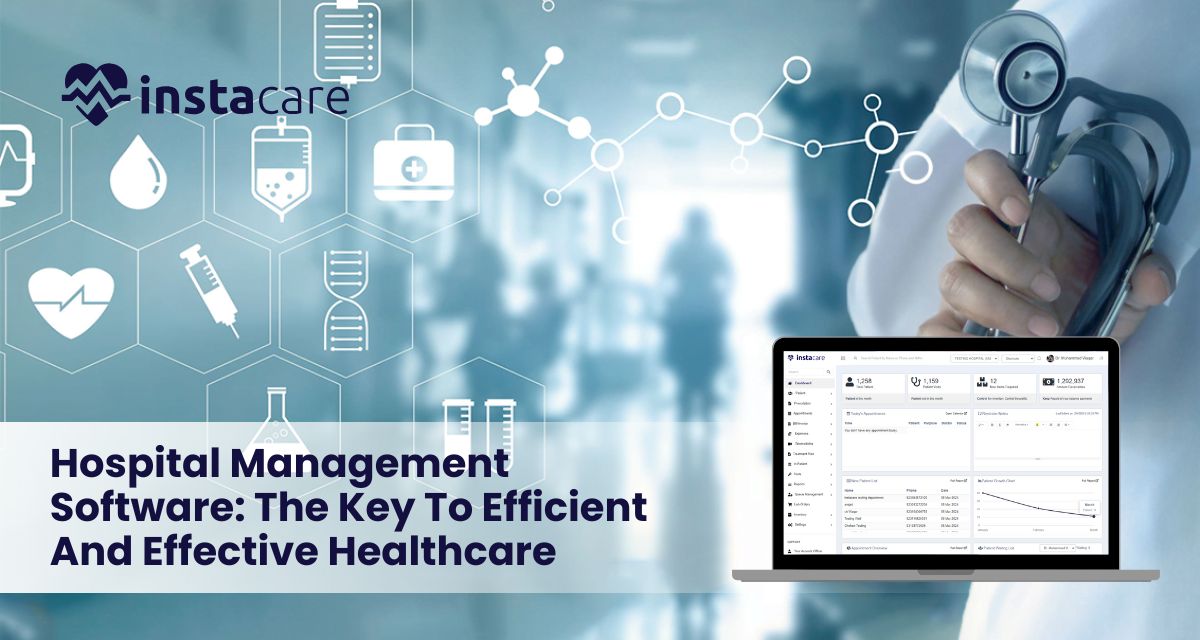
The demand for management systems in the evolving healthcare sector has never been more crucial than now Hospital management software (HMS) essential for enhancing healthcare services and optimising operational processes to achieve improved patient results this detailed handbook delves into the key aspects, benefits and influence of hospital management software, on the healthcare field. Hospital management software is a tool aimed at optimising both the clinical operations in healthcare facilities by combining tasks like patient registration and appointment scheduling with billing and electronic health records management on one platform to enhance workflow efficiency, for healthcare professionals. Key Features Of Medical Center Administration Software 1- Patient Registration and Admission HMS plays a role in helping with registration and admission at healthcare facilities by enabling the efficient collection of important patient details such as demographics and medical history, through software tools provided to healthcare providers. This streamlines the admission process reduces errors often seen with data input. 2- Appointment Scheduling Scheduling patient appointments plays a role in healthcare facilities operations. The Hospital Management System (HMS) commonly offers an appointment scheduling function, for staff to easily arrange or adjust appointments and notify patients appropriately through automated reminders. This practice does not help in decreasing missed appointments. Also enhances the efficient utilisation of healthcare resources. 3-Electronic Health Records (EHR) The EHR part of HMS is imperative for keeping up with precise patient records. It empowers medical care suppliers to store, recover, and update patient data continuously. This centralization of information guarantees that all medical services experts engaged with a patient’s consideration approach similar data, prompting better-organized care and working on persistent wellbeing. 4- Billing And Revenue Cycle Management Emergency clinic the board programming works on the charging system via computerized invoicing, installment handling, and claims accommodation. This component assists medical care suppliers with keeping up with monetary steadiness by guaranteeing opportune installments and decreasing charging blunders. Besides, HMS can incorporate with insurance agencies, smoothing out the case interaction and improving the income cycle of the management. 5- Inventory Management Compelling stock administration is fundamental for medical services offices to stay away from stockouts and wastage. HMS incorporates devices for following clinical supplies, drugs, and gear. By giving constant stock information, the product assists directors with pursuing informed buying choices and oversees costs really. 6- Reporting And Analytics HMS offers hearty detailing and examinations that empower medical services associations to screen key execution markers (KPIs) and survey functional effectiveness. By producing nifty gritty reports on understanding results, monetary execution, and asset use, medical care directors can distinguish regions for development and go with information driven choices. 7- Communication Tools Powerful correspondence is significant in medical care settings. HMS frequently incorporates work in specialised devices, like secure informing and notices, to work with coordinated effort among medical services groups. This guarantees that all colleagues are educated about quiet status, treatment plans, and any progressions in care conventions. 8- Telemedicine Integration With the ascent of telehealth administrations, numerous medical clinics and the board frameworks currently incorporate telemedicine highlights. This combination permits medical services suppliers to lead virtual meetings, oversee distant patient observing, and keep up with progression of care for patients who can’t visit the office face to face. Book Free Demo Benefits Of Hospital Management Software 1- Improved Operational Efficiency Via mechanizing routine undertakings and smoothing out work processes, HMS altogether improves functional productivity. Medical services staff can zero in a greater number of on understanding considerations as opposed to regulatory obligations, prompting further developed efficiency and decreased burnout. 2- Enhanced Patient Experience HMS adds to a superior patient encounter by decreasing stand by times, further developing correspondence, and guaranteeing exact record-keeping. Patients value the accommodation of online arrangement booking, admittance to their wellbeing records, and ideal updates, prompting higher fulfilment levels. 3- Better Data Management Clinic the board programming concentrates patient information, making it more straightforward for medical care suppliers to access and share data. This prompts further developed coordination of care, decreased duplication of tests, and better-educated clinical choices. 4- Regulatory Compliance Medical care offices should conform to different guidelines, including information security regulations and industry norms. HMS frequently incorporates highlights that assist associations keep up with consistent guidelines like HIPAA (Medical coverage Compactness and Responsibility Act), guaranteeing that patient data is put away safely and gotten to exclusively by approved work force. 5- Cost Savings By upgrading work processes, diminishing blunders, and further developing charging processes, HMS can prompt massive expense investment funds for medical services associations. Also, viable stock administration forestalls overloading and wastage, further improving monetary execution. 6- Scalability As medical care associations develop, their functional necessities change. Medical Hospital management software is commonly intended to be versatile, permitting offices to add new modules and elements on a case by case basis. This adaptability guarantees that HMS can adjust to the developing requests of medical services conveyance. 7- Enhanced Security Information security is a main concern in medical care. HMS utilizes progressed safety efforts, for example, encryption, access controls, and normal reinforcements to shield delicate patient data from unapproved access and information breaks. The Future Of Hospital Management Software The fate of clinic board programming is promising, with ceaseless progressions in innovation and expanding requests for effective medical services conveyance. Key patterns to look for include: 1- Artificial Intelligence (Ai) Integration Simulated intelligence is set to reform medical Hospital management software by improving navigation, anticipating patient results, and robotizing regulatory assignments. By utilising computer based intelligence calculations, medical services associations can work on understanding consideration and smooth out activities. 2- Enhanced Telehealth Capabilities As telemedicine keeps on acquiring ubiquity, HMS will probably develop to incorporate heartier telehealth highlights, empowering medical care suppliers to flawlessly offer far off counsels and checking administrations. 3- Interoperability Future HMS arrangements will focus on interoperability, permitting various frameworks to actually impart and share information. This will prompt better consideration coordination and work on persistent results. 4- Focus On Patient Engagement Integrating patient commitment devices, for example, patient entrances and versatile applications, will turn out to

What Are the Valuable Features of A Tailored Hospital Software Adopting customized hospital software is now essential for hospitals to optimize operations, enhance patient care, and comply with regulations in today’s quickly evolving healthcare landscape. These customized solutions come with various features made especially to meet the individual requirements and difficulties experienced by healthcare professionals. Customized software expedites administrative work, strengthens team communication within the healthcare system, and increases patient experience. Through customization of the software to meet the unique needs of every institution, providers may guarantee a smooth connection with the current workflows and standards. Insightful Details About Tailored Hospital Software Furthermore, robust, customized hospital software frequently includes strong security features to safeguard patient information and guarantee adherence to legal requirements. Hospitals that want to provide high-quality care, remain competitive, and indeed adjust to the changing needs of the healthcare sector must implement customized hospital software. The term “tailored hospital software” describes adaptable digital solutions created especially to meet the various needs of healthcare facilities. Instead of off-the-shelf software, Tailored solutions are painstakingly designed to fit each hospital’s unique processes and protocols, guaranteeing smooth integration and peak performance. Ease Of Customization The simplicity of modification offered by customized hospital software is one of its most significant benefits. Healthcare providers can customize the program to fit their needs, ensuring that it satisfies the particular requirements of various hospital departments. Adaptability In Features Customized features and functionalities can be added to tailored software to meet the unique requirements of different departments, including administration, radiology, pharmacy, and emergency. Because of this flexibility, healthcare providers can increase organizational efficiency and streamline procedures. Customized Approaches For Various Departments Within a hospital, every department faces unique obstacles and demands. Department-specific solutions are provided by customized hospital software, guaranteeing that every section of the hospital runs smoothly and cooperatively. Book Free Demo Integration Capabilities Robust integration capabilities of customized hospital software enable smooth integration with current hospital infrastructure systems and technologies. Smooth Interaction With Current Systems It might be challenging to mix new software with legacy systems. Customized hospital software is made to work in harmony with current systems, dropping downtime and guaranteeing business continuity. Enhancing Interdepartmental Communication Coordination of patient care across departments needs effective communication. Customized hospital software makes it easier for departments to share data and communicate with one another, which improves teamwork and patient consequences. Enhanced Security Measures Healthcare organizations must prioritize protecting patient data in this time of growing cybersecurity threats. Enhanced security measures are provided by hospital software that is specifically designed to protect private patient data. Protection Of Patient Data Tailored software uses strong authentication and encryption methods to shield patient data from breaks and unwanted access. Health Insurance Portability and Accountability Act (HIPAA) and indeed other strict healthcare laws are complied with thanks to built-in security safeguards. Observance Of Healthcare Regulations Strict regulatory restrictions regarding the handling and storing of patient data apply to healthcare professionals. Customized hospital software is made to guarantee adherence to industry rules, giving patients and healthcare organizations piece of mind. Streamlined Workflow Management Providing high-quality patient care and optimizing operational efficiency depend on effective workflow management. A variety of features are available in hospital software that has been specially designed to improve resource efficiency and workflow. Optimizing Appointment Scheduling Efficient appointment scheduling is essential to lessening wait times and raising patient satisfaction. Appointment booking and administration procedures can be streamlined with tailored software’s sophisticated scheduling algorithms and user-friendly interfaces. Efficient Resource Allocation Allocating resources efficiently guarantees hospitals have the people, tools, and materials to satisfy patient demand. Customized hospital software offers real-time analytics and insights to maximize efficiency, reduce waste, and optimize resource allocation and utilization. View More: Simplifying Record-Keeping with a Patient Record Management System Patient-Centric Features Customized hospital software offers several features intended to improve patient outcomes and experience while prioritizing the provision of patient-centric care. Tailored Health Plans Healthcare professionals can develop individualized care plans based on the requirements and preferences of each patient by using tailored software. Hospitals can enhance patient outcomes and satisfaction by customizing treatment plans and actions. Tools For Engaging Patients Patient fulfillment and health results can improve when people are vigorously involved in their care. Patients can indeed actively participate in their treatment process using patient engagement tools provided by tailored hospital software, which include mobile apps, patient portals, and remote monitoring options. Tools For Reporting And Analytics Optimizing operational efficiency and clinical results requires data-driven decision-making. Healthcare providers can indeed obtain valuable insights into patient populations, clinical trends, and performance measures by utilizing customized hospital software, which offers comprehensive analytics and reporting capabilities. Data-Informed Decision Making Healthcare practitioners can find patterns, trends, and opportunities for development inside their businesses using data analytics. Customized dashboards and reports provided by tailored software allow decision-makers to take well-informed positions based on up-to-date information. Assessment And Enhancement Of Performance In a hospital, finding excellence and improvement areas requires ongoing performance assessment. Healthcare providers can monitor key performance indicators (KPIs) and compare their results to industry standards with the help of customized software, which helps with continuous quality improvement projects. Cost-Effectiveness Over time, investing in customized hospital software can result in significant cost savings, assisting healthcare companies in lowering working costs and enhancing their financial stability. Lowering Of Operational Expenses Tailored software lowers hospital work, supply, and organizational overhead costs by automating physical operations, maximizing resource practice, and streamlining workflows. Scalability Hospitals need software that can produce and change with the needs of the healthcare industry. Hospitals may grow and expand with the help of tailored hospital software, which provides scalability to meet evolving needs and technological advancements. Accommodation Of Growth And Expansion Hospitals require software solutions to quickly expand or open new locations to satisfy the increasing demand. Scalability possibilities provided by tailored software let hospitals grow without experiencing any problems. Sense-Based Design For Simple Navigation User experience is prioritized in tailored software, which provides healthcare workers with simple-to-use navigation menus and interfaces that facilitate rapid access

6 Amazing Aspects Of Hospital Information System Software Every hospital in a health system needs a flexible and effective hospital information management system. To maintain a high IT infrastructure, healthcare professionals are adjusting to the most recent technological innovations. Hospital information system software assists healthcare companies in overcoming any difficult obstacles they encounter in the modern healthcare sector. What Is Hospital Information System? To manage the financial, administrative, and clinical facets of hospitals, the HIS hospital information system software also known as a Clinical Information System, was created. For effective data management of hospital inventory and patient information, every hospital continues to use Hospital Management System software. Departments The financial, inpatient, Operation Theater, nursing, radiology, clinical, laboratory, outpatient, materials, pharmaceutical, and pathology departments of healthcare all benefit from the control that the hospital information system software provides over their data. Why Is A Hospital Management System Necessary? The backbone of every hospital or healthcare facility is believed to be an effective, reliable, and cost-efficient system. The software for the hospital information system is one of them. Significance Of The Hospital Information System The significance of the hospital information system is discussed below. More effective revenue management Improved ability to make clinical decisions The greatest approach to upgrading the technology in your hospital Improved data security Can instantly monitor every detail and eliminate faults. A better reputation as a result of favorable quality assessments. A cost-effective choice for any facility. There are no chances of mistakes because HMS reduced the personnel. Improved data security and retrievability Better patient care and efficiency View More: 11 Characteristics Of Hospital Information Management System Amazing Aspects Of Hospital Information Systems Here are some of the wonderful qualities you should consider when choosing a hospital information system software for your healthcare requirements from an effective and sophisticated hospital information management system. Appointment The first step in onboarding a patient is to provide them with hassle-free appointments. Patients can arrange appointments online and from any location with the use of appointment scheduling capabilities, which can reduce waiting times and emergencies. IP, OP, And OT Are All Combined Into One Three essential components, including management of inpatients, outpatients, and operating rooms, are integrated into the hospital information management system. MIS reporting, asset management, ward and room administration, nurse and doctor assignments, and other things are all part of it. Every outpatient department’s requirements are managed by the outpatient management. Book Free Demo Insurance And Billing Charges for patient registration, physician fees, performed tests, and other expenses were included in the billing process. The family must promptly pay the fee before a patient is released. Here comes hospital information system software, which is significant. It facilitates a quicker, error-free operation. The specific therapy or service provided to the patient is now connected with it. Costs are input with the aid of code, which also made it possible for automated billing. The hospital information system software aids in accelerating and simplifying the insurance claim procedure. Drugstore Integration Stock management, built-in tax calculations, auto expiry notifications, barcodes, and other features are all taken care of by the Hospital Information Management System Pharmacy Integration module. The HMS pharmacy management module aids in maintaining control over several pharmacies. Prescription integration, stock management, intelligent reports, stock moment, and other tasks are handled by the pharmacy management module. Modules Based On Specialties The Hospital Information System has consolidated reporting features for PACS, X-rays, Ultrasound, CT scans, and more. To get the best results, they are also compatible with other imaging technologies. Authentication will only be given to those who are allowed to review the reports. Organ diagnosis is a straightforward process that is a part of digital imaging. This technology can quickly understand reports from the fields of radiology, dentistry, cancer, IVF, and cardiology. Unique User Roles And An Integrated Interface The hospital information system provides individuals with data protection and privacy. By putting them into practice, you can empower clear and fluid functionality. Since HIS is a cloud-based program and everything is connected, there is no opportunity for breaches to happen. It indicates that the patient data is secure and can only be viewed by select individuals after authentication. Conclusion Here was all about hospital information system software which is highly helpful for every hospital and clinical department you can also take assistance from instacare.com.pk.

11 Characteristics Of Hospital Information Management System The goal of the introduction of the Hospital Information Management System was to aid hospitals in streamlining their operations. A hospital management system is also a computer system that facilitates the efficient execution of the jobs of healthcare practitioners and helps manage information connected to healthcare. They oversee the data for all healthcare departments, including, Clinical, Financial, Laboratory, Inpatient, Outpatient, Theater of operations, Materials, Nursing, and Pharmaceutical. What Makes HMS Crucial For A Hospital? The hospital management system was developed to address the challenges also associated with managing the patient paperwork related to each hospitalization’s numerous departments while maintaining patient anonymity. HMS makes it possible to handle all patient paperwork in one location, freeing staff members from having to organize and analyze patient paperwork. HMS performs a wide range of tasks, including: Keep the patient’s medical records up to date Keep the patient’s contact information up to date Observe the appointment dates Save the insurance details for future use Keeping track of debt payments Benefits Of Hospital Information Management System The following are the benefits of a Hospital Information Management System: Quickening technology Increased efficiency due to reduced human error Limits the scope for errors Made possible data security and accurate data retrieval Both affordable and manageable Simple access to patient data that includes precise patient history Patient treatment is improved as a result Hospital Management System Characteristics Management Of Appointments Appointment widgets will be put onto hospitals’ websites if they have their websites. On the hospital’s website, clients may easily make online appointments. Book Free Demo Billing Administration Radiology, lab, and treatment billing integration. When a discount is authorized, notifications are delivered. Automatic due capture, before- and after-consultation billing options. Prescription Control Manage recently taken and frequently used medications. Option to display a list of drugs the pharmacy has available. Patients receive SMS prescriptions. Release Summary Based on a template, discharging summary. Integration of ICD10. The choice is to delay the discharge summary till the IP bill is paid. System Master Information Allows you to use your palm to access all MIS data. Hospital Management System Advantages We have now clarified the significance of the hospital management system; it is up to you to choose the best type for your requirements and goals. Here, we provide further details about the advantages of different HMS and their effects on healthcare systems. Patient Data Retrieval Is Simple HMS enables easy access to all patient-related data stored on a system with only a few clicks. The user can access patient history, current disease, doctors involved, test results, billing information, and many more. These facts will aid in making connections regarding the patient, such as their precise diagnosis, appropriate treatments, and medications. Higher Data Security Using HMS at your hospital allows patient data to be kept entirely secure. It can only be offered to a small number of authorized personnel. With HMS, all the data is kept safe by securing the login credentials on a server or in the cloud. Boost Transparency And Visibility The Hospital Management System (HMS) enhances transparency and visibility across the whole management process and all records. Improve Accurate Reporting Processes With the aid of current and correct records, it helps to streamline accurate reporting. Enhancing Management Visibility Additionally, it increases the hospital’s management visibility by making all patient, physician, and medication-related information and data freely accessible to all departments. Finally Hospital Information Management System reduces waiting times in the hospital and lowers labor costs by reducing the number of workers also needed to operate the manual data input and paperwork system. His adoption will reduce the amount of human interference in the system, preventing errors brought on by humans. Every hospital has various requirements; determine what will work best for you and install the appropriate HMS system.
- 1
- 2