

With this technological advancement and huge interest in health, a tremendous transformation has been witnessed in the health situation of Pakistan. From all these transformations, EHR software emerged as one of the innovations that will revolutionize healthcare delivery in Pakistan. The EHR system would be the foundation of profound innovation in healthcare and would help more healthcare providers offer better care with improved operational efficiency and better patient outcomes. We will write about the importance of EHR software, advantages, difficulties, and prospects that this might hold for healthcare in Pakistan. Understanding EHR Software EHR software is the electronic version of a patient’s paper chart. The EHR includes the medical history, diagnoses, treatment plans, medications, allergies, and laboratory results of a patient. Instead of paper records, it would have been used in older times. The EHRs were provided to enable providers to share the record through different channels and settings used in health care, thus providing real-time communication between health care providers. Importance of EHR in Modern Healthcare EHRs are very important for shaping a very current and living part of modern health care because they: Ensure centralization of patient information: EHRs provide an integrated, cohesive view of a patient’s health record from which decisions can easily be made. Improve communication: EHRs improve the communication among the healthcare providers as all parties dealing with the patient are allowed access to the same information. Improve Patient Safety: EHRs reduce the errors attributed to handwriting, misreading the notes, and medication management thereby contributing to improving patient safety. Support Data Analytics: EHRs enable health care organizations to analyze the data; from this analysis, the healthcare organizations are able to track public health and also enhance clinical outcome. Current Status of Healthcare in Pakistan Pakistan healthcare system faces the following disadvantages: Low access to quality care: Most of the rural areas lack facilities for healthcare provision; this brings a gap in access to medical treatment. Lack of proper health records integration: Paper-based records lack comprehensiveness, and it becomes challenging for healthcare providers to accommodate the population as a whole because of incomplete information that such documentation might lack. Inefficient Administrative Practices: The paper-based record-keeping elongates the process involved in the billing process. Long processes sometimes delay the appointment setting and handling of patients. Healthcare Professionals’ Lack: It lacks healthcare professionals who are skilled in the appropriate use of the health facilities’ technology. Required Technology-Based Solutions By adopting technology solutions in healthcare, which leads to the efficiency and betterment of care providers, challenges related to Pakistan’s health industry will be met. Modernization of a country’s healthcare system is facilitated by EHR software, which might bring more responsiveness to the needs of the patients. Book Free Demo Benefits of EHR Software in Pakistan 1-Better Patient Care EHR software enhances the quality of care offered to patients in the following way: it enables direct access by health care providers to extensive patient information. Direct access enables: Improved Diagnosis and Treatment: Health care providers can conduct a more comprehensive review of a patient’s medical history while making diagnoses and treatment plans for the patient. Personalized Health Care: An in-depth knowledge of a patient’s needs by changing treatment plans for such patients will lead to improved health outcomes. 2-Increase Efficiency It will automate clerical works, save time based on paperwork, and let healthcare providers get more personally involved with the patient. Some of the major efficiency improvements are: Automated Billing and Coding: EHR systems ensure that automated billing processes are accomplished without errors or revamping revenue cycles. Simplified Appointment Scheduling: EHRs make it easier to handle appointments and make it possible for clinics to avoid no-shows and optimize patient flow. Integrated Communication: EHRs will support integrated communication between healthcare providers, thus ensuring that consultations and referrals are made faster. 3-Enhanced Data Management EHR Software has enhanced data management in that: It centralizes patient records because patient information is held in one single location, and this information is very safe, thereby retrieval and updating are easier. It ensures safe sharing of patient information with other care givers, hence teamwork and continuum of care. Supporting Research and Public Health: aggregated data from EHRs may be used for research purposes, hence offering an avenue for health care organizations to identify trends in bettering public health initiatives. 4-Cost Savings One of the advantages of implementing EHR software for health providers is also saving on cost for instance: Minimized Administrative Costs: clerical work is most minimized with automation. Less Storage Cost: Electronic records do not need space to be stored, hence saving the money that would otherwise have been spent on maintaining paper-based records. Improvement in Revenue Cycle: Effectiveness in billing and coding allows quick payments and cash flow. Problems with EHR Software Implementation in Pakistan Although these are a few benefits the implementation of EHR software in Pakistan throws up quite some problems: 1-On-site Costs These systems may be very capital-intensive to establish for small clinics and other health facilities. The cost will come in terms of the software license, hardware, training, and later on, maintenance. 2-Fear of Change One is the fear of new technology by the healthcare providers themselves because it takes time to learn the working system. Further, the change in workflow may also be something that a healthcare provider fears most. 3-Data Security and Privacy Issues The digitized health record creates room for breaches of data security and unauthorized access to the sensitive information of patients. Thus, one of the problems that must be addressed in the implementation process is providing security for the EHR system. 4-Limited Infrastructure Internet connectivity and the technological infrastructure are rare in most areas of Pakistan, which is predominantly composed of rural areas and might become an issue if proper use is to be made of cloud-based EHR systems. Trends That Will Shape the Future Given that EHR software in Pakistan has tremendous potential, the following trends will shape the contours of its future: Interoperability: Future EHRs will symbolize interoperability in the sense that
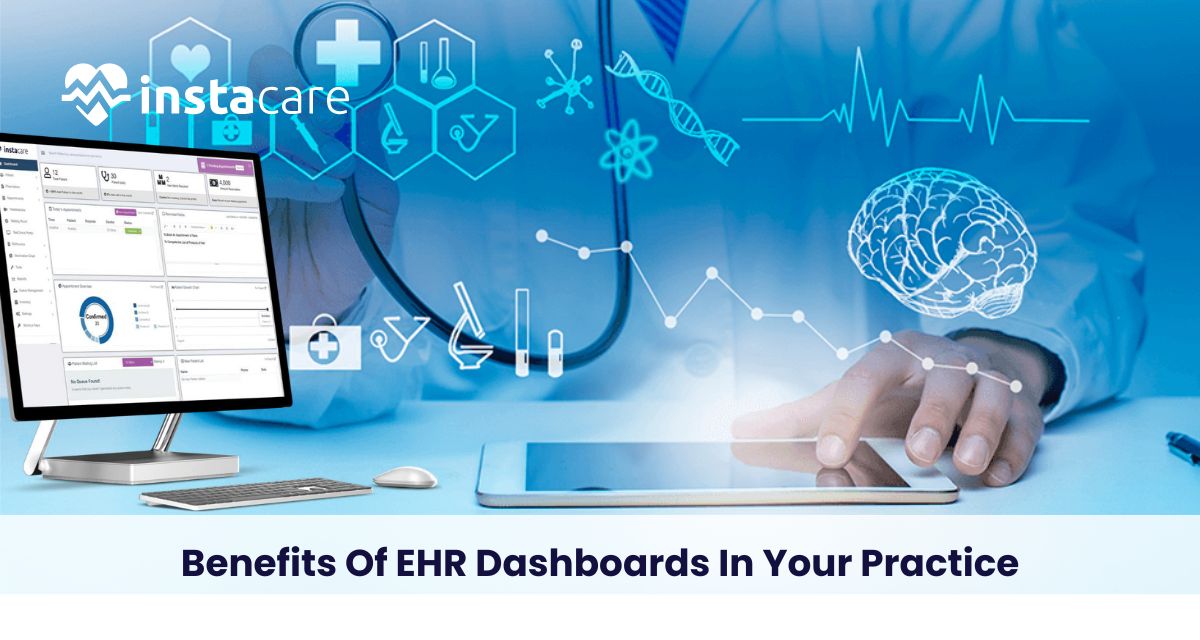
8 Benefits Of EHR Dashboards In Your Practice Under the changes in the healthcare framework, Electronic Health Records (EHR) have emerged as an essential component in medical practices. Of course, other functions that EHR systems can have are numerous; however, among these functions, the most valuable are the dashboards that help save time and increase the efficiency of the work performed. EHR dashboards give the healthcare professional a single-point graphical interface through which he can get the overall data of a patient and the summary of indicators of the health system. Administrators can also prioritize their goals and objectives through directed bulletins. In this blog, we’ll detail 8 essential uses for EHR dashboards and how they directly improve your practice’s efficiency and, as a result, patient outcomes. Here Are 8 Benefits Of EHR Dashboards ! 1- Streamlining Patient Data Management Clinicians value EHR dashboards because they make the management of patients’ data much easier and more efficient. Whereas patients’ records or test results would take time to retrieve from physical files or even search through databases, a healthcare provider gets the complete picture of a patient at a single click of a button. Such ease of access not only a lot of time but also minimizes the chances of making mistakes that translating into better decision-making processes that are faster. Overwhelming heaps of information can be well managed by EHR dashboards, which, in turn, redirect healthcare providers’ attention to patients and their needs. 2- Enhancing Communication and Collaboration EHR dashboards are significant in medical practices due to the influence of efficient communication. Since all authorized personnel view the EHR and the data, EHR dashboards foster cooperation among healthcare workers. This is because integrated communication tools enable members of the team to share information, review cases, and adequately come up with care plans. It eliminates time-consuming meetings or phone calls and ensures everyone is informed and the patient is not the one to suffer in the process. 3- Improving Scheduling and Workflow Management EHRs could otherwise be scheduled inefficiently, resulting in loss of time and money, which EHR dashboards possess more robust features to manage. These dashboards make it easier to have real-time schedule visibility to allow staff to control the flow of patients. Such a system helps to remind people of the appointments, hence curtailing on no-shows while overbooking or canceling; it is easy to tweak. In this regard, EHR dashboards that integrate scheduling and workflow features assist the practices in achieving maximum practice efficiency. Book Free Demo 4- Tracking Performance Metrics and Quality of Care Another benefit of creating an EHR dashboard is that it helps track and check the organization’s and practice’s performance against its intended quality-of-care standards. These dashboards are analytical since they use KPIs like the number of patients waiting for doctors, recovery rates, and patient satisfaction statistics. By monitoring these metrics, the healthcare providers can determine any shortcomings and thus make changes with a view of improving the quality of services as well as efficiency. 5- Policies Improving Data Security and Compliance With an ever-increasing rate of data breach incidences, EHR dashboards provide strong and secure user interfaces to guard patient’s sensitive information. These dashboards incorporate data encryption, RBAC, and audit trails that allow only authorized users to view or alter the data. These security features also enhance the protection of patient data while helping the practices concerned to remain in conformity with regulations such as HIPAA, hence minimizing on possible penalties. 6- Facilitating Billing and Revenue Cycle Management Billing and revenue cycle are the essential areas that define the practice of any healthcare facility, and the EHR dashboards can a great addition to it. Organizing the patients’ billing information at the EHR Lower Layer dashboards eliminates the problem of errors and increased time compared to its unstructured format. This integration is beneficial in ensuring that the claims are correctly sent and in the right time so that there is maximum reimbursement and adequate cash flow. In addition, real-time exposure to billing metrics gives practices a timely outlook on any problem affecting revenue. 7- Supporting Clinical Decision-Making EHR dashboards are very helpful resources in the context of clinical decision-making. By giving crucial patient information, clinical pathways, and evidence-based advice to healthcare providers, such things as these allow for real-time decision-making at the point of care. This allows doctors to refine their initial diagnoses and final treatment plans since they have easy access to patients’ past histories, current medications, and most up-to-date test results. Although increases patients’ benefits and satisfaction, it also raises the productivity of the practice in general. 8- Reducing Administrative Burden The stability of EHRs may also contribute to what some clinicians consider their biggest drawback: the cumbersomeness, which can eat up a large percentage of a health care provider’s day. EHR dashboards address this challenge. This way, the EHR dashboards save time that would have otherwise been spent of carrying out routine tasks like reminding patients of their appointments, follow-ups, and generation of reports among others hence allowing the provider to concentrate more on patients. The change of work procedures and using technology help to decrease the number of mistakes during data input. Conclusion It can be noted that dashboards have become valuable tools in health care practices, facilitating productivity and patient care. The above-classified dashboards help the healthcare providers by ensuring effective patient data management, efficient communication, and performance metrics, scheduling and cutting down the manager’s loads which in turn help in delivering better care more efficiently. With such changes in focus continuously occurring in the healthcare field, the practices that will efficiently harness all the aspects of EHR dashboards will be able to stand for the future and meet the challenges by delivering the best results to the patients. FAQs What is the purpose of an EHR dashboard in a healthcare practice? An EHR Dashboard is a single page that is part of an Electronic Health Records system. It provides clear access to patient information, highlights organizational performance metrics,