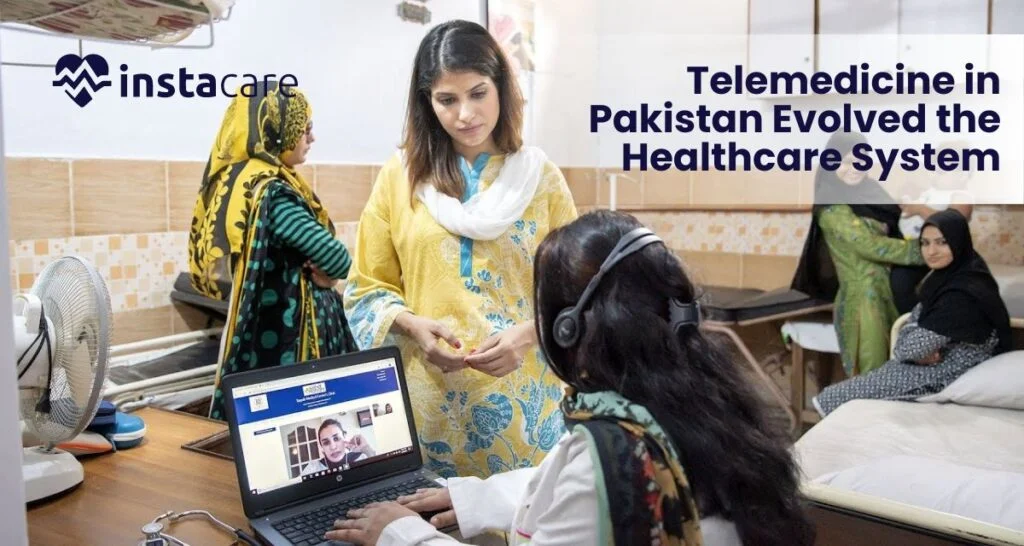
How Telemedicine in Pakistan Evolved the Healthcare System The distribution of health care as well as doctors in Pakistan has been a challenge for a long while, unfortunately widening the gap between rural and urban areas with limited resources. However, within the early 2000s, the country was pushed by the unquestioned force of technology to face the fact that technology can be utilized to address the gaps. And this is when the actual format of Telemedicine in Pakistan starts to come into existence.. At the beginning the main undertaking was the PTA Telemedicine Program that took place in 2005. for instance, it used ICTs to raise the standard of healthcare services; this involved making the services not only adequate but also affordable for everyone including the poor. A Pandemic-Driven Acceleration The COVID-19 pandemic actually become the biggest supporter for the rapid development of telemedicine in Pakistan. Along with the rest of the world, which was coping with the crises in healthcare, the urgency of leveraging telemedicine in the country was at the forefront. On the one hand, stayed-at-home orders, social distancing measures including the increase of telemedicine usage whereby patients were seeking healthcare services remotely without going to see healthcare facilities in person. In response to this up rise in demand, the government and regulations authorities have taken very beneficial steps in Pakistan to build a supportive environment for telemedicine. Improving Digital Infrastructure Observing that when it comes to the spread of telemedicine, having strong enough internet connections and stable telecommunication networks is one of the most vital factors, the government therefore made some efforts to improve the fundamental internet infrastructure as well as the telecom networks across the country. In 2018, the organization rolled out the Broadband for Sustainable Development (BSD) program that sought to broaden the internet network’s reach especially in rural and the underprivileged areas, which in turn would boost the number of people who can seek telemedicine services. Book Free Demo Increased Accessibility and Reach of Healthcare One of the remotely provided telemedicine’s greatest positive sides is a wide range of by an expert’s appointment. In the past, people, who lived in remote areas, had to travel far to visit a specialist of consultant. These patients can now consult with a medical expert in urban centers, thanks to the internet and video calling. This has not only diminish the congestion on major cities health sector infrastructure but also allowed patient’s to have their treatment needs attended in a timely manner by qualified experts , irrespective of their location. Addressing the Shortage of Healthcare Professionals Telemedicine, experts today have eradicated the burdens of workforce shortage to some extent in Pakistan. Through the facilitation of Tel-health, the country has now experienced an expansion in utilization of both domestic and foreign professionals’ fields, thus enhancing the available healthcare resources. Chronic Disease Management and Remote Monitoring Apart from that, telemedicine has been proven to be an effective instrument through which patients suffering with chronic illnesses are managed and remote patient monitoring is facilitated. The people living with health complications, such as diabetes, blood pressure problems, heart conditions, can now be monitored, receive guidance, and have their medication managed through only a visual contact, thus the need for countless hospital trips. Medical Lead to Better Patient Engagement and Empowerment Telemedicine in Pakistan has bought about health promotion and the participation of patients in the healthcare process. The doors to patient-centered care have been flung wide open. Now, patients no longer take a passive, back seat role in their healthcare, but instead become directly involved thanks to access to their medical records, communication with healthcare providers, and monitoring of health parameters via telemedicine platforms and mobile apps. It has increased the patients’ engagement in their own care which has resulted in better adherence to their drug regimens, better self-management of chronic illnesses and more informed healthcare choices among patients regarding their own health. Preventive Healthcare And Early Disease Detection While telemedicine has been present only a short period of time it has delivered not only the improved health care services to people but also promoted the preventive healthcare and the early disease detection as another means of doing this. By means of tele-consultations and digital health monitoring tools, health providers are now able to establish contact with their patients on a more frequent basis, to carry out timely preventive care and routine monitoring which may uncover underlying problems or complications. Overcoming Challenges The evolution of telemedicine in Pakistan has not been an easy walk; quite conversely, challenges have been (and consistently, are) the order of the day. Features like reduced digital literacy, higher prices for telemedicine devices, and the internet services, and the conservativeness of some healthcare professionals in accepting popular technology adoption strategies have persisted. To deal with this issue, the relevant bodies at the helm, and most notably the government and stakeholders in the healthcare field, have been looking for ways to develop the initiatives. Digital literacy and skills training sessions are being conducted among both healthcare workers and patients to empower them in their telemedicine usage and services. The government support has also been extended to subsidize and incentivize the technological tools for the provision of virtual care in the underserved and rural areas. This plan is going to be made up of programs to offer low-income homes internet subsidy and medical devices at discounted prices as well as training programs to uplift healthcare professionals in the use of telemedicine. The Future of Telemedicine in Pakistan Aiming at the future, telemedicine in Pakistan is bound to be an integral aspect as Pakistan shifts through the different stages in the rapid changing trends of health care. On the one hand, technology still continues to change in our modern life and to be integrated with such systems as artificial intelligence and machine learning to be applied to healthcare. On the other hand, healthcare professionals and treatment seekers become more and more ready to use this form of communication. Telemedicine in