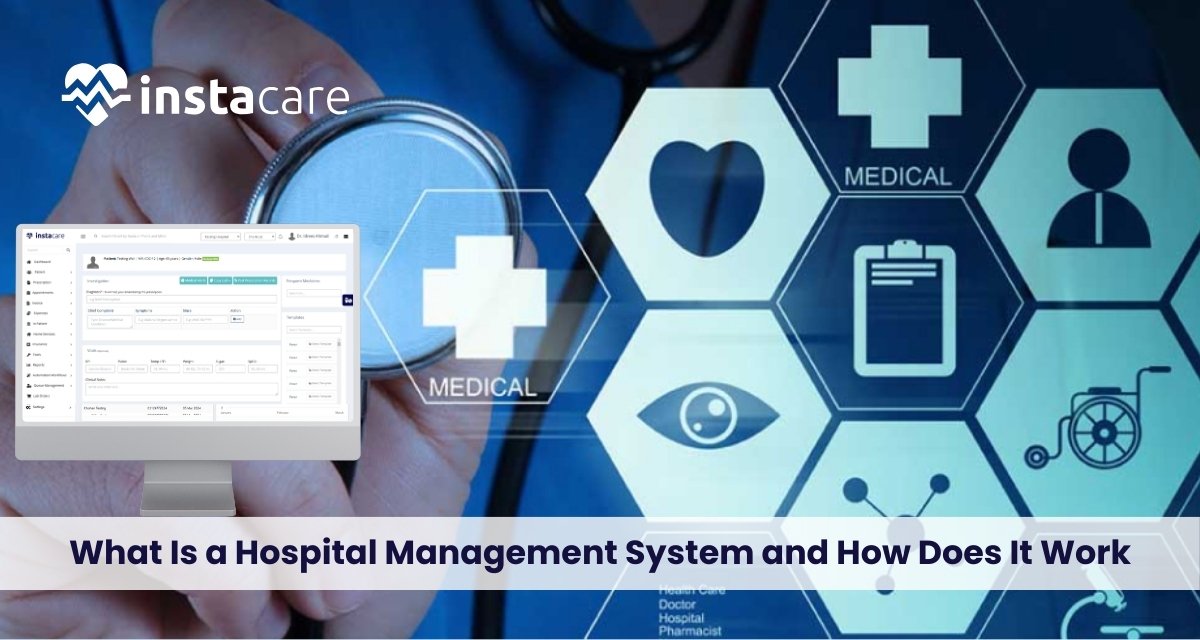
What Is a Hospital Management System and How Does It Work? A hospital management system is the term used to describe an all-inclusive Hospital software solution that makes the various activities of a hospital or healthcare facility easy. This is often achieved by bringing together several functions, such as patient management, billing, scheduling, and more, in one cohesive platform. The Hospital Management System primarily focuses on enhancing the efficiency in carrying out health care functions and more effective management for patients and for health care itself. Over time, the need for effective methods of healthcare facility management due to its alterations is identified, and nowadays, it is regarded as a regular constituent of present health care arrangements. Components of a Hospital Management System Many modules form part of a hospital management system. Everyone addresses different aspects of healthcare management. All these work together in a well-defined process, benefiting the patients by giving total comfort and peace in the healthcare organization. Some major modules in HMS include: Patient Management System Electronic Health Records (EHR) Hospital Billing Systems Patient Appointment Scheduling Hospital Inventory Management The management system is very important in ensuring proper records of a patient’s information and history. This would ensure that all the necessary information for effective treatment is available to health providers. Electronic Health Record (EHR) system allows for digital storage of health information, which makes it easy for healthcare professionals to access and update patient records in real-time. The same Healthcare management system offers a hospital billing system that offers automatic billing. This feature makes invoicing and financial tracking pretty easy, removing much administrative burden from the staff. It would further enable rapid financial transactions as long as payment is made in a timely manner to the providers of healthcare services. Another prime feature of the Hospital Management System is appointment scheduling. This module makes appointment scheduling much easier for the patient. Consequently, wait times are minimized, and the patient experience improves overall. Further, inventory management in hospitals is quite vital as well. It is in their best interest that medical supplies and equipment are tracked well enough to prevent shortfalls and waste. Benefits of a Hospital Management System A hospital management system has various benefits for providers and patients. An effective HMS significantly improves operational efficiency and provides better patient outcomes while reducing the Healthcare administration system. One key advantage of the Hospital Management System is its streamlined operations. Hospitals integrate all different departments and functions into one unit to eliminate duplication and maximize flow. In return, this ensures that healthcare providers spend much more time dealing with patients rather than administrative matters. Quality of care is an enhanced benefit of the Hospital information system since prompt, quick, and not-so-delayed decisions about patients are reached by availing proper sets of comprehensive information. As a result, higher quality is attached to diagnostics, along with a chance to make choices from effective therapy approaches in medical institutions to treat their patients. Another major advantage is the ability to cut the cost of services. A hospital management system does this by automating tasks such as billing and scheduling. The extra time saved enables the organization to offer superior health care and thus have appropriate service delivery operations. A strong Hospital Management System also ensures data security. Because all patient data is stored securely and well managed, compliance with healthcare regulations is easily guaranteed. Any unauthorized access to sensitive patient information is thus prevented. How Does a Hospital Management System Work? A hospital management system is a centralized platform that integrates several healthcare operations. The architecture of a hospital management system usually consists of an interface, a database for patient information, and modules for various functionalities. When a patient comes to the hospital, it will capture all details, including medical history and insurance. All these details are stored in such an accessible format so that any doctor can refer and retrieve any relevant data on any patient promptly. This feature in the HMS ensures interdepartmental communication. When a new patient is admitted, it communicates every piece of information with relevant departments, such as billing, nursing, or even physicians, so that everyone involved is aware. It facilitates easy appointment scheduling through the patient. The module will allow for automatic scheduling updates of healthcare providers; therefore, double booking or missed appointments will never occur. This is very important in optimizing resource usage and enhancing patient satisfaction. Then, the Hospital Billing System creates the invoices following the treatment and manages the insurance claims in a manner that ensures proper billing accompanied by efficient payment processing, thus maintaining the revenue cycle healthy for the healthcare facility. Implementing a hospital management system is challenging because it requires a complex set of tasks that must be addressed at different levels. Although the advantages of a Hospital Management System are very significant, implementing an HMS involves challenges. Understanding these challenges prepares health facilities for a less complicated transition process. Implementation may be expensive. The initial capital input into an HMS implementation includes software licensing, hardware, and staff training. This is a considerable barrier to adopting an HMS in smaller facilities. The other serious challenge is user acceptance. For the HMS to succeed, the health staff must embrace the new system. Users’ changes can kill the software’s successful implementation. Thus, effective training and support are essential for effective user acceptance. The other challenge is data migration. Moving existing data from paper documents or old systems to the HMS requires a complex and time-consuming process, and proper planning is required so that key information is not missed. Many healthcare organizations use software for several systems and products. Therefore, proper integration needs to support seamless, trouble-free work efficiency that will not otherwise negatively affect the operations of a non-sensing Hospital Management System. Post-implementation maintenance and support should always be provided for the system. A Hospital Management System needs very regular upgrades and technical support to be effective. Hospitals need to prepare for such long-term costs and ensure that they

Top Digital Health Company in Asia by CXO Global Forum InstaCare is proud to announce that the CXO Global Forum has honored it with the prestigious ‘Top Entrepreneur Award’. This recognition reinforces InstaCare’s position as the Top Digital Health Company in Asia and a pioneer in revolutionizing the healthcare landscape. Our innovative solutions and unwavering commitment to healthcare excellence have also earned it multiple accolades, including: Top Digital Health Company in Pakistan Best Healthtech Startup in Pakistan Best EMR and Practice Management Company in Asia These achievements reflect InstaCare’s dedication to leveraging technology to enhance healthcare accessibility, efficiency, and outcomes across the region. Bilal Amjad Reflects on InstaCare’s Commitment “This award is a testament to our mission of transforming healthcare through advanced digital solutions,” said Bilal Amjad, CEO of InstaCare. “We are committed to empowering healthcare providers and patients with tools that elevate care delivery and contribute to a healthier future for everyone.” As a leading digital health platform, we continue to innovate and deliver impactful solutions, including: Electronic Medical Records (EMR) Practice Management Systems Telemedicine Patient Engagement Tools Our efforts are bridging the gap between patients and healthcare providers, ensuring that healthcare is more accessible, efficient, and affordable across Pakistan and beyond. The recognition by CXO Global Forum underscores InstaCare’s vision of setting new benchmarks for healthcare technology, bringing innovation, and making a lasting impact on the healthcare industry.