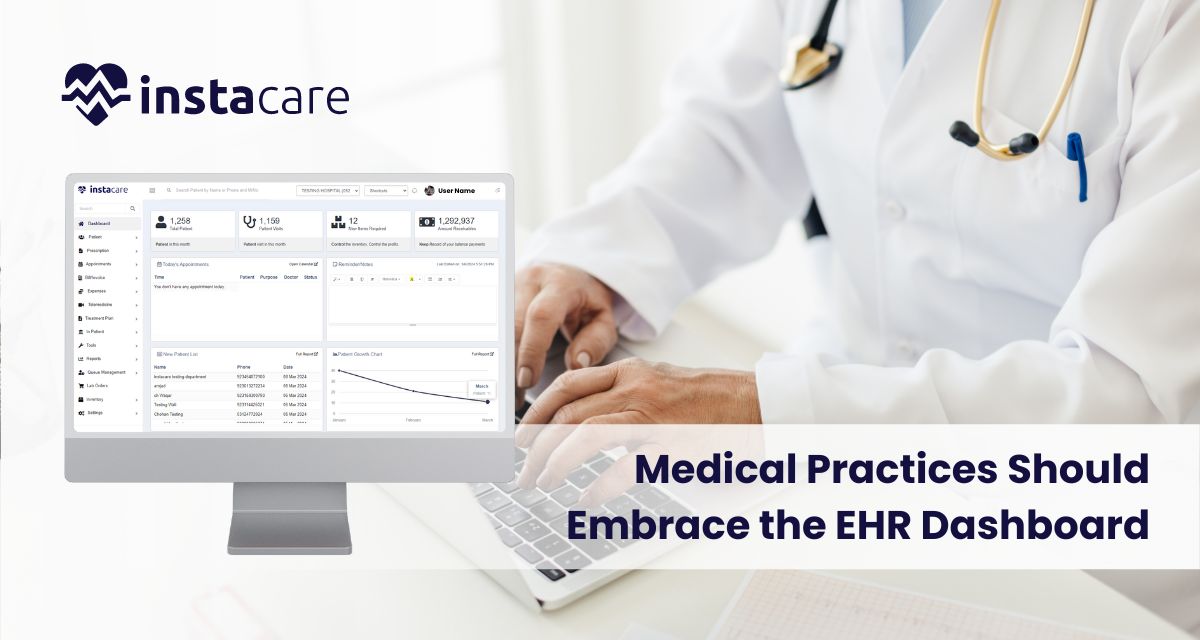
Why Medical Practices Should Embrace the EHR Dashboard? Efficiency and care for the patients are paramount in today’s time and hectic schedules in healthcare. EHR made a big difference in how medical practices manage patient information; however, there is much more to achieve with EHR through its dashboard. The EHR dashboard makes practices more efficient and helps to improve patient outcomes by streamlining workflows and enhancing communication. Here is why your practice should adopt the EHR dashboard. Understanding the EHR Dashboard The EHR dashboard is a visual interface through which critical patient information and practice metrics are presented to the healthcare professional for quick access. It puts together information from a host of sources onto one easy-to-operate platform. The dashboard would include, but was not limited to, patient records, appointment schedules, clinical alerts, billing information, and analytics on practice performance. Real-time Access to Information A few of the major advantages of the EHR dashboard for the clinical users include; The EHR dashboard enables real time patient information. Doctors will be able to monitor in real time their patients’ past history, diagnosis and treatment, medications, allergies, and lab results. In this regard, through immediate access, informed decision-making during consultations will lead to improved patient care. Improved Care Coordination The EHR dashboard allows communication between healthcare providers. When a variety of specialists and primary care providers can view the same information about the patient, then care starts to become coordinated. For instance, if a patient is seeing a variety of specialists, having a shared dashboard ensures that all providers are on the same page about treatment plans and reduces conflicting medicines and procedures. Personalized Patient Interactions The EHR dashboard gives the health care provider a reason and way to personalize interactions with the patients. By knowing the patient’s history and preferences, one is able to give recommendations and advice relevant to that particular patient; hence, this fosters a good relationship between the patient and the health provider. This may improve patient compliance and patient satisfaction. Increased Efficiency The EHR dashboard simplifies workflow by putting all the data needed in one convenient location. Professionals are able to quickly navigate from patient records to scheduling and onto billing in much less time than it would take them to search for information. This, in turn, will allow providers to see more patients and thus enhance profitability of the practice. Automation of Routine Tasks Many of these EHR dashboards have automation features that can perform basic tasks, such as appointment reminders and follow-up notifications. Automating these processes frees up the workload of staff to work more on critical areas, such as patient care and administrative support. Book Free Demo Effective Resource Management Such a dashboard is the window to the performance of a practice: one can ascertain from the various types of metrics on patient volume, appointment cancellation rates, and staff productivity. Analysis of these metrics will enable the practices to make informed decisions on resource allocation, staffing needs, and how to improve operatively. This is a proactive approach to ensure practices run smoothly and efficiently. Improved Data Analytics The analytics tools in EHR dashboards will provide comprehensive and effective interpretations of the trends in practices. Practices could track patient outcomes to know about treatments that work best and apply changes through evidence-based practice improvements. Quality Improvement Initiatives Quality improvement is part of any healthcare practice. EHR dashboards will make it possible to track key quality metrics such as patient satisfaction scores, readmission rates, and treatment outcomes. Through the tracking of these metrics on a regular basis, practices will be able to implement changes that improve their quality of care and experience for patients. Compliance and Security Some of these regulations include HIPAA and the requirements for Meaningful Use. An EHR dashboard will go a long way in ensuring that compliance is easy to attain since reports and documentation necessary for audits are easily accessible. Such transparency protects the practice and increases community regard for the practice. Enhanced Data Security In the present age of growing cyber threats, data security remains one of the main concerns for medical practices. Advanced security features, including encryption and access controls, are widely part of most of the EHR dashboards. Such measures ensure sensitive patient information is kept secure and that medical institutions stay in compliance with regulations. User-Friendly Interfaces A common concern in the adoption of any new technology relates to the learning curve. Fortunately, today’s modern EHR dashboard offers an intuitive interface that makes navigation relatively easy. Training programs will help the staff get acquainted with the system sooner and minimize disruption to practice operations. Ongoing Support Also crucial to the utilization of an EHR dashboard is continued support on the part of the software vendor. Regular updates, technical support, and training resources will help practices derive the most value from their EHR system. This support enables a culture of continuous quality improvement in the practice. Overcoming Resistance to Change Change does not always come easily, and health care is a very complex arena. Some staff will have concerns that new technologies will replace jobs or add to their workload. The practice leaders must communicate the benefits of the EHR dashboard and engage the staff in the implementation process. Engaged team members feel ownership of the new process and are more accepting of it. Data Quality An EHR dashboard is only as good as the data it gets, which means that practices have to have appropriate protocols in place for ensuring that the data going in is both accurate and complete. Periodic audits and training also provide ways to ensure data integrity and maximize the effectiveness of the dashboard. Conclusion The EHR dashboard is only one of many ways the landscape of healthcare will continue to evolve, and for medical practices looking to remain strong in their field, embracing this technology is no longer an option but a necessity. It can enhance patient care, streamline workflows, and enhance data analytics-in all areas. This can help them in