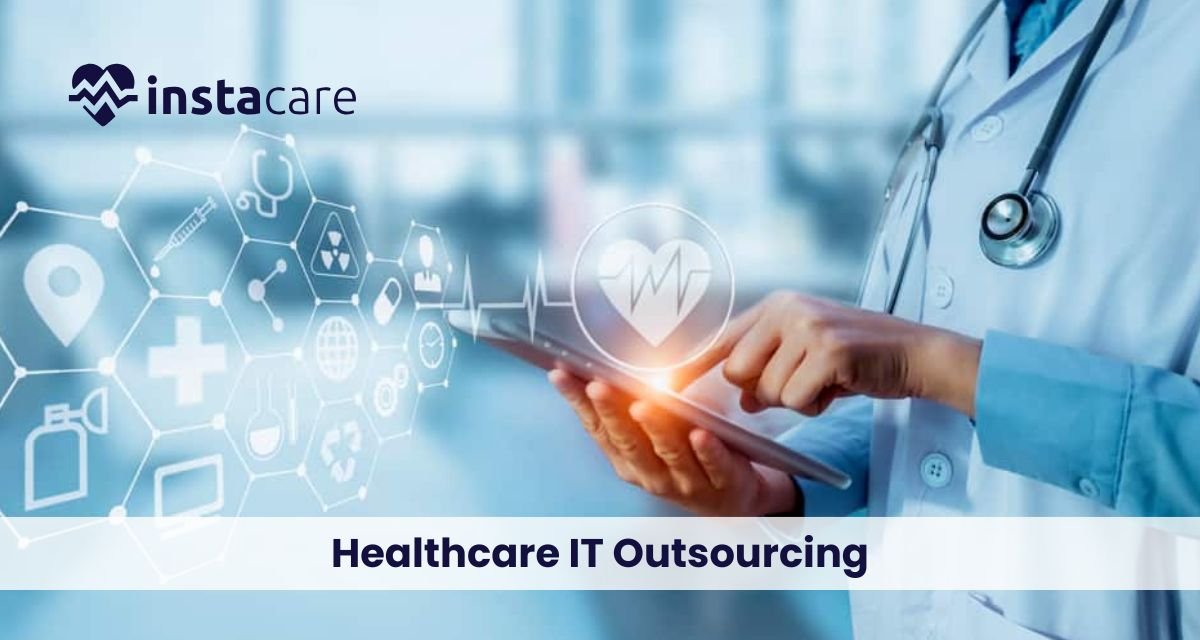
Healthcare IT Outsourcing: Benefits, Challenges, and Best Practices for Modern Healthcare Technology has become a key instrument in the modern rapidly changing healthcare sector to better patient care, increase efficiency in operations, and ensure regulatory compliance. Customised IT solutions continue to be embraced by hospitals and healthcare providers to facilitate various procedures, including electronic medical records, telehealth, cybersecurity, and data management. In-house IT development and management may, however be costly and time-consuming. This is where medical IT outsourcing and Healthcare IT services come in as viable and economical solutions to contemporary healthcare organisations. IT outsourcing in healthcare enables hospitals and clinics among other medical facilities to tap into expertise outside the organisation in handling the complex technological requirements. Organisations can have access to scalable solutions, adopt the most advanced technologies, and ensure that they adhere to the strict healthcare regulations by collaborating with provides. What is Healthcare IT Outsourcing? Healthcare IT outsourcing refers to the process of outsourcing third party vendors or service providers to operate, design, or maintain IT infrastructure and software in healthcare organizations. Such services may include outsourcing of software development to healthcare and also to hospitals, as well as telehealth outsourcing of IT services. Outsourcing can cover: EMR/EHR support: The effective management of electronic health records. Healthcare cybersecurity services: Data protection and regulation. Medical cloud computing: It provides storage and access to medical information, which is safe and scalable. Healthcare data management services: Gathering, examining and protecting patient and operational data. Outsourcing these tasks, hospitals do not have to worry about technology management as it is a competency that is left to special professionals. It further enables organizations to be flexible towards embracing digital transformation in healthcare IT. Major Advantages of Healthcare IT Outsourcing IT Healthcare software development outsourcing has many benefits. The most prominent benefits are the following: Cost Effectiveness Outsourcing will not necessitate the inclusion of huge in-house IT departments and the huge investment of capital. The services of the hospitals are paid on a case by case basis and this makes the IT outsourcing for hospitals a cost effective one. Availability of Specialization Third-party providers can provide expertise in Healthcare IT consulting, cybersecurity, and developing software. This makes the hospitals keep pace with the current technologies. Scalability Outsourced solutions entail the ability of healthcare providers to scale operations based on the volume of patients and the needs of the operations. IT system outsourcing to healthcare also makes sure that IT systems expand with organizational needs. Regulatory Compliance Trusted providers are HIPAA compliant and deliver HIPAA compliant IT outsourcing which reduces the chances of legal and compliance claims. Enhanced Patient Experience The outsourced EMR/EHR support and telehealth solutions enhance appointment management, data accuracy, and communication with patients. Greater Security Healthcare cybersecurity protects sensitive medical information against breaches, ransom attacks and unauthorized access. Consider Core Services When IT duties are outsourced, hospital employees have an opportunity to concentrate on patient care and quality enhancement, as well as on strategic activities. These advantages render healthcare IT outsourcing a viable solution to organizations that aim at efficiency, professionalism and technology without overwhelming their internal capabilities. Hardships in Healthcare IT Outsourcing Along with the advantages, the outsourcing of healthcare IT services also has certain difficulties: Data Privacy Issues The process of transferring sensitive patient information to third-party vendors needs to be highly data-protected. Organizations need to make sure that vendors are IT outsourced under the HIPAA compliant standards. Integration Problems The incorporation of the outsourced systems with the existing IT system may be complicated. Outsourced medical billing services or hospital IT support services may also be incompatible with the hospitals. Vendor Reliability Selecting an inappropriate provider may cause delays, technical glitches or disruption of services. The vendor must have experience in Healthcare technology outsourcing. Unknown Expenses Certain outsourcing deals could have undisclosed charges on upgrades, maintenance, or other support. Sustainable outsourcing contracts need transparent pricing. Communication Barriers Using offshore or remote IT teams can create difficulties related to real-time communication and collaboration and impact the timelines of service delivery. Through these issues, hospitals can make wise choices, identify reputable providers as well as institute risk mitigation measures to healthcare IT services. Book Free Demo Best Practices to effective healthcare IT outsourcing Best practices can help healthcare organisations to reap the greatest benefits of IT outsourcing: State Requirements Clearly Determine scope, deliverables, and the anticipated results of the services, including outsourced EMR/EHR support or telehealth IT outsourcing. Select long-term Vendors Find an outsourcing provider of software development and healthcare cybersecurity services. Guarantee Regulatory Compliance Check that the vendors comply with HIPAA and other local healthcare laws to ensure patient data are safe. Determine Communication Rules Frequent reporting, status updates, and collaborative software enhance visibility and organization Monitor Performance Track KPIs, Quality of the services, and user feedback to make sure the outsourced team performs as expected. Data Backup and Security The backup and encryption of data should be robust to ensure that information on patients and the organization is protected. Ongoing Training Promote constant training and updating to ensure outsourced teams have access to knowledge on the trends and changes in healthcare, software, and digital transformation in healthcare IT. These best practices will guarantee the success of the outsourcing relationship, which will enable the hospitals to utilize the potential of the hospital IT support services and other specialized IT solutions. Healthcare IT Outsourcing in the Future There is more expected digital transformation in the healthcare sector, and the role of IT outsourcing will be critical in the transformation. Key trends include: AI and automation integration: Outsourced IT providers will start to be more integrated with AI to provide predictive analytics, workflow automation, and patient monitoring. Telehealth Expansion: The increase in demand of remote care will help expand telehealth IT outsourcing that would implement virtual consultations and remote patient monitoring. Cloud-Based Solutions: Cloud adoption solutions in the healthcare ensure scalability, data security storage