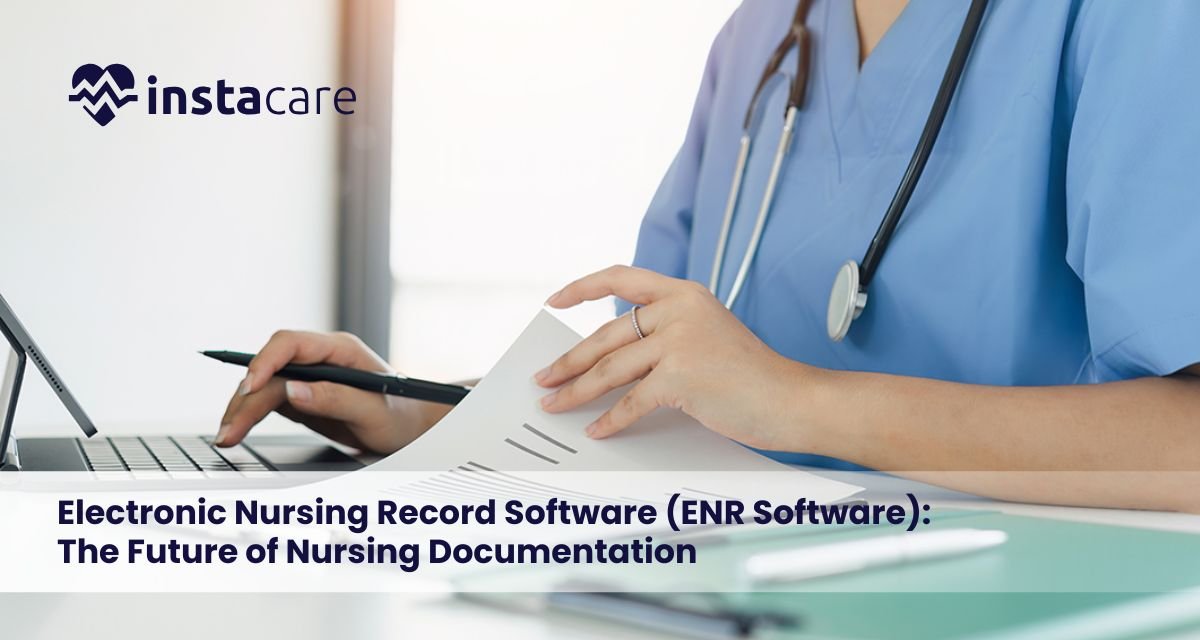
Electronic Nursing Record Software (ENR Software): The Future of Nursing Documentation The field of healthcare is quickly becoming digitised, and nursing documentation is not an exception. Nurses are at the front line in providing care to the patients and in most cases, the traditional paper-based records and the divided systems tend to slow them down and thus prone to make errors. ENR software has become an effective tool that allows one to document appropriately, in real-time, and patient-centred. ENR software is changing the way nurses in healthcare facilities document, communicate and provide care through the simplification of workflows and access to clinical data. What Is Electronic Nursing Record (ENR) Software? Electronic Nursing record software is a dedicated healthcare record system that was developed and intended to be used by nurses in easy access, management, and recording of patient care information electronically. In contrast to the general electronic health record for nurses, ENR is built around such nursing-specific data as assessment, care plans, medication administration, vital signs and progress notes. Electronic nursing records enable nurses to record patient details in an instant with structured templates and standardised terminologies. This software is a component of an ENR system in healthcare and functions well with the larger systems of the hospital to provide continuity in care and accuracy of data throughout the patient experience. Key Features of ENR Software The current nursing documentation software has a vast spectrum of functions capable of supporting clinical efficiency and patient safety. Common features include: Assessment, interventions, and outcomes: customisable nursing charting software. Automated time stamps and real time documentation. Computerized patient care records that are available in different departments. Medication, vitals, and care reminders and clinical alerts. Development of care plans and revision depending on the state of the patient. Laboratory/ pharmacy/ physician systems integration. Support of mobile and bedside documentation. Role-based access control to data storage. All these characteristics make the digital nursing documentation both extensive and convenient in the fast-paced clinical setting. Benefits of ENR Software Implementation of ENR software provides tremendous benefits to both nurses, health institutions and patients. In the case of nurses, it saves them time that would otherwise be associated with paperwork and manual charting and direct patient care can be given more attention. In the case of healthcare organisations, it enhances the accuracy of documentation, standardisation, and compliance with regulations. Better communication between care teams promotes safer and more coordinated care to patients. The other advantages are: Minimized documentation errors. Greater efficiency on nursing workflow management software. Quicker patient data accessibility. Greater interdisciplinary cooperation. More quality improvement data analytics. In general, ENR software helps to maintain a more effective and responsible healthcare documentation system. How ENR Software Supports Quality Patient Care? Timely, accurate, and comprehensive documentation is the key to high-quality nursing care. This is facilitated by ENR software which allows nurses to document patient assessment, intervention and reactions in real time. This will guarantee that the impact of a patient in his or her health is seen instantly by the whole treatment team. Nurse-specific electronic health records facilitate standardised care delivery with the aid of evidence-based templates and clinical pathways. This minimizes variability in care, and serves to aid in making informed clinical decisions. Also, there are inbuilt warnings and verification systems that can eliminate medication mistakes and omissions in interventions, thus directly affecting patient safety. Implementation: What Healthcare Facilities Should Know? The use of hospital nursing software should be properly planned and coordinated. Starting with evaluating clinical needs, current infrastructure, and staff preparedness, healthcare facilities should start with it. Implementation can be achieved successfully by choosing a system that can fit the nursing processes and not by interfering with them. Key considerations include: Training of staff and managing change. Integration of the system with the current electronic medical records for nurses. Paper/legacy system data migration. System scalability and technical support. The adoption and the success in the long term require leadership involvement and nurse involvement in the implementation. Common Challenges and Solutions With all these advantages, ENR software implementation is not easy. The opposition to change is not unique, particularly concerning the employees who are used to the paper-based documents. This can be taken care of by intensive training, continuous support and including nurses in designing the system. The complexity of the system, data overload and interoperability problems are other challenges. The obstacles can be overcome by selecting an easy-to-use nursing informatics software and making sure that it can be easily integrated with other systems. The usability can also be enhanced in the long run by regular system updates and feedback loops. Book Your Free Marketing Consultation Regulatory and Compliance Considerations ENR software should adhere to healthcare policies concerning patient privacy, data security and clinical documentation standards. Audit trails, secure access control, and encryption should be supported by systems to aid in secure storage of patient information. Observation of the national and international standards of healthcare shows that the electronic patient care records are legally sufficient and ethically controlled. Healthcare organisations should also be able to practice proper documentation in order to fulfil the accreditation and reporting requirements. Future Trends in ENR Software The development of the ENR software is directly related to the development of healthcare technology. There is an increased adoption of artificial intelligence and predictive analytics to aid in clinical decision-making and early detection of patient risks. Other current trends are: Nursing charting voice recognition software. Suggestions on AI-assisted documentation. Nursing outcome advanced data analytics. Mobile-first and cloud-based platforms. Complete integrated EHR and ENR systems. The innovations will further improve efficiency, accuracy and patient-centred care. Choosing the Right ENR Software Nursing care management software needs to be chosen with a clear grasp of the clinical requirements, as well as organisational objectives. The healthcare facilities must focus on intuitive, scaled and interoperative systems. The important evaluation criteria are: Ease of use for nursing staff Customisation options Connection with current clinical documentation software. Vendor support and training Meeting healthcare regulations. The selected ENR solution can
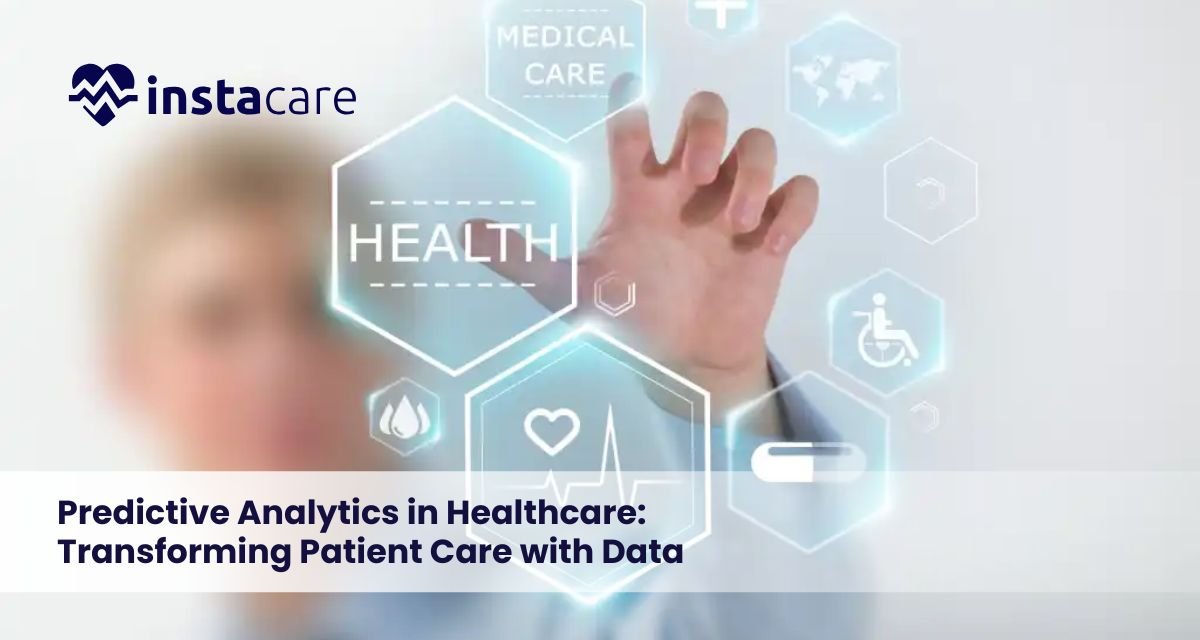
Predictive Analytics in Healthcare: Transforming Patient Care with Data Healthcare is gradually moving into a new phase where medical decisions are becoming more of an active planning process as opposed to a reactionary one. The modern-day hospitals, clinics, and health systems contain colossal quantities of patient data, diagnostics reports and treatment histories to lifestyle trends. With smart healthcare data analysis, such information can be a potent tool that aids in forecasting diseases, the results of treatment, hospitalization, and preventive measures. This technology is called predictive analytics – a technology-based strategy that is revolutionizing patient outcomes, cost reduction, and enhancing efficiency in the operations of healthcare networks. What Is Predictive Analytics in Healthcare? Predictive analytics is the application of statistical modeling, data mining, and artificial intelligence to predict the future health of given the current data. The option is applied in the healthcare setting to discover trends and patterns in patient data to predict medical events as disease progression, response to treatment, readmission likelihood, or emergency risk. The main idea is basic, it is possible to use past and present information to create healthier possibilities in the future Medical prediction models help healthcare organizations to justify decisions, diagnose more accurately, and become less uncertain in medical planning. These systems neither substitute clinicians but empower them with scientifically supported evidence. How Predictive Analytics Works? The predictive analytics system starts by getting a considerable amount of patient data in the form of electronic medical records, diagnostic equipment, wearable health devices, clinical notes, and even genomic data. After collection, the information is cleaned and organized in order to make it true and useful. The data are then analyzed through advanced algorithms to identify the patterns that cannot be seen by the human eye. These algorithms are expected to take into account various factors, including age, lifestyle, previous history, vitals, and lab outcomes, to determine who is possibly at risk of particular health events. The results are presented in dashboards or clinical systems, which allow healthcare personnel to act in time – even prior to the manifestations of symptoms. Major Applications of Predictive Analytics in Healthcare Predictive analytics has become embedded in most spheres of medicine. Here are some key predictive analytics use cases in healthcare: 1. Early Detection of Chronic Diseases Such diseases as diabetes, hypertension and heart diseases are most likely to be forecasted months or even years ahead of complete development. Lifestyle changes and intervention care are more effective when the warning signs are detected early to minimize complications. 2. Prediction of Patient Readmissions Patients are usually readmission cases in hospitals. Predictive analytics can recognize those that have the greatest probability of returning to help doctors with the added monitoring, follow-up, or discharge planning. 3. Treatment Personalization Predictive devices develop personalized treatment regimens by analyzing the reaction of various patients to drugs and treatment. This has a tremendous effect in enhancing success rates and minimizing side effects. 4. Demand Forecasting Resource Management Forecast models enable healthcare systems to plan how they staff, availability of ICU, medicine stock in the system, and equipment placement with more precision, resulting in increased operational efficiency. 5. Public and Population Health Planning Predictive analytics provides an important contribution to the management of outbreaks, seasonal behavior, and health policy at the community level. All these are potent predictive analytics applications in healthcare, where information and technology drive more intelligent decisions. Book Your Free Marketing Consultation Benefits of Predictive Analytics in Healthcare The benefits of predictive healthcare are far reaching and ever-widening. Some core benefits include: Less hospitalization due to timely intervention. Quickly identified and precise clinical decisions. Improved patient satisfaction and care quality. Reduced spending on healthcare and efficient use of resources. Guaranteeing organization of future disease trends. Individualized therapy and response to drugs. Powerful evidence-based treatment of doctors and experts. All of these strengths reflect the increasing worth of predictive analytics benefits in healthcare, which is a change that can improve patient health and medical outcomes. Key Technologies Behind Predictive Analytics Predictive healthcare is driven by a number of digital solutions that are important in interpreting and forecasting data. These include: Neural networks and artificial intelligence. Pattern recognition software and data mining. EHRS integration systems. Real-time tracking and wearable data gathering. Clinician visualization dashboards. Cloud storage of data security. Automation and machine-guided processing assist healthcare teams in large datasets analysis in a short amount of time and to a high degree of accuracy. Such methods as healthcare predictive modeling, machine learning in healthcare, and big data analytics in healthcare collaborate and provide profound understanding of patient trends. Challenges and Limitations In spite of its impressive growth, predictive analytics has such difficulties as: Data Privacy & Security Concerns The data about patients is very confidential. There must be good cybersecurity and regulatory compliance. Technical Complexity Medical institutions do not necessarily have sophisticated digital infrastructure and qualified staff. Model Accuracy & Bias Algorithms also demand constant optimisation so that they would be precise, equitable, and impartial in a broad population. Integration Issues Linking various data resources, old systems, and clinical processes can be time and resources-consuming. Despite the challenges, adoption is still on the rise worldwide as hospitals appreciate the importance of using ai for medical prediction, clinical decision-making through predictive analytics for hospitals, as well as accurate healthcare forecasting models. Future of Predictive Analytics in Healthcare In the coming ten years, predictive analytics is going to be a fundamental support of modern medicine. The systems will evolve out of mere risk predictions into full automated decision support eliminating human error and increasing the speed of diagnosis. Hospitals across the globe will be dependent on cloud-based monitoring systems, wearable devices, and automated warning systems. There will be easier remote management of patients particularly in chronic cases. Early disease detection using analytics will lower the number of mortalities, and hospital predictive analytics will optimise workflow, ambulance routes, the availability of ICUs, and resource allocation. At a
Loan Management System: Streamlining the Future of Financial Lending Technology in the fast-changing financial industry has changed the manner in which loans are being processed, traced, and controlled. The time of manual loan handling has passed, and today financial institutions have agreed to use automated systems which are accurate, efficient, and customer-friendly. A Loan Management System (LMS) is a key to this change. An LMS streamlines all the processes involved in loan origination, loan repayment monitoring and the lending process is quick, transparent and trustworthy. It does not matter whether you are a bank or a credit union or a microfinance institution, the trick towards smarter lending and sustainable growth is to have a loan tracking system implemented. What Is a Loan Management System? A Loan Management System refers to a specialized financial institution software that employs the complete loan lifecycle of a loan. It automates application intake, credit assessment, approval, disbursement and repayment tracking. Conventionally, managing loans used to entail manual keeping of records, paper work and human checking of records, all which was likely to cause delays and error. An online lending platform removes all these inefficiencies by automated digitization of all operations to provide a smooth and safe management of loan portfolios. An LMS has the ability to act as: An accessible and scalable cloud-based loan management system Repayment loan software on premise that allows banks to retain control over their data A microfinance loan software designed in micro lending organizations and cooperatives Key Functions of a Loan Management System A contemporary loan servicing software encompasses a number of key functions that make things easy: 1. Loan Origination The LMS simplifies the loan origination system flow – including customer registration and credit assessment, loan passage, and delivery. It provides the stability of decision-making based on pre-determined credit guidelines and analytics. 2. Loan Servicing After a loan is given out, LMS also takes care of the other continuous activities which include loan repayment tracking, calculation of interest on the loan, and rescheduling. This assists in keeping a good balance of payments and balances. 3. Customer Management The system keeps a digital record of the entire borrowers, their financial background, credit rating as well as history of communication with them making it easy to offer customized service. 4. Compliance and Reporting The strict legal and regulatory frameworks require financial institutions to comply with them. The LMS is automatic in generating reports and enforcing laws and data protection measures on loans. 5. Loan Portfolio Management An LMS enables lenders to track the efficiency of their loan portfolio management by providing real-time analytics to assist them in identifying risks and defaults and detecting growth opportunities early. Core Features of a Modern LMS An effective lending management software has high-performance tools that aim at optimizing the customer experience and efficiency. Here are some key features: 1. Workflow Management and Automation Under loan processing automation, tedious duties like data entry, verification of documents and routing approval are automated. This saves on the manual work and enhances accuracy. 2. Integrated Payment Systems The system is connected with online banking, digital wallets, and payment gateways so that the system operations in the loan collection management system are smooth and safe. 3. Cloud-Based Architecture A loan management system that is based on the cloud enables the financial institutions to view data at any time and any place. It facilitates remote access, real-time access, and scalability. 4. Risk Analysis and Credit Scoring The LMS will be connected to credit bureaus and its algorithms will be built using AI to determine the creditworthiness of a borrower, minimizing the risk of issuing credit to a risky client. 5. Customizable Dashboards All loan transactions including pending approvals and overdue can be tracked by managers and administrators using one dashboard. 6. Notifications and Alerts Email and SMS alerts are automated to remind customers about impending payments or outstanding loans and enhance the collection and customer satisfaction levels. 7. Data Security and Backup Having an inbuilt encryption and frequent data backups, an LMS guarantees total security against data invasion and information loss. Book Your Free Marketing Consultation Benefits of Implementing a Loan Management System Embracing an LMS provides financial organizations with a very diverse set of advantages, which do not necessarily mean operational efficiency. 1. Streamlined Operations Automation saves time and lessens the use of manual paperwork within the lending cycle by the institutions. Automated loan management makes it more productive and accurate. 2. Better Decision-Making With the assistance of sophisticated analytical and reporting systems, lenders are able to make credible credit decisions and minimize the possibility of non-recovery. 3. Higher Customer Satisfaction Borrowers are able to easily access loans and monitor their loans and even paying them online making it convenient and transparent. 4. Cost Efficiency An automation will decrease the cost of administration, employee workload, and physical documentation, which results in savings in the long term. 5. Enhanced Compliance Audit trails and automated reporting make regulatory compliance easier and less time-consuming. 6. Real-Time Loan Tracking A centralized loan tracking system allows institutions to know all loans Real-Time to a minimum risk of oversight or fraud. 7. Scalability Cloud-based loan administration system will have the capacity to manage larger loan portfolios and customer bases with minimum infrastructure investments. Types of Loan Management Systems The various institutions demand various models of LMS solutions based on their lending models. 1. Bank Loan Management System Enterprise-level software is used by banks that interfaces with core banking systems to administer an extensive variety of loans – personal and home loans to corporate financing. A bank loan management system is crucial for large-scale operations. 2. Microfinance Loan Software This system is designed to serve small lending organizations and rural cooperatives and promotes group lending, microloans, and streamlined approval procedures. 3. P2P Lending Solutions These online lending companies match single lenders and customers and provide convenient rates and quicker loans using a digital lending platform. 4. Consumer Lending Management Applied to credit card firms, auto lenders,
Understanding MRP Software: The Backbone of Efficient Manufacturing In today’s tough manufacturing world, being efficient isn’t a choice, it’s a must. Because of this, tools like material requirements planning software are stepping up, changing how factories handle output, stock, and supplies. This full walkthrough shows the real way MRP systems shake up daily plant operations. What Is MRP Software? Material needs planning tools are digital setups made to help handle factory work, figuring out what supplies are needed along with when things should be built. Starting back in the 1960s, this system has grown – not just counting stock anymore, but now linking various company operations through advanced planning tech. Today’s MRP setups act like the brain of factory work, handling tasks from buying supplies to shipping final products. Instead of simple stock trackers, they offer full-scale planning features that match available materials with what’s needed for making goods. This is the foundation of manufacturing resource planning. How MRP Software Works? MRP software runs using three key pieces of info: the master production plan, a list of parts, also known as bill of materials, along with how much stock is on hand right now. It crunches these numbers to figure out which supplies are necessary, the amount needed, plus when exactly they should arrive. The software keeps an eye on what’s needed for production, then triggers purchase orders once stock dips under set levels. Because it runs on its own, this automated inventory control system cuts out uncertainty while lowering mistakes people might make when buying supplies. Live tracking of production lets factories check the status of every order as it moves through manufacturing. When supplies come in, tasks advance, or products go out, the software changes itself instantly – giving a clearer look at how things run than ever before. This real-time production tracking capability is crucial for modern operations. Key Features of MRP Software Understanding MRP system features helps manufacturers make informed decisions: Demand Forecasting: A modern MRP setup uses prediction tools to study past numbers along with market shifts, spotting what materials will be needed later. By staying ahead, this demand forecasting software avoids running out of supplies while also keeping overstock low. Production Scheduling: Factories use manufacturing scheduling tools to line up tasks when materials, time, and machine limits fit. These programs juggle different demands so plans actually work in real life. Cloud Integration: Cloud-based MRP software is getting more common, letting people log in from any spot with a web connection. These options skip the need for costly gear, instead rolling out updates on their own and boosting protection over time. Inventory Tracking: Keeping tabs on inventory management in MRP isn’t just about counting stuff. It follows batch IDs, use-by dates, and approval papers – handles several storage spots without a hitch. Benefits of Using MRP Software The benefits of MRP software are clear and show real results: Cost Reduction: Most manufacturers see inventory expenses drop by 20-30% during the first year after setup. With better stock control, businesses unlock money once stuck in surplus supplies. Improved Efficiency: Work runs way smoother once scheduling tools fix hold-ups while boosting how materials and time get used. Firms see output jump 15-25% because tasks flow better over time. Better Customer Satisfaction: Happy customers come when makers keep hitting their delivery targets. With live updates on how things are being built, companies can set realistic deadlines while warning buyers early if something might take longer. Reduced Waste: Materials showing up right on time means less gets tossed by accident. This way of doing things slashes waste, cuts down on outdated stock, besides lowering space expenses – all while helping the planet without trying too hard. Book Your Free Marketing Consultation Challenges & Considerations of MRP Software Implementation Complexity: Setting up MRP software implementation needs clear prep plus solid team effort. This work usually takes many weeks, needing focused time for moving data, checking systems, or teaching staff. Initial Investment: Upfront expenses might run high, especially with full-featured setups. Still, compact small business MRP solutions come with low starting prices and abilities that expand as the business does. Data Accuracy Requirements: Getting the numbers right matters most – without accurate inventory, material lists, or how things are built, the whole setup falls apart. So teams need solid ways to handle and track that data. Change Management: Switching things up is tough. Workers used to doing tasks by hand might push back when new tools come in. Getting it right takes leaders who stand behind the change, while also giving teams solid practice sessions. Choosing the Right MRP Software Picking the best MRP software for manufacturing starts by clearly understanding your unique needs: Assess Your Needs: Think about things such as how much you produce, how intricate your products are, or what systems you already use and how they’ll connect. MRP vs ERP Consideration: When checking out MRP vs ERP, keep in mind MRP zeroes in on making products, whereas ERP covers more areas like money stuff, people management, and customer relations. A bunch of makers begin with MRP, then move toward full ERP down the line. Scalability: Scaling up is a big deal. Pick tools that grow with you instead of forcing a full overhaul later. Cloud MRP usually handles bigger workloads more smoothly. Vendor Support: How well a seller is seen really matters, also their ability to help when things go south. When setup hits snags – and it will – quick tech help plus solid guides make all the difference right when you need it most. Future of MRP Systems AI-Powered Forecasting: AI tools are changing how software guesses future sales. By studying huge amounts of data, they spot trends better than before, so businesses can stock smarter. These systems learn over time, adjusting predictions as new info comes in, which helps avoid overstock or shortages. IoT Integration: IoT links machines straight to MRP software, so live updates on output, upkeep, and efficiency flow without delay.
HCMS Software: Streamlining Healthcare Management with Smart Digital Solutions In the modern day technological world, healthcare institutions are ever-changing, in a bid to better patient care, operational effectiveness, and data security. Without the help of computers, it may be difficult to manage a lot of clinical and administrative data. It is at this point that a superior healthcare content management system. The HCMS software is meant to support clinic workflow, patient records, and administrative records in a well-organized manner to ensure that hospitals and clinics run smoothly without failing to satisfy the regulations and patients. What Is HCMS Software? HCMS in healthcare can be defined as a unified digital platform that handles, structures, and safeguards healthcare-related data, records and processes. It is a centralized solution that links different departments of a hospital, including admissions and billing, diagnostics and patient management. Hospital content management software is unlike the traditional manual system which makes sure that data is readily available in real-time improving the flow of information within the hospital and enabling healthcare professionals to make decisions based on data. It combines various healthcare operations such as patient records, scheduling and document storage into a single system. Core Features of HCMS Software A good hospital information management software would have all the tools needed to streamline all the complicated activities. Common features are usually: Centralized Data Repository: A repository that holds all the patient, administrative and clinical data in a secure central repository. Medical Document Management Software: Facilitates the simple storage, retrieval and sharing of medical documents. Automation of Workflow in Healthcare: Automation of monotonous activities like scheduling appointments, billing, and reporting. Electronic Health Record Integration: Integrates patient information across multiple systems to form a single medical record perspective. Healthcare Compliance Management: Provides compliance with both local and international healthcare rules. Patient Record Management System: Keeps proper and updated patient records, laboratory tests, and treatment. Healthcare Data Management System: Sorts data analytics, reporting, and insights on performance improvement. The features enable the healthcare facilities to provide quality services and ensure transparency and control of their operations. Benefits of Implementing HCMS Software The benefits of HCMS software are quite many and have a direct impact on the clinical productivity and patient satisfaction. Improved Efficacy: healthcare workflow automation lowers paperwork, decreases administrative lag times and liberates personnel to attend to patients. Greater Accuracy: Digital data management has low chances of error in patient records and billing by humans. Real-Time Data Access: Anywhere, clinicians can have access to patient histories, lab results, and medical reports. Data Protection: Sensitive patient information against unauthorized access and breaches is guaranteed with medical data security software. Regulatory Compliance: Inbuilt tools assist hospitals to remain in line with the data protection laws as well as the healthcare privacy laws. Cost-Effectiveness: Eliminating manual operations and records decreases the cost of operations in the long run. Improved Patient Experience: Reduced registration time, fast access to medical history, and smooth appointment management increase the level of patient satisfaction. These advantages demonstrate that the use of digitalization in the form of HCMS has a great influence on the delivery of healthcare services. How HCMS Software Works? HCMS software works on the principle of linking all the elements of the ecosystem of a healthcare facility into a single digital network. When installed, it integrates patient records, medical records and administrative data in a central repository. Employees are then able to access and update information with authorized interfaces and there is the smooth flow of information between the departments. Once a patient enters into the hospital, all the data of the patient is stored in the patient record management system that is automatically updated in other modules, like billing and lab records. The electronic health record integration option will make sure that the patient information provided by other healthcare systems is aligned. All in all, the workflow automation process decreases redundancy, increases accuracy, and contributes to the evidence-based care decision. Choosing the Right HCMS Software The choice of the best system is dependent on your size, budget and operational needs of your organization. Healthcare facilities must focus on scalability, ease of the user interface, and support by the vendor when selecting cloud-based HCMS solutions. The deployment of cloud means that the information of multiple branches can be accessed in real-time, which is perfect in large healthcare networks. The main issues to consider are: Integration with pre-existing healthcare IT solutions. Security and certification certifications. Simple connection with third-party tools and databases. After sales technical support and training. Flexibility in customization as per the departmental requirements. Careful choice of a solution will guarantee the adoption process is smoother and efficiency will be increased in the long term. Use Cases Across Healthcare Sectors The HCMS software is useful in different fields of healthcare, including small clinics and large hospitals and research centers. For example: Hospitals: HCMS can be used to schedule, centralize data, and analyze performance. Clinics: Enjoy ease of appointment and billing services. Laboratories: Store test records, reports and compliance documents electronically. Pharmacies: Pharmacy is tracking inventory and prescription data. Public Health Organizations: Population health analytics and policy development. This flexibility renders HCMS unavoidable throughout the healthcare ecosystem. Book Your Free Marketing Consultation Future of HCMS Software The future of HCMS software is in the further digital revolution of healthcare. Predictive data analysis, disease forecasting and personalized treatment planning are all fields that artificial intelligence (AI) and machine learning will make significant contributions. Real-time data monitoring of patients will also continue to increase, as more Internet of Things (IoT) devices are integrated to provide even more opportunities to monitor the patient. In addition, the increasing need of IT-related solutions in healthcare will promote the interoperability of hospitals, clinics, and telemedicine platforms, which will allow adhering to a single approach in care delivery. Challenges in Implementation Although it has benefits, installing HCMS software is
Payroll Software: Simplifying Salary Management for Modern Businesses In the fast-paced business landscape of today, effectively managing employee pay is no longer an administrative chore, it’s a strategic imperative. Companies need to accurately and promptly process salaries, taxes, and deductions in order to uphold trust and compliance. That’s where payroll software is useful. Present-day payroll software is changing the processing of employee wages from tedious calculations and spreadsheets to automated and secure ones. For small startups, SMEs, or big corporations, payroll software is facilitating the reduction of workloads, accuracy, and compliance with country-specific labor laws. Technology and automation have made salary management quicker, more secure, and transparent compared to the past. What Is Payroll Software? The online payroll system is an application program for computers that attempts to simplify the cumbersome task of calculating wages and wages payment to workers. It intelligences payroll operations such as calculating wages, deductions, bonuses, benefits, and tax. The most incredible innovation in this area is the internet-based payroll system, whereby HR and finance departments are capable of performing payroll functions from outside through the internet. Such a system not only simplifies the payroll functions but also prevents the possibility of human errors. Through real-time updating of data, business houses can easily create pays lips, track attendance, and run compliance checks. With the advancement of digital technologies, cloud payroll systems are becoming an imperative for business houses looking to be efficient, secure, and scalable. Key Features of Payroll Software Any payroll and HR software succeeds only if it can deliver automation, integration, and flexibility. The most critical payroll software features that current systems possess include the following: Automated calculation of salary based on the number of hours worked, attendance, and deductions Payroll tax calculation for accurate and compliant reporting to the authorities Payslip generation software to allow easy creation and communication of electronic payslips Payroll reporting and analysis to report data on labor cost and trends attendance and payroll integration to connect attendance information with compensation programs secure payroll data management through encryption and restricted access rights Above mentioned features allow organizations to automate redundant manual processes, eliminate data errors, and attain standardized payroll processing. By integrating payroll programs with HR and accounting software, organizations can attain seamless business flow and financial transparency. Benefits of Using Payroll Software Automated payroll can be of great assistance to company efficiency and employee satisfaction. The key benefits are: 1. Time and Cost Efficiency Large organizations spend hours or days processing payroll manually. Automated payroll compresses this time into a few minutes. It also saves administrative time by preventing the use of several HR personnel in performing repetitive activities. 2. Improved Accuracy With payroll software, calculation of tax, deduction, and bonus is automatic, obviating human errors. Inconsequential errors in manual payroll may activate compliance problems or employees’ dissatisfaction. Automation guarantees all figures are accurate. 3. Legal and Tax Compliance The software assists companies in being in compliance with all the regulations by keeping the labor laws and tax rates updated automatically. That means payroll compliance is assured and less likely to be penalized or fined because of errors or outdated information. 4. Increased Accessibility Businesses can manage employees’ wages anywhere and everywhere with cloud-based payroll software solutions. This is especially most appropriate for teleworker or branch office business entities. Round-the-clock real-time access keeps the payroll up to date and in sync across all departments. 5. Scalability for Growing Businesses For the compact and expanding enterprise, there exists small business payroll software that presents low-cost, easy-to-use solutions that evolve with the business. Its adaptability makes it an optimal choice to process payroll effectively from day one. How Payroll Software Enhances Business Productivity An elite payroll management system directly adds to increased productivity by liberating the HR and accounting divisions from lengthy administrative tasks. Automation eliminates paperwork, manual approvals, and multiple checks. Having employee salary management ensures improved in-house communication across teams, with improved coordination of monetary as well as HR functions. Managers can see real-time payroll reports and track employees’ expenditures as well as performance-based payment analysis with no delay. Payroll solutions include payroll reporting and analytics to allow businesses to receive better insight into the labor cost and make better budgeting and workforce planning decisions. Book Your Free Marketing Consultation Factors to Consider When Choosing Payroll Software Proper payroll solution selection is essential for long-term success. Companies need to consider the following prior to implementation: Functionality: Make sure the software includes full features, from tax calculation to payslip printing. Integration: Choose payroll systems that offer seamless attendance to work integration. Security: Secure handling of payroll data is paramount to safeguard sensitive employee data. User Experience: Easy-to-use interface is crucial to allow seamless working by HR teams. Customization: Seek flexibility to adjust salary structures, reports, and tax parameters as per organizational requirements. Customer Support: Effective technical support provides a seamless process and quick fixes. Scalability: Your software has to be scalable enough to accommodate your business and manage growing employee data without redundancy. Top Payroll Software Solutions in the Market There are numerous payroll application offerings in the market that are innovative and easy to use, and suitable for any business size. Below are among the most utilized platforms: Gusto – Appropriate for payroll software for small businesses medium-sized businesses; extremely popular due to ease and automation. ADP Workforce Now – Strong HR and payroll software solution with good compliance and analytics capabilities. QuickBooks Payroll – Migrated companies using QuickBooks accounting. Zoho Payroll – Cloud payroll software solution, highly integrated with other Zoho products. Paychex Flex – Integrated solution with rich-feature customizable payroll, benefits, and tax administration. Rippling – Provides automation and integration of IT administration, HR, and payroll. Deel – It is dedicated to global payroll administration for remote and international teams. Future of Payroll Management The payroll sector is changing at a fast pace with data analytics