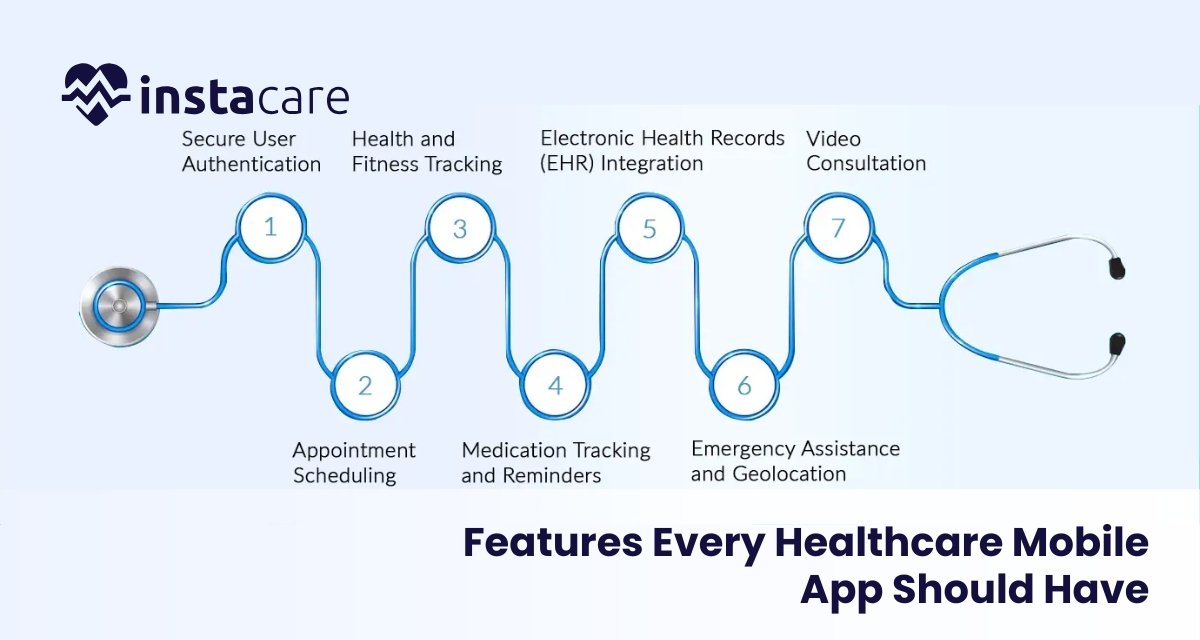
5 Features Every Healthcare Mobile App Should Have Mobile applications no doubt have become popular in the healthcare sector as a must have tool today. They contribute to better communication, better patient satisfaction as well as reduce many elements of manageability for patients and caregivers. The use of Health app has risen to the extent that developers must be developing features that will suit the various requirements. Here, we will discuss five critical features that every healthcare mobile app must have to be effective, usable, and satisfying for the patient. 1- User-Friendly Interface Importance of Usability This is therefore very important when it comes to the design of mobile applications in the health sector a user-friendly interface. This is because, patient will need to be targeted across the board young, old, technologically advanced, or not. A well-designed interface can really enhance user engagement and satisfaction, which will ultimately translate to more usage and improved health outcomes. Key Elements of a User-Friendly Interface Intuitive navigation: the application should ideally offer a simple layout that highlights common features such as appointment scheduling, medical records, and chat functions. Clear menus, in addition to labeled icons, can facilitate quick navigation. Accessibility Options: A health application should include functionalities that allow for accessibility by any person, whether disabled or otherwise. It should include voice commands, large texts, and other high-contrast color schemes. Onboarding Process: A proper onboarding process is necessary for new users. A tutorial or guide for a short period of time will make users understand the app functionalities, so they can easily start navigating from the beginning. Consider using interactive elements or short videos to engage users during this process. Impact of Usability on Patient Engagement Usability affects patient engagement. The more user-friendly the app is to navigate, the more likely it is that patients will use all its features continuously. Continuous engagement will eventually be translated into health management because patients are more likely to make appointments, monitor their health parameters, and get in touch with their healthcare providers. 2- Appointment Scheduling and Reminders Streamline Appointments A game-changer for patients and health care providers alike, it is: scheduling an appointment via a mobile app. While saving the user’s time, scheduling through a mobile app might also optimize the schedule of the healthcare provider by reducing administrative burden connected with appointment management. Features of an Effective Appointment Scheduling System Real-Time Availability: In a way, patients should be able to see real time status of providers making it possible to select the desired time. This will reduce frustration and uncertainty. Easy Booking and Rescheduling: The use of the app must allow one to easily schedule, reschedule or even cancel appointments. Availability is the ability to adapt to a new schedule and respond to major life events such as illness or a new job. Telemedicine features: As telemedicine has a good ground, health applications need to be designed in such a way that the virtual appointment can be booked by the patients. This enables more and more people with problems of mobility and also the people residing in distant locations reach care services. Remind notifications The no-show rate can be reduced dramatically by reminding patients of their scheduled appointments. There can be in-app alerts, emails, or SMS reminders to patients about their scheduled visits. Benefits from Appointment Scheduling Features Patient satisfaction increases due to an easy scheduling and appointment management feature for patients. Since patients are satisfied with the ease of scheduling and managing their appointments, there is high loyalty and trust for the healthcare provider. Better Operational Productivity: Streamlined scheduling for the healthcare providers would mean better resource utilization, lesser waiting periods, and improved patient flow. Book Free Demo 3- Secure Messaging and Communications Improving Patient-Provider Communication Health care is delivered if proper communication is established between the patients and the health provider. The user can ask questions regarding issues or express concerns or about symptoms using secure messaging and then can be addressed without visiting the clinic. It may take less time to resolve patient issues. Security and Privacy Considerations As health information is considered being sensitive in nature, messaging has to be in a position to meet standards such as HIPAA. Contributions to the appropriate privacy include guaranteeing data end-to-end encryption and safe login, among other things, such as the two-factor authentication. Key Features of Secure Messaging Chat History: This makes it easy to refer to previous conversations, and it can add context and continuity in care. This is helpful especially for chronic health issues requiring multiple interactions. Multimedia Support: The possibility of sharing images or documents about health can enhance communication. For instance, the patients through pictures, they can capture rashes, or any other symptoms that will help the healthcare providers in management. The Importance of Communication in Healthcare Indeed, clear and proper communication can greatly improve patient experience. This is because it creates an easy opportunity for them to seek aid when they want to, as they feel confident reaching out to their providers when necessary. Third, secure messaging is an avenue whereby providers can trace back to communicate with patients; thus, understanding what they require to do afterward about their care. 4- Access to Medical Records Patients Empowerment through Information Yet another benefit is the ability to get the patient’s medical history as this makes the patient a knowledgeable one. It empowers a user with his/her medical record, outcome of the test, and the planned treatment, thereby enhances the user’s participation in managing her own health. Integration with Health Systems The application should seamlessly connect with Electronic Health Records (EHR) systems for timely access to records. Providers need to ensure the app can read directly from the EHR so that patient data is always updated and accurate. Key Features Accessing Medical Record Download Medical Records: Allowing users to download their medical record for access during an offline may add convenience to patients. The patients can save a copy to maintain their records or share the information with another