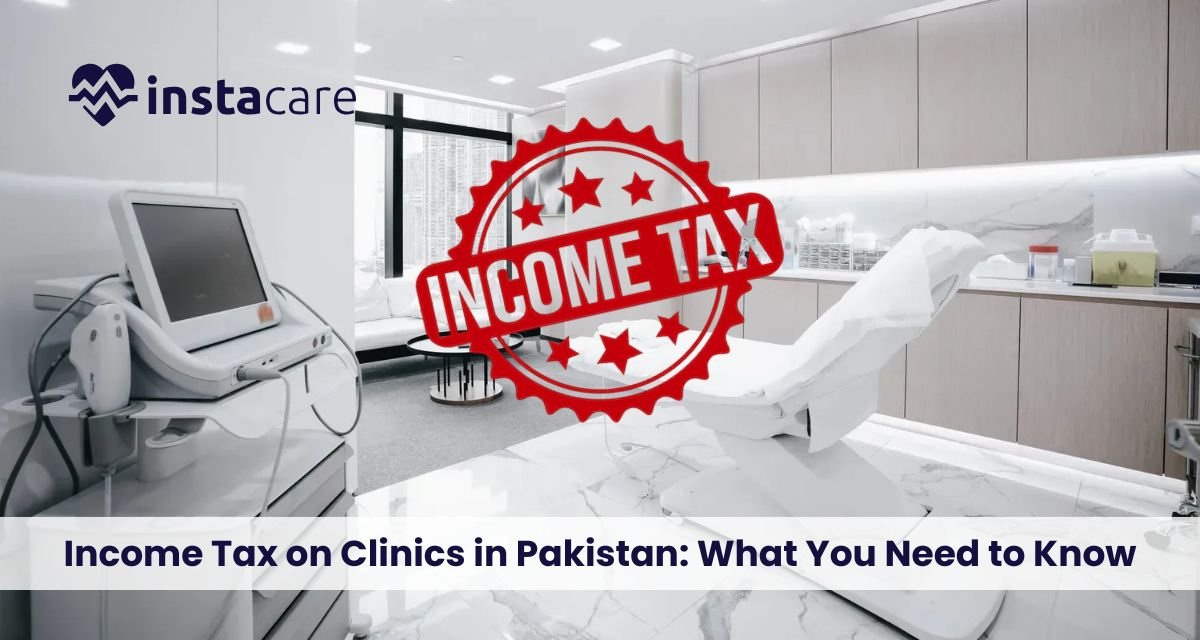
Income Tax on Clinics in Pakistan: What You Need to Know In recent months, the Punjab Revenue Authority (PRA) has stepped up its enforcement against beauty and aesthetic clinics, exposing long-standing tax evasion in this high-revenue sector. Clinics generating crores in annual profit are now being formally registered, digitally tracked, and integrated into Pakistan’s tax net a move that could reshape the regulatory landscape for health, wellness, and beauty services. This article explores how income/service tax applies to clinics in Pakistan, why the PRA crackdown matters, and what clinic owners and patients should know. Why Clinics Are Under the Tax Radar Sheer Volume of Revenue According to PRA officials, many beauty clinics in Punjab (especially in big cities like Lahore) have been generating billions of rupees annually without paying appropriate taxes. In one case, PRA identified an aesthetic clinic alone with Rs 1.8 billion in annual sales that had previously flown under the radar. About 50 such “tax-evading” clinics have been detected so far. New Sectors Under Survey PRA is auditing 11 new sectors, including beauty parlors, aesthetic clinics, health clubs, and cosmetic surgery centers, signaling a broad drive to expand the tax base. Digital Monitoring via E-Invoice System These clinics will be formally registered and linked with the Electronic Invoice / Information Management System (EIMS), enabling real-time tracking of sales and tax compliance. Strengthening Enforcement To close the compliance gap, PRA is deploying more enforcement officers, creating a dedicated monitoring cell, and using digital tools to keep performance and accountability high. What Is the Applicable Tax Rate for Clinics? To understand how tax applies, it’s helpful to look at provincial tax laws and rates: According to a KPMG brief on provincial tax laws (2025), services by private-sector health care centers (including clinics) are taxed under service tax regimes, not standard corporate income tax. Specifically, “services provided … by beauty parlors, beauty clinics, health care centers, cosmetic or plastic surgery centers / clinics …” fall under a 5% tax rate, with no input-tax adjustment. In Khyber Pakhtunkhwa (KP), there is also a 5% service tax on similar clinic and beauty services. Implication: These clinics are primarily subject to service tax, not traditional income tax. But within that service tax, PRA’s measures are making it harder to evade. What Does the PRA Crackdown Mean for Clinics? Formal Registration & Tax Compliance Clinics that have not been paying tax will now be formally registered with PRA. Through EIMS, every transaction could be recorded and reported. This increases transparency, making electronic invoicing mandatory for a broader set of service providers. Capacity Building PRA is boosting its field force by hiring more enforcement officers. A dedicated digital monitoring cell is being set up to track staff performance and compliance. Widening the Tax Base By including beauty clinics in the tax net, PRA is not just collecting revenue it’s also expanding its tax base, making the system more equitable. The survey is set to be completed by December, meaning more non-registered clinics may soon be formally assessed for taxes. Enforcement Risks for Non-compliant Clinics Clinics that resist may face penalties, audits, and even forced closure if they are found intentionally evading tax. PRA’s rollout of EIMS increases the risk of being “caught in the system” since all invoices will be traceable. Challenges & Concerns While the crackdown is a positive step for tax fairness, several potential challenges loom: Operational Burden: Smaller clinics that were not previously registered may struggle with the administrative and technical burden of EIMS compliance. Cash-based Business: A large portion of such businesses may have operated in cash; forcing digital invoicing may disrupt traditional business practices. Resistance / Evasion: Some clinic owners may resist or find workarounds. Enforcement depends heavily on PRA’s capacity and persistence. Pricing Impact on Clients: If clinics face higher compliance costs, they may pass them on to clients, potentially increasing the cost of beauty and wellness services. Why This Matters for Patients & Clinicians For Patients: More regulation means potentially more transparency your invoices may now clearly show tax, helping you verify that businesses are compliant. For Clinic Owners: It’s time to get compliant. Registering, integrating with EIMS, and maintaining detailed transaction records will not only avoid penalties but also build trust with regulators and clients. For Investors in Clinics: The crackdown underscores that this is a “legitimate” and taxable business now. Investors should factor in the expected tax liabilities and compliance costs. Broader Fiscal Context PRA’s Strategy: This move aligns with broader efforts by PRA to modernize tax administration and close loopholes. Revenue Pressure: As Pakistan seeks to increase its domestic revenue, expanding service-sector taxation (e.g., clinics, beauty parlors) gives the government a new frontier for tax collection. Digital Tax Infrastructure: The EIMS system is part of a broader digitization strategy, enabling more real-time tax tracking and reducing reliance on manual audits. Conclusion The PRA’s intensified crackdown on beauty clinics marks a turning point these businesses can no longer operate in the shadows. By leveraging digital infrastructure like EIMS and expanding enforcement capacity, the authority is pushing for a more transparent, compliant, and equitable tax regime. For clinic owners, compliance is no longer optional it’s essential. For regulators, this opens up a major revenue stream. And for patients, it could mean cleaner business practices and clearer billing. As the landscape shifts, instacare.com.pk/ can play a vital role in guiding, educating, and influencing the sector toward responsible growth.
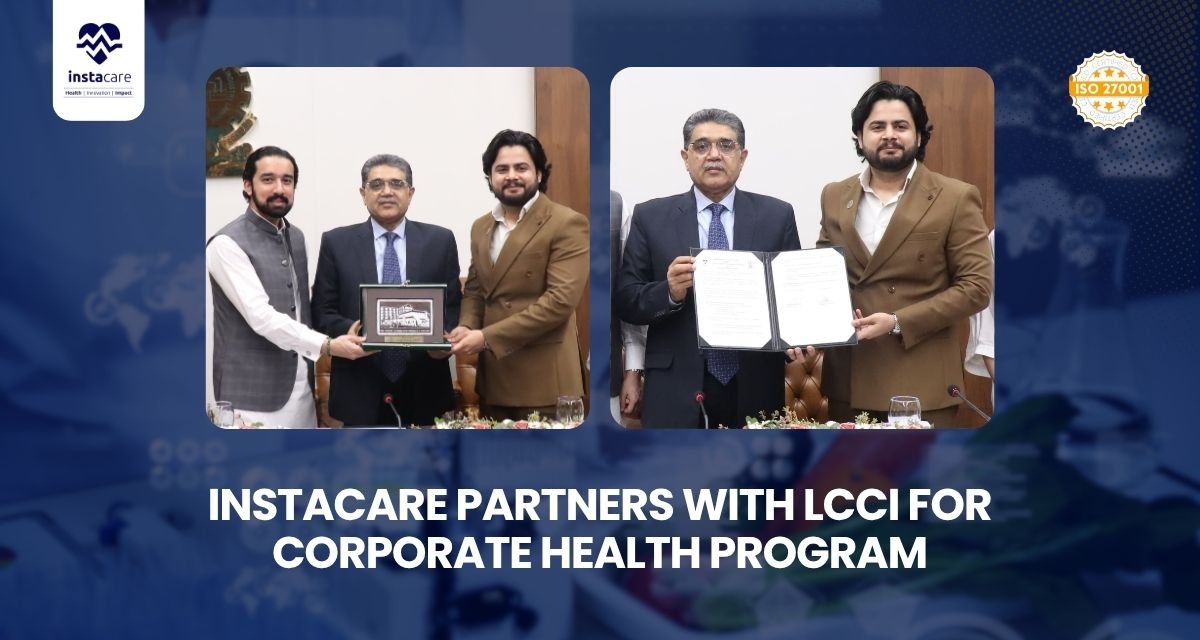
InstaCare Partners with LCCI to Provide Premium Healthcare Benefits to 46,000+ Businesses Across Pakistan InstaCare, Pakistan’s leading healthcare platform, has officially partnered with the Lahore Chamber of Commerce & Industry (LCCI). This collaboration offers over 46,000 businesses across Pakistan access to exclusive healthcare benefits, including up to 30% discounts on lab tests, radiology, and consultations. Exclusive Healthcare Benefits for LCCI Businesses Through this strategic MoU, InstaCare provides affordable healthcare solutions to employees of LCCI-affiliated businesses. Key benefits include: 30% discount on essential lab tests, radiology services, and medical consultations. Access to InstaCare’s Super Health App for seamless health management. Workshops and digital health tools to promote wellness across the corporate sector. This partnership aims to make healthcare more accessible and cost-effective for businesses across Pakistan. Corporate Health Transformation: A Nationwide Initiative The collaboration is set to reshape corporate health programs in Pakistan. By leveraging digital innovations and workshops, InstaCare will support businesses in prioritizing employee health and wellness. These programs are part of a broader initiative to transform corporate healthcare in Pakistan, ensuring employees have access to high-quality services at discounted rates. InstaCare’s CEO (Bilal Amjad) said, “This partnership will significantly improve access to healthcare for thousands of employees across Pakistan. We are excited to offer these benefits to help businesses create healthier, more productive environments.” How InstaCare is Making Healthcare More Accessible As part of this initiative, InstaCare is bringing advanced healthcare technology directly to employees of LCCI-affiliated businesses. Through the InstaCare Super Health App, users can: Book appointments for consultations and tests. Access digital health tools to monitor and manage their health. Find nearby healthcare facilities offering discounted services. The app ensures quick access to healthcare services, making it easier than ever for businesses to maintain the well-being of their employees. About InstaCare: “InstaCare is a leader in corporate healthcare solutions, partnering with businesses across Pakistan to provide high-quality healthcare benefits for employees. With a mission to transform corporate wellness, InstaCare brings innovative health solutions to organizations, enabling them to provide affordable healthcare options for their workforce.” About Lahore Chamber of Commerce & Industry (LCCI): The Lahore Chamber of Commerce & Industry (LCCI) represents businesses across Pakistan, advocating for better policy and promoting business growth. The LCCI network serves as a platform for business collaboration and community development. Contact Information: Website: Instacare.com.pk Phone: (92) 309-4447192 Email: business@InstaCare.com.pk App Download: [Download InstaCare Super Health App]
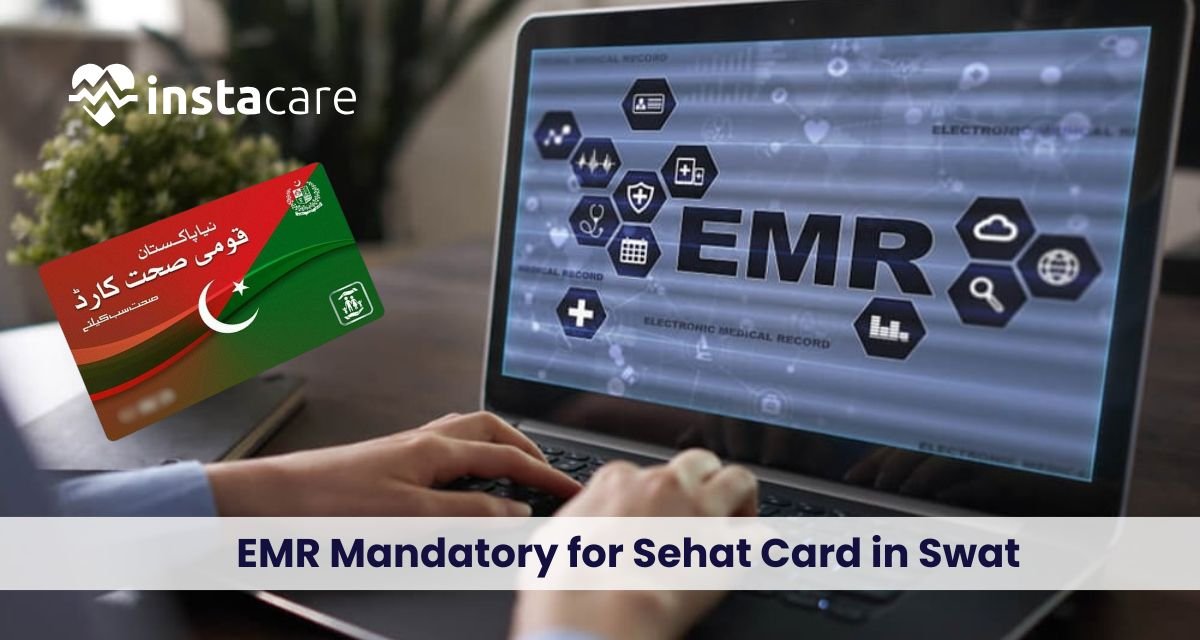
EMR Mandatory for Sehat Card in Swat: KP Government Makes Digital Records Compulsory for All Hospitals Mingora, Swat (July 11, 2025) – In a major healthcare policy shift, the Khyber Pakhtunkhwa (KP) government has declared Electronic Medical Record (EMR) software mandatory for all hospitals in Swat, linking compliance directly to the Sehat Card Plus program. The new directive, effective immediately, sets an October 31, 2025, deadline, after which non-compliant hospitals will be barred from treating Sehat Card patients. Why EMR is Now Mandatory for Sehat Card in Swat The KP Health Department issued an official circular (Ref: KP/H&ME/Tech/EMR-Swat/2025/01) stating that EMR integration is essential for: ✔ Seamless Sehat Card claims processing ✔ Eliminating fraudulent billing ✔ Improving patient care through digital records ✔ Enabling data-driven healthcare policies “Hospitals without EMR cannot generate the digital treatment proofs required for Sehat Card claims. This move ensures transparency and efficiency,” said Dr. Riaz Tanoli, Director of Sehat Sahulat Program KP. Impact on Swat’s Hospitals Public Hospitals Saidu Teaching Hospital and other major facilities must upgrade existing systems. Rural Health Centres (RHCs) face challenges due to limited IT infrastructure. Private Hospitals & Clinics Larger hospitals already use EMRs, but smaller clinics must adopt affordable solutions. The KP government will provide subsidized EMR software and training. Strict Consequences for Non-Compliance Hospitals failing to implement EMR by October 31, 2025, will: ❌ Be removed from the Sehat Card network ❌ Lose Sehat Card patients, affecting revenue ❌ Face potential penalties or audits Public & Professional Reaction Patients: “If this stops fake billing and speeds up treatment, we support it,” said Fazal Rabi, a Mingora resident. Doctors: Worry about extra admin work during transition. Hospital Admins: Seek government support for internet and training in remote areas. What’s Next? The Swat EMR mandate could expand to all KP districts if successful. The government is also working on: 🔹 Better internet connectivity for rural hospitals 🔹 Training programs for medical staff 🔹 Centralized health data analytics Final Verdict The EMR mandatory rule for Sehat Card in Swat marks a digital healthcare revolution—but its success depends on smooth implementation and support for smaller clinics through reliable solutions like EMR Software by Instacare.