

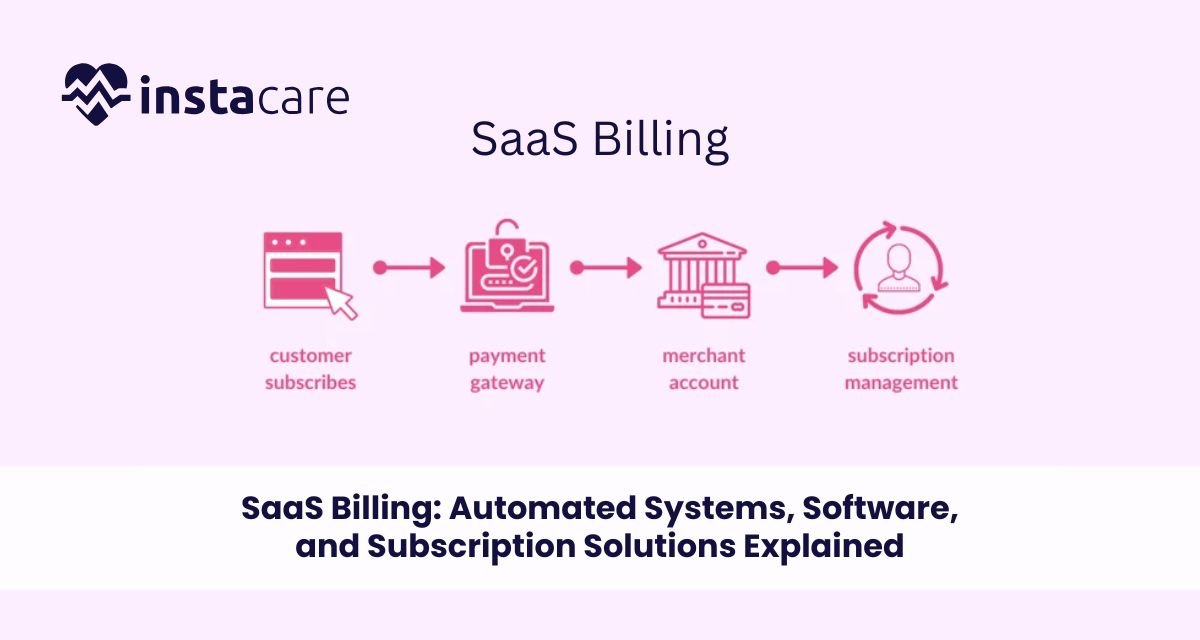
SaaS Billing: Software, Solutions, and Subscription Solutions Automated Defined Software as a Service (SaaS) business model has revolutionized how organizations provide value and interact with customers. Traditional software with one time payment does not come into play with SaaS business models in which organizations obtain recurring revenue from subscription plans, usage, or bundling fees. The revolution has brought with it the necessity for more effective automated SaaS billing platforms to enhance efficient operation, predictable SaaS revenue recognition, and customer satisfaction. Whether you’re a startup or an established SaaS company, understanding SaaS billing solutions and their role in your business is crucial to scale successfully and maintain financial health. What is SaaS Billing? SaaS billing refers to the procedures and processes through which customers are billed for software services monthly. SaaS subscription billing is distinct from standard billing procedures in that it supports flexible pricing, recurring charges, automated SaaS invoicing system, as well as subscription service-linked account management. SaaS billing procedures involve: Recurring SaaS subscription billing Automated remittance and invoicing Usage-based SaaS billing (metered billing) Tax calculation, discounts, and promotions Subscription management and upgrades In plain words, a SaaS billing platform allows convenient and effortless billing and payment for the business and customer. SaaS Billing Insights Recurring and Subscription-Based Models The recurring revenue model is the foundational concept of SaaS billing management. The customers pay monthly, quarterly, or annually for availing software services. Recurring billing for SaaS provides steady cash flow, predictable revenues, and improved customer retention. Metered and Usage-Based Charging Metered SaaS or usage billing SaaS pricing is applied primarily in SaaS companies when fees correlate directly with use of the service. Advanced tracking and autobilling infrastructure needs to be utilized to support it because billing must be done in real-time. Hybrid Billing Models Some SaaS businesses use both flat fee subscription and metered billing SaaS model. SaaS’s dynamic billing mechanism has to effectively address such variations to maintain billing accuracy and transparency to the customers. The Role Automated Billing Systems Play Automated SaaS billing is unavoidable for several reasons: Manual billing suffers from human error, delay, and compliance problems. SaaS auto-billing does away with them through auto-pay, time-saving for admins, and increased customer satisfaction. Core Billing Automation SaaS Solution Operations: Auto billing and auto payments: Does away with human error and improves cash flow. Subscription renewal and subscription management: Automates renewals, upgrades, downgrades, and cancellations. Usage tracking and metered billing: Allows for equitable billing of usage of services. Taxation and regulatory compliance: Complies with international tax laws, i.e., VAT and GST. Dunning management: Retry payments and notify customer for failed payments automated. Advantages of Automated SaaS Billing Systems: Improve accuracy and avert revenue loss Fosters customer trust through transparent billing Conserves time and operational expense Offers real-time analytics for customer and revenue activity Book Your Free Marketing Consultation SaaS Billing Software: Features and Benefits Main Features of SaaS Billing Software Flexible Pricing Configuration: Tiered pricing, freemium plans, and custom plans supported. Advanced SaaS Billings System: Invoicing automatically generated in real time with line item detail. Payment Gateway Integration: Multiple payment processors support for global acceptability. Subscription Life Cycle Management: Automatic trial period, renewals, cancellations, and refunds processing. Billings Analytics and Reporting: Revenue stream, churn rate, and customer lifetime value report in real time. SaaS Revenue Recognition Compliance: Automates revenue recognition in compliance with like ASC 606. Business Benefits of Using the Best SaaS Billings Software Scalability: Increasing bills with expanding customer base. Lower Churn: Effective billing and dunning save money and help reduce churn rate by retaining customers. Better Financial Projections: Reliable reports provide the ability to forecast revenues and cash flows. Customer Self-Service Functions: Allow customers to self-manage billing choices, change plans, or change payment units. SaaS Pricing Models 1. Flat-Rate Pricing A charge per period is levied by customers to access software features without restriction. Easy to charge but may be possible only for some customer segments. 2. Tiered Pricing Variable prices allow various levels of access or capability. Best suited to support more than one customer segment. 3. Usage-Based Billing (Metered Billing) Customers buy usage measures such as number of users, API calls, or used storage. Usage-based SaaS pricing models provide flexibility and fairness. 4. Freemium with Paid Upgrades Provide base functionality free and sell premium functionality through subscription. Must accommodate free and paying user bases within elastic SaaS billing infrastructure. 5. Hybrid Models Provide two or more pricing models to gain maximum flexibility and revenue optimization. Compliance and Security Considerations SaaS companies must comply with numerous payment, data privacy, and financial reporting requirements. Compliance Areas PCI-DSS Compliance: Secure handling of credit card transactions. GDPR and CCPA Compliance: Customer data privacy guaranteed. Tax Compliance: Tax calculation automatically calculated based on customer location and applicable laws. SaaS Revenue Recognition: Adhering to accounting standards for deferring reporting of revenue. Best Security Practices Employ secure payment gateways and encrypted APIs. Scan your SaaS billing application for security vulnerabilities regularly. Implement multi-factor authentication for admin and customer dashboards. How to Select the Best SaaS Billing Solution The best SaaS billing software is based on your business growth model, size, and strategy. Consider the Following Scalability: Does the solution grow with your business? Integration Capabilities: Does it integrate
SaaS Logistics: Smart Supply Chain Management to Cloud Solutions Technology is revolutionizing business company usage of supply chain management, and logistics are being remapped. The software used for managing logistics has evolved a great deal from old-school on-premises models to agile, cloud-based models. The transformation allows companies to achieve ultimate efficiency, simplicity, and control over operations. SaaS supply chain management allows inexpensive and adaptive solutions to be utilized by organizations of all sizes. Cloud logistics solutions allow organizations to relish real-time data, automate operations, and improve the delivery process without major IT investment. What is SaaS Logistics? SaaS logistics refers to cloud-based software utilized to handle logistics and supply chain functions. In contrast to conventional systems, the software is web-hosted and subscription-based. Among them are transport management system (TMS) software, warehouse management SaaS software, and fleet management SaaS software. These are cloud-based software which enable firms to manage everything from inventory control to delivery without laying out money for costly hardware or software licenses. SaaS logistics and shipping guarantees harmonious integration of supply chain procedures, focusing on efficiency and ongoing monitoring. Logistics tracking software provides real-time monitoring of shipments by companies, resulting in better decision-making and customer satisfaction. SaaS Logistics Software Key Advantages Cloud logistics software enjoys the following benefits compared to traditional systems: Cost Savings: No infrastructure cost for capital and assurance of subscription fees. Scalability: Cloud logistics software expands with your expanding business. Accessibility: Perform control operations wherever, whenever you want cloud connectivity. Real-Time Information: Your real-time logistics tracking software provides real-time delivery and stock details. Integration: Tight integration with other company systems, enabling data transfer between platforms smoothly. These are the features that make SaaS for supply chain management the correct choice for companies wishing to streamline operations and lower overheads. Key Features of SaaS Logistics Platforms Solution-specific solutions by emerging logistics SaaS solution vendors address unique needs. Most critical capabilities are: Transport Management System (TMS): Combines planning, execution, and tracking of loads to accomplish optimal route delivery and cost savings. Warehouse Management SaaS: Offers order processing, storage administration, and inventory management functionality. Fleet Management SaaS: Monitors vehicle usage, upkeep, and driver performance to accomplish maximum delivery efficiency. Last Mile Delivery Software: Designed for last-mile delivery optimization to enable on-time order fulfillment. Order Fulfillment Software: Order processing, packaging, and shipping are automated to automate supply chain processes. They are cloud-based, analytics-AI-powered solutions. Advantages of SaaS in Supply Chain Management Supply chain management implementation by SaaS builds operational advantages: Enhanced Visibility: Cloud logistics software allows a single point of access to data and enhances supply chain activities. Enhanced Efficiency: Automated logistics elements of logistics automation platform solutions minimize human error and intervention. Enhanced Decision-Making: Real-time information through real-time logistics tracking software allows managers to make more informed decisions. Less Cost: Pay-as-you-go models guarantee efficient budgets. Businesses that use SaaS to ship and logistically operate become more competitive by offering better customer service and automated transactions. Book Your Free Marketing Consultation Application of SaaS in Logistics Logistics platforms based on SaaS provide support for different segments of the supply chain: E-commerce: Order fulfillment software and last-mile delivery software are used by business firms to ship on time and monitor customer orders. Freight Companies: SaaS freight management solutions enable them to route plan and load optimize. Retail Chains: They use SaaS to control the optimal levels of inventory and avoid shrinkage. Distribution Centers: Take advantage of warehouse management SaaS, which controls automated picking, packing, and storage operations. Fleet Operators: Take advantage of fleet management SaaS, which controls vehicle performance and driver behavior. Below are some of the avenues through which various industries benefit from SaaS in supply chain optimization. Challenges and Considerations Despite being beneficial, SaaS logistics also has challenges: Data Security: Use of cloud services comes with concerns about sensitive information. Difficulty in Integration: Incorporating logistics management software into current business systems is challenging. Vendor Reliability: Not every company that offers SaaS logistics offers the same service or uptime guarantee. Limitations of Customization: Certain cloud-based logistics software has little room to customize compared to on-premise systems. These are things one must learn well in advance before deciding on a platform to automate logistics for your enterprise. Selecting the Proper SaaS Logistics Platform When selecting a SaaS platform, follow these: Features & Functionality: Make sure the platform has the type of transport management system (TMS), warehouse management SaaS, and order fulfillment software relevant for your business. Scalability: Make sure cloud logistics solutions scale up to support your organization’s requirements. Integration: The platform should integrate well with your current ERP or CRM platforms. Vendor Reputation: Check customer reviews, uptime record, and service quality of logistics SaaS providers. AI & Automation Features: Logistics SaaS solutions with AI capabilities provide predictive analysis and automation of decision-making. Smart choice will get your shipping and logistics SaaS investment yielding returns in the long term. SaaS Logistics Future The future of SaaS logistics is favorable with recent advancements such as AI, IoT, and blockchain. AI in Logistics SaaS: Artificial Intelligence will further transform demand forecasting, route optimization, and risk management. Logistics Automation Platform: Automation will make supply chain operations smooth, from tracking stocks to automated delivery systems. Real-Time Logistics Tracking Software: IoT will enable companies with even better tracking and predictive
SaaS Accounting: The Comprehensive Guide to Revenue, Billing & Compliance SaaS businesses have unique business and financial models that require unique accounting methods. Business Schools need to cover this: SaaS businesses versus product businesses. When compared with product businesses, issues related to recurring revenues, long-term customer relationships, and complex compliance issues are uniquely relevant to SaaS businesses. The answer to the question What is SaaS accounting? is particularly important for accounting and finance teams that need to run operations, maintain compliance, and make decisions based on facts. This guide covers everything from the unique accounting for SaaS companies to revenue recognition, billing types, financial statements, metrics, and more automated compliance and forecasting tools. What is SaaS? SaaS accounting refers to the contribution of the financial administration and bookkeeping of the Software as a Service (SaaS) organizations. SaaS companies have recurring revenue which comes in form of subscriptions unlike in traditional businesses meaning it has special revenue recognitions, tracking of deferred income as well as specialized metrics which include Monthly Recurring Revenue (MRR), Annual Recurring Revenue (ARR), and Customer Lifetime Value (CLV). SaaS accounting estimates within tolerance in order to provide good forecasts, reporting to investors, and strategy. It usually employs cloud-based accounting systems that mainly support subscription billing, CRMs and payment gateway services and the software makes the process of financial reporting for SaaS business automated and scalable. Unique Challenges in SaaS Accounting Accounting challenges in SaaS are due to the subscription model. In contrast to retail, the revenue cannot be recognized upfront. Rather, it must be recognized throughout a customer’s subscription. Accrual accounting is required for SaaS. Accounting challenges of importance in SaaS include: Servicing multi-period contracts Accrued revenue management in SaaS Compliance with SaaS rules under ASC 606 Recurring revenue monthly (MRR) and annually (ARR) calculation Convergence of subscription billing accounting systems In addition, SaaS companies must address issues like the management of cash flow SaaS where advance payments skew near-term liquidity. Principles of Substantive SaaS Accounting SaaS accounting is founded on principles that ensure financial reporting is accurate and regulatory compliant. They are: 1. Accrual Accounting Accrual accounting for saas retains revenue and expense on the books whenever earned or incurred but not when cash is paid. This method of accounting provides a better picture of the real financial position of a company. 2. Revenue Deferral Deferred revenue for SaaS means payment made in advance of services completion. In a customer paying annual plan upfront, one-twelfth of the revenue is recorded each month. 3. Revenue Recognition Compliance With ASC 606 SaaS compliance, businesses must recognize revenue at satisfaction of performance obligations and not when cash is received. Adhering to the standard helps align finances with economic activity. These foundations lie at the center of accounting integrity for SaaS businesses and promote transparency for stakeholders and regulators. Book Your Free Marketing Consultation Revenue Recognition in SaaS SaaS revenue recognition is based on ASC 606, an internationally accepted standard manual. ASC 606 requires SaaS companies: Identify a customer contract Define performance obligations Determine the transaction price Allocate price to obligations Recognize revenue on fulfillment of obligation This is especially crucial for tiered-pricing or multi-service businesses. For example, if a SaaS business offers onboarding support along with the software license, it must break and defer the revenue accordingly. Good SaaS revenue recognition keeps companies in compliance and to make sound financial choices. Some automate it using saas accounting software. SaaS Billing Models Subscription accounting billing adds one more complexity to SaaS operations. Common billing cases are: Flat-rate billing: One flat rate for all usage. Tiered pricing: Multiple plans based on features or levels of usage. Usage-based billing: Charge on actual usage (e.g., per API call). Hybrid billing: Combination of fixed fees and usage-based fees. Every model impacts revenue forecasting SaaS, customer turnover, and revenue accounting. Usage models, for instance, will require estimates and patches on every billing cycle. Business-built billing systems not only bring revenue precision but also improve cash flow management SaaS, especially for high-growth companies. SaaS Financial Reporting & Metrics Financial reporting for SaaS businesses is more than balance sheets and income statements. SaaS companies use performance measures almost solely in terms of operating metrics. Saas financial metrics of interest include: Monthly Recurring Revenue (MRR): Measures recurring revenue earned in a month. Annual Recurring Revenue (ARR): Annualized version of MRR. Churn Rate: Number of customers or revenue lost over some time. Customer Lifetime Value (CLTV) Customer Acquisition Cost (CAC) Monitoring churn rate and revenue impact is especially crucial. Inordinate churn can cripple expansion regardless of whether acquisition is robust. Monitoring these saas financial metrics allows companies to act pre-emptively and decide to optimize price or product strategy. Reporting also allows revenue projecting SaaS, allowing leaders to prepare for hiring, growth, or fundraises. SaaS Accounting Tools & Software With the sophistication of subscription billing and compliance, companies make wide use of master saas accounting software. These solutions aid: Subscription billing accounting ASC 606 SaaS compliance Deferred revenue schedules Consolidated financial reporting MRR/ARR dashboards A few of the popular solutions are: QuickBooks with SaaS add-ons Xero with subscription plug-ins Chargebee and Recurly for automated billing NetSuite for enterprise-level reporting Precise saas accounting software can automate processes, reduce errors, and enable your staff to spend more time on strategic goals rather than manual data entry. Best Practices for
B2B SaaS vs B2C SaaS: Key Differences, Strategies & Business Models Software as a Service or SaaS transformed the consumption of software for the better. Nobody downloads software onto a local machine anymore or purchases single-off licenses anymore. People and companies use software and applications from the cloud on a subscription basis today. SaaS operates anywhere, selling productivity software to organizations or a one-person language tool. Not every SaaS company is the same. The market is divided into two general categories: B2B SaaS (Business-to-Business) and B2C SaaS (Business-to-Consumer). You need to know how B2B and B2C SaaS differ from each other since product creation all the way to marketing and selling is affected by whether you sell to a business or end-customer. In this article, we’ll explore the fundamental differences between B2B and B2C SaaS, showcase examples, dive into business models, and highlight top SaaS go-to-market strategies, including how to drive growth, revenue, and retention in each category. What is SaaS? SaaS is a software application computer software that is offered and used through the Internet. Instead of manually installing software, users can access the service from any computer. Software is typically pay-per-use and, in some cases, includes ongoing updates, cloud storage, and technical support. There are two broad categories: Examples of B2B SaaS: Salesforce, HubSpot, Asana, business, professional-, and team-developed applications to achieve efficiency and collaboration. Examples of B2C SaaS: include Netflix, Duolingo, Spotify, and software products intended for end-users for self-enhancement, education, or entertainment. All SaaS products, audience or not, are based on good SaaS business models with recurring revenue, scalability, and an emphasis on long-term user stickiness. B2B SaaS vs B2C SaaS: Key Differences While both B2B and B2C SaaS products deliver value as cloud software, customer acquisition, customer retention in SaaS, and customer finding for them are different. Let us explore the difference between B2B and B2C SaaS in a little more detail. 1. Audience & Buying Decision B2B SaaS is marketed and sold to organizations’ groups, teams, or departments. It is rational, systematic, and often multi-decision-maker buying. To illustrate, a CRM like Salesforce will need to flow through marketing, sales, and finance approval before selling. It is reversed, however, in the case of B2C SaaS. The consumer is a person. The purchase experience is emotional and spontaneous. An application like Headspace is installed by a user after viewing an ad, a recommendation, or even trying to solve a personal issue. 2. Sales Cycle It’s a long, complex B2B SaaS sales funnel. It’s product demo, pricing negotiation, contract negotiation, and onboarding. It can be weeks or months long, depending on company size. B2C SaaS, though, has a very low sales cycle. It’s usually the instance of a new user discovering a product and signing up, especially when there is a freemium. 3. User Experience & Design One of the more fundamental B2B vs B2C SaaS UX design distinctions is likely functionality vs simplicity. B2B UX is marvelous features and customization. The sites are all about efficiency, integrations, and enterprise-scale reporting. B2C UX is simple and enjoyable. It has to be usable, desirable, and fast because people make instant usability judgments. 4. Customer Retention Customer retention is worth it in both models but executed differently. Retention is founded on high support, onboarding, and longer behaviors in B2B SaaS. Stakes are involved; it is hard to switch if a business is dependent on a tool. In the B2C SaaS customer journey, they churn more unless a product is creating near-immediate value. Businesses therefore use in-app reminders, gamification, and content refreshes to keep individuals around. Business Models in B2B and B2C SaaS Your revenue model has an enormous impact on your capacity for scaling and expanding your business. Let’s compare the B2B SaaS vs B2C SaaS revenue model and configurations. B2B SaaS Business Models Subscription Tiers: By user base, feature set availability, or usage. Annual Contracts: Longer term-based contracts with discount or support included. Usage-Based Pricing: Customers pay for consumed usage (e.g., API calls or stored usage). B2B SaaS lead generation pays off and typically includes webinars, whitepapers, demos, and outbound. B2B SaaS isn’t surprising to be shown with household names such as Zoom (business), Monday.com, or Notion for Teams. B2C SaaS Business Models Freemium: Cost-free, low-featured plan with the choice to upgrade. Monthly Subscriptions: Low-price, cancel-at-will plans are perfect for intermittent users. In-App Purchases: Most commonly applied in education and wellness apps. B2C SaaS user acquisition is primarily driven by paid media, viral marketing, app store visibility, and influencer marketing. A few popular B2C SaaS include YouTube Premium, Grammarly, and Calm. Book Your Free Marketing Consultation Marketing & Growth Strategies for B2B and B2C SaaS Alright, so let’s find out here how marketing varies between both SaaS types, i.e., what are the most effective marketing strategies, channels, and go-to-market SaaS strategies? B2B SaaS Marketing Strategies Content Marketing: Educate your audience through blogs, guides, and case studies. Account-Based Marketing (ABM): Messaging by business or role. LinkedIn Ads & Outreach: Best to reach decision-makers and professionals. Email Nurturing: Most required when employed for a long B2B SaaS sales cycle. Operational pain points will most likely be solved by ROI, logic, value, and solution-based B2B SaaS marketing strategies. B2C SaaS Growth Hacks Viral Loops: Referral and social sharing programs (e.g., Dropbox’s notorious growth hack). Push Notifications: Scheduled automatic reminders bring users back to the app. Gamification: Streaks, badges, and leaderboards encourage activity. Influencer Marketing: Surf the wave of social influencers’ trust. B2C SaaS growth hacks rely
Open Source vs Proprietary SaaS: What are the differences, advantages & disadvantages? Software-as-a-Service (SaaS) has become the cornerstone of much modern-day business activity. From CRM software, project management software, to marketing suites, SaaS solutions are being used in nearly every sector. However, companies need to make a crucial decision: open source or proprietary SaaS? Information regarding the open source to closed source model is key when selecting the perfect investment. Both contain certain pros and cons that can affect customization, flexibility, support, cost, and long-term growth. This article provides an extensive SaaS software comparison to help you make the right choice. What Is Open Source SaaS? Open source SaaS is cloud software written using publicly available source code. Businesses can learn, modify, and host the application on their server. The procedure is popular among developers and technically savvy teams who need to have greater control. Transparency is the largest open source software benefit. Since the code is available, organizations can audit the code for security vulnerabilities, modify features as per their need, and contribute to future software development. The majority of SaaS open source platforms are open source and are licensed under MIT, GPL, or Apache. They are put under different SaaS licensing models that offer free or altered use depending on meeting their terms. What is Proprietary SaaS? Proprietary SaaS is software owned, hosted, and created by a vendor who retains full control of the code. The product is accessed by subscribers and is delivered in its entirety over the web. Neither do they have ownership of the source code nor low-level modifications. Proprietary SaaS applications can include pre-packaged functionality, an easy-to-use interface, and technical support connectivity. Maintenance, data security in proprietary SaaS, infrastructure, and software updates are vendor-responsible, offering a hassle-free one-stop solution. This is the optimal path for companies that want simplicity and stability, especially when in-house development skills are not immediately available. Key Differences Between Open Source and Proprietary SaaS There are some proprietary software limitations. The most significant difference is customization and control. Open source provides the complete freedom of the codebase, whereas proprietary software locks the users into a single product. In the matter of customization, the customization in SaaS is significantly stronger in open source systems since developers can customize the platform to precise specifications. Open source platforms are more technically demanding to install, administer, and grow. Private platforms don’t have to be used straight from the box, however, and are appealing to businesses that value simplicity over highly customized solutions. Also, pricing models are diverse. Proprietary SaaS features is sold on a subscription basis that may include support, hosting, and maintenance. Open source SaaS may be less expensive to start with, but may require ongoing support and external maintenance. Advantages and Disadvantages of Open Source SaaS Advantages One of the best open source SaaS advantages is that it gives control to you. You can deploy the platform on your hardware, personalize code to fit your business processes, and create custom features not found in mass-market offerings. The cost of SaaS platforms is generally lower with open source since you lack ongoing vendor licensing costs. This is fantastic for startups or businesses walking a tightrope. Open source also gives you the maximum open source flexibility; you’re not locked into a vendor’s roadmap or ecosystem. You decide what to upgrade, when to upgrade, and how to take the platform forward. Disadvantages Despite open source software benefits, it requires in-house technical expertise. Installation, upgrades, and debugging are difficult to accomplish without a capable development team. Support typically occurs via web forums unless you shell out money for expert support. User interfaces can’t match proprietary ones, and documentation is a chance. Pros and Cons of Proprietary SaaS Advantages With proprietary SaaS, the app software company does everything, from hosting and updates to security and backups. The whole deal is attractive to firms that desire reliability without servers to maintain or developers to retain. Easy-to-use design, easy onboarding, and instant customer support access are standard on most platforms. Properly secured proprietary SaaS is a benefit as well because the vendors spend a lot of time protecting data, compliance, and threat blocking. These choices are perfect for those who need to go fast and do not have the technical burden of open source platforms. Disadvantages A major downside is lack of control. You can’t alter the way the software is behaving outside of what’s in the settings. Such restrictions on proprietary software constrain innovation, especially for organizations that need specific process specifications. Another problem is SaaS vendor lock-in. Your business is locked into a single vendor, who can raise price, change terms, or shut off features. Changing to another solution later on is expensive and labor-intensive. Book Your Free Marketing Consultation Deciding Between Open Source and Proprietary SaaS You still get to pick the model that’s appropriate for your company. If your company wants control, customization, and innovation, then open source would be the appropriate selection. It supports extensive configuration, can handle special workflows, and avoids licensing danger. You also get to make the platform decisions according to your internal standards. If convenience, speed, and total vendor support are paramount, proprietary SaaS is probably the answer. It’s ideal for teams that need to “plug and play” without care about code-level changes or infrastructure. For companies with shallow technical depth, convenience and scalability of proprietary products are hard to beat. Scalability of open source SaaS will be heavily dependent on the quality of how it’s hosted and built. Installed properly, it can scale to SaaS for enterprises loads. But it does not happen automatically. Proprietary solutions, however, scale with you day one. Conclusion There is no one-size-fits-all approach for anyone in the open source vs closed source SaaS conversation. Instead, it’s just a matter of your business model, budget, internal capability, and road map forward. If you need something you can install, build on, and deploy wherever you wish, then open source offers uninhibited freedom. If your utopia
Global vs Local SaaS: Key Differences, Challenges, and Strategies SaaS has revolutionized the manner in which organizations develop, deploy, and utilize software. As SaaS growth accelerates worldwide, the majority of start-ups now face a strategic decision: attend to a local SaaS market or develop a global SaaS strategy. While local deployment enables faster traction and familiar markets, the global strategy offers access to scale, repeat revenue, and sustained growth. But globalizing from local is nuanced. SaaS expansion internationally requires a lot more than placing a product in a foreign geography. It requires systematic local adaptation, extensive cross-border saas know-how, and deliberate compliance, support, and localization thinking. This handbook reveals the key differences between local vs international SaaS, explains the most significant global saas challenges, and presents recommendations for you on how to grow your product internationally successfully. Local vs Global SaaS: Definitions To begin with, let us define what we mean by local and global SaaS accurately before we proceed with the differences. Local SaaS A country- or region-specific SaaS product is designed and built for a single or multiple countries or regions. It’s customized to local usage habits, law, language, and payment system. Examples are accounting packages that are set up to cater to local tax requirements or HR packages that are attuned to local employees’ practices. Global SaaS A global SaaS platform has clients in more than one region and country. It must contend with different user needs, currencies, languages, and regulatory environments. Examples of popularly utilized global vs regional SaaS platforms include Salesforce, Zoom, or HubSpot. Key Differences Between Local and Global SaaS It is not a question of scaling saas globally alone to move from local to global Saas; there are foundational differences in infrastructure, go-to-market, and product architecture. 1. Market Concentration Local SaaS addresses local or niche pain areas. The global SaaS addresses universal business pain areas, such as providing a more complete solution. 2. Localization Requirements Local SaaS involves little or no adaptation. Global SaaS involves minimal expenditure in language localization for saas, e.g., UI/UX, support, and documentation. 3. Compliance with Regulations Local SaaS must comply with the laws of a single country. International SaaS must contend with advanced regulatory challenges in global SaaS, including GDPR (EU), CCPA (US), and data residency laws in China or Brazil. 4. Pricing Strategy Local pricing relies on currency alone. Global pricing is a pricing strategy for global saas, i.e., currency conversion, tiered levels of price, and perceived value across multiple economies. 5. Customer Support Local SaaS support personnel typically operate from a single time zone and language. Global SaaS necessitates customer support in global saas 24/7, regional, and multilingual hubs of support. 6. Sales & Marketing Local SaaS acquires customers locally by language and channels. Global SaaS invests globally in demand generation, partnerships, and local salesforces. Book Your Free Marketing Consultation Challenges of Scaling a Local SaaS Globally Saas international expansion is a risky undertaking. The benefits of going global with saas are enticing: diversified revenue, greater brand value, and market dominance, but there are a number of barriers that can topple or ruin growth unless addressed in the right way. 1. Localization and Cultural Alignment Each geography possesses cultural subtleties, business etiquette, and buyer assumptions. Lack of adequate investment in a well-thought-out SaaS localization strategy, beyond language translation, is guaranteed to enrage users and wreck adoption. 2. Legal and Regulatory Complexity Countries differ greatly in how they approach data, digital services, and taxation. The complexity of SaaS regulation worldwide, like GDPR or on-premises hosting of data, is complemented by other legal nuances. 3. Operations Infrastructure International SaaS businesses need to contend with dispersed infrastructure, servers, cloud infrastructure, and performance worldwide. Latency, uptime, and redundancy become issues that are of paramount importance. 4. Payment Gateway and Currency Processing Going global will most likely mean including local area payment mechanisms and dealing with many currencies. Global transactions will even be restricted in certain markets. 5. Brand Perception and Marketing Something that will be effective in a particular territory will not work at all in another. Brand voice, case studies, and even product positioning will need to be tailored by market. 6. Time Zones and Support Hours Customer support for international SaaS must be supported in multiple time zones. It is usually necessary to employ and train a multi-lingual support staff or farm out regionally. Local SaaS Company Global Strategies To accomplish scalable SaaS global expansion, local SaaS businesses must adopt a phased, planned strategy. Here are important strategies for assisting your shift from local to global: 1. Begin with a Pilot Region Instead of executing a global expansion in multiple directions simultaneously, start with one or two markets in foreign countries. Identify places with decent SaaS penetration, linguistic affinity, or similar regulatory regimes. 2. Localize with Investment Develop a holistic language localization strategy for SaaS that extends beyond the user interface: Translate onboarding procedures, documentation, and email messages Localize product graphics to the local context Localize terms of law, units of measurement, and currencies 3. Change Your Pricing Model Your SaaS pricing model should take into account buying power and expectations in each market. Include localized price bands if they are present, country discounts, and other payment models. 4. Create International Partnerships Work with resellers, agencies, or integration partners in the region who comprehend the behavior of customers in that region. They can help in local market adaptation in saas and quicker market penetration. 5. Construct Global Infrastructure Readiness Host your application in local data centers near your global users. Simplify the performance, security, and data compliance with local data laws. Utilize CDN (Content Delivery Networks) and cross-border cloud services like AWS or Azure. 6. Locally or Regionally Hired Employ local sales and marketing staff who understand the local cultures and customer aspirations. Train customer support staff for multilingual support and time zones. 7. Regulatory Readiness Work with regulatory specialists to be current on international

Vertical vs Horizontal SaaS: Major Differentiators, Advantages, and Illustrations SaaS keeps growing leaps and bounds, but platforms aren’t all equal. Increased competition for SaaS startups and B2B marketers in the last couple of years has been in the guise of vertical vs horizontal SaaS definition, two radically different product strategy, market targeting, and growth paradigms. Understanding these paradigms is something everyone involved in SaaS go-to-market strategy should be aware of, especially to understand B2B SaaS product positioning, scalability, and niche targeting. This is a vertical SaaS guide, how it contrasts with horizontal SaaS, and why one fits better based on your model, purpose, and users. What Is Vertical SaaS? Vertical SaaS definition is that it is software developed to tackle one vertical industry or a single market. These applications have been coded on the basis of industry workflows, compliance considerations, and features. A single vertical SaaS app will not do it all for every firm; it is built to tackle one sort of problem that is industry-specific SaaS. This vertical SaaS will typically address a business such as healthcare, law, construction, real estate, or education. A sample of vertical SaaS for healthcare might offer HIPAA-compliant patient portals, scheduling, and electronic health records packaged together. With focused intensity, vertical SaaS examples businesses can concentrate on one industry and build high levels of customer trust. What Horizontal SaaS? Horizontal SaaS, however, faces a huge number of industries as it addresses general business requirements. Applications are not industry-specific but generic applications and are used by the majority of business types. For horizontal SaaS examples, marketing tools such as Mailchimp or file transfer apps such as Dropbox are the archetypal horizontal SaaS offerings. Salesforce, Slack, and Dropbox are products that any company can utilize, whether a chain store retailer, a hospital, or an IT firm. Horizontal SaaS platforms are usually architected to scale in terms of a massive user base and feature sets that are malleable enough to enable different industries to customize their experience. Differences Between Horizontal and Vertical SaaS The most significant difference is intent and focus in the marketplace. Vertical SaaS focuses on industries directly. Vertical SaaS digs very deep into process, regulation, and customer culture of an industry. Horizontal SaaS goes wide, it focuses on problems that are generic in nature, like working with customers, file sharing, or being a team. Vertical SaaS is going to be the one that’s easier to onboard in. It’s vertical because it’s performing the same action, doing the same thing, and speaking to the same integrations, all of which are present in that vertical alone. Horizontal SaaS requires more custom effort from the end user because it has to operate across multiple verticals. The second major divergence is the customer-retention axis. Vertical SaaS platforms will tend to be more customer-retentive due to the highly specialized nature and high switching costs. Horizontal platforms will tend to be competitive but can enjoy the advantage of having a larger addressable market. From a viewpoint considering the segmentation axis of SaaS marketplaces, vertical SaaS offers depth, while horizontal SaaS offers breadth. Strengths of Horizontal SaaS Challenges of horizontal SaaS are many but the biggest advantage of Horizontal SaaS is vertical expansion to industries. Since the product is resolving universal problems, i.e., communication, CRM, or accounting, it can be sold to any business of any sector that will require it. Brand awareness is strength too. A lot of horizontal SaaS for small businesses like QuickBooks or Mailchimp are already consumer brands since they’re going so broad a demographic. Horizontal SaaS offerings also leverage volume. They are massive scale, and cost per customer acquisition decreases over time. The onboarding is typically self-service, so they can grow very fast without the need to maintain a light-weighted sales organization. Second, horizontal SaaS platforms are extremely flexible. They are building blocks upon which companies can construct themselves as per their individual needs using APIs, plug-ins, or integration. The downside is competition. Since among vertical SaaS vs horizontal SaaS market size, the size of the market of horizontal SaaS is bigger, it is broader in extent. The competition here will need to innovate to stay ahead of the curve and not become commoditized. Book Your Free Marketing Consultation Advantages of Vertical SaaS Vertical SaaS solutions, being more specialized in application, are of extremely high value on account of specialization. As they are built around deep insights into the needs of a single specific industry alone, they solve hard problems that commodity software cannot. An example construction firm software product would be a contractor management feature, regulation compliance for safety, milestone tracking, and project bidding, all of which are highly specific to how construction firms operate. It is something that is helpful to vertical SaaS firms. Buyers see them as a more substantial partner than softwares suppliers are viewed. It means longer terms, improved retention, and top-tier pricing. Speed to value is also benefits of vertical SaaS. The product is designed with the customer’s business processes in mind specifically so there is faster implementation and simpler adoption. Vertical SaaS growth trends are also growing very sharply. As more companies need more tailored experiences, niche SaaS solutions are becoming increasingly popular in highly niche and heavily regulated industries. The only drawback is that the total addressable market is smaller than horizontal SaaS. But market depth and loyalty could be much greater. Which One Should You Choose Horizontal or vertical SaaS will be based on some things like your vision, resources, target market, and experience. Choose horizontal SaaS if your solution product targets an issue that touches more than one industry, for example, file storage, task management, CRM, or collaboration. It is your beverage of choice if you are looking for high growth, high visibility, and a self-service mode. Use vertical SaaS if you are an industry specialist and can offer solutions specific to the industry that general software cannot. If you have a niche with multi-step processes or regulatory requirements and want to be a

How SaaS Companies Make Money: The Business Model Defined SaaS has transformed software development, delivery, and profitability. SaaS stands for Software as a Service. SaaS enables companies to deliver cloud-based applications to customers over the internet, in most cases, on a subscription basis. But instead of merely selling software, SaaS businesses operate on other models of revenue centered around recurring revenue in SaaS, customer retention, and long-term expansion. Whether you are an investor, a marketer, or an entrepreneur in the tech industry, knowing how revenue is generated in SaaS is vital. In this article, we explore the main sources of how SaaS generates revenue, the most in-demand monetization models, SaaS key financial performance indicators, and trends that are changing this fast-rising industry. What Is a SaaS Business Model? A SaaS model provides computer programs via the cloud rather than the traditional installed software versions. The user typically employs a program or web interface to use the product and pays regularly, monthly, quarterly, or annually. The model benefits the customer and the vendor in the following manner: Lower initial cost for customers Vendor’s scalable architecture Simplified management and updating Upselling opportunities within SaaS To businesses, subscription model SaaS provides steady revenues and better customer relationships. Instead of transaction volumes, retention and lifetime value become the key. Sourcing Large Revenues for SaaS Companies While the subscription model is the main source for most SaaS companies to generate revenue from, there is a second one. Well-established SaaS companies diversify revenues with more than one monetization stream: 1. Subscription Plans This is the source of core recurring revenue. Companies offer tiered seats, features, or prices by usage. An example is as follows: Basic (freemium or low-price) Professional Enterprise This model locks in recurring revenue for SaaS, levels cash flow, and aids in long-term planning. 2. Freemium to Premium Conversions The freemium SaaS model offers free, limited functionality to users and later tries to convert them into paid plans in the future. This is most suitable for quickly expanding user bases. 3. Upselling and Cross-Selling Upselling additional features, add-ons, or ancillary products increases SaaS customer lifetime value. For example, a CRM software upsells additional automation features or adds marketing modules. 4. Professional Services Some SaaS software has consulting, implementation, or training services, oftentimes in B2B settings. They are revenue and client success drivers. 5. API or Usage-Based Billing A select few charge on a per-number-of-API-calls, data-consumed, or per-transaction basis. This applies to developer-focused SaaS or infrastructure products such as Twilio, AWS, etc. Monetization Strategies in SaaS Effective SaaS pricing strategies depend on several of the right pricing methods being chosen. Some of the most established approaches in use at present by SaaS firms are outlined below: 1. Per-User Pricing Paid by the number of customers. It’s reasonably well-suited to scale with firm size, but will level off team adoption. 2. Tiered Pricing Plans grow with sets of features. Tiered pricing is best for upselling and moving customers into higher-priced plans. 3. Usage-Based Pricing Such as “pay-as-you-go,” the model is cost-value aligned. It’s employed by infrastructure software and SaaS that operate with variable workloads. 4. Flat-Rate Pricing Single price for all. Such a method is extremely simple and easy, but does not include revenue from over-consumption. 5. Freemium Strategy Offering an ad-supported version with limited functionality to capture users. The strategy is to promote some of these users to a paid one through monetization of value. Book Your Free Marketing Consultation Savvy SaaS Metrics Driving Revenue In attempting to understand how SaaS startups make money, it’s important to monitor SaaS financial metrics that are performance indicators, retention and profitability: 1. Monthly Recurring Revenue (MRR) / Annual Recurring Revenue (ARR) These are the pillars of SaaS profitability, giving visibility to revenues in the future in the long term. 2. Customer Lifetime Value (CLTV) It determines how much revenue is driven by a customer over their lifetime. Upselling to drive CLTV growth and product stickiness is on the priority list. 3. Customer Acquisition Cost (CAC) It puts a number on getting a new customer. To be viable, CLTV must be 3x CAC. 4. Churn Rate Churn rate in SaaS is the percentage rate at which customers unsubscribe within a given time. Lesser churn implies more consistent revenues and improved growth rates. 5. Net Revenue Retention (NRR) It accounts for upgrades, downgrades, as well as churn to figure out how much revenue is being retained from current customers. 100% or more NRR reflects good growth. 6. Conversion Rate In freemium or trial-based models, it is important to gauge which of the users are transitioning into paid customers. 7. Efficiency of SaaS Sales Funnel Monitoring how the leads move through the SaaS sales funnel, from awareness to activation and on to purchase, aligns marketing and sales activities in an effort to maximize performance. Challenges in SaaS Monetization SaaS has many benefits, but the SaaS business model is not without some problems that are holding back growth and SaaS profitability: 1. High Churn Rates It costs less to keep a customer than it does to acquire a new one. SaaS high churn rate can be expensive and hurt scalability. 2. Price Sensitivity Subscribers would prefer to compare products side-by-side. If your SaaS pricing model doesn’t bring value, users will abandon it quickly. 3. Tardy ROI Since SaaS income builds up gradually, SaaS companies must spend initially on product creation and customer acquisition before they generate profits. 4. Customer Support Burden Serving a large number of repeat clients involves maintaining lean support staff and onboarding infrastructures to avoid churn. 5. Scaling Infrastructure As user bases grow, platforms must add server capacity, uptime stability, and security, features with high costs. Trends in Future SaaS Revenue Models The SaaS trend is evolving through customer requirements and technology advancements. New trends include: 1. AI-Powered Personalization SaaS