

Last Updated on 7 months ago by zuraiz How Healthcare Software Bridges the Gap Between Patients and Providers? Healthcare software has emerged as an essential solution which tackles existing challenges concerning communication and care coordination, as well as care continuity problems in the healthcare field. The rapidly evolving healthcare sector has narrowed the physical gap between patients and healthcare professionals through digital methods. The medical industry adopted modern connectivity and access alongside enhanced efficiency after healthcare software became available. The digital transformation is impacting healthcare delivery by creating patient-focused care approaches that utilise data to improve treatment. This blog examines the patient-provider connection facilitated by healthcare software and its positive impact on healthcare services and key performance indicators for patients and providers. Understanding the Communication Gap in Healthcare The digital revolution introduced significant changes to patient-provider interactions, as they previously relied on personal encounters and phone chats, supplemented by written medical documents. Under the previous healthcare system, patients faced problems due to delayed care, disrupted communication, and diminished transparency. Patients felt uninformed and disengaged regarding their health, while providers faced administrative burdens, including manual record maintenance and limited access to external clinic health information. The approach to healthcare shifted from proactive to reactive due to these measures. Healthcare software systems emerged to address the continuous care needs of providers, who sought enhanced communication and more effective coordination between offices through computerised medical applications. What is Healthcare Software? Healthcare software features various digital tools and platforms that help support medical service delivery while ensuring service management. Computer applications in healthcare span simple appointment management systems to advanced AI-driven systems. These tools work together to strengthen communication, enhance accessibility, and enable providers and patients to access instant data for more informed and empowered care. Most Commonly Used Healthcare Software Electronic Health Records (EHR) Electronic Health Record (EHR) represents the most influential healthcare software system currently available. An Electronic Health Record system unifies all patient clinical records into a single digital system, including medical data such as history, test outcomes, images, and therapeutic plans. EHR systems enable provider staff to access key medical information in a streamlined process, which simultaneously decreases documentation work and minimises medical mistakes. Through EHRs patients avoid relaying their medical history at each visit they make and receive care that is both timely and individualised. The standardised structure of electronic health records allows healthcare workers to team up for patient care, which enhances continuity while decreasing possibilities for misunderstandings between providers. Telemedicine Healthcare delivery experienced revolutionary changes through telemedicine solutions and software, which provide virtual care solutions and consulting opportunities between healthcare providers and patients. Patients access medical consultations through protected video sessions from their residences. The technology enables better healthcare accessibility to patients while decreasing their travel expenses and diminishing their journey durations. Healthcare providers achieve better flexibility, and their system allows remote patient monitoring while managing patient queues in an optimised way. Telemedicine platforms link with EHRS and appointment systems, which deliver a unified service experience to health providers and patients. Patient Portals The healthcare connection relies heavily on patient portals as essential elements for communication excellence. Patients can access their health information through secure, structured web-based portals that operate 24 hours a day. Patients can: Healthcare technology users access medical documentation along with their laboratory test results through the portal system. Schedule or cancel appointments Request prescription refills Communicate directly with providers Telehealth platforms and solutions allow patients to pay medical expenses and maintain coverage records. The system delivers higher levels of transparency that increase both patient-provider communication and provider accountability. Patients who enjoy open access to their records and health providers demonstrate increased health journey participation, which results in better treatment results. Mobile Health Apps The mobile health apps transform how individuals handle their daily medical routines. Mobile applications provide users with customised functions that assist in improving patient outcomes and routine medical care practices. Most applications enable wearable devices to track multiple metrics simultaneously. Heart rate Blood sugar levels Blood pressure Sleep patterns Physical activity Healthcare providers gain access to real-time data, which enables them to make better decisions and find medical issues in an early stage. Remote Patient Monitoring RPM systems use technological devices to monitor patients at home outside regular hospital settings. Digital thermometers and blood pressure monitors along with glucose meters, gather patient vital signs which healthcare providers receive during real-time transmissions. Developing the remote patient monitoring system works best in managing chronic diseases because it enables these three key benefits: Early detection of complications Reduced hospital readmissions Personalised treatment adjustments RPM promotes better patient compliance with their prescribed healthcare plan. For patients, RPM offers peace of mind. Through RPM, providers implement preventive measures rather than responding to situations. Practice Management and Billing Software Healthcare facilities need operational efficiency as a priority to run efficiently, but they must focus mainly on delivering clinical care. Practices that implement management tools automate their daily operations, which include: Appointment scheduling Patient registration Insurance verification Billing and claims management The systems cut down paper-based work, resulting in more time available for healthcare personnel to tend to their patients directly. These healthcare systems reduce billing mistakes while expediting reimbursements, and they strengthen operational longevity for medical practices. Challenges in Adopting Healthcare Software Organizations face different obstacles when deploying healthcare software, although they yield positive results. The sensitive health data management must meet all requirements set by HIPAA and GDPR, alongside privacy and security needs. Numerous systems maintain limited connectivity because they fail to operate and exchange data properly. Small practices encounter obstacles to funding and operating sophisticated software systems that handle implementation costs. Healthcare providers, along with their patient engagement experience varying degrees of comfort using digital technology. To succeed with these barriers, one needs to invest in infrastructure development alongside training programs and user-friendly interface development. Conclusion Clinic Management Software is reaching its modern-day importance as an essential healthcare technology. From enabling telemedicine to facilitating real-time health tracking and simplifying administrative processes, it has

Last Updated on 7 months ago by zuraiz InstaCare and LCCI Partner to Boost Digital Health Innovation in Pakistan In a landmark step toward strengthening Pakistan’s digital health ecosystem, InstaCare Pvt. Ltd. has announced a strategic collaboration with the Lahore Chamber of Commerce & Industry (LCCI) to drive healthcare innovation, affordability, and accessibility for the business community across the country. This forward-looking partnership was officially unveiled at the ICTN Expo, one of Pakistan’s leading technology exhibitions, where both organizations shared a joint vision of transforming healthcare access through digital solutions. Key Highlights of the Partnership Strategic Collaboration for Accessible Healthcare Through this collaboration, InstaCare and LCCI will work together to enhance digital healthcare access and affordability for companies operating under the chamber’s umbrella. This initiative aligns with both organizations’ commitment to empowering the private sector with better health resources for their teams and communities. Launch of the Digital Health Committee InstaCare and LCCI are also launching the first-ever Digital Health Committee within LCCI — a dedicated body that will champion entrepreneurship, policy advocacy, and ecosystem development for the healthtech sector. The committee will serve as a platform to connect startups, healthcare providers, and regulators to foster sustainable innovation. Exclusive Discount for LCCI Members As part of this collaboration, InstaCare will offer an exclusive discount of up to 30% on its digital health solutions to all registered LCCI member companies. This initiative aims to help organizations adopt reliable clinic management systems, telemedicine platforms, lab integrations, and more — at accessible pricing. A Shared Vision for Digital Health Empowerment Speaking about the partnership, Bilal Amjad, CEO of InstaCare, stated: “Pakistan’s healthcare transformation will only be possible when the private sector leads with innovation and accessibility. Our partnership with LCCI is not just a business collaboration — it’s a joint commitment to make healthcare smarter, fairer, and more future-ready.” A representative from LCCI added: “We are proud to partner with InstaCare to launch this important initiative. Digital health is the future, and this committee will play a vital role in promoting innovation and improving access for our members and beyond.”
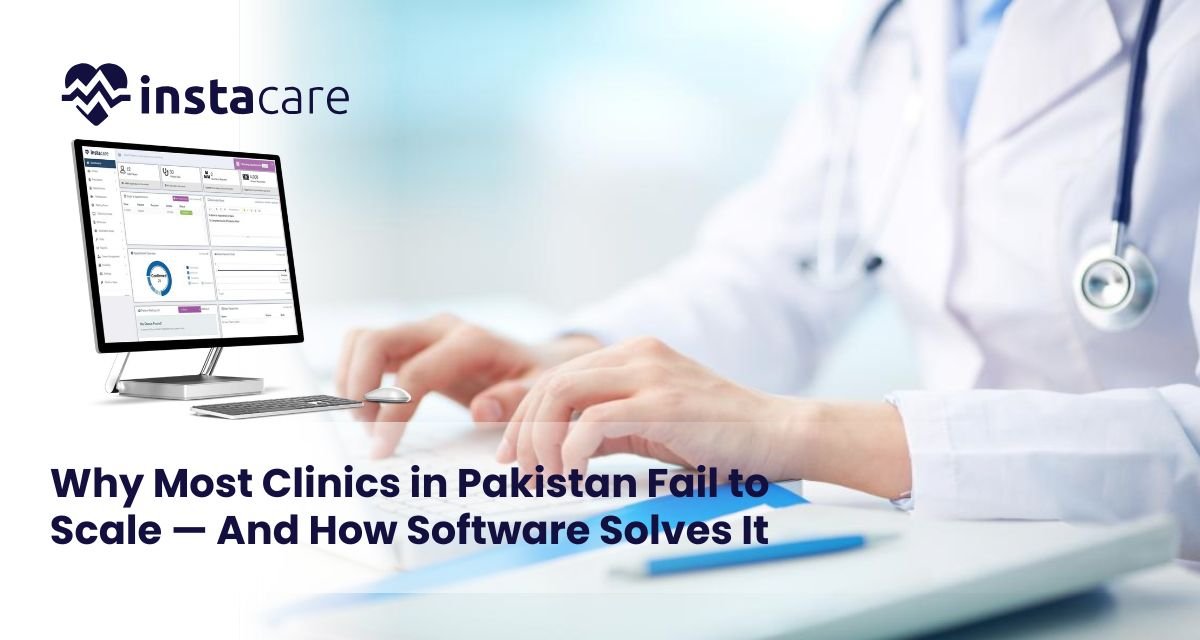
Last Updated on 7 months ago by zuraiz Why Most Clinics in Pakistan Fail to Scale — And How Software Solves It? The rapidly evolving healthcare industry of Pakistan depends heavily on clinics and small medical practices, which provide essential medical care to numerous patients throughout urban and rural areas. These medical facilities treat patients across millions of individuals throughout cities as well as remote areas. Despite performing critical functions, most clinics in Pakistan encounter difficulties expanding their operations past one clinic or doctor location. The expansion of clinics into multi-location healthcare groups remains rare even within densely inhabited areas. Many clinics in Pakistan face growth limitations which leads to a fundamental inquiry about the causes and solutions for this situation. The solution requires an integration of structural problems with business process weaknesses, coupled with weak digital capabilities as the primary reason for growth stagnation. The implementation of digital health record systems and solutions, combined with clinic management software systems, begins to eliminate the barriers that hinder clinic expansion and sustainable scalability. Understanding The Scaling Problem in Pakistani Clinics The objective of scaling a private clinic business exceeds merely extending patient volume across multiple branches. The goal is to develop standardized systems that provide uniform patient care throughout every operational contact point. The majority of clinics in Pakistan battle organizational excellence because of multiple essential factors, and require the best clinic management system in Pakistan 1. Manual Record Keeping and Data Loss Reliable patient documentation records persist on paper at most clinics that operate in the small to mid-sized category. The lack of proper data management produces various problems, which include lost patient history records along with difficult follow-up procedures and increased chances of data loss. Financial expansion through patient data management proves impossible when retrieval capabilities cannot ensure clinical data accessibility. 2. Lack of Operational Visibility The majority of Pakistani clinic owners together with their medical staff operate their clinics without knowing their operational efficiencies. Clinics are effectively making use of the available appointment times. The medical staff manages to follow their scheduled work protocols. What amount of income does the clinic lose through patients who fail to show up and through incorrect inventory management? These important questions remain unanswered because clinics have insufficient monitoring systems. A data-driven strategy is essential for making strategic expansion decisions since the absence of insights will turn important decisions into mere speculation. New clinic branches reflect identical inefficient operational methods from existing facilities, which produce failure instead of growth. 3. Staff Dependency and Lack of Standardization Multiple clinics in Pakistan rely heavily on selected personnel who grasp their operational systems because only these workers enable proper performance. When essential staff members exit, the system fails to function properly. The facilities lack standard operating procedures (SOPs) to train staff and manage flow operations while processing payments. Business expansion depends on standardized operating systems that serve the company beyond individual employees. The absence of automation and enforcement software preserves the fragile and inconsistent operational status of clinics. 4. Financial Leakage and Untracked Expenses Examining monetary movements remains a significant obstacle for businesses trying to expand their medical operations. Several clinics fail to establish proper systems that track both income and expenses, discounts and patient refunds. Petty cash goes unrecorded. Patient payments might be under-reported. The inability to track financial data undermines any possibility of comprehending whether a clinic makes enough profit to grow. The lack of software-backed patient tracking systems results in conflicts about revenue sharing among doctors who share revenue at multi-practitioner clinics. Book Free Demo How Smart Clinic Management Software Solves These Problems? Digital transformation functions across all healthcare institutions, starting from large hospitals to small clinics. A patient management software platform transforms all medical facilities, even in small clinics, through automated operations and improved patient care and data analytics. Here’s how: 1. Automated Appointment Management When patients use clinic software, they can make appointments using a computer or a mobile device options which cuts both telephone congestion and human mistake rates. Software management tools help doctors schedule appointments better so patients obtain their appointments on time, which decreases missed appointments. Real-time updates maintain constant alignment between clinic personnel as well as medical staff. 2. Electronic Medical Records (EMRs) The EMR software for clinics functionality enables clinics to maintain safe storage of patient information including medical records, laboratory reports and clinical prescriptions. The health care quality measures enhance as the system allows patients to keep their medical history accessible across different network doctors or clinics. 3. Centralized Billing and Payments The central billing feature of clinic management software joins all financial operations, including payments and receipt handling together. The software system provides instantaneous transaction recording and report production, and minimises financial loss through cash theft. Seamless payment processing occurs when certain platforms link with POS equipment and digital payment solutions. Benefits of Centralised Billing: Eliminates manual errors Enables transparent revenue-sharing between doctors The software system allows clinic owners to determine their revenue numbers according to service type and department. Patients have better trust in billing processes because items appear separated in statements. 4. Inventory and Pharmacy Management Clinic automation solutions enable clinics with in-house pharmacies to track supply quantities and expiration dates as well as automatically request reorders for consumable materials. The system prevents unnecessary stocking while ensuring essential drugs, together with consumables, remain available during needed. Advantages of inventory automation: Avoids medicine shortages By implementing this measure, expired products cannot reach the market for sale Reduces theft or unaccounted losses The system generates up-to-the-minute evaluations of clinic stock 5. Multi-Branch Management Through software for multi-branch clinics, users can visualise and control various locations through a unified dashboard. Clinic owners gain centralised oversight of all locations’ activities, which include an appointment system along with revenue generation and employee performance tracking, even when they are not physically present. Courting expansion becomes possible for clinics since they gain direct oversight and control across all their new locations. Conclusion Modern medical facilities that will prosper

Last Updated on 7 months ago by zuraiz InstaCare at DFDI Forum 2025: Shaping Pakistan’s Digital Health Future InstaCare is proud to have participated in the DFDI Forum 2025, a groundbreaking event organized by the Ministry of IT and Telecom Pakistan, where global investors, tech leaders, and policymakers gathered to discuss the future of digital health in Pakistan. This forum marked a historic step in shaping Pakistan’s digital transformation, securing an impressive $700 million in investment commitments on Day 1 alone. Pakistan’s Rising Digital Health Hub The event showcased how Pakistan is positioning itself as a regional hub for digital innovation, fostering foreign investments and nurturing technological advancements that will drive the future of digital health in Pakistan. It was a unique opportunity for us to engage in meaningful discussions, exchange ideas, and gain insights into how Pakistan is becoming an emerging leader in the digital health ecosystem. Digital FDI: A Catalyst for Growth in Pakistan The momentum at the forum was truly inspiring. With the Ministry of IT and Telecom Pakistan leading the charge, Pakistan is set to become a focal point for global digital partnerships and investment in tech innovations. InstaCare, as part of the digital health sector in Pakistan, is excited to contribute to this evolution by offering cutting-edge healthcare technology solutions, digital health platforms, and telemedicine services to millions of Pakistanis. Opportunities for Growth in Digital Health and Tech Investments The event highlighted the growing interest and commitment from global investors to contribute to Pakistan’s digital growth. With significant investments in telemedicine, healthcare IT solutions, and digital health infrastructure, InstaCare is poised to capitalize on these opportunities to expand its services and contribute to Pakistan’s digital healthcare landscape. By fostering tech investment and collaborating with global partners, we can drive innovation, enhance healthcare delivery, and create sustainable solutions for a digitally empowered future. Key Highlights of DFDI Forum 2025 $700 million investment secured on Day 1 Global discussions on the future of digital health in Pakistan and tech investments Strong emphasis on Pakistan’s role as a regional hub for digital innovation Collaborative opportunities for digital health solutions and telemedicine advancements Looking Ahead: Pakistan’s Digital Health Revolution The DFDI Forum 2025 has set the stage for a new era of tech-driven growth in Pakistan, and we are excited to be part of this journey. With investments flowing into digital health technologies and e-health solutions, Pakistan is on the brink of a digital health revolution, where healthcare services will be more accessible, efficient, and innovative. We look forward to continuing our efforts to enhance digital healthcare solutions, making a real difference in the lives of millions across Pakistan. Join InstaCare in Transforming Pakistan’s Digital Future At InstaCare, we believe that the future of healthcare lies in digital transformation. As part of the Ministry of IT and Telecom Pakistan’s initiative, we are committed to shaping the future of digital health in Pakistan. Stay connected with us and be part of the digital health revolution in Pakistan!