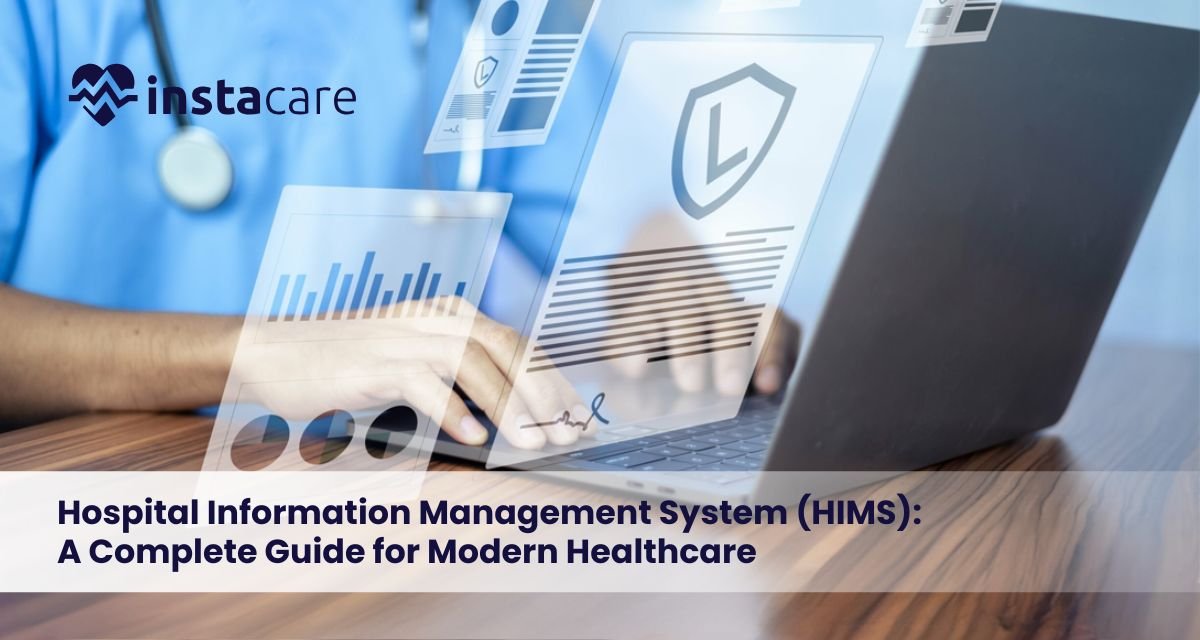
Hospital Information Management System (HIMS): A Complete Guide for Modern Healthcare The world’s healthcare systems are changing fast as a result of digital transformation and the necessity to provide efficient patient-centred care. Manual processes are currently virtually impossible and prone to errors in hospitals that deal with huge amounts of clinical, administrative and financial data. This is where a Hospital Information Management System is required. HIMS assists healthcare professionals in streamlining operations in hospitals by implementing technology in daily practices, decision support, and patient outcomes within a modern healthcare information system. What Is a Hospital Information Management System (HIMS)? A Hospital Information Management System (HIMS) is a complete online tool, which is meant to coordinate every side of hospital work. It integrates clinical, administrative, financial and operational operations into a single hospital information system. HIMS enables the hospitals to store, process and access patient information electronically as opposed to paper-based systems. It helps in registering patients, making appointments, diagnostics, billing, reporting, and compliance. Simply put, it can be described as the backbone of the digital world of the modern hospitals, functioning as advanced hospital management software that facilitates communication within the departments. Key Components of a Hospital Information Management System Strong hospital information system comprises a number of inter-linked modules, whose functions within the hospital activities are: Patient Registration and Admission Module: The module that handles the demographics of the patients, the details of their admission and their discharge, supporting a reliable patient information management system. EMR Stores: Holds clinical information including diagnoses, treatment plans, laboratory results and physician notes within an electronic hospital management system. Clinical Information System: Assists the doctors and the nurses with access to real-time data about the medical information, which enhances the clinical decision making as part of a structured clinical information system. Billing and Financial Management: Automates billing, insurance claims, payments and financial reporting. Pharmacy and Inventory Management: Tracks medications, stock levels, and usage to prevent shortages and wastage. Hospital ERP Software: Integrates into one system the human resources, procurement, payroll, and asset management through hospital ERP software. The Hospital Workflow Management System: Organizes work in different departments to ensure efficiency and minimization of delays using a comprehensive hospital workflow management system. These elements combined form an all inclusive electronic hospital management system supported by a centralized hospital data management system. How HIMS Works in a Hospital Environment? HIMS is a digital ecosystem that is centralized. Every time a patient comes, he or she is keyed into the system and immediately available in all departments. In real time, doctors can access medical histories, nurses can update on the progress of treatment, the labs can post test findings, and the billing departments can create the bill. This continuous flow of data enhances coordination and gets rid of duplication. The hospital data management system will guarantee accuracy and consistency in information and secure access to information, allowing staff to dedicate more time to the patient, as opposed to the administrative aspect, through integrated hospital IT systems. Benefits of Implementing HIMS Implementation of a hospital management software has many benefits: Better Efficiency: Automated processes save on paper work and administration overheads. Improved Data Accuracy: Digital records reduce mistakes that come about due to recording by hand. Enhanced Clinical Decision-Making: Real-time patient access helps in proper diagnoses and treatment plan. Cost Reduction: Improved operations and rationalized resource use reduced the cost of operation. Regulatory Compliance: Ensures that there is proper documentation and reporting in line with the healthcare regulations. Centralized Hospital IT: Systems forms a single point of all operations of the hospital. In general, HIMS enhances productivity at the same time with high care standards using a secure medical information management system. Book Your Free Marketing Consultation Role of HIMS in Improving Patient Experience One of the healthcare performance indicators is patient satisfaction. HIMS is essential in improving the patient experience through the reduction of wait time, enhancement of communication and continuity of care. Having a stable patient information management system, patients can be registered faster, have timely test results, correct billing, and easier follow-ups. Digital documentation also facilitates tailored care, since the medical history is available to the health practitioners. Moreover, billing and treatment plans promote transparency that fosters trust between the patient and health care provider. Challenges in Implementing HIMS Notwithstanding its positive side, HIMS has challenges: The cost of High Initial Investment: Infrastructure, software licensing, as well as training, may be expensive. Resistance to Change: The staff might be hard to adjust to the digital systems replacing the manual systems. Data Safety and Privacy Implications: Assure confidentiality of medical records. System Integration: Problematic with existing system may be complicated. Training Requirements: On-going employee training is also necessary to make good use of it. Nevertheless, these challenges could be managed with the help of appropriate planning and support of vendors. HIMS vs Other Healthcare Information Systems HIMS is not to be confused with other systems, however, it is broader in its scope: Electronic Medical Records (EMR): Only clinical information. Laboratory Information Systems (LIS): Laboratory operations. Radiology Information Systems (RIS): Processes imaging information. HIMS is more comprehensive and involves all these functions in a single medical information management system as compared to standalone solutions. Future of Hospital Information Management Systems The future of HIMS is strongly related to new technologies. The operations in hospitals are being changed by artificial intelligence, machine learning, cloud computing, and big data analytics. The future systems will be predictive, diagnostics based on automation, integration of telemedicine, and interoperability. The postmodern hospitals will be based on the enhanced hospital workflow management systems that will enable hospitals to provide quicker, safer, and more individualised care. HIMS will also be more innovative, safer, and patient-centred and yet again, healthcare will be becoming more digital. Conclusion A Hospital Information Management System is more than a luxury, nowadays, it is a necessity in healthcare institutions. HIMS is also an efficient approach that helps to improve patient care, promote long-term sustainability, and integrate clinical, administrative, and
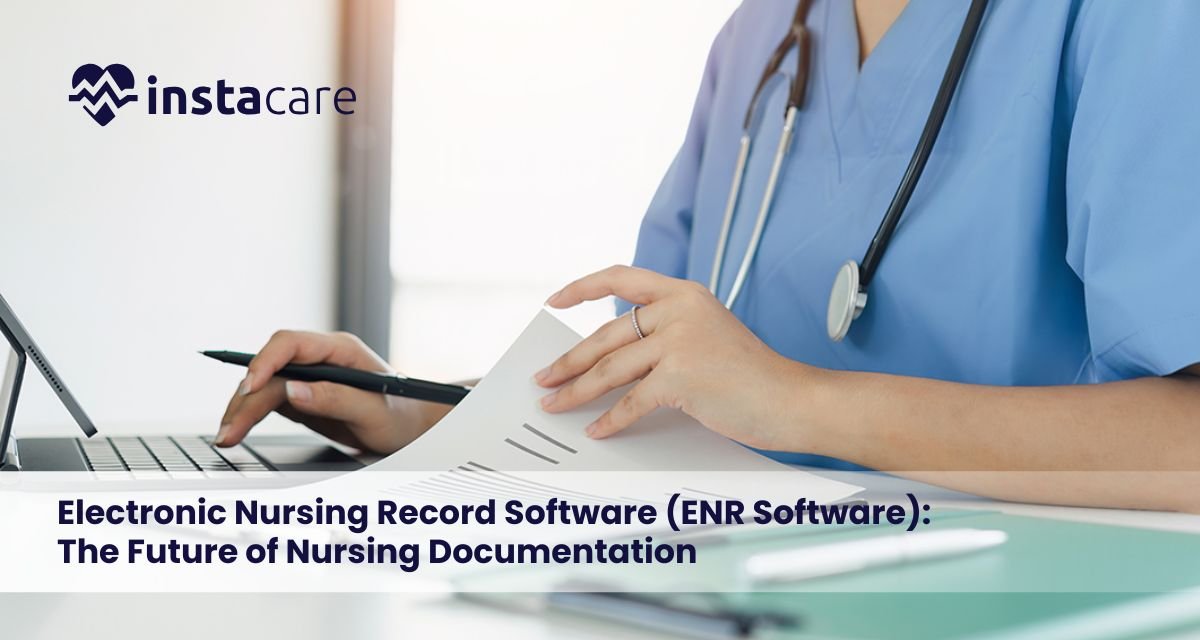
Electronic Nursing Record Software (ENR Software): The Future of Nursing Documentation The field of healthcare is quickly becoming digitised, and nursing documentation is not an exception. Nurses are at the front line in providing care to the patients and in most cases, the traditional paper-based records and the divided systems tend to slow them down and thus prone to make errors. ENR software has become an effective tool that allows one to document appropriately, in real-time, and patient-centred. ENR software is changing the way nurses in healthcare facilities document, communicate and provide care through the simplification of workflows and access to clinical data. What Is Electronic Nursing Record (ENR) Software? Electronic Nursing record software is a dedicated healthcare record system that was developed and intended to be used by nurses in easy access, management, and recording of patient care information electronically. In contrast to the general electronic health record for nurses, ENR is built around such nursing-specific data as assessment, care plans, medication administration, vital signs and progress notes. Electronic nursing records enable nurses to record patient details in an instant with structured templates and standardised terminologies. This software is a component of an ENR system in healthcare and functions well with the larger systems of the hospital to provide continuity in care and accuracy of data throughout the patient experience. Key Features of ENR Software The current nursing documentation software has a vast spectrum of functions capable of supporting clinical efficiency and patient safety. Common features include: Assessment, interventions, and outcomes: customisable nursing charting software. Automated time stamps and real time documentation. Computerized patient care records that are available in different departments. Medication, vitals, and care reminders and clinical alerts. Development of care plans and revision depending on the state of the patient. Laboratory/ pharmacy/ physician systems integration. Support of mobile and bedside documentation. Role-based access control to data storage. All these characteristics make the digital nursing documentation both extensive and convenient in the fast-paced clinical setting. Benefits of ENR Software Implementation of ENR software provides tremendous benefits to both nurses, health institutions and patients. In the case of nurses, it saves them time that would otherwise be associated with paperwork and manual charting and direct patient care can be given more attention. In the case of healthcare organisations, it enhances the accuracy of documentation, standardisation, and compliance with regulations. Better communication between care teams promotes safer and more coordinated care to patients. The other advantages are: Minimized documentation errors. Greater efficiency on nursing workflow management software. Quicker patient data accessibility. Greater interdisciplinary cooperation. More quality improvement data analytics. In general, ENR software helps to maintain a more effective and responsible healthcare documentation system. How ENR Software Supports Quality Patient Care? Timely, accurate, and comprehensive documentation is the key to high-quality nursing care. This is facilitated by ENR software which allows nurses to document patient assessment, intervention and reactions in real time. This will guarantee that the impact of a patient in his or her health is seen instantly by the whole treatment team. Nurse-specific electronic health records facilitate standardised care delivery with the aid of evidence-based templates and clinical pathways. This minimizes variability in care, and serves to aid in making informed clinical decisions. Also, there are inbuilt warnings and verification systems that can eliminate medication mistakes and omissions in interventions, thus directly affecting patient safety. Implementation: What Healthcare Facilities Should Know? The use of hospital nursing software should be properly planned and coordinated. Starting with evaluating clinical needs, current infrastructure, and staff preparedness, healthcare facilities should start with it. Implementation can be achieved successfully by choosing a system that can fit the nursing processes and not by interfering with them. Key considerations include: Training of staff and managing change. Integration of the system with the current electronic medical records for nurses. Paper/legacy system data migration. System scalability and technical support. The adoption and the success in the long term require leadership involvement and nurse involvement in the implementation. Common Challenges and Solutions With all these advantages, ENR software implementation is not easy. The opposition to change is not unique, particularly concerning the employees who are used to the paper-based documents. This can be taken care of by intensive training, continuous support and including nurses in designing the system. The complexity of the system, data overload and interoperability problems are other challenges. The obstacles can be overcome by selecting an easy-to-use nursing informatics software and making sure that it can be easily integrated with other systems. The usability can also be enhanced in the long run by regular system updates and feedback loops. Book Your Free Marketing Consultation Regulatory and Compliance Considerations ENR software should adhere to healthcare policies concerning patient privacy, data security and clinical documentation standards. Audit trails, secure access control, and encryption should be supported by systems to aid in secure storage of patient information. Observation of the national and international standards of healthcare shows that the electronic patient care records are legally sufficient and ethically controlled. Healthcare organisations should also be able to practice proper documentation in order to fulfil the accreditation and reporting requirements. Future Trends in ENR Software The development of the ENR software is directly related to the development of healthcare technology. There is an increased adoption of artificial intelligence and predictive analytics to aid in clinical decision-making and early detection of patient risks. Other current trends are: Nursing charting voice recognition software. Suggestions on AI-assisted documentation. Nursing outcome advanced data analytics. Mobile-first and cloud-based platforms. Complete integrated EHR and ENR systems. The innovations will further improve efficiency, accuracy and patient-centred care. Choosing the Right ENR Software Nursing care management software needs to be chosen with a clear grasp of the clinical requirements, as well as organisational objectives. The healthcare facilities must focus on intuitive, scaled and interoperative systems. The important evaluation criteria are: Ease of use for nursing staff Customisation options Connection with current clinical documentation software. Vendor support and training Meeting healthcare regulations. The selected ENR solution can
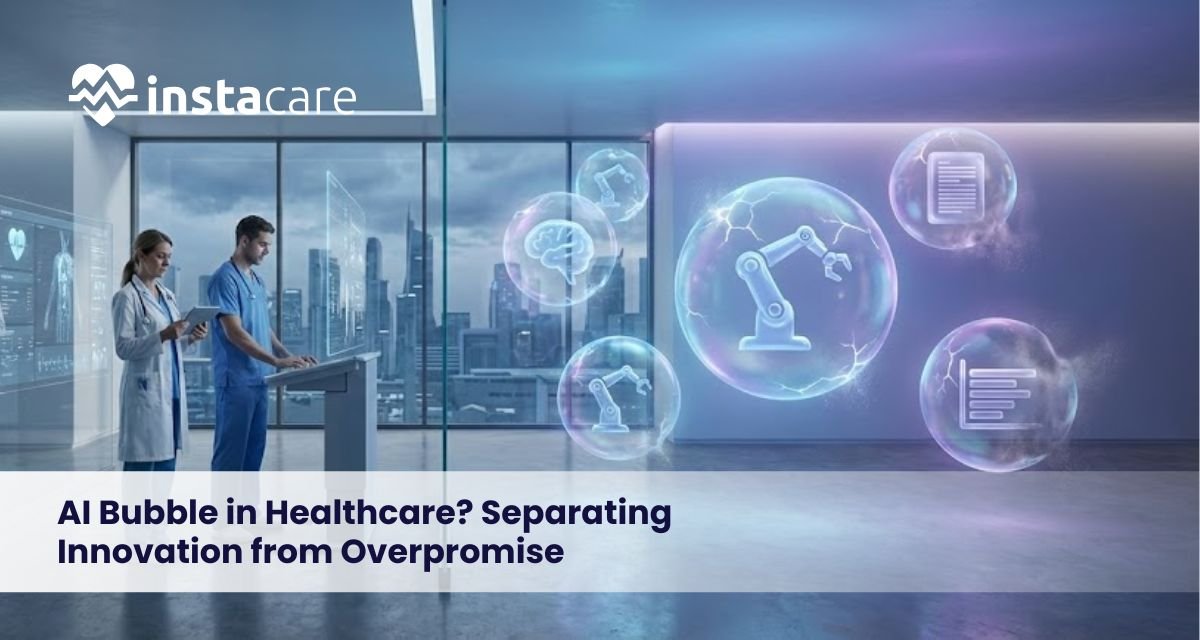
Is There an AI Bubble in Healthcare? Separating Innovation from Overpromise Artificial intelligence is one of the most popular technologies in contemporary healthcare. Between diagnostics and clinical decision support to administrative automation and patient engagement, AI will provide faster, cheaper and more accurate care. Nevertheless, in addition to the true innovation, there is an increasing concern of artificial intelligence hype in healthcare. Investors, providers and policy-makers are becoming more worried whether the sector is in a bubble, where the expectations and valuations are rising at a higher rate than the actual results on the ground. It is paramount to know where AI really brings value, and where it fails to, to adopt it sustainably. What Is the AI Bubble in Healthcare? An AI bubble in healthcare is defined as the stage at which the excitement, capital, and valuation are higher than the demonstrated clinical and scalability of the technology. Most AI instruments are promoted as revolutionary prior to their complete advancement in clinical settings. This results in healthcare AI overvaluation, where solutions are sold and valued on a future potential basis instead of their existing performance. In contrast to conventional healthcare technologies, AI systems are sensitive to the quality of data, integration of workflow processes, and trust between clinicians, which require years to develop. In cases where expectations disregard these realities, a distinction arises between the promise and practice. Drivers Behind the AI Hype A number of factors is stoking the intense surge in AI hype in the healthcare sector: Venture capital pressure: Among the startups, there is a tendency to advance unreasonable claims to obtain funding. Regulatory momentum: Accelerated approval routes generate hope, but too soon. Data availability: EHRs and expansion of imaging databases imply readiness, even in situations where the quality of data is inconsistent. Media accounts: Success stories are given more coverage, whereas less coverage is given to failures. Labor crises: AI is positioned as a remedy to clinician burnout and nursing staffing issues. The combination of these forces contributes to the acceleration of the AI hype cycle in healthcare, as solutions are offered in the market before they are functionally viable. Where AI Is Truly Delivering Value? Nonetheless, AI is actually making healthcare better in a number of clear ways. The following are evidence-supported, realistic use cases of AI in healthcare that have been successful in their operations: Medical imaging: AI-assisted radiology can be used as a support tool to enhance the detection of fractures, tumours, and strokes. AI in administration: AI saves time in documentation, minimizes coding mistakes, and postponements in billing. Population health analytics: Predictive models are used to locate high-risk patients at an early stage of intervention. Remote monitoring: AI is used to process wearable data to control chronic diseases. Clinical triage: Decision-support systems help nurses and physicians to prioritize care. In such scenarios, AI does not replace clinicians but enhances them, which makes the technology meet the actual clinical requirements. Where AI Falls Short? AI has the most trouble in the area of healthcare complexity. The limitations of AI in healthcare are evident in such spheres as subtlety, morality, and human judgment: Contextual decision-making: AIs do not always understand social, emotional, and cultural aspects. Generalization problems: Models that have been trained in one hospital do not generalize to the other hospital because of differences in the data. Bias of data: Unless audited well historical data can strengthen inequalities. Explain ability: A lot of AI models are black boxes, and this decreases the level of trust of clinicians. These issues demonstrate the reason behind why complete clinical judgment automation might not be feasible in the near future. Book Free Demo Risks of the AI Bubble in Healthcare A bloated AI market presents significant risks of AI in healthcare, such as: Incorporation of ineffective funding in unproven instruments. Loss of clinician confidence through non-repeated performance. Poorly validated algorithms lead to patient safety risks. Raised expenses with no corresponding results gains. Backlash in regulations after failures of high-profile. The bubble would eventually stifle innovation in the long term once it gets out of control, as it would destroy trust in truly useful technologies. Impact on Healthcare Providers and Patients To the providers, the unrealistic expectations of AI pose pressure on operations. Care facilities can drain a lot of funds on systems that interfere with the operations without achieving the efficiencies promised. This adds to burnout instead of decreasing burnout, making AI adoption challenges in healthcare more problematic. It may also affect patients. The excessive use of developing AI tools may lead to incorrect diagnosis, care postponements, or a deprivation of human bonding. The transparency and supervision is necessary to secure patient confidence and safety. How to Identify Overhyped AI Solutions? In order to mitigate risk, healthcare organizations should use strict evaluation criteria: Clinical validation through the peer review. Evaluate actual implementation scenarios. Confirm interoperability with current systems. Practice explain ability and clinician control. Evaluate the complete ownership cost, not only licensing. Models that do not have such building blocks usually lead to machine learning failures in healthcare despite well-marketed stories. The Future of AI in Healthcare: Bubble or Sustainable Growth? The AI in healthcare does not have a high chance of collapsing, but it is likely to undergo a market correction. To achieve sustainable growth, it is important to transform the hype-based adoption to evidence-based implementation. Ethical concerns of AI in healthcare, like bias, transparency, and accountability, will be addressed in the long-term success. Artificial intelligence will no longer be valued based on novelty; it will now be evaluated based on quantifiable clinical advantages, safety, and overall efficiency on a system-wide basis. Conclusion The AI in healthcare has a transformative potential, which cannot be denied-although not everything will become true. Isolating innovation and promise overpromises needs a realist and clinical validation and disciplined adoption strategies. Although hype has increased the rate of awareness, the ultimate development will hinge on the
Healthcare Analytics Software: How Data Is Transforming Modern Patient Care In modern healthcare, results depend more on how data is used. Because of this, clinics and hospitals now apply analysis tools to support choices in treatment, cut delays, reduce waste, also lift service quality. These systems give live updates on patient patterns, staff workloads, and equipment needs, while forecasting risks before they grow serious. They turn unorganized information into practical steps for care teams. What Is Healthcare Analytics Software? Healthcare analytics tools gather patient and system information to support better choices. These systems analyze medical records, use forecasts, show reports, plus display insights through interactive screens. Data flows in from EMRs, labs, or wearables, enabling clinics to track treatment progress while spotting dangers early. Providers gain clearer oversight, helping them act ahead of time to improve results. Key capabilities: Data aggregation across multiple sources Display of client data alongside system performance measures Predicting how illnesses develop plus sorting patient risks Linking EMR or EHR platforms to support smooth daily operations Why Healthcare Analytics Matters Today Today’s medical system deals with more patients, widespread long-term illnesses, plus higher running expenses. Using data tools matters greatly because it helps manage these challenges effectively through better insights and planning over time Improving patient results by using data-driven choices instead of assumptions Lowering hospital readmission rates while cutting mistakes in treatment Improving how workers are assigned, alongside better handling of supplies Using shared data to help public health efforts through combined analysis Groups that apply data tools in healthcare see higher satisfaction from patients, fewer workflow issues, also stronger adherence to rules. Key Features of Healthcare Analytics Software Healthcare medical analytics platforms offer a range of specialized features tailored for clinical and operational needs: Live health data tracking: instant updates on vital signs, test outcomes, triggering faster care actions when needed. Healthcare Dashboard Software: healthcare dashboard software tools let users adjust views to show key data, patterns, or patient details, helping leaders and care teams check info fast through tailored layouts that improve clarity and decision speed by organizing inputs clearly. Predictive Analytics for Healthcare: predictive analytics for healthcare uses machine learning to forecast illness trends, estimate needed resources, while also sorting patient risks by likelihood. Population Health Analytics Tools: Population health analytics tools assess community patterns, helping spot vulnerable patients, so clinics can act early. These systems track outcomes while guiding prevention strategies through data use instead of guesswork. AI-Based Healthcare Capabilities: Use AI-based healthcare to spot issues automatically. Or streamline daily operations efficiently. Also assist doctors with smart tools for better choices. EMR/EHR Analytics Integration: EMR/EHR analytics integration combines patient records with lab outcomes through a single analytical platform, also linking imaging details efficiently. Types of Healthcare Analytics Healthcare clinical data analysis falls into four main kinds Descriptive Analytics: gives an overview of past information to notice trends in patient entries, recovery results, or how equipment is used, using insights from earlier records while focusing on practical observations rather than complex theories. Diagnostic analytics: looks into causes of results, like why readmissions are frequent or treatments don’t work well, by examining patterns from past data using logical review methods. Predictive Analytics: Leverages math-based tools to estimate health risks, track illness development, or anticipate workload needs. Prescriptive Analytics: Recommends actionable strategies, including optimized treatment plans, staffing schedules, or resource allocation. Every kind supports different goals, some help hospitals track data, while others improve community well-being. Benefits of Healthcare Analytics Software Implementing robust analytics software provides tangible benefits: Data-Driven Decision Making: Data-driven decision boost clinical choices by using actual patient information to guide actions, through this, accuracy increases while assumptions fade. Operational Efficiency: Streamlined operations improve bed use, staffing plans, or supply tracking, cutting down on excess. Each part works better when linked through clear processes instead of isolated fixes. Enhanced Patient Outcomes: Patient results improve when forecasts and risk checks support timely actions or prevention steps. Regulatory Compliance: Simplifies documentation for HIPAA alongside ICD-10, meeting key healthcare requirements efficiently. Cost Reduction: Pinpoints key expenses, cuts redundant steps, while improving how resources are used. Essential Integrations & Technologies To work best, healthcare hospital analytics solutions tools need to connect with current systems through seamless compatibility. EMR/EHR Systems: EMR or EHR Software are essential; they enable ongoing patient information access. Lab Information Systems (LIS): Lab Information Systems deliver test outcomes, enabling timely medical decisions through immediate data access. Imaging Systems (PACS): Combines radiology info with visual records to support full patient review. IoT & Wearable Devices: IoT and wearable tools track health signs nonstop, sending instant warnings when needed. Business Intelligence & Visualization Tools: Business intelligence tools help create reports for hospital leaders. These systems turn data into clear visuals. They assist decision-makers with up-to-date insights. Information is shared through dashboards tailored to management needs. Good integration allows smooth operations, correct reports, or shared data access. Book Your Free Marketing Consultation Challenges in Implementing Healthcare Analytics Even though the benefits are obvious, hospitals struggle with putting things into practice because of various obstacles. Data Quality & Standardization: Data quality varies between EMRs, lab results, or imaging records, which impacts analysis accuracy. Different formats from sources like clinics plus hospitals create mismatches that slow down processing. Uniform standards help align entries yet gaps remain common in practice. Expense to set up: Requires big initial spending on tools, equipment, or learning. Costs rise due to technology purchase, setup needs, also employee education. Compatibility problems: Challenges linking various platforms between teams or locations, due to mismatched standards. Systems often fail to communicate properly, creating delays, especially when software versions differ widely. Data Privacy & Security: Using secure systems that follow HIPAA rules, access is limited, sharing happens under strict checks, while storage stays protected through monitored protocols. Resistance to Change: Some clinicians resist shifting to data-based methods instead of familiar approaches. To tackle these issues, a careful strategy is needed along with a step-by-step rollout while preparing those involved. Future Trends in Healthcare Analytics The future of
Predictive Analytics in Healthcare: Transforming Patient Care with Data Healthcare is gradually moving into a new phase where medical decisions are becoming more of an active planning process as opposed to a reactionary one. The modern-day hospitals, clinics, and health systems contain colossal quantities of patient data, diagnostics reports and treatment histories to lifestyle trends. With smart healthcare data analysis, such information can be a potent tool that aids in forecasting diseases, the results of treatment, hospitalization, and preventive measures. This technology is called predictive analytics – a technology-based strategy that is revolutionizing patient outcomes, cost reduction, and enhancing efficiency in the operations of healthcare networks. What Is Predictive Analytics in Healthcare? Predictive analytics is the application of statistical modeling, data mining, and artificial intelligence to predict the future health of given the current data. The option is applied in the healthcare setting to discover trends and patterns in patient data to predict medical events as disease progression, response to treatment, readmission likelihood, or emergency risk. The main idea is basic, it is possible to use past and present information to create healthier possibilities in the future Medical prediction models help healthcare organizations to justify decisions, diagnose more accurately, and become less uncertain in medical planning. These systems neither substitute clinicians but empower them with scientifically supported evidence. How Predictive Analytics Works? The predictive analytics system starts by getting a considerable amount of patient data in the form of electronic medical records, diagnostic equipment, wearable health devices, clinical notes, and even genomic data. After collection, the information is cleaned and organized in order to make it true and useful. The data are then analyzed through advanced algorithms to identify the patterns that cannot be seen by the human eye. These algorithms are expected to take into account various factors, including age, lifestyle, previous history, vitals, and lab outcomes, to determine who is possibly at risk of particular health events. The results are presented in dashboards or clinical systems, which allow healthcare personnel to act in time – even prior to the manifestations of symptoms. Major Applications of Predictive Analytics in Healthcare Predictive analytics has become embedded in most spheres of medicine. Here are some key predictive analytics use cases in healthcare: 1. Early Detection of Chronic Diseases Such diseases as diabetes, hypertension and heart diseases are most likely to be forecasted months or even years ahead of complete development. Lifestyle changes and intervention care are more effective when the warning signs are detected early to minimize complications. 2. Prediction of Patient Readmissions Patients are usually readmission cases in hospitals. Predictive analytics can recognize those that have the greatest probability of returning to help doctors with the added monitoring, follow-up, or discharge planning. 3. Treatment Personalization Predictive devices develop personalized treatment regimens by analyzing the reaction of various patients to drugs and treatment. This has a tremendous effect in enhancing success rates and minimizing side effects. 4. Demand Forecasting Resource Management Forecast models enable healthcare systems to plan how they staff, availability of ICU, medicine stock in the system, and equipment placement with more precision, resulting in increased operational efficiency. 5. Public and Population Health Planning Predictive analytics provides an important contribution to the management of outbreaks, seasonal behavior, and health policy at the community level. All these are potent predictive analytics applications in healthcare, where information and technology drive more intelligent decisions. Book Your Free Marketing Consultation Benefits of Predictive Analytics in Healthcare The benefits of predictive healthcare are far reaching and ever-widening. Some core benefits include: Less hospitalization due to timely intervention. Quickly identified and precise clinical decisions. Improved patient satisfaction and care quality. Reduced spending on healthcare and efficient use of resources. Guaranteeing organization of future disease trends. Individualized therapy and response to drugs. Powerful evidence-based treatment of doctors and experts. All of these strengths reflect the increasing worth of predictive analytics benefits in healthcare, which is a change that can improve patient health and medical outcomes. Key Technologies Behind Predictive Analytics Predictive healthcare is driven by a number of digital solutions that are important in interpreting and forecasting data. These include: Neural networks and artificial intelligence. Pattern recognition software and data mining. EHRS integration systems. Real-time tracking and wearable data gathering. Clinician visualization dashboards. Cloud storage of data security. Automation and machine-guided processing assist healthcare teams in large datasets analysis in a short amount of time and to a high degree of accuracy. Such methods as healthcare predictive modeling, machine learning in healthcare, and big data analytics in healthcare collaborate and provide profound understanding of patient trends. Challenges and Limitations In spite of its impressive growth, predictive analytics has such difficulties as: Data Privacy & Security Concerns The data about patients is very confidential. There must be good cybersecurity and regulatory compliance. Technical Complexity Medical institutions do not necessarily have sophisticated digital infrastructure and qualified staff. Model Accuracy & Bias Algorithms also demand constant optimisation so that they would be precise, equitable, and impartial in a broad population. Integration Issues Linking various data resources, old systems, and clinical processes can be time and resources-consuming. Despite the challenges, adoption is still on the rise worldwide as hospitals appreciate the importance of using ai for medical prediction, clinical decision-making through predictive analytics for hospitals, as well as accurate healthcare forecasting models. Future of Predictive Analytics in Healthcare In the coming ten years, predictive analytics is going to be a fundamental support of modern medicine. The systems will evolve out of mere risk predictions into full automated decision support eliminating human error and increasing the speed of diagnosis. Hospitals across the globe will be dependent on cloud-based monitoring systems, wearable devices, and automated warning systems. There will be easier remote management of patients particularly in chronic cases. Early disease detection using analytics will lower the number of mortalities, and hospital predictive analytics will optimise workflow, ambulance routes, the availability of ICUs, and resource allocation. At a
Today’s companies deal with growing challenges when handling tasks in IT, human resources, finances, office operations, or related areas. Staff now want quick, smooth support, much like the service they get as shoppers. Because of this shift, more firms use Enterprise Service Management (ESM): an organized method spreading trusted processes company-wide. Through digital upgrades, ESM supports smoother operations, better outcomes, and stronger performance across departments. What Is Enterprise Service Management? Enterprise Service Management means using IT service methods beyond IT, like in HR or finance. Rather than working separately, teams share one system to handle tasks, issues, steps, and sign-offs. ESM works by using set methods to provide services smoothly, relying on organized lists of offerings alongside common automated tools. When adding staff members, handling budget permissions, or dealing with office maintenance needs, ESM keeps performance steady across teams. While standardization supports speed, unified systems reduce errors during operations. Why ESM Matters Today? Companies now face fast-moving markets, mixed workplace setups, or higher staff demands. Outdated hand-done methods reduce speed while raising mistakes. Instead, ESM helps handle company workflows through smarter task coordination along with improved procedures. In today’s work environment, staff expect simpler ways to get things done, juggling several platforms isn’t acceptable anymore. Because of ESM, Cross-department service delivery come together under one system. This improves tracking, ensures responsibility, and supports rules adherence, all without complexity. Key Components of an ESM Framework A well-structured service management system depends on key parts, these elements function together through integration to create benefits 1. Unified Service Platform A Unified service platform where various teams handle tasks, processes, and information together, removing duplicate software while boosting teamwork through shared access. 2. Service Catalog Management A clear list showing every service, type of request, and how things get done. Service catalog management allows staff to submit needs quickly while understanding next steps. 3. Workflow Automation Workflow automation systems cut hands-on tasks, speed up sign-offs through streamlined steps. These Enterprise workflow management tools help drive such improvements by linking processes together efficiently. 4. Incident and Request Management Uniform methods for Incident and request management service requests, while dealing with incidents or escalations between teams, lead to quicker fixes along with better support outcomes. 5. Service Lifecycle Management ESM handles every stage of business services, from planning and launch to tracking results while making ongoing upgrades, using feedback loops. Service lifecycle management combines setup processes with real-time monitoring so operations stay efficient over time through small adjustments. 6. Service Governance and Compliance Built-in oversight makes sure Service governance and compliance comply with company rules, legal norms, or inspection criteria. Benefits of Enterprise Service Management Adopting Enterprise Service Management offers measurable benefits across the organization: Improved Employee Experience With employee service management, staff get quicker replies; information is shared clearly while access to tools becomes simpler through intuitive self-help options. Operational Efficiency Using automated workflows along with set procedures helps groups cut down repetitive jobs, shifting attention toward more meaningful tasks. Enhanced Visibility and Control ESM offers live updates through dashboards, so managers can monitor progress while spotting delays. This allows quicker choices based on current information instead of guesswork. Cost Reduction Centralizing tools, alongside automation, cuts expenses while boosting efficiency. Scalable Service Delivery When companies expand, ESM adjusts smoothly while avoiding extra hassle. Book Your Free Marketing Consultation How ESM Works Across Different Departments? One key advantage of Enterprise Service Management lies in how well it adjusts to different teams: IT Department IT teams expand standard ITSM functions by linking Service desk solutions with incident handling through workflow tools across the business. While connecting these elements improves coordination, adjustments are needed to fit wider operational demands. Each integration supports smoother operations without relying on outdated methods or vague terminology. Human Resources HR applies ESM during hiring, leaving processes, salary questions, or rule-related inquiries, improving integration quality while monitoring adherence more effectively. Finance Finance teams use automation for expense checks, purchase forms, or spending plans, resulting in fewer errors and faster processing. Facilities Management Facilities staff handle repair tasks, monitor equipment locations, while organizing office spaces via unified request systems. Legal and Compliance ESM handles contract checks, authorizes policies, also manages compliance, using automation plus clear tracking records. Through shared workflows across units, ESM helps groups use uniform methods, yet keeps room for team-specific adjustments. Steps to Implement Enterprise Service Management Putting ESM into action works best with a clear plan: 1. Identify High-Impact Use Cases Begin by focusing on steps that often lead to hold-ups or irritation, like employee setup or sign-off procedures. 2. Standardize Processes Record workflows first, then set standards, to maintain uniformity while allowing growth. Use clear steps before automation takes place, so systems can expand smoothly over time. 3. Choose the Right Technology Select a platform offering enterprise automation tools, alongside smooth integration capabilities. It should scale easily while ensuring solid usability throughout use. 4. Build a Service Catalog Create an easy-to-read catalog that shows staff what services they can access along with how to apply for them. 5. Automate and Integrate Automate routine work to save time, connect current tools so information moves smoothly. While doing this, ensure compatibility across platforms by aligning workflows step by step. 6. Train and Communicate Make sure those involved grasp the advantages while getting adequate instruction to use it. While doing so, support their learning process through clear guidance and consistent feedback during rollout. 7. Measure and Optimize Business process optimization monitor key metrics for process efficiency, service standards, or staff morale, adjust workflows regularly using clear feedback loops. Future of Enterprise Service Management The future of Enterprise Service Management links directly to changes in Enterprise digital workplace. Because companies adopt artificial intelligence, ESM systems grow smarter, also more responsive over time. Predictive analytics can speed up solving problems, meanwhile, smarter automation improves how businesses manage tasks. Linking systems with teamwork apps boosts the digital workspace, so services become more relevant and easier to reach. ESM is set to boost company-wide tech growth

IPD Management in Hospitals: A Complete Guide to Efficient Inpatient Care Inpatient care is the main support of the hospital services that provide patients with the complete service in case of hospitalization. The Inpatient department management is required to be efficient in providing quality care with an uninterrupted flow of the hospital. The processes involved in the treatment of a patient including the period of admission until the time of discharge are to be carefully planned, coordinated, and monitored. Hospitals are turning to contemporary systems and technologies to simplify the process of IPD and improve patient outcomes because healthcare is becoming more and more complex. What is IPD Management? The IPD Management can be defined as the systematic method through which hospitals handle patients admitted to stay overnight or on a long term basis. It covers registration, planning of treatment and medical follow-up all the way to billing and discharge. The vision is to deliver effective, safe, and smooth, inpatient services and utilize hospital resources and staff utilization to the best. Management will make sure patient care takes precedence, and the operations have bottlenecks that are minimal. Core Components of IPD Management Effective Hospital IPD workflow depends on a number of important elements: Admission process of IPD patients- This is the initial important step in the inpatient care. It is the process of checking the details of patients, bed assigning, and documentation of medical history. Uncomplicated admission procedure reduces time wastage and creates an opportunity to prioritize medical personnel with high-priority cases. Inpatient record management– keeping of proper patient records that are current and up-to-date records will make sure that the doctors, nurses and other healthcare professionals have access to all pertinent medical records. Digital systems have ensured that record-keeping is efficient, safe and accessible. Hospital bed management – It is essential to allocate and monitor the hospital beds properly so as to accommodate patients. Hospitals have to manage the availability of beds and demand of patients and keep hygiene and safety standards. Monitoring of IPD patients: It is important that patients should be continuously monitored in terms of their vital signs and general health condition. These involve a regular examination, surveillance, and the early detection of complications in order to offer interventions in time. IPD discharge process– Discharge: This entails synthesising the treatment of the patient, record updating and making future care plans. The procedural discharge process will eliminate delays, enhance patient satisfaction, and adherence to medical procedures. IPD billing system- Hospital revenue and patient transparency involve proper billing and insurance payment. Contemporary IPD billing systems make payment automatic, which minimizes errors and administration. Core Components of IPD Management The IPD department software has changed into a centralized point of managing inpatient services due to technology. The management systems in hospitals incorporate a number of functions including patient admission, bed allocation, monitoring, billing, and maintenance of records. Electronic Health Records (EHRs) help to ease the process of IPD documentation due to the possibility of secure and real-time updates. The use of automated alerts and monitoring devices provides the IPD patient safety measures with a higher level of efficiency by making sure that critical healthcare changes are identified and properly managed. Remote consultation is also made possible by telemedicine devices to minimize unnecessary visits to hospitals and better manage the coordination of inpatient care. Technology’s Role in Enhancing IPD Operations Regardless of the improvements, there are a number of women facing hospitals in IPD management: The lack of enough beds and overcrowding has the potential of overworking the Hospital ward management and staff. Poor documentation and manual record-keeping has the potential to impair the Inpatient record management and patient safety. Technology integration needs training and management change because employees should be able to adjust to new IPD operational efficiency tools. Hospital inpatient services have been faced with a challenge of ensuring patient satisfaction at a desired cost-effectiveness. To overcome such challenges, strategic planning, staff training, and embracing of sound management systems are needed. Book Free Demo Key Challenges in IPD Management The best practices that hospitals should adopt to maximize inpatient care are the following: Standardize the procedure of admission of IPD patients using clear procedures and pre-admission assessments. Employ electronic methods of keeping Inpatient records to ensure a well-kept and accessible information about a patient. Adopt intelligent Hospital bed management systems that monitor the occupancy of beds in real time. Implement technologies of constant IPD monitoring of patients to identify the initial indicators of deterioration. Enhance the IPD discharge process to minimize bottlenecks besides enhancing patient satisfaction. Install billing software to improve on the IPD billing system to minimize errors and manual labor. Provide training to the train staff on inpatient care coordination and IPD patient safety protocols to guarantee high standards of care. Best Practices for Effective IPD Management Effective management of the Inpatient department management has a number of advantages: IPD patient admission process to be attributed to timeline interventions and coordinated care. Better patient record management, reducing turnover time in admissions, transfers and discharges. More efficient use of the resources in the Hospital bed management, such as personnel, equipment, and beds. A rise in patient satisfaction due to a systematic IPD chart and a clear billing policy. Less medical errors due to constant IPD patient monitoring and regular protocols. Hospitals can use optimized IPD systems to increase services without sacrificing the quality of care. Advantages of an Optimized IPD System Technology and patient-centred care are the key factors that define the future of Hospital inpatient services. Key trends include: High-tech AI-based monitoring devices that improve IPD monitoring of patients. Hospital bed analytics and resources allocation analytics. IPD department software on mobile and cloud to access the patient records seamlessly. Improved coordination of telehealth services to enable coordinated Inpatient care. Intelligent automation in the documentation and billing
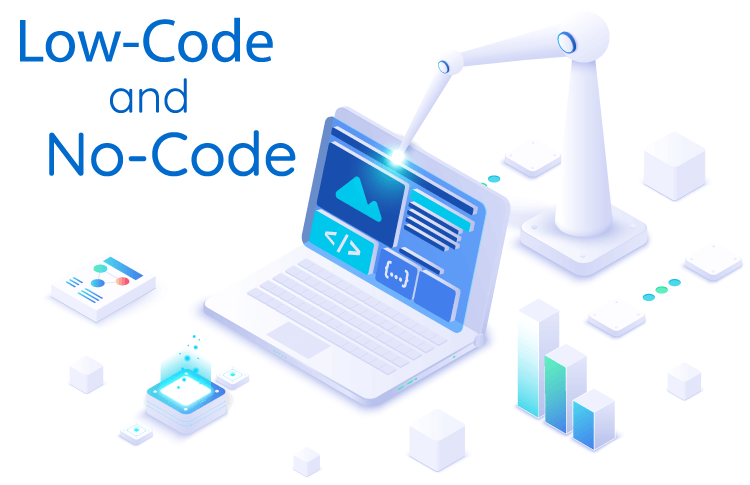
Low-Code & No-Code in Healthcare: Transforming Digital Innovation Without Heavy Coding The healthcare sector faces fast tech changes, yet standard software methods tend to be sluggish, costly, or rely heavily on scarce IT staff. That’s why low-code healthcare platforms and no-code healthcare solutions are gaining ground in medical settings. Instead of coding from scratch, care centers can now create apps through visual interfaces. Automation becomes easier for routine tasks across clinics and health networks. With these platforms, teams design tools tailored to their needs, even without developer support. In this guide, we’ll look at what these systems are; then examine why healthcare relies on them. Real examples show where they’re used, highlighting advantages alongside obstacles. Finally, discover how such tools influence future advancements in health technology. What Are Low-Code and No-Code? Low-code and no-code platforms are software development tools that allow users to create applications with minimal or no coding. Low-Code Platforms Low-code solutions offer: Drag-and-drop interfaces Pre-built components Adaptation using simple coding These tools work well for creating simple low-code EMR software, hospital systems with minimal coding, low-code clinical software that requires less programming, also digital health products built quickly. No-Code Platforms No-code tools let people create apps through drag-and-drop screens or form creators, using automation features instead of code. These often serve to build: No-code telemedicine platforms No-code patient management tools for handling patients No-code EHR solutions No-code digital health tools for digital health Each method lets medical groups build systems more quickly while cutting costs compared to standard methods. Why Healthcare Needs Low-Code and No-Code Solutions? Healthcare faces distinct issues like strict rules, not enough workers, complicated processes, also ever-increasing patient information. Low-code and no-code tools solve these pain points by enabling: 1. Faster Digital Transformation Hospitals can skip long waits for software. Because of fast development, medical apps are built quickly through rapid healthcare app development. Teams now release tools in days, sometimes just a few weeks. 2. Reduced IT Burden Some medical centers don’t have big tech groups. Still, these systems let nurses and office workers create what’s necessary, without coding skills. 3. Affordable Technology Expansion Classic bespoke software comes at a high price. Meanwhile, low-code or no-code options cut expenses by around 60% to 80%. 4. Improved Workflow Efficiency Several medical centers continue using handwritten records. Yet digital health automation streamlines operations, cutting mistakes while boosting efficiency. 5. Better Patient Care Digital health tools help doctors save time, so diagnoses happen quicker; this boosts teamwork among staff while patients get healthier results. Healthcare needs better tech that adapts quickly, so low-code or no-code tools are now essential rather than optional. Book Your Free Marketing Consultation Key Use Cases in Healthcare Low-code or no-code tools open many practical options. Among the strongest examples are: 1. Electronic Medical Records (EMR) & Electronic Health Records (EHR) Hospitals may develop custom low-code EMR tools, while also designing no-code EHR systems that match their processes. 2. Telemedicine Applications Clinics might build no-code telehealth tools fast, using them for virtual visits, web-based booking, or e-prescriptions. 3. Patient Management Systems Create simple digital tools without coding: Manage appointments through automated reminders Use dashboards to handle check-ins instead of manual logs Streamline payments via integrated invoicing systems Enable messaging features for smoother conversations between visits 4. Hospital Management Tools Low-code hospital management system simplifies creating hospital tools for admissions, also streamlining how staff are assigned. It supports pharmacy monitoring while improving control over supplies. Systems become quicker to deploy due to reduced coding needs. Each function integrates smoothly without complex programming. 5. Clinical Decision Support Tools Using simple coding tools, healthcare groups build logic-driven apps that help physicians decide on diagnoses or therapies. These systems guide medical choices via automated rules instead of complex programming. 6. Digital Health Automation Healthcare workflow automation includes: Lab reporting workflows might use digital tools to run automatically Insurance claim steps could operate via tech solutions Triage setups may function through system automation Discharge summary tasks can work using smart software 7. Custom Mobile Apps Groups may create phone tools for nurse checks through healthcare app development, handling equipment, gathering patient opinions, or sharing messages inside departments. 8. Data Dashboards & Analytics Low-code platforms can integrate real-time data to provide dashboards for hospital administrators. These examples reveal how simple and strong low-code or no-code platforms are within today’s medical setups. Benefits for Healthcare Organisations Adopting low-code and no-code tools offers major advantages: 1. Speed Companies may develop software ten times quicker by leveraging fast medical application builders. 2. Lower Cost Less demand for big coding groups or costly tailored programs. 3. Customization Hospitals may adapt tools to fit how they work rather than reshaping routines around programs. 4. Empowered Staff Non-tech team members are able to build digital health solutions addressing actual needs, using simple methods or practical approaches, to reach meaningful outcomes. 5. Easy Integration Many platforms work well with current health tools, such as EMRs or labs, and also connect to hospital records. While some link directly, others need minor adjustments; each setup varies by site. Compatibility depends on structure, yet most adapt without major changes. 6. Better Patient Experience Faster service comes through automation; better care follows clearer communication. 7. Scalability Applications scale smoothly when businesses expand, while updates roll out without hassle. Challenges & Considerations of Low-Code and No-Code Though strong, these tools bring difficulties too, yet they’re useful despite drawbacks. However, issues arise alongside benefits; still, people keep using them regardless. 1. Data Security and Privacy Medical services deal with private details. Firms need to confirm systems meet HIPAA rules, follow GDPR standards, or adhere to regional laws. 2. Limited Customization in No-Code No-code solutions might limit advanced app features. 3. Vendor Lock-In Some platforms limit moving data or apps to different systems, migration becomes a challenge due to restrictions built into the design. 4. Need for Basic Training Although programming isn’t necessary, employees must learn how to build smooth processes, through proper instruction. Yet without hands-on practice, workflow planning may
What Is Healthcare Workflow Automation? Healthcare changes fast as digital tools improve how patients are treated and systems run. Among key advances, automating workflows stands out by simplifying tasks across hospitals, clinics, or health networks. When these automated healthcare processes are used, staff spend less time on paperwork, make fewer mistakes, and meanwhile dedicate greater attention to individuals needing care. With tools like automatic booking and electronic records management, clinics use these systems to boost precision, efficiency, and patient results. Knowing their advantages, tech setup, or real-world uses helps medical organizations adapt during digital transformation in healthcare. What Is Healthcare Workflow Automation? Healthcare workflow automation means applying tools to simplify routine, lengthy duties across medical and office settings. This includes activities like signing in patients, setting appointments, handling test results, processing payments, also organizing treatment plans. Using automation in healthcare helps hospitals cut mistakes while freeing up employee hours; this also boosts how patients feel about their treatment. Tools such as systems that organize hospital duties or refine clinical workflow automation offer clear methods for handling workflows, each part of care stays on track without gaps. Why Healthcare Workflow Automation Matters? Healthcare systems involve many teams, plus different people working together. Outdated methods often take more time, carry mistakes, or demand extra effort. Digital tools help manage tasks better through smarter organization Lessening paperwork tasks for healthcare workers. Enhancing patient happiness by streamlining clinic processes via digital tools. Enhancing operational efficiency and cost-effectiveness. Meeting rules through precise records or verified logs. Hospitals using automated appointment scheduling may speed up treatment, reduce wait times, leading to better patient results through streamlined workflows. Examples of Healthcare Workflow Automation Examples of real-world uses are: Automated appointment scheduling: Patients pick, shift, or skip visits online, less pressure on office staff. EMR workflow automation simplifies handling digital patient files, improving consistency while supporting access between teams through integrated systems that reduce errors over time by maintaining updated information without delays during transfers from one unit to another. Automated medication handling helps give the right dose at the right time, boosting care reliability. These tools reduce mistakes by streamlining delivery schedules through digital oversight. Billing plus insurance tasks get easier, fewer mistakes in codes, claim handling, or balancing payments thanks to automation. Lab and diagnostic processes get automated, test requests move smoothly, outcomes reach doctors quickly, while warnings pop up when needed. These cases show how healthcare automation tools improve medical tasks as well as office work, leading to smoother operations in hospitals. Technologies Used in Workflow Automation Modern healthcare automation relies on various digital technologies: Robotic Process Automation (RPA) handles routine jobs like entering data or creating reports by using software bots that mimic human actions. These tools follow set rules to complete tasks quickly without manual effort involved in daily operations across departments. Artificial Intelligence, along with Machine Learning, aids in forecasting trends, assessing patient risks, or improving clinical choices. Cloud computing allows safe storage while making patient files easy to reach. It supports business information access through digital systems instead of physical servers. Data stays protected yet available when needed across locations using network connections. Integration platforms link various hospital systems, enabling smooth interaction between units through unified data exchange. Apps on phones or online help streamline how patients are managed, also supporting distant healthcare delivery. These tools work together, creating a full system that supports change in health care through digital means. Book Your Free Marketing Consultation Key Areas Where Automation Delivers the Biggest Impact Automation impacts various hospital workflow management tasks differently: some areas improve quickly, others change slowly, while certain processes adapt over time through gradual shifts in workflow standards Medical workflow optimization simplifies how patients are registered, cared for, and tracked, using smart tools that reduce manual steps while improving accuracy across departments by connecting data smoothly between stages. Healthcare operations automation: Optimizes administrative functions, including staffing, inventory, and billing. Healthcare task automation boosts productivity by handling routine work, cutting mistakes while allowing workers to focus more on patients through streamlined processes that replace manual efforts with reliable systems operating consistently over time. Patient workflow automation: Enhances record accuracy, accessibility, and compliance with healthcare regulations. Hospital process automation: makes scheduling easier, cuts missed visits, boosts patient happiness through smoother rescheduling plus reminders. Focusing here helps hospitals improve results while boosting daily performance. How Healthcare Workflow Automation Works? The process of automating hospital workflows generally follows these steps: Process mapping: spot recurring tasks that often fail, then pick ones fit for automated solutions using logical workflows instead. Install healthcare workflow software that work with current hospital tech platforms. Task automation: Apply software to manage appointments, alerts, medical records changes, payments, also post-visit checks. Monitoring plus analytics help measure results, check patient feedback, also assess how well systems work. Keep improving: adjust processes by using data insights along with input from employees and those receiving care. Through consistent automation, healthcare facilities may improve operations without compromising treatment standards. Role of AI in Improving Healthcare Workflows AI helps improve how healthcare tasks are managed. These systems streamline processes through smart technology Predict hospital intake while adjusting team shifts accordingly. Detect irregularities in patient files, enabling quicker choices. Help manage hospital operations through suggested distribution of resources. Streamline healthcare tasks through guidance on difficult diagnoses, using smart tools that help professionals choose next steps. Instead of manual checks, systems suggest actions based on patient data patterns. Analyzing big data helps boost performance while enhancing care results. Smart systems using artificial intelligence, alongside automated health tools, help clinics respond faster and work better. Conclusion Medical centers now use smart systems to manage daily tasks more smoothly. Thanks to digital tools, services become faster while mistakes drop sharply. Staff perform better under less pressure thanks to streamlined routines. Systems like automatic records handling or booking appointments save time as well as money. Putting money into digital upgrades helps clinics stay ahead, yet improve care quality. Since tech keeps changing, automated processes in medicine boost
Understanding MRP Software: The Backbone of Efficient Manufacturing In today’s tough manufacturing world, being efficient isn’t a choice, it’s a must. Because of this, tools like material requirements planning software are stepping up, changing how factories handle output, stock, and supplies. This full walkthrough shows the real way MRP systems shake up daily plant operations. What Is MRP Software? Material needs planning tools are digital setups made to help handle factory work, figuring out what supplies are needed along with when things should be built. Starting back in the 1960s, this system has grown – not just counting stock anymore, but now linking various company operations through advanced planning tech. Today’s MRP setups act like the brain of factory work, handling tasks from buying supplies to shipping final products. Instead of simple stock trackers, they offer full-scale planning features that match available materials with what’s needed for making goods. This is the foundation of manufacturing resource planning. How MRP Software Works? MRP software runs using three key pieces of info: the master production plan, a list of parts, also known as bill of materials, along with how much stock is on hand right now. It crunches these numbers to figure out which supplies are necessary, the amount needed, plus when exactly they should arrive. The software keeps an eye on what’s needed for production, then triggers purchase orders once stock dips under set levels. Because it runs on its own, this automated inventory control system cuts out uncertainty while lowering mistakes people might make when buying supplies. Live tracking of production lets factories check the status of every order as it moves through manufacturing. When supplies come in, tasks advance, or products go out, the software changes itself instantly – giving a clearer look at how things run than ever before. This real-time production tracking capability is crucial for modern operations. Key Features of MRP Software Understanding MRP system features helps manufacturers make informed decisions: Demand Forecasting: A modern MRP setup uses prediction tools to study past numbers along with market shifts, spotting what materials will be needed later. By staying ahead, this demand forecasting software avoids running out of supplies while also keeping overstock low. Production Scheduling: Factories use manufacturing scheduling tools to line up tasks when materials, time, and machine limits fit. These programs juggle different demands so plans actually work in real life. Cloud Integration: Cloud-based MRP software is getting more common, letting people log in from any spot with a web connection. These options skip the need for costly gear, instead rolling out updates on their own and boosting protection over time. Inventory Tracking: Keeping tabs on inventory management in MRP isn’t just about counting stuff. It follows batch IDs, use-by dates, and approval papers – handles several storage spots without a hitch. Benefits of Using MRP Software The benefits of MRP software are clear and show real results: Cost Reduction: Most manufacturers see inventory expenses drop by 20-30% during the first year after setup. With better stock control, businesses unlock money once stuck in surplus supplies. Improved Efficiency: Work runs way smoother once scheduling tools fix hold-ups while boosting how materials and time get used. Firms see output jump 15-25% because tasks flow better over time. Better Customer Satisfaction: Happy customers come when makers keep hitting their delivery targets. With live updates on how things are being built, companies can set realistic deadlines while warning buyers early if something might take longer. Reduced Waste: Materials showing up right on time means less gets tossed by accident. This way of doing things slashes waste, cuts down on outdated stock, besides lowering space expenses – all while helping the planet without trying too hard. Book Your Free Marketing Consultation Challenges & Considerations of MRP Software Implementation Complexity: Setting up MRP software implementation needs clear prep plus solid team effort. This work usually takes many weeks, needing focused time for moving data, checking systems, or teaching staff. Initial Investment: Upfront expenses might run high, especially with full-featured setups. Still, compact small business MRP solutions come with low starting prices and abilities that expand as the business does. Data Accuracy Requirements: Getting the numbers right matters most – without accurate inventory, material lists, or how things are built, the whole setup falls apart. So teams need solid ways to handle and track that data. Change Management: Switching things up is tough. Workers used to doing tasks by hand might push back when new tools come in. Getting it right takes leaders who stand behind the change, while also giving teams solid practice sessions. Choosing the Right MRP Software Picking the best MRP software for manufacturing starts by clearly understanding your unique needs: Assess Your Needs: Think about things such as how much you produce, how intricate your products are, or what systems you already use and how they’ll connect. MRP vs ERP Consideration: When checking out MRP vs ERP, keep in mind MRP zeroes in on making products, whereas ERP covers more areas like money stuff, people management, and customer relations. A bunch of makers begin with MRP, then move toward full ERP down the line. Scalability: Scaling up is a big deal. Pick tools that grow with you instead of forcing a full overhaul later. Cloud MRP usually handles bigger workloads more smoothly. Vendor Support: How well a seller is seen really matters, also their ability to help when things go south. When setup hits snags – and it will – quick tech help plus solid guides make all the difference right when you need it most. Future of MRP Systems AI-Powered Forecasting: AI tools are changing how software guesses future sales. By studying huge amounts of data, they spot trends better than before, so businesses can stock smarter. These systems learn over time, adjusting predictions as new info comes in, which helps avoid overstock or shortages. IoT Integration: IoT links machines straight to MRP software, so live updates on output, upkeep, and efficiency flow without delay.