


Income Tax on Clinics in Pakistan: What You Need to Know In recent months, the Punjab Revenue Authority (PRA) has stepped up its enforcement against beauty and aesthetic clinics, exposing long-standing tax evasion in this high-revenue sector. Clinics generating crores in annual profit are now being formally registered, digitally tracked, and integrated into Pakistan’s tax net a move that could reshape the regulatory landscape for health, wellness, and beauty services. This article explores how income/service tax applies to clinics in Pakistan, why the PRA crackdown matters, and what clinic owners and patients should know. Why Clinics Are Under the Tax Radar Sheer Volume of Revenue According to PRA officials, many beauty clinics in Punjab (especially in big cities like Lahore) have been generating billions of rupees annually without paying appropriate taxes. In one case, PRA identified an aesthetic clinic alone with Rs 1.8 billion in annual sales that had previously flown under the radar. About 50 such “tax-evading” clinics have been detected so far. New Sectors Under Survey PRA is auditing 11 new sectors, including beauty parlors, aesthetic clinics, health clubs, and cosmetic surgery centers, signaling a broad drive to expand the tax base. Digital Monitoring via E-Invoice System These clinics will be formally registered and linked with the Electronic Invoice / Information Management System (EIMS), enabling real-time tracking of sales and tax compliance. Strengthening Enforcement To close the compliance gap, PRA is deploying more enforcement officers, creating a dedicated monitoring cell, and using digital tools to keep performance and accountability high. What Is the Applicable Tax Rate for Clinics? To understand how tax applies, it’s helpful to look at provincial tax laws and rates: According to a KPMG brief on provincial tax laws (2025), services by private-sector health care centers (including clinics) are taxed under service tax regimes, not standard corporate income tax. Specifically, “services provided … by beauty parlors, beauty clinics, health care centers, cosmetic or plastic surgery centers / clinics …” fall under a 5% tax rate, with no input-tax adjustment. In Khyber Pakhtunkhwa (KP), there is also a 5% service tax on similar clinic and beauty services. Implication: These clinics are primarily subject to service tax, not traditional income tax. But within that service tax, PRA’s measures are making it harder to evade. What Does the PRA Crackdown Mean for Clinics? Formal Registration & Tax Compliance Clinics that have not been paying tax will now be formally registered with PRA. Through EIMS, every transaction could be recorded and reported. This increases transparency, making electronic invoicing mandatory for a broader set of service providers. Capacity Building PRA is boosting its field force by hiring more enforcement officers. A dedicated digital monitoring cell is being set up to track staff performance and compliance. Widening the Tax Base By including beauty clinics in the tax net, PRA is not just collecting revenue it’s also expanding its tax base, making the system more equitable. The survey is set to be completed by December, meaning more non-registered clinics may soon be formally assessed for taxes. Enforcement Risks for Non-compliant Clinics Clinics that resist may face penalties, audits, and even forced closure if they are found intentionally evading tax. PRA’s rollout of EIMS increases the risk of being “caught in the system” since all invoices will be traceable. Challenges & Concerns While the crackdown is a positive step for tax fairness, several potential challenges loom: Operational Burden: Smaller clinics that were not previously registered may struggle with the administrative and technical burden of EIMS compliance. Cash-based Business: A large portion of such businesses may have operated in cash; forcing digital invoicing may disrupt traditional business practices. Resistance / Evasion: Some clinic owners may resist or find workarounds. Enforcement depends heavily on PRA’s capacity and persistence. Pricing Impact on Clients: If clinics face higher compliance costs, they may pass them on to clients, potentially increasing the cost of beauty and wellness services. Why This Matters for Patients & Clinicians For Patients: More regulation means potentially more transparency your invoices may now clearly show tax, helping you verify that businesses are compliant. For Clinic Owners: It’s time to get compliant. Registering, integrating with EIMS, and maintaining detailed transaction records will not only avoid penalties but also build trust with regulators and clients. For Investors in Clinics: The crackdown underscores that this is a “legitimate” and taxable business now. Investors should factor in the expected tax liabilities and compliance costs. Broader Fiscal Context PRA’s Strategy: This move aligns with broader efforts by PRA to modernize tax administration and close loopholes. Revenue Pressure: As Pakistan seeks to increase its domestic revenue, expanding service-sector taxation (e.g., clinics, beauty parlors) gives the government a new frontier for tax collection. Digital Tax Infrastructure: The EIMS system is part of a broader digitization strategy, enabling more real-time tax tracking and reducing reliance on manual audits. Conclusion The PRA’s intensified crackdown on beauty clinics marks a turning point these businesses can no longer operate in the shadows. By leveraging digital infrastructure like EIMS and expanding enforcement capacity, the authority is pushing for a more transparent, compliant, and equitable tax regime. For clinic owners, compliance is no longer optional it’s essential. For regulators, this opens up a major revenue stream. And for patients, it could mean cleaner business practices and clearer billing. As the landscape shifts, instacare.com.pk/ can play a vital role in guiding, educating, and influencing the sector toward responsible growth.
Founder InstaCare, Mr. Bilal Amjad has been awarded as “Healthcare Entrepreneur of the Year 2020” at the 5th annual APAC Business Awards, proudly hosted by APAC Insider. Bilal’s vision is to make healthcare efficient as google and as simple as a phone call. Under his leadership, Team InstaCare has achieved major national and international awards and has represented Pakistan’s Entrepreneurial ecosystem on many local and international platforms. APAC Insider’s approach reflects the innovative, dedicated, and results-focused culture that has seen the Asia Pacific region become home to some of the most prominent industry-leading businesses in the world. Special Thanks to Kathryn Hall – Director, Ms. Katherine Benton – Awards Executive, Joe Woods – APAC Insider Lead Researcher, Steven Simpson – APAC Insider Awards Team Leader, and Jeremy Roe – Head of Research for this award.
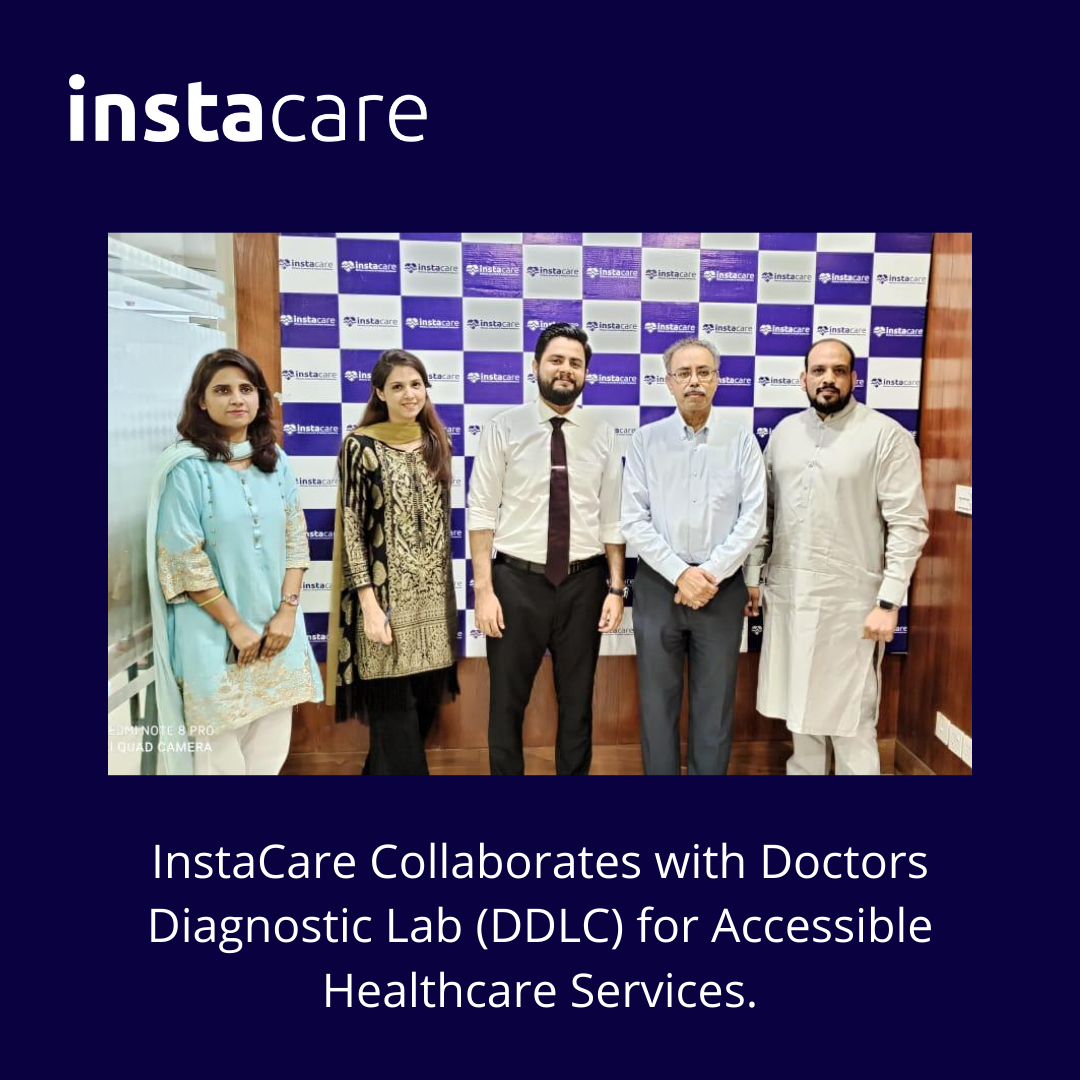
Lahore, Wednesday, August 19, 2020: InstaCare is a HealthTech organization that aims to innovate in the healthcare ecosystem and collaborate with relevant stakeholders including patients, healthcare professionals, institutions, and pharmaceutical companies to enable accessible and reliable healthcare for the masses. InstaCare has joined hands with Doctors Diagnostic Lab (DDLC) to move a step further in making healthcare accessible in Pakistan. The collaboration between InstaCare and DDLC will bring forward quality and timely diagnostic services with the convenience of home sample collection aiding our vision of making quality healthcare accessible across Pakistan. InstaCare will help Doctors Hospital in digitizing their lab through the DDLC application. Along with this, the app will also allow people to book online consultation and maintain health records. We are confident that through the partnership we will add another avenue for people to access timely healthcare delivery and reliable services. As a digital stakeholder in healthcare the ecosystem in Pakistan InstaCare is striving to help stakeholders in the industry go digital and grow their national footprint and add services in our platform as a one-stop healthcare solution. We hope to keep moving forward with the same passion and energy to create changes.
Governor of Punjab, Chaudhary Mohammad Sarwar on the occasion of the announcement of interim results of PROTECT Trial awarded InstaCare with a shield of appreciation for enabling digital healthcare services for the Trial. PROTECT Trial is the largest trial that is being conducted in Pakistan for the finding of Coronavirus treatment at the University of Health Sciences with its 10+ trial sites across Pakistan. InstaCare, an International Award Winning EMR/EHR Company InstaCare is working since 2015 in Pakistan to enable digital healthcare infrastructure in the country. Today the vision of InstaCare can be witnessed in over 5,000 medical practices across the country where medical practices have gone completely digital. InstaCare Telemedicine Software InstaCare Telemedicine Software is widely being used both nationally and internationally to provide access to healthcare services. With over 1,000 telemedicine practitioners in Pakistan, InstaCare is the largest network of telemedicine enabled medical practices.
Telehealth in Pakistan Helped 6000+ Patients During Lockdown After the COVID-19 Outbreak in the country, the supply chain has become a major challenge for the public as well as the government. From food items to medicines, everything is becoming difficult to access due to lockdown. Meanwhile, InstaCare came forward with an initiative called InstaCare Corona Response Unit – ICRU to help people by making healthcare services accessible and efficient. The platform has made online doctor checkup possible at your home by the use of telehealth in Pakistan. InstaCare is also taking online medicine orders with free delivery across Pakistan. You can even request an online lab test booking with free home sampling services through the platform. For the people who are concerned about medical issues during the pandemic, you can avail of free telehealth in Pakistan. So now lets discuss what is ICRU. What is the InstaCare Corona Response Unit – ICRU InstaCare has been known for its amazing work and contribution to introduce the services of telehealth in Pakistan for past many years. When COVID-19 Strikes Pakistan, 12 team members at InstaCare volunteer themselves to help the country to make healthcare remain accessible even in the hard times. While the company was closely studying the global as well as local stats so it was very much obvious that Pakistan will have to embrace lockdown in order to save lives but Team InstaCare was planning how to deliver care at doorstep during such time. Response unit that was started with 12 members started spreading all over Pakistan when some amazing doctors, organizations and healthcare workers joined the unit. Doctors from all 4 provinces volunteer themselves for this great cause. Organizations such as Sehat Karwan, ElajZone , Khyber Medical University (KMU), Pathodont Clinics and Akram Medical Complex played a vital role to provide relief to the patients anytime anywhere with telemedicine. Akram Medical Complex and InstaCare Started Telemedicine to help patients during COVID-19 CEO, Akram Medical Complex, Dr. Shehla Javaid came forward as hope to thousands of patients when she decided to make AMC a telemedicine center during the pandemic to help patients. InstaCare supported the vision by offering its best telehealth system. Khyber Medical University (KMU) and Government of KPK Started Telemedicine in Pakistan in collaboration with InstaCare Khyber medical university, A leading medical institute in Peshawar formed a telemedicine center with 50+ doctors to offer free online doctor checkups in KPK. Governer KPK , Announced the news on his official twitter handler: More than 50 doctors will be available on telephone & internet from 9AM to 6PM. Helpline No’s for Patients: 03171777516 & 03179797297 or can use KMU website. https://t.co/sK9qNjcCCY 2/2#PakistanFightsCorona #StayHomeStaySafe pic.twitter.com/gh0C9RbpWp — Shah Farman (@ShahFarman_PTI) March 26, 2020 Shah Farman, KPK Governor Inaugurated the telemedicine center at KMU, Peshawar: ICRU 10 Days Progress In just 10 days after the announcement of ICRU Free Services, People started responding. The response was massive so InstaCare called more volunteer doctors and medical students. Today ICRU is a family of 300+ People serving the nation with their best capabilities, following stats explains the progress of our team’s 10 days efforts: How InstaCare telehealth services work: You can visit InstaCare.Pk, a web portal where patients can instantly get online medical consultation with telemedicine. You can call at helpline number 03171777516 to talk to doctors if you have any medical related queries. You can download the InstaCare App from Google Playstore to order medicines or lab tests. Subscribe Youtube Channel for Live Sessions with Doctors so you can share your concerns with doctors while staying at home. Follow Instagram and Facebook for live updates and useful content. Read the blog to make yourself more aware of the situation and how to take better care of yourself and your loved ones. Prof. Dr. Javed Akram, Vice-Chancellor University of Health Sciences Reviews about InstaCare Dr. Javed Akram is a known medical professional with years of experience and is always known for his research work and dedication to enable the digital healthcare ecosystem in Pakistan. He praised the efforts of InstaCare services in telehealth in Pakistan as: Media Praising about Telehealth in Pakistan
Coronavirus is the immediate issue of our times. While the US is offering Germany tons of dollars to share the research regarding Corona, our very own virologist Dr. Idrees has manufactured corona kits in his own lab at Punjab University Lahore. He said in an interview to City 42 they have created this test kit through indigenous technology. It is yet to be confirmed that what exactly he meant by indigenous technology. During the conversation with the reporter, he said “Pakistan should not import kits. These kits are so expensive that our whole budget of health might get consumed.” As a solution, he proposed, “we should build our own kits. These kits cost only $5 and can test as much as 150 patients in a day.” When asked can he manufacture more, he said, “we are willing to join hands with the government and can create thousands of kits in a week.” But the same time, he advised that the government only share these kits to the labs that have BSL-2 (Biosafety level 2). Otherwise, it might infect lab workers, then their families, and so on. Adding to that he said, they are also working on the Corona vaccine which will get ready hopefully by the end of the week. One concern with the story is that the kits haven’t been tested yet. But Dr. Idrees has mentioned in the interview that they can start tests from even today. If that’s the case, then there are chances that vaccine will also be created soon.
Ayatollah Hashem Bathayi Golpayegani, who was 78, died two days after testing positive for the Corona (COVID-19) disease and being hospitalized, state news agency IRNA reported. The official represented Tehran in the Assembly of Experts, an 88-strong body of clerics that appoints and monitors Iran’s supreme leader. At least 12 Iranian politicians and officials, both sitting and former, have now died of the illness, and 13 more have been infected and are either in quarantine or being treated. The Coronavirus also killed a prominent economist and political activist, according to the semi-official news agency ISNA. Fariborz Rais-Dana, 71, succumbed to the illness after being hospitalized for six days, ISNA reported. Fariborz Rais-Dana, 71, succumbed to the illness after being hospitalized for six days, ISNA reported. A prolific writer with a Ph.D. from the London School of Economics, he had spent time in prison after being convicted of spreading propaganda against the system. According to the health ministry, the rising trend is due to the increasing number of tests being carried out. It says many patients started showing symptoms days after they were infected. Official tolls, which are given every 24 hours, have usually lagged behind reports by local media. Sometimes, these also have been contradicted by provincial authorities. Further, Iran is yet to impose a lockdown but it has temporarily closed Parliament, barred pilgrims from gathering at a holy tomb and postponed the second round of legislative elections. Officials have repeatedly urged citizens to stick to guidelines and stay at home to stop the coronavirus from spreading. Along with these, the total number of deaths in Iran has reached to 724. Iran is the third most Corona infected country in the world. Around 14,000 cases have been confirmed. Suspects and unreported are yet to be measured.
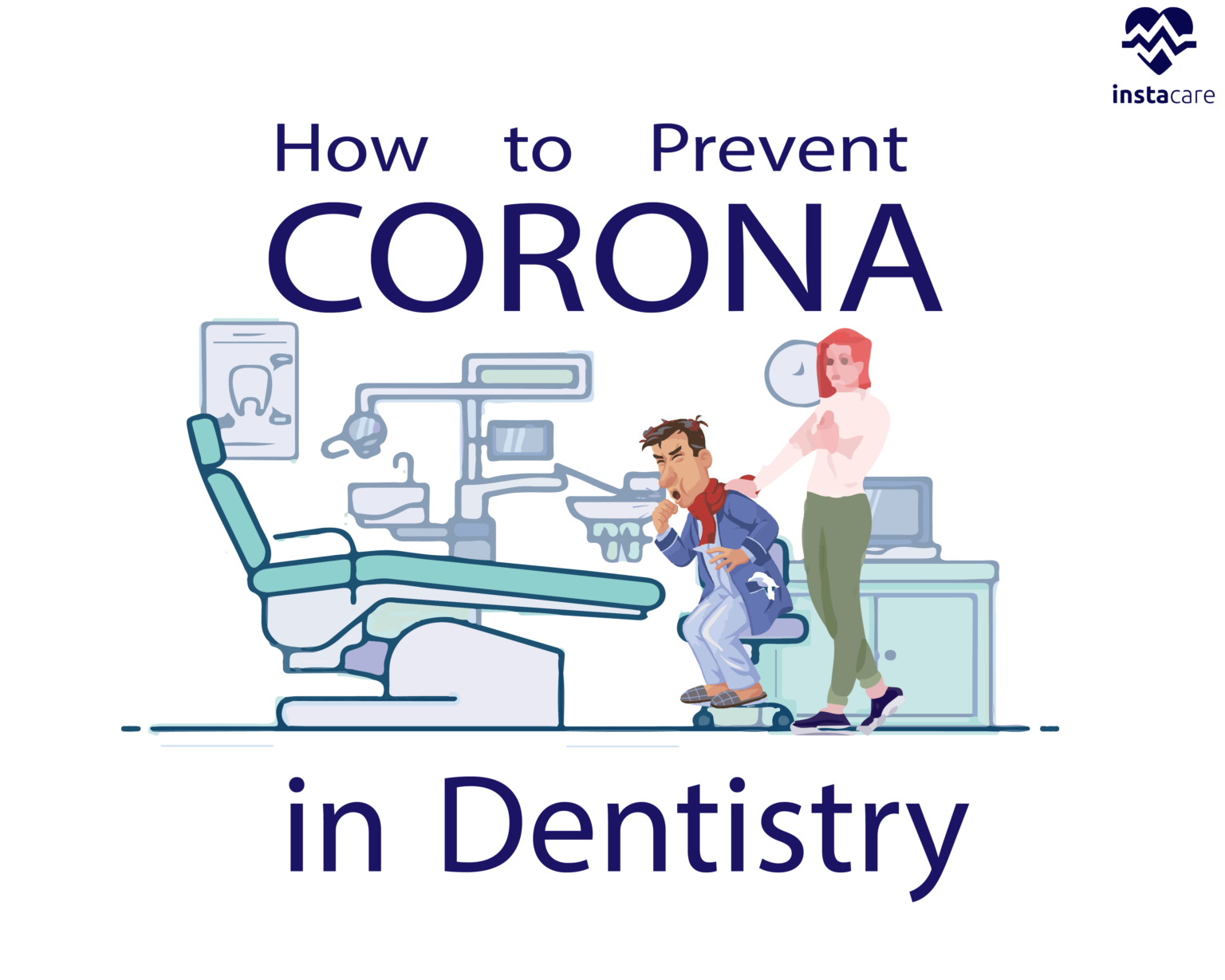
Can There Be Spread Of Corona Through Dentistry? Considering the situation worldwide, there are high possibilities that any kind of interaction between humans, animals or even objects contains a huge risk of the corona. Spread in 110 countries so far, it’s the immediate point of concern. As far as dentistry is concerned, being a profession that deals with the human mouth, it contains relatively more chances of spreading the virus. Corona through dentistry is something that is highly possible. The spread of Corona through dentistry According to research published in the International Journal of Oral Science, there are three major ways through which Corona can spread. These there are as following: Airborne Spread Contact Spread Contaminated Surfaces Spread Airborne Spread The dental papers indicate that numerous dental strategies produce pressurized canned products and beads that are polluted with the virus. Consequently, bead and airborne transmission of 2019-nCoV are the most significant worries in dental facilities and medical clinics, since it is difficult to maintain a strategic distance from the age of a lot of vaporized and bead blended in with patient’s salivation and even blood during dental practice. Notwithstanding the contaminated patient’s hack and breathing, dental gadgets, for example, fast dental handpiece utilizes rapid gas to drive the turbine to turn at high velocity and work with running water. At the point when dental gadgets work in the patient’s oral pit, a lot of vaporized and beads blended in with the patient’s spit or even blood will be produced. Particles of beads and pressurized canned products are sufficiently little to remain airborne for an all-encompassing period before they choose ecological surfaces or enter the respiratory tract. In this way, the 2019-nCoV can possibly spread through beads and pressurized canned products from tainted people in dental centers and emergency clinics. Contact Spread A dental expert’s continuous, immediate or circuitous contact with human liquids, tolerant materials, and defiled dental instruments or natural surfaces makes a potential course to the spread of viruses. Likewise, dental experts and different patients have likely contact of conjunctival, nasal, or oral mucosa with beads and pressurized canned products containing microorganisms created from a tainted individual and pushed a short separation by hacking and talking without a veil. Compelling contamination control methodologies are expected to forestall the spread of 2019-nCoV through these contact schedules. Contaminated Surfaces Spread Human coronaviruses such as SARS-CoV, Middle East Respiratory Syndrome coronavirus (MERS-CoV), or endemic human coronaviruses (HCoV) can persist on surfaces like metal, glass, or plastic for up to a couple of days. Therefore, contaminated surfaces that are frequently contacted in healthcare settings are a potential source of coronavirus transmission. Dental practices derived droplets and aerosols from infected patients, which likely contaminate the whole surface in dental offices. In addition, it was shown at room temperature that HCoV remains infectious from 2 h up to 9 days, and persists better at 50% compared with 30% relative humidity. Thus, keeping a clean and dry environment in the dental office would help decrease the persistence of 2019-nCoV. Preventing the spread of Corona through dentistry There are a few preventive measures that dentists must take to avoid any kind of transmission of Corona. A few of them are given as follows: Patient Evaluation If possible, make sure that you are aware of the patient’s history. With a person with positive Corona, it’s highly advised to be extremely careful. Use Instacare’s Telemedicine to have a complete medical session through a video call. This will reduce the chances of transmission. Hand Hygiene It’s been widely notified that washing hands regularly, significantly reduces the chances of virus transmission. Use a hand sanitizer in case you don’t have access to water. Personal protective measures for dental professionals Airborne droplet transmission of infection is the main route of spread, particularly in dental clinics and hospitals. Barrier-protection equipment is strongly recommended for all healthcare givers in the clinic/hospital settings during the epidemic period of 2019-nCoV. Like including protective eyewear, masks, gloves, caps, face shields, and protective outwear. Rubber dam isolation The use of rubber dams can significantly minimize the production of saliva- and blood-contaminated aerosol or spatter, particularly in cases when high-speed handpieces and dental ultrasonic devices are used. Mouthrinse before dental procedures Since 2019-nCoV is vulnerable to oxidation, preprocedural mouthrinse containing oxidative agents such as 1% hydrogen peroxide or 0.2% povidone is recommended, for the purpose of reducing the salivary load of oral microbes, including potential 2019-nCoV carriage. A regular mouthrinse is also recommended. Even after all these measures, make sure that you don’t interact unnecessarily. Even now, we know very little about it. So, keep your surroundings clean.
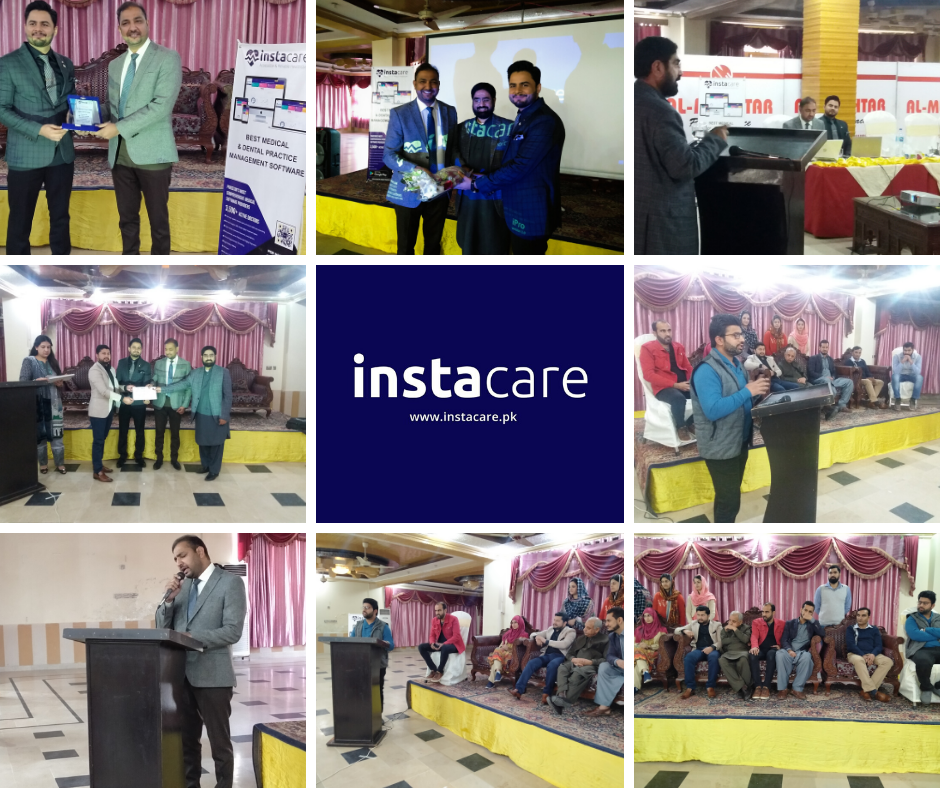
Pakistan Dental Association – PDA Chakwal Elections 2020 held on 6th December 2019 at Al-Mukhtar Royal Palace, Chakwal. The elections were co-organized by InstaCare as the beginning of its journey of healthcare digitization in Chakwal. The Results were announced by Dr. Arshad Mahmood Malik and are as the following: Results of PDA Chakwal Elections 2020 Dr. Farooq Ul Hassan, Elected as President of PDA Chakwal 2020. President Elect: Dr Ghulam Kibria Senior Vice President : Dr. Asif Hayat Janjuha Vice President: Dr. Shehzada Saqib General Secretary: Dr. Ehtasham Naseer Clinical Secretary: Dr. Adnan Zulfiqar Joint Secretary: Dr. Wajid hussain Press and Publication Secretary: Dr Adeeba Mahmood Finance Secretary: Dr. Fasih Ahmed InstaCare wishes all the newly elected candidates all the very best.
Mr. Bilal Amjad Founder & CEO InstaCare along his team met Mr. Zafar Iqbal Federal Minister of National Health Services Regulation and Coordination Government of Pakistan. Dr. Zafar Mirza served WHO as the Director of Health System Development at the Regional Office for the Eastern Mediterranean. He is a medical doctor with post-graduation in Public Health in Developing Countries from the London School of Hygiene and Tropical Medicine and a clinical stint in mental health. Both, Bilal and Dr. Zafar talked on a common vision of Accessible, Efficient and Affordable Healthcare Services in Pakistan to facilitate its people.