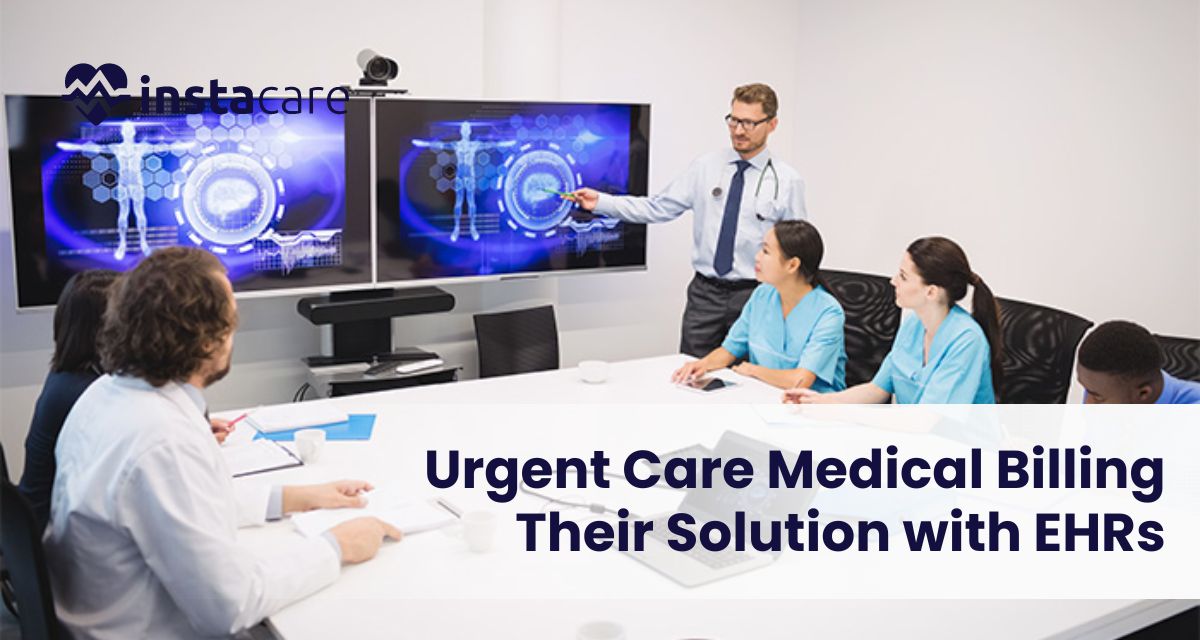
Top 7 Challenges in Urgent Care Medical Billing Their Solution with EHRs Urgent care centers have emerged as vital health care systems for the quick treatment of patients who are experiencing non-life-threatening illnesses. Irrespective of the role and valuable contribution of urgent care centers in health care delivery, such health care treatment centers stand at the receiving end while considering the challenges in managing financial operations, especially medical billing. Proper and accurate medical billing is not merely essential to attain financial stability, but it also ensures the smooth running of operational workflows and facilitates the maintenance of patient satisfaction. Here we discuss about the challenges in urgent care medical billing and their solution with EHR.. 1-Coding Accuracy and Compliance Medical billing demands the greatest level of accuracy in coding so that health services provided are properly documented and paid. If a coding is incomplete or inaccurate, it leads to claim denials, delayed reimbursement, and even violation of health care regulations such as the HIPAA-Health Insurance Portability and Accountability Act. Urgent care presents a great challenge in sustaining the accuracy of coding given the great turnover of patients and the immense array of services rendered. Among all the disparate and undocumented data that remains in a lot of organizations, EHR stands out as a very potent tool whereby techniques to increase coding accuracy and compliance can be applied. Updated coding guidelines and automated checks that assist health providers with choosing the most appropriate codes for services delivered are contained within most modern EHR products. 2-Timely Claim Submission Timely submission of claims is essential to the smooth operation of urgent cares since it provides a constant flow of income into the center. Slow claim submissions imply longer revenue cycles, larger accounts receivables, and strained finances. The conventional method of generating and submitting claims tends to be slow and error-prone, more so in fast-paced urgent cares. EHRs make the submitting of claims easier as it automates the creation, checking, and transmissions of claims to insurers, that is payers. That is accomplished by capitalizing on the inbuilt billing modules that capture every patient encounter in real-time, auto-filling of the claim forms, and running initial checks on completeness and accuracy. 3-Insurance Verification Insurance verification in patient care is one of the first measures that need to be taken in the entire medical billing process in order to make sure that the services offered to the patient are well covered under the reins of reimbursement. The traditional or manual processes of insurance verification are very cumbersome, time-consuming, and prone to errors. The error-prone nature of these techniques might be a cause of denials and lagging in payments against the claim. Immediate health care sectors are those sectors where immediate attention is given to the patients; that is why quick execution of the insurance verification process is mandate for speedy workflow and better customer satisfaction. EHRs have automated insurance verification technology built into their patient registration and scheduling modules. Each time a patient is checked in to an urgent care facility using an EHR, the system immediately draws the patient’s insurance information from live databases to determine coverage and the copayment or deductible requirement. Book Free Demo 4-Denials and Rejections Denial and rejection, being the most worrisome problems in medical billing, have to be rapidly pinpointed as to where the issues are and how to get over the same. Denial may happen for various reasons such as coding errors, missing documentation, or inconsistency in patient details. In immediate care centers, where the turnover of patients is pretty rapid and the disease profile of the patients also varies, effective denial management holds the key towards revenue integrity and ensures continuous operations. EHRs possess robust analytics and reporting capabilities that healthcare providers can utilize to assess trends in claim denials to pinpoint its causes in a root-cause manner, but with correction in mind. 5-Patient Payment Collection Collecting payments from patients is a core component of urgent care financial management, as it provides revenue capture and sustainability. Collecting payments at the point of service is, at times, very difficult in such environments where the encounters are short and limited to immediate medical attention. If payments are not captured in a timely or adequate manner, accounts receivable grow and urgent care providers face increased financial instability. Integrated payment solutions are another critical feature on offer; EHRs collect payments right from the point of care. Secure payment processing functions have been built into the system so that the providers can charge different credit/debit card types and mobile payments, thereby enabling the providers to use an integrated method for collecting payments instead of logging into other third-party payment gateways charging money for each transaction performed. 6-Regulatory Changes With every one of them, urgent care centers have to go through developing healthcare regulations and compliance requirements most of the time. This also might include changes in policies or updates in coding guidelines or even changes in reimbursement criteria that impact the billing and financial results at the end. Other than this, non-compliance with the established regulatory standards tends to be costly because it puts a health care provider at risk for penalties, audits, and reputational risks. EHR systems are designed in a manner that they dynamically evolve to reconcile regulatory changes, hence having already set functionalities that allow for robust compliance monitoring and conformance. The systems are given updates on a regular basis for the incorporation of newly introduced regulatory requirements and industry standards for the purpose of ensuring continuous compliance by urgent care providers with all laws that are federal and state-level dealing with healthcare services. 7-Integration with Revenue Cycle Management (RCM) Effective revenue cycle management is critically linked with urgent care financial performance and operational effectiveness. The RCM spans the patient care continuum, from appointment scheduling to the final payment collection, and hence requires smooth and bi-directional integration of clinical workflow with the Billings function. Inefficient RCM results in revenue leakage, increased administrative expenses, and reduced patient satisfaction. EHR systems today
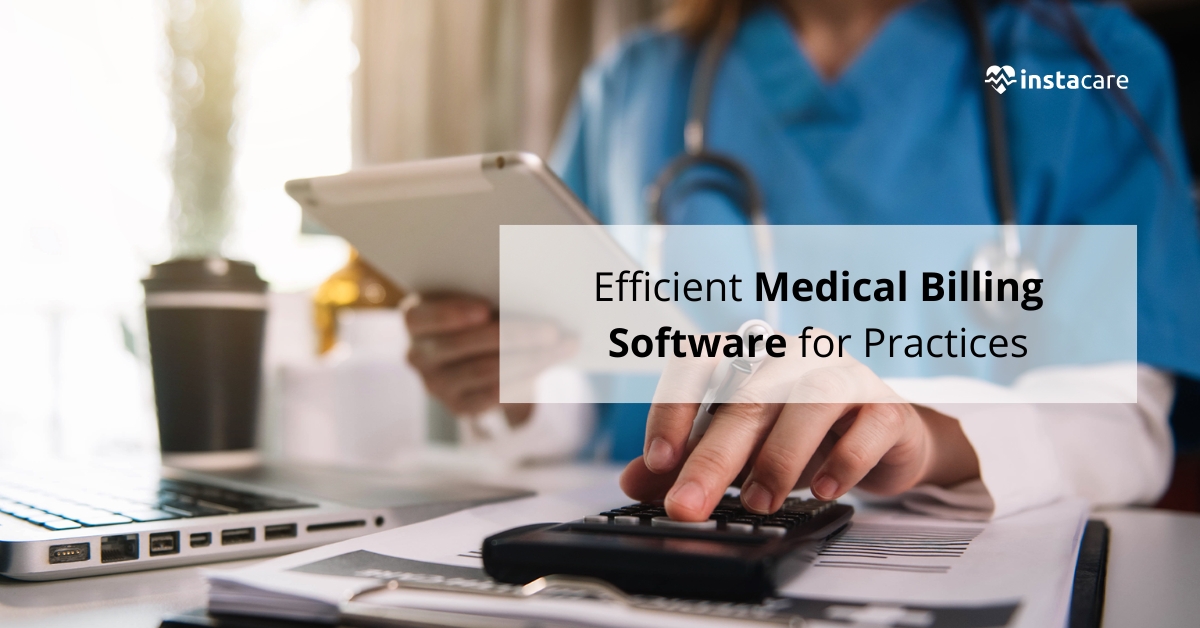
Efficient Medical Billing Software for Practices Are you a healthcare provider or office manager looking for the best medical billing software for your practice? You’re in luck! Today, there are various easy-to-use and efficient medical billing solutions to choose from that can save time and money while helping you maintain accuracy and security. From cloud-based systems to customizable options, the world of medical billing software is filled with amazing opportunities to streamline payment processing, automated patient payments, and data management. In this blog post, we will discuss the different types of medical billings software available – including what features make one program stand out against another – so your practice can make an informed decision when choosing the optimal solution. Overview of Medical Billing Software – what it is, how it works and why it’s important for practices Medical billing software is an essential tool for any medical practice looking to streamline their billing process and improve their bottom line. This software enables practices to create, submit, and track insurance claims electronically, reducing errors and increasing efficiency. With medical billing software, practices can also manage patient information and billing histories in one central location, saving time and reducing administrative costs. The importance of medical billing software is not only due to its practical benefits, but also because it ensures compliance with regulatory requirements and helps practices stay up-to-date with changing industry standards. By implementing medical billing software, practices can improve their revenue cycle management and focus on providing high-quality care to their patients. Book Free Demo Benefits of Using Medical Billing Software – ease of use, accuracy, time-saving, and cost-efficiency Medical billing software has become an essential tool for the healthcare industry, providing a range of benefits that cannot be ignored. With the use of a medical invoicing system, healthcare providers can simplify their billing process by reducing errors and improving accuracy. This not only saves time, but it also ensures that payments are processed efficiently, making it easier to keep track of revenue streams. In addition to accuracy and time-saving benefits, medical billing software also offers cost-efficiency as it eliminates the need for manual data entry and reduces administrative costs.With all these benefits, it’s no wonder that medical billing software is becoming increasingly popular in healthcare practices worldwide. Types of Medical Billing Software Available – cloud-based, onsite and hybrid solutions Medical reimbursement software is an essential tool for healthcare providers looking to streamline their billing and payment processes. With so many different types of medical billing software available, it can be difficult to choose the right solution for your practice. Cloud-based software is becoming increasingly popular, offering the flexibility and convenience of access anywhere, anytime. Onsite solutions provide greater control and security, while hybrid solutions offer the best of both worlds. Ultimately, the right choice will depend on your practice’s specific needs and goals. Regardless of which medical billing software type you choose, it’s important to select a reputable provider that offers robust features and responsive support to simplify your billing and reimbursement processes. Steps to Select the Right Medical Billing Software – research features, understand user feedback and compare pricing Choosing the right practice management software can be a daunting task, but it doesn’t have to be. Take the right steps to ensure you select the best medical billing software for your practice by starting with research. Make a list of features that are important to you and your practice’s needs. Then, take time to understand user feedback and reviews to see how the software is performing in real-world situations. Finally, compare pricing to ensure you’re getting the best value for your investment. All of these steps will help you make a well-informed decision and ultimately select the right medical billing software for your practice. View More: Streamline Your Medical Billing with Medical Billing Software Advantages of Automated Medical Billing – reduce paperwork, streamline processes and improve accuracy In today’s fast-paced healthcare industry, it’s no secret that managing financials can be quite the challenge. Fortunately, automated medical billing offers a solution – and not just any solution, but one that is efficient, precise, and simpler. By reducing paperwork, streamlining processes and improving accuracy, automated medical billing is well worth considering for healthcare financial management. Whether it be for a small clinic or large hospital, automated billing can help reduce stress, streamline the billing process, and increase overall financial productivity. Gone are the days of paper trails, lost receipts, and incorrect billings – it’s time to take the leap towards automated medical billing. How to Optimize Your Medical Billing System – implement best practices for billing process optimization Having an efficient medical billing system is critical to the success of any healthcare provider. With the right tools and processes, you can streamline your billing procedures, reduce errors, and ensure that payments are received promptly. One way to achieve this is by implementing best practices for billing process optimization, using state-of-the-art medical billing software. With this software, you can automate many of your billing tasks, making the billing process faster and more accurate. Additionally, you can easily track reimbursements, insurance claims, and patient payments, giving you greater visibility into your financial health. By optimizing your medical billing system, you can improve your cash flow, reduce risk, and focus on what really matters: providing high-quality patient care. Conclusion Thankfully, with the advent of efficient medical billing software, practices are now able to keep up with streamlining their billing processes. It is important for practices to remain knowledgeable about the ever-evolving advances in medical billing technology so they can make sure that they are utilizing the best possible option and fully maximizing profits. Moreover, having an adequate medical billing software ensures a practice has access to secure data storage – allowing them to readily track patient records no matter where they are located. Overall, this leads to better accuracy which translates into greater overall revenues for practices over time. Given the overwhelming capabilities of such software – it’s worth investing in

5 Reasons Why Your Practice Needs Medical Billing Software Many diverse organizations carry out medical procedures and provide patients with medical treatment. Healthcare facilities, clinics, doctor’s offices, and more are available. Some of these are charitable organizations, while the majority are for-profit businesses. If your company falls under this second group, you should consider getting some medical billing software. Let’s look at some more convincing ones since there are numerous instances where it is functional. 1- Required For Timely Reporting One factor you might desire software for your medical practice is reporting. You’ll probably also want to keep close tabs on the amount of money you’re making and where it originated. This is important because you’ll want to find redundant or wasteful regions. You can examine these weekly, monthly, quarterly, or yearly reports to streamline the admissions process, message, billing, etc., at your hospital or business. The easier it will be to enhance and increase, the more data you gather. In that manner, you may increase your revenue while guaranteeing patient satisfaction and preventing them from seeking treatment elsewhere. 2- Utilizing While Interacting With Insurance Providers Almost everyone who visits a hospital or a private clinic has some health insurance. You likely accept a variety of them, and submitting claims to each can be challenging. Book Free Demo This procedure becomes more straightforward when you place the appropriate medical billing software. Most or all of your claim filing can be automated. That implies that your personnel won’t have to make calls to insurance companies or worry about the specifics any longer. The software can be helpful if your claim is denied. You can use it to find out why the insurance carrier rejected the case and to also update the client on the progress of their request. Medical billing software can also be used to bill patients. If the patients would instead get their documentation that way, you can utilize it to print it off and mail it to them. 3- It Can Be Configured For Credentialing Services Your clinic or hospital undoubtedly has to regularly re-credential providers. Make sure also that every person in your organization is qualified to treat patients; otherwise, you risk facing legal action. You can accomplish it with your medical billing software. It can be used to perform error-free credentialing for a variety of non-physician professionals in addition to doctors. The medical billing software can keep records of and store the relevant paperwork. It can ensure that you do not lose any documentation you need to confirm the accreditation of a physician, pharmacist, or orderly. 4- To Create A Growth Roadmap At some time, if you run a clinic or a private practice, you might desire to grow. You might be able to gather the cash to do that, but it’s a drawn-out, complicated process, and the money is just one part of it. You can also benefit from your medical billing software in this way. The software may help you define your objectives, list them out, and provide a clear road map for getting wherever you want. 5- The software’s IT Services Are A Plus To Have Whenever you purchase software from a reputable vendor, you must also receive the necessary IT assistance. You can contact them and receive excellent support if you ever have security issues or if something does not function as anticipated. To get you began, many of these software packages offer Chatbots. They might respond to a query you have. You can switch to a live operator if they don’t. Finally Suppose you are thinking about getting any medical billing software. Then InstaCare is the best company. By offering cutting-edge management software, they directly collaborate with healthcare providers like physicians’ offices, hospitals, gyms, and fitness facilities. Visit https://instacare.com.pk/ to get further details.