
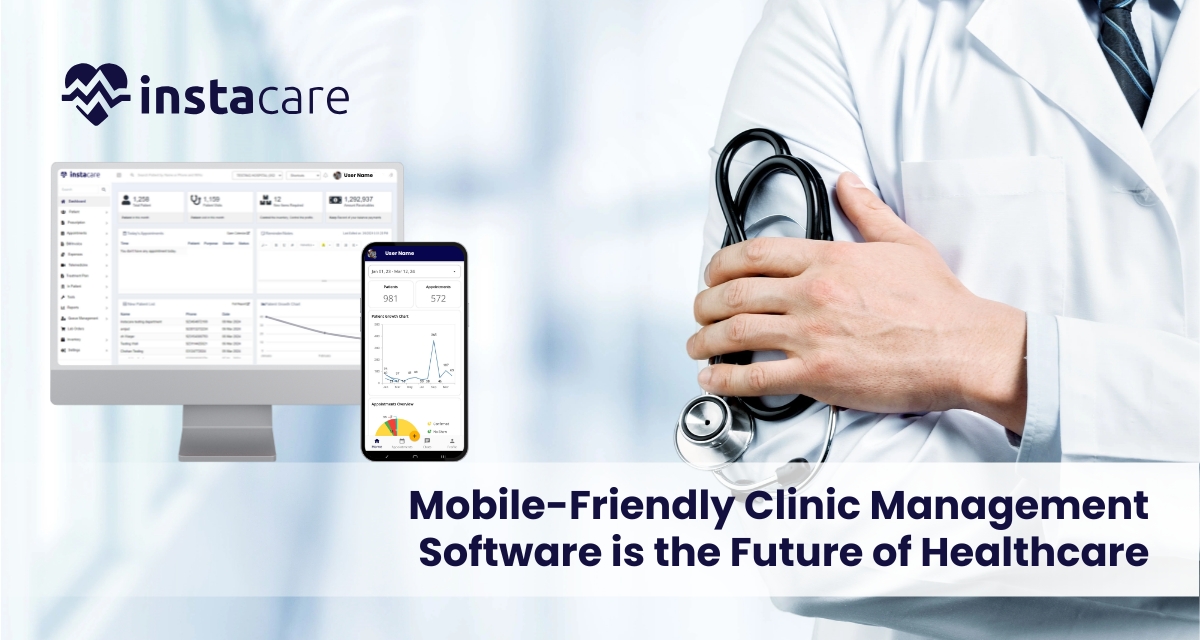
Technology dominates the management of healthcare needs in the ever-competitive environment because it supports efficiency, patient satisfaction, and generally the delivery of services. Closer to our topic, among the most remarkable trends that have emerged in the recent years can be noted the appearance of the clinic management software designed for mobile devices. Convenience has been on the foreground as healthcare providers realize the problems of accessibility, and more clinics now require mobile solutions. The following article looks at why clinics need mobile-friendly clinic management software, the advantages, elements, and implications for patient care. The Need for Mobile-Friendly Solutions Changing Patient Expectations It’s today when the most tech-savvy patients, better than ever, are shown more access to smartphones and tablets. It is their expectation that the availability of healthcare should be even easier and more convenient like other services they use each day. The patient desires to book an appointment with the health care providers as well as view his/her medical records and communicate all at his fingertips. A clinic management software that is mobile friendly addresses the above demand in terms of features that support patient engagement and satisfaction. Boosting Efficiency in Operations It is becoming a constraint to healthcare centers since they are being asked to deliver quality services with limited time and costs. With mobile compatible systems, the employees obtain the ability to schedule and coordinate appointments, update records, and collaborate remotely. These are enlightening since flexibility decreases the number of formalities to be filled and time spent on documentation limiting the time healthcare providers spend with patients. Key Features of Mobile-Friendly Clinic Management Software 1- Appointment Scheduling The mobile clinic management software allows the easy scheduling of appointments for patients using intuitive interfaces. Patients can thus choose their preferred times and receive reminders for their appointments, and even reschedule if needed. This is not only a patient-satisfaction improvement but also a calendar management optimization of the clinic. 2- Telemedicine Abilities Telemedicine has become more popular during the COVID-19 pandemic as well as many other innovations in the sphere of health care. Since many of its features are incrust within the mobile-friendly software that some healthcare providers use to offer consultations virtually, the tool enhances easy access and use of care wherever-again, created and used, especially for the patients in the remote areas or with restricted mobility. 3- EHR Accessibility The access of patient records anytime and anywhere by healthcare providers using mobile-friendly software will ensure that providers are always up-to-date, which means they can make more informed decisions and help patients achieve better outcomes. 4- Billing and Payments Mobile clinic management software allows for the smooth running of billing, where patients can pay their bills online. This helps the clinics have improved cash flow and, more importantly, enhances the patient experience with convenient payment options. 5- Patient Communication Effective communication is a key factor in patient satisfaction. Most mobile-friendly software includes messaging features that enable secure communication between patients and healthcare providers. This allows for fast responses to inquiries from patients, confirmations of appointments, and instructions for follow-up care. 6- Reporting and Analytics Mobile software will help in generating reports and analytics on the performance of the clinics, which will enable clinics to make data-driven decisions. Patient demographics, appointment trends, and revenue streams are key indicators of areas of improvement for healthcare providers, optimizing their operations. Book Free Demo Benefits of mobile-friendly clinic management software 1- Patient engagement is increased By adopting mobile access features, the software increases patient’s overall involvement in view of the fact that they can readily access their information as well as interact with providers. When a patient has a good feeling that they are part of the decision making process, they are most likely to follow the set treatment regimens and come for review. 2- Improved Workflow Efficiency Mobile solutions automate most of the administrative tasks and, therefore, free up more time for the staff for the core purpose: the patients. So, the general outcome would lead to a reduction in wait times or better patient experience. 3- Cost Savings Implementation of a mobile-friendly clinic management saves the clinic huge costs over some time. With automation of the administrative process and operation optimization of the clinic, one will incur less overhead while raising maximum revenue through better patient retention and satisfaction rates. 4- Data Security Improvement Modern mobile-friendly solutions focus much on data security, offering encryption and secure access controls of patient information. This feature helps the clinics adhere to HIPAA compliance, protecting their sensitive patient data. 5- Scalability With growing healthcare facilities, the management of them evolves. Mobile-friendly clinic management software is often scalable; this means that clinics can add features or accommodate more users as needed. This ensures that the software grows with the practice. The Future of Healthcare with Mobile Solutions The introduction of mobile-friendly clinic management software into healthcare systems marks a significant step forward in the direction of patient-centered care. Further development in technology will also be an important factor in enhancing the capabilities of such platforms to provide even more features that enhance patient experiences and operations. Embracing Innovation This world calls for becoming innovativeness if health service providers wish to survive. So doing the mobile-friendly solution not only helps clinics in filling their needs but also presents avenues for growth and survival further ahead. Role of the Healthcare Provider Healthcare providers play a great role in making this transition as smooth as possible. They need to invest in training and resources that will make the employees feel comfortable with mobile-friendly software. Thus, a well-trained team can exploit the whole potential of such tools toward better patient care. Conclusion Mobile-friendly clinic management software undoubtedly is the future of health care. Patient expectations are increasing, and a demand to run the system efficiently is inevitable. Thus, clinics would have to adapt to all these changes through technology. Thus, investment in mobile-friendly solutions can engage patients better and streamline workflow with the goal of health care

In today’s fast-moving health environment, efficient billing and payment processes are of the essence for the good financial health of clinics. Integrated CMS is a complete solution that can streamline these activities, reduce errors, save time, and lead to superior patient satisfaction. This article dives deeper into how integrated CMS can transform billing and payment in clinics and the best practices to consider for successful implementation. What is Integrated CMS? Integrated clinic management software is a single, all-inclusive application where many functionalities such as patient scheduling, electronic health records (EHR), billing, and reporting are integrated. It ensures that the errors in data entry are reduced and financial processes can be made more efficient. Elements of Integrated CMS Automated Invoicing: It generates an invoice for the patient’s visit and services rendered, thus avoiding manual entry and reducing error chances. Insurance Claims Processing: Automates claims submittal and tracking against reimbursements to get payment processed faster. Payment Processing: Allowing patients to pay their accounts online; thus, they get to pay hassle-free as well as in a secure way. Reporting and Analytics: Helps understand billing patterns, outstanding payments, and the clinic’s financial performance, which enables them to make informed business decisions. Importance of Streamlining Billing and Payments Reduce Administrative Burden Typically, billing and payment procedures are cumbersome, time-consuming, and require much administrative effort. If, however, the billing and payment procedure is embedded in a CMS, there are fewer administrative efforts; therefore less paperwork and more time by the staff to give attention to the patient. The system thus increases the possibility of manual errors such as entry of wrong data, due to the high risk involved in manual data entry into the system, which contributes to some billing errors, declined claims, and long payment processing periods. The integrated CMS minimizes the quantity of data entry since it fills up all billing information automatically from a patient’s record, thereby minimizing the chances of errors. Enhancing Patient Experience Easy and streamlined billing, combined with an integrated CMS, helps in enhancing the overall experience of patients. Patients like easy-to-understand simple bills and the convenience of online or mobile payments. Such a smooth process can boost patient satisfaction and loyalty. Book Free Demo How Integrated CMS Streamlines Billing and Payments 1-The ease of automated billing processes Automated billing saves time and reduces errors as it refers to the generation of an invoice by following rules and patient encounters. If services are provided to a patient, the CMS will automatically calculate charges and create an invoice for this patient directly to a patient or insurance company. Advantages Time-Saving Automated billing saves ample time compared to manual billing regarding time considerations. Consistency While using automated billing, the process of billing is consistent, and one complies with legal regulations. Faster Revenue Cycle: It accelerates the revenue cycle by eliminating delays in billing. Streamline Insurrance Claim Process The process of making and managing insurance claims can be complex and result in a default denial or delayed payments. An integrated CMS streamlines the process by allowing clinics to make electronic claims and monitor the progress. Benefits Less Denials: Thus, it reduces the chances of denials by ensuring proper coding and documentation. Accelerated Reimbursement: Enables accelerated reimbursement by making electronic submissions. Real-Time Tracking: Allows clinics to know whether their claims have been settled or not in real-time, which enables quick attention to arising issues. Easy Payment Processing CMS-integrated solutions make sure that patients have a choice of payment processing, which could be in the form of credit card payments, online bill payments, or even payment plans. Patients can make payments through secure portals, which improves the experience of the patients and raises the chance of timely payment. Advantages: Flexibility: The system will be flexible enough to offer various options of payment processing for a patient to select from their preferences. Reporting And Analytics The CMS can provide all clinics with reporting and analytics. The reporting and analytics features can then create reports on outstanding balances, payment patterns, and other revenue cycle metrics. Informed Decision Making: The clinic administrators make information-based decisions to improve the financial health of the clinic. Trend Analysis: It enables the clinics to determine trends in their account to optimize their billing and payment processes. Performance Monitoring: Continuous monitoring of financial performance against goals and benchmarks is made possible. Best Practices for Implementing Integrated CMS 1-Assess Your Clinic’s Needs First, through a detailed needs analysis with your clinic, identify exactly what your needs are for the integrated CMS. Consider the size of your practice, the count of your patients, and the number of complexities that go on in billing services. This allows you to make a decision that will fit within your operational requirements. 2-Involve key stakeholders Involve users themselves, including administrative assistants, billers, and healthcare providers, in the selection and implementation process. Their input and reaction will be useful when selecting a system that would be effective for all users. 3-Provide Comprehensive Training Provide comprehensive training to the whole staff once the CMS has been installed. Proper training will ensure that they know how to use the system properly to carry out their functions and thus ensure easy, error-free performance. 4-Monitor Performance Routinely After completing the merged CMS, monitor its performance regularly. Use reporting tools to determine the efficiency of billing, turnaround times for payments, and financial well-being. This ongoing review will inform you of where to adjust to enhance processes and optimize performance. 5-Conduct compliance updates That the integrated CMS you have installed is compliant with the regulations and standards of healthcare, as well as with the billing at the time you implemented it. It will be great to get constant updates on processes and software to keep your business aligned with those ever-changing laws and mandates. Challenges to Expect 1-Avoidance of Change Adoption is likely to be a fight, particularly from the staff, given that they have previously been accustomed to the traditional billing systems and, therefore, might suffer from withdrawal symptoms missing them. This may be