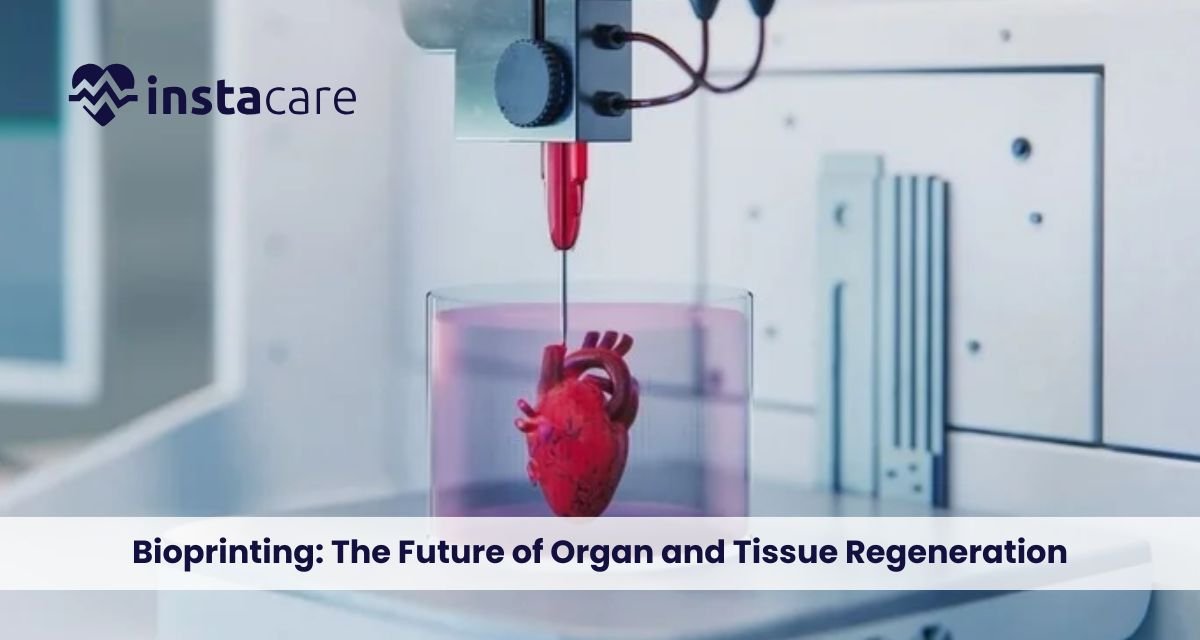
Bioprinting: The Future of Organ and Tissue Regeneration The recent decades have witnessed unparalleled advancements in regenerative medicine, and the advancement is most prominently seen with 3D bioprinting technology. The technology harmoniously brings biology, engineering, and cutting-edge advanced printing systems together to conceptualise and manufacture living tissue and even organs. The vision of printing functional biological scaffolds to repair or replace failed tissue is science fact and at our fingertips. As biomaterials science, printing technology, and stem cell technology advance, medical bioprinting can revolutionise the practice of medicine by revolutionising how doctors heal patients with organ failure, disease, or traumatic injury. What Is Bioprinting? Bioprinting is a form of 3D printing that attempts to print living organisms from living cells and biomaterials. Additive manufacturing is merely printing items with plastics, metals, or resins. Bioprinting consists of biocompatible scaffolds, growth factors, and cells. Bioprinting organs and tissues in layman’s terms is building living structures layer by layer that are copies of natural biological systems. The technology goes beyond the model of the human body to make research a reality. The technology is employed in individualised medicine, where implants and tissue grafts are tailored to suit the specific needs of a patient. With more companies venturing into bioprinting, more research is being stimulated to develop complex types of tissues like liver tissue, heart muscle, and even skin grafts to treat severely burned patients. How Bioprinting Works? To see the extent of this technology, first know how bioprinting is accomplished. It starts with the development of an imaginary model that is most often obtained through medical imaging such as MRI or CT scans. These are then copied in the form of a 3D blueprint to be printed. Some technicalities include defining the process of bioprinting: Preprocessing – Acquisition of patient-specific data, creation of digital model, and biomaterials and cell type selection. Printing – Printing layer by layer of the bio-ink containing cells, hydrogels, or growth factors. Post-processing – Printed structure incubated in a bioreactor to promote cell growth, vascularization, and maturation. The bioprinting process steps protocol enables tissues grown not just to replicate anatomy but even to work biologically. Materials Used in Bioprinting The most important aspect of effective bioprinting is choosing the material. The material, or Bioprinting materials, should be elastic, biocompatible, and also stimulate cell growth. Others that are actually hip are: Bio-inks: Immobilised live cells in hydrogels with proteins and growth factors. Synthetic polymers: Polycaprolactone (PCL) to form stiff scaffolds. Natural polymers: Gelatin, alginate, and collagen, to replicate the body’s extracellular matrix. Decellularised matrices: Cells are eliminated from the tissues, but not structural proteins. Material choice is based on the final use, bone, cartilage, vascular networks, or gross organ morphologies. Applications of Bioprinting The applications of bioprinting are many and continue to grow. Some of the major ones are: Tissue Engineering – Building bioprinted tissue such as cartilage, skin, and bone for regenerative medicine. Organ Transplantation – Functional kidneys, livers, and hearts for temporary use to cover the gap of donors. Drug Testing – Tissue printing to test the safety and effectiveness of drugs without any use of animals. Cancer Research – Tissue printing for disease modelling and treatment with new treatments. Cosmetic and Reconstructive Surgery – Personalised skin grafts, ear cartilage, and bone skeletons. Bioprinting medicine would then be able to close or minimise transplant waiting lists and even accelerate recovery of the patient. Book Free Demo Benefits of Bioprinting Advantages of bioprinting as compared to traditional medical procedures are many. The most significant advantages are: Personalization: Organs and tissue are printed to precisely match a patient’s anatomy as well as genetic requirement. Reduced Rejection Rate: Composed of a patient’s cells, thus rejection by the body is impossible. Faster Healing Rate: Implants and grafts made by computer are easily incorporated into host tissue. Ethical Benefits: No animal and human donor organ testing is required. Benchtop Benefits: Enables scientists to research disease processes with the help of high-definition tissue models. Not only avoiding horrid organ deficiencies during donation, but curing millions of patients worldwide, bioprinting can change lives. Restrictions and Limitations As promising as the Challenges of bioprinting is, there are a couple of extremely critical issues with bioprinting that must be addressed first before it stands any chance of being a standard medical procedure. Vascularization: They’ve already managed to print tissue seeded with networks of vessels to provide oxygen and nutrients. Organ Structure Complexity: Simple tissue like skin is straightforward to print, but a kidney or a heart is much more complicated. Regulatory Obstacles: Without international guidance and regulation for bioprinted product clearance. Expensive: Very sophisticated material, technology, and expertise are expensive. Scale-up Ability: Yes, very probable to produce lab-scale tissue but scale up to large-scale mass production is not feasible. It remains ostracized at the margins by scientists but will be years behind schedule by the time it becomes ordinary clinical therapy. Ethical and Legal Concerns The ability to produce living tissue also raises Ethical issues in bioprinting. They are man’s identity crisis, fear of cloning, and abuse of technology. For example, to whom does a right belong on a printed organ, the creator, the hospital, or the patient? Equity of access is also compromised. Reduced access to only affluent patients will augment health inequity. Governments and international agencies have to make sure there is some policy and guidelines for equitable, safe, and ethical access to this technology. The Future of Bioprinting There is hope for the Future of bioprinting. Scientists can already envision the day transplant lines become a footnote in books and personalised medicine the norm. The coming decade will see us standing at the edge of clinical trials for functional transplantable organs, ordinary use of printed tissue in drug discovery, and other advances in regenerative medicine. Besides it, Bioprinting vs 3D printing Organ distinctions will appear when industries overlap. Mechanical objects are