How to Maximizing Potential with Hospital Management System? In a country as vast and populated as Pakistan, accessible healthcare is an essential part of providing quality living standards. But due to the lack of investment in necessary medical infrastructure and facilities, widespread access to public health care can often be difficult for citizens. With the current situation in mind, exploring available hospital management systems that have potential to upgrade Pakistan’s healthcare capabilities could potentially be beneficial for its population. In this blog post, we will take a look at what life looks like with regards to health in Pakistan, before diving into how better hospital management system could revolutionize the nation’s overall standard of care. An Overview of Pakistan’s Healthcare System Pakistan’s healthcare system has evolved significantly over the years. It is a complex system that is still growing and requires improvement in several areas. The government has made efforts to develop and regulate the sector, but the result is still far from satisfactory. Hospitals and clinics struggle with shortages of essential medicines, equipment, and health workers. Nevertheless, there have been substantial improvements in areas such as maternal and child health, immunizations, and communicable diseases. Pakistan faces several challenges, including a high burden of non-communicable diseases, weak primary healthcare, a lack of health insurance, and inadequate funding. Addressing these issues requires a comprehensive approach that involves all stakeholders, including policymakers, healthcare providers, and citizens. Nonetheless, Pakistan has made progress in healthcare, and with continued efforts, there is hope for a better future. Book Free Demo The Need for Hospital Management System in Pakistan In Pakistan, there is an urgent need for a robust hospital management system that can effectively streamline and manage healthcare facilities. The country’s healthcare system is burdened by various challenges, such as inadequate resources, inefficient processes, and limited access to critical medical supplies. These challenges have negatively impacted the quality of care patients receive and the overall effectiveness of hospitals. However, implementing a comprehensive hospital management system can help overcome these challenges by automating and optimizing processes, coordinating patient care, and improving communication among healthcare providers. By leveraging the power of technology, hospitals in Pakistan can enhance their ability to provide high-quality care to patients and ultimately drive better healthcare outcomes. Benefits of Implementing Hospital Management System Implementing a hospital management system can bring numerous benefits, including improved patient care, streamlined processes, and enhanced communication between staff members. With the ability to manage patient records and medical histories electronically, medical staff can quickly access critical information, reducing the risk of errors and ensuring that patients receive the care they need. Additionally, the system can automate administrative tasks, freeing up staff time and resources to focus on providing quality care. With improved communication between staff and departments, accountability and efficiency are maximized, resulting in a more effective healthcare system. Overall, the implementation of a hospital management system can improve the quality of care, reduce costs, and increase patient satisfaction. View More: How Hospital Management Systems are Revolutionizing Healthcare in Pakistan? Challenges Faced During Implementing Hospital Management Systems in Pakistan The implementation of hospital management systems in Pakistan is a significant challenge due to several factors that affect the healthcare industry in the region. One of the fundamental challenges is the lack of digital infrastructure, which makes it difficult to integrate these modern systems into existing healthcare facilities. Additionally, inadequate IT training and awareness among healthcare professionals and limited financial resources also hamper the implementation process. Despite these challenges, the use of hospital management systems in Pakistan is becoming more widespread, and efforts are being made by the government and private sector to address these issues. With time, it is hoped that the implementation process will be smoother, making it possible to enhance healthcare outcomes and improve patient care. Exploring Different Solutions to Overcome the Challenges Overcoming challenges is something that we all must face at some point in our lives. Whether it’s a personal struggle, work-related stress, or a global crisis, taking a step back and exploring different solutions can help us overcome even the most difficult obstacles. The key is to approach the problem with an open mind and a willingness to try new things. Sometimes the solution may seem obvious, while other times it may be hidden beneath layers of complexity. By breaking down the problem into manageable pieces, seeking input and advice from others, and remaining flexible in our approach, we can find unique ways to overcome challenges and achieve success. Advantages of Using Hospital Management Systems in Medical Facilities in Pakistan In today’s ever-evolving world, hospital management systems are becoming increasingly important for medical facilities in Pakistan. With the advent of advanced technology, the healthcare industry has undergone significant changes, and hospital management systems have become a valuable tool to streamline hospital operations. These systems aid in patient care, resource use, scheduling, and financial planning, resulting in improved efficiency, cost-effectiveness, and patient outcomes. In addition, hospital management systems allow for better communication and collaboration between departments while reducing the risk of errors caused by manual record-keeping. Overall, the advantages of implementing hospital management systems in Pakistan’s medical facilities are undeniable and can significantly enhance the quality of healthcare delivery in the region.
10 Reasons Why Hospital Management Software Is Helpful In The Healthcare Industry For some time now, the application of artificial intelligence in healthcare has been making headlines. There is indeed more to it than just talking about medical robots every time. An automated system in healthcare is a prime illustration. Various software programs that encourage efficiency in delivering medical services constitute automation in the healthcare industry. Modern methods and technologies are used in this technology for efficiency. They support your loved one’s remote safety, security, and health monitoring. In light of this, we will outline the twelve benefits of healthcare automation for patients and healthcare service providers. More Fast Data Retrieval The production of data is an essential component of health care. EHR systems are now being enhanced to produce data instantly. The patient experience will be improved, and the data extraction procedure will be increased. In addition, medical professionals will quickly access the necessary data when required. Improved Ordering The ordering procedure was complicated and drawn out. A single order with an HER machine requires many clicks to execute. Predictive AI technology, however, can significantly improve ordering process efficiency. Faster Billing AI in revenue applications can accelerate the regeneration of bills. Additionally, this reduces the time needed to deliver patient bills, increasing client satisfaction. Disease Early Detection Patients benefit from early detection in several ways. Early diagnosis and therapy can stop the spread of the illness. It is simpler to identify a patient with a particular ailment because of automated systems in healthcare. This typically occurs before the onset of symptoms. Rapid And Accurate Medical Diagnostics When making clinical decisions, especially for those with severe conditions, time is of the essence. A patient is more likely to develop worse or die from the condition if the diagnosis is delayed. Health professionals are also prone to errors that produce false outcomes when they rush the procedure. However, the automated diagnostic process from clinic management software makes quicker and more accurate findings. Providing Better Quality Care Health care professionals can give improved services thanks to clinic management software automation. These include improved patient care, enhanced productivity, and patient data retrieval. When needed, patient information is always available. This simplifies the care giving process. Patient indexing, data entry, and medical history are a few of these. Healthcare automation enables doctors to keep an eye on their patients, remind them of follow-up visits, and speed up billing. Improved Patient Participation & Management Today, the majority of patients utilize mobile applications to boost engagement. Mobile apps for services make managing patient care more accessible. They simplify scheduling appointments, reviewing patient records, and paying hospital bills. Patients may communicate with doctors and get health advice through mobile applications. Minimum Errors Simple errors in the delivery of healthcare can be pretty expensive. Due to fatigue and inattention, doctors are prone to making errors. With automated machinery, this isn’t the case, though. Electronic systems can help healthcare practitioners provide prompt and effective treatments. A computerized system is more efficient and eliminates room for error. Solutions To Safer Treatment A more precise diagnosis reduces the possibility of consequences from patients receiving incorrect care. Patients receive the best care, and doctors feel confident in their recommendations. The possibility of medical negligence resulting from a false diagnosis is likewise remote. Automation lowers the number of medical malpractice cases, benefiting patients by saving them time and money. Enhanced Communication Healthcare automation also improves communication between patients and medical professionals. For instance, most patients forget their appointment dates and miss them. However, with an appointment reminder, the frequency of patients skipping appointments is lowered. Conclusion To execute implementing healthcare automation, you are needed to first think about patient engagement. For the best-automated hospital management software, you may contact https://instacare.com.pk/, the best hospital management software company.
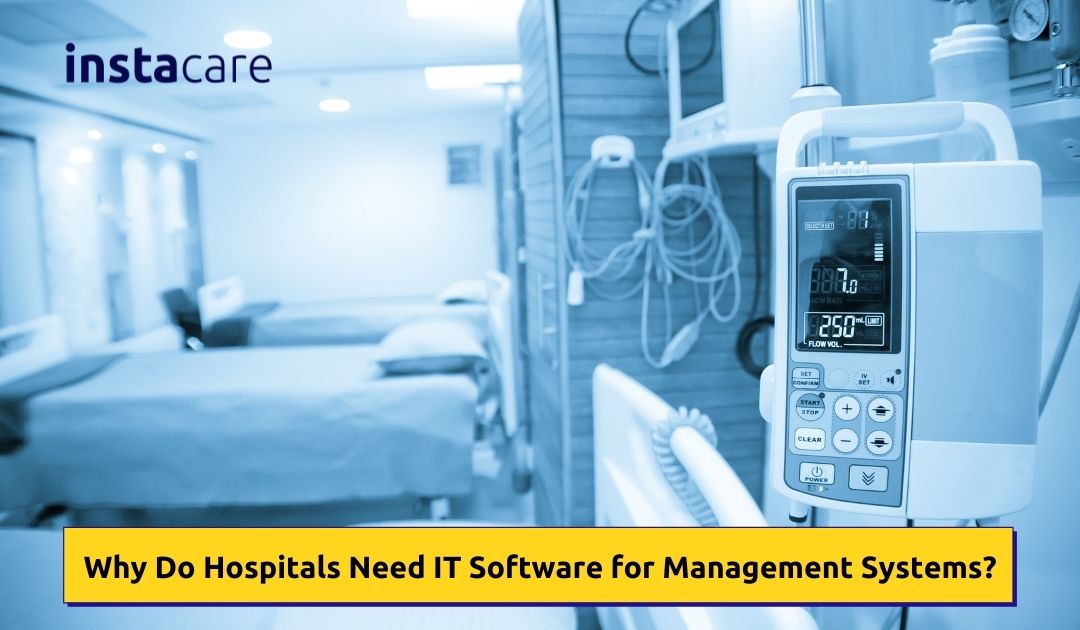
Why Do Hospitals Need IT Software for Management Systems? Nowadays IT software is most important for hospital management systems. This software better the experience of patients by making use of better systems for decision making. Through this software hospitals and clinics manage operations, increase patient retention and manage financial operations and many more. In this software, you can add the health record and the revenue cycle. Hospitals and healthcare facilities improve the quality of healthcare services, reduce operating costs, and improve the revenue cycle by using such hospital management systems. What are the benefits of IT software for hospital management systems? . IT software for hospital management allows easy access to patients’ data to save records which include patient name, gender, age, and health information. This software improves the ability to access such data remotely. . This software helps authorities of the hospital to make policies regarding developing comprehensive health. . Its software efficiently engenders the running of finance, the diet of patients, and also the distribution of medical aid. . This software manages the inventory system which includes the information of hospital stocks. You can also check the detail about the stock is in the case of misplacement and any theft. . This software reduces transcription errors and duplication of information entries. . This software also reduces the error caused by handwriting. . IT software for hospitals authorizes business intelligence modules to provide valuable insights into hospital functions and the standard of patient care. . IT software for hospital management offers modules like patient registration, appointment, outpatient management, inpatient management, billing, laboratory and pharmacy management, and many more. . IT software for the hospital also improves the healthcare facility and the experience. . It also improves the interaction between doctors with their patients. . This software also reduces the expense of paper and improves safety. Which company provides the best IT software for hospital management in Pakistan? InstaCare is providing customizable, comprehensive, and integrated IT software for hospitals in Pakistan. This software also gives alerts and text messages to the doctor and the patients to improve the quality of patient care. This hospital management software helps you to be aware of revenue streams, patient records, and other critical metrics in real-time at your fingertips.
- 1
- 2