

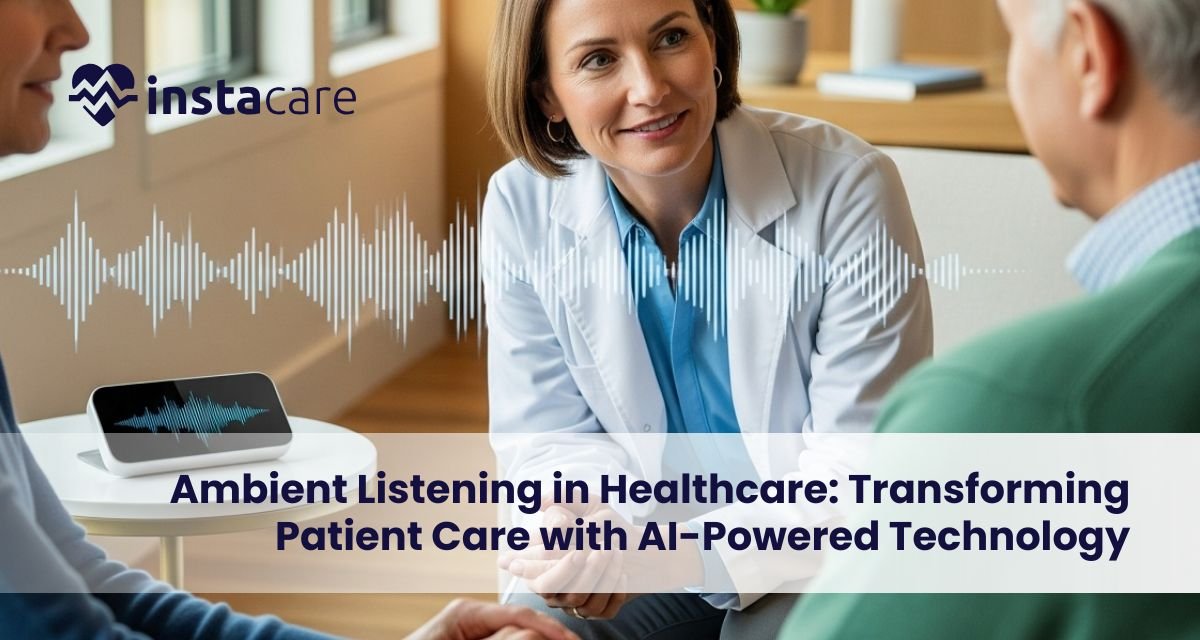
Ambient Listening in Healthcare: Transforming Patient Care with AI-Powered Technology The healthcare sector is being rapidly transformed by digital technology. Telemedicine to electronic health records, the focus has always been on patient outcomes, effectiveness, and accuracy. The most fascinating of the newer ones is ambient clinical listening technology. That allows health professionals to have automated recording of conversations that occur during doctor consultations, convert them into templated notes, and enter them directly into patient records. While other methods consume hours of tedious by-hand note-taking, ambient listening utilizes NLP and AI to record doctor-patient interactions. This keeps doctors out of additional computer time and more patient time. Hospitals, clinics, and startups now test this approach as a way to curb physician burnout, improve patient satisfaction, and reduce administrative work. What Is Ambient Listening in Healthcare? Ambient listening care means the utilization of artificial intelligence-based systems to listen and comprehend the natural flow of conversation among healthcare providers and patients. The systems generate clinical documentation automatically without any need for healthcare providers to dictate or type anesthesiologist notes post-visits. For example, while consulting, the AI logs patient symptoms along with physician recommendations. It then transforms all of this into a structured clinical note to be viewed and approved by the physician. The outcome is a seamless and precise workflow. To doctors, it’s a game-changer. Ambient listening for doctors is equal to not being obsessed with monotonous note-taking anymore, but with patient care. To patients, it is a more ordinary conversation free from the intrusions of continual typing or note-taking. How Ambient Listening Functions? Ambient listening technology brings together sophisticated audio capture with AI processing. This is how it generally operates: Audio Capture – Software-based units or secure microphones record talk in real-time. Noise Reduction – Background noise is filtered out so that only significant dialogue is translated. Speech-to-Text Translation – NLP translates the spoken words into text. Contextualization – Medical terminology, patient symptomology, med orders, and follow-up treatment are identified by AI software. Note Organization – The text is organized in a structured format into usable notes appropriate for electronic health records (EHRs). Physician listening – Doctors can quickly review and sign off on the notes, conserving precious time. Next-generation Ambient listening AI tools are trained on massive databases of medical vocabulary, clinical protocols and diagnostic protocols. This makes them very accurate, even in sophisticated medical conversations. Ambient listening for medical transcription is quicker, less expensive, and less prone to mistakes than with previous dictation equipment. Book Your Free Marketing Consultation Advantages to Healthcare Providers Benefits of ambient listening in healthcare, particularly for doctors. Less Administrative Time – Doctors will spend hours a day documenting EHRs. Automation frees them from this time. Fewer Burnout Cases – Among the leading reasons for administrative burden is physician burnout, studies have found. Ambient listening diminishes redundant work, which results in more job satisfaction. Higher Accuracy – Less handwritten or memory-based errors are made through ambient listening for clinical documentation. Higher Productivity – Physicians can see more patients in a day without sacrificing quality. Seamless Integration – Notes generated by AI can be seamlessly transferred into EHRs, hence the patient information is more accessible across departments. In healthcare environments, it is especially crucial because it has a direct impact on patient outcome. By eliminating clerical burdens, ambient listening allows clinicians to concentrate on diagnosis, treatment, and patient relationships. Advantages for Patients For the patient, ambient listening improves the entire healthcare experience. Improved Attention from Physicians – With reduced distraction, physicians can maintain eye contact, listen closely, and develop greater trust. This enhances ambient listening and patient satisfaction significantly. Accurate Medical Records – Computer transcription allows for proper recording of symptoms, histories, and treatment with lesser possibility of prescription or diagnosis errors. Improved Communication – The patients are heard when physicians are not typists’ fingers flying on the keyboard or dictating words to be spoken back to them. Faster Service – Since the notes are being created in the moment, patients receive faster follow-ups, lab orders, or referrals. Remote Care Benefit – With Ambient listening in telehealth these days, patients receive quality care from afar and AI does proper and accurate documentation. Patients end up being richer from safer, more trustworthy, and more personalized healthcare experiences. Challenges and Concerns There are issues despite the promise of ambient listening. ● Data Privacy and Security Confidentiality of patients is of utmost importance. Systems are required to meet strict regulations, i.e., ambient listening and HIPAA, to preserve confidential health information. Violation would break trust and incur legal consequences. ● Accuracy Limitations AI systems are sophisticated, yet there may be mishearing of medical terminology, accent, or dialect. Ongoing training and doctor backup are required in order not to miscommunicate. ● Implementation Costs Small settings find it hard to commit to ambient listening equipment. Costs are for software, system integration, and staffing training. ● Provider Adaptation Doctors used to taking notes will be resistant to the new equipment at first. Training and effect demonstratives are needed to close this gap. ● Ethical Issues Some people will be uncomfortable with being taped, even where information is protected. Policies of transparency and consent need to be devised. Future of Ambient Listening in Healthcare The future for ambient listening in healthcare is bright. With technology that incorporates AI, accuracy and efficiency will be even improved. Integration with Wearables and IoT – Suppose AI devices record health talks in smart homes and update clinical records automatically. Expansion to Other Specialties – Although employed now in primary care and general practice, Ambient listening healthcare examples demonstrate that it will be used for specialties such as psychiatry, emergency care, and the management of chronic disease. Predictive Analytics – In addition to documentation, AI has the capacity to analyze talk in an attempt to identify predictive indicators of disease in advance, giving preventative treatments.
Healthcare Consumerism: Trends, Benefits, Challenges & Future in Patient Care Healthcare is being reformed in its very foundation. Patients no longer tolerate being passive recipients of medical care. Instead, they desire to be empowered, involved, and informed to make decisions about themselves about their health. This new trend of healthcare consumerism has transformed the delivery, buying, and evaluation of care. Above all, the Healthcare consumer experience is convenience, value, and transparency and creates a paradigm under which patients are enabled as consumers who have the power to make a selection between providers, treatments, and services. What is Healthcare Consumerism? Consumerism in healthcare is about removing power from the providers and placing it in the hands of patients, giving people access to the information and resources they require so that they can make decisions about their care. It’s everything about Patient empowerment in healthcare, where making informed decisions is the norm and not the exception. Patients can shop around so that treatment plans can be evaluated, get second opinions, and compare prices before deciding. In comparison to the classic model of health care, centered on cure after disease, consumerism in health care is based on prevention, wellness, and lifestyle modification. Consumers/patients are able to choose quality, price, or convenience, as they might for other things in their life, for instance, a vacation or shopping. In its simplest terms, what this is all really about is building trust, being honest with patients, and having them feel heard when their treatment is being decided. Key Trends in Healthcare Consumerism Healthcare is changing at the speed of light, and some of the healthcare consumer trends more accurately describe the shift: ● Telemedicine and Virtual Care The pandemic accelerated the use of telehealth, where patients may be examined by a physician from home. It was a luxury then but is now the norm. ● Tailor-made Care Based on Data Genetics, AI, and data analysis are among the new technologies that support physicians in formulating tailor-made treatment plans based on individual requirements. ● Wellness and Preventive Orientation Customers are interested in preventive care services like lifestyle management, meal planning, and exercise tracking. Preventive care reduces long-term healthcare expenditure. ● Healthcare Cost Transparency Required The patient should receive open information regarding the cost of treatment. Healthcare cost transparency lowers comparison between clinics, hospitals, and procedures prior to making a choice to comparison of any other service. ● Emergence of Digital Tools The merging of consumerism and health in today’s digital age is certain. Wearable technology, cell phone apps, and patient portals allow patients to monitor their progress and stay engaged with providers. ● Shift to Value-Based Models Value-based care and consumerism are based on outcomes generated instead of procedure volumes. Patient-preferred healthcare systems pay providers for improved outcomes. Benefits of Healthcare Consumerism Both providers and patients have gained monstrous dividends with the shift towards consumer-directed care. The benefits of healthcare consumerism are as follows: ● Enhanced Power of Decision-Making Rating, review, and feedback on how patients can now measure quality of care and select the best possible providers is given to them. ● Enhanced Consumer Healthcare Experience After higher-level service, patients have seen easier scheduling, billing, and communication, and greater patient satisfaction at each touch point. ● Increased Transparency and Trust Improved cost and outcome information allow patients to be more informed about decisions and less frightened by surprise bills. ● Other Patient Engagement Initiatives Physicians are using applications, reminders, and Digital health and consumerism technologies to directly engage patients in their care, with better compliance and outcomes. ● Better Health Outcomes Educated and engaged patients are more likely to follow through on treatment orders, keep up preventive care, and self-manage chronic illness more effectively. ● Competitive Healthcare Systems Increased consumerism compels providers to improve their level of performance, which means improved quality of care for the system overall. Book Your Free Marketing Consultation Challenges of Healthcare Consumerism In spite of the promise of the movement, some Challenges of healthcare consumerism must be addressed: ● Unequal Access to Resources Patients do not have an equal access to technology, internet connection, or quality healthcare services, and this inhibits equality. ● Information Overload Most of the health information disseminated on the internet is too much for the patients and produces misreading of information or dangerous decision-making in a position of ignorance. ● Higher Cost of Technology Technology and healthcare consumerism adoption within the healthcare industry requires investment in electronic health record, telehealth systems, and AI solutions that are expenses for small providers. ● Threat to Data Privacy The spread of application with electronic tools has led to rising threats of data violation and misuse of individual medical information. ● Resistance by Profession and Culture Patterns of consumerism will be resisted by health professionals because they prefer evasion of hierarchical structures. The Future of Healthcare Consumerism Healthcare consumerism looks bright in the future with technology, policy, and patient expectation on the move. Healthcare transparency for consumers will enable patients to shop their providers by cost, outcomes, and patient satisfaction. Impact of consumerism in healthcare will make providers more efficient, go digital, and prioritize outcomes over volume. On the horizon are the following trends: ● Expansion of Telehealth Networks Remote therapies will flourish, supported by advanced chronic disease monitoring systems. ● Blending of Wearable Devices Intelligent wearables will provide real-time feedback to physicians, which will trigger follow-up, individualized treatment adjustments. ● Data-Driven Personalized Medicine Artificial intelligence and genetic screening will lead to ultra-personalized health solutions. ● Increased Patient Choice in Health Care Patient choice in healthcare will have more power to influence the choice of providers, insurance, and care delivery platforms on price as well as the quality of services. ● More Powerful Value-Based Systems Outcome-based care systems will prevail, where the payers will remunerate the providers based on the quality and effectiveness of care instead of the
Ambulatory Care: Definition, Services, Benefits, and Examples Healthcare provision is today a vastly transformed experience that offers patients simpler, streamlined, and specialized treatment without overnight hospital admission. Ambulatory medical care is a fresh and fast-evolving field that is rapidly gaining significance because it allows patients to be diagnosed, treated, and followed with no overnight admission. It is centered on convenience, cost-effectiveness, and patient care and remains one of the key pillars of health systems in current times. From specialty clinics to ambulatory treatment centers, these centers have all kinds of services, from preventive check-ups to sophisticated surgical procedures. What is Ambulatory Care? What is Ambulatory Care? In short, ambulatory care is any form of medical intervention or service rendered to a patient who does not require an overnight stay in the hospital. It is also called outpatient care, where patients visit a facility, receive treatment, and are sent home the same day. It can be anything from routine consultations to sophisticated diagnostic tests and surgery conducted in ambulatory surgery centers. According to the Ambulatory care definition, it focuses on giving safe, effective, and timely medical care without prolonging hospitalization. It can be provided in other alternative places such as ambulatory care clinics, doctor offices, urgent care centers, and specialty clinics. Types of Services under Ambulatory Care Ambulatory health care services are diverse and based on patients’ needs. They are classified as follows: 1. Primary Ambulatory Care Primary ambulatory care is made up of check-ups at regular intervals, prevention screening, and management of chronic illness. Services provided here include vaccinations, blood pressure checks, diabetes management, and health education. 2. Specialist Consultations Ambulatory care clinics also accept patients for specialist consultations such as cardiologists, dermatologists, or neurologists. Such consultations usually involve diagnostic workups and follow-up. 3. Diagnostic Services Most ambulatory care centers do X-rays, ultrasounds, MRIs, and lab tests. They can provide results immediately so that the treatment can be provided simultaneously. 4. Ambulatory Surgery Some surgeries like herniorrhaphy, endoscopy, cataract extraction, and orthopedic surgery, are conducted in ambulatory surgery centers. It is not a hospitalization but provides high-quality of care. 5. Urgent and Emergency Care Other ambulatory care clinics handle minor emergencies such as breaks, cuts, and burns. These are suitable for patients who need urgent care but do not necessarily need to be admitted as inpatients. 6. Rehabilitation and Therapy Certain of the services such as physical therapy, occupational therapy, and speech therapy are ambulatory patient services in which healing and overall improvement is involved. 7. Preventive and Wellness Services Among them are weight management programs, smoking quitlines, and diet counseling to help patients maintain their health. Benefits of Ambulatory Care The benefits of ambulatory care are more than its convenience. It is a cost-effective, patient-focused way of providing health care. 1. Convenience and Accessibility Patient Management Software can fix an appointment as per the patient’s convenience without waiting and spending on transport costs. 2. Cost Savings It is cheaper than inpatient treatment since there is a lesser cost of an Ambulatory care facility and staff. 3. Fewer Hospital-Acquired Infection Opportunities Since the patients are present at the health care centers for fewer hours, they are subjected to hospital-acquired infection for fewer hours. 4. Faster Recovery Treating them with an ambulatory care center, patients are sent home the same day, which in a majority of cases results in faster recovery at home. 5. Customized Treatment With professional healthcare personnel like ambulatory care nursing practitioners, the patients are attended to according to their respective statuses. 6. Efficient Usage of Resources More health conditions are medically treated within a shorter time, efficiently utilizing resources and preventing hospitals from getting saturated. Book Your Free Marketing Consultation Ambulatory Care vs. Inpatient Care Ambulatory care vs inpatient care is crucial to know to make informed decisions regarding healthcare. Ambulatory care is for patients who can be safely sent home after treatment is completed, while inpatient care is hospital overnight stay for at least one night. Typically, ambulatory care is less expensive, quicker, and easier, and inpatient care is required for the more severe diseases that have to be monitored constantly. Ambulatory care involves physical therapy, minor procedures, and diagnostic studies. Inpatient care involves intensive care, major surgery, and post-operative observation. This is how the line splits for the providers and patients to choose the best treatment option by medical need and case. Who Can be Treated by Ambulatory Care? Ambulatory care is suitable for a large population. Patients of chronic diseases – Diabetic, asthmatic, or hypertensive patients are managed with follow-up and preventive examination at a regular interval. Postoperative patients – Those who require follow-up after discharge can choose ambulatory care centers for observation. Ease-seeking patients – Busy lives like ours prefer outpatient treatment, which does not disrupt life. Preventive health seekers – Those who worry about early detection of disease and health receive primary ambulatory care services. Mild illness or injury cases – Non-life-threatening conditions are treated well in ambulatory care clinics. With a focus on quality care, accessibility, and convenience, ambulatory care is ideal for those patients who do not need to be hospitalized overnight. Conclusion Ambulatory care has revolutionized the face of medicine by offering quality treatment within the reach and accessibility of everyone. Either through the avenues of ambulatory care centers, specialty clinics, or ambulatory surgical centers, it allows patients to benefit from immediate medical treatment without the hassle of lying on a hospital bed. The divergence of ambulatory care services, ranging from preventive health programs to complex surgeries, is a reflection of its versatility and patient-friendliness. For others interested in the distinction between inpatient and ambulatory care, it is an issue of medical necessity. But for others, ambulatory care is a less expensive, more convenient, and safer route to wellness and recovery. As the services become more formalized for ambulatory patients, the future of Ambulatory healthcare services shines brighter, is more pliable, more efficient, and available to all. FAQs 1.
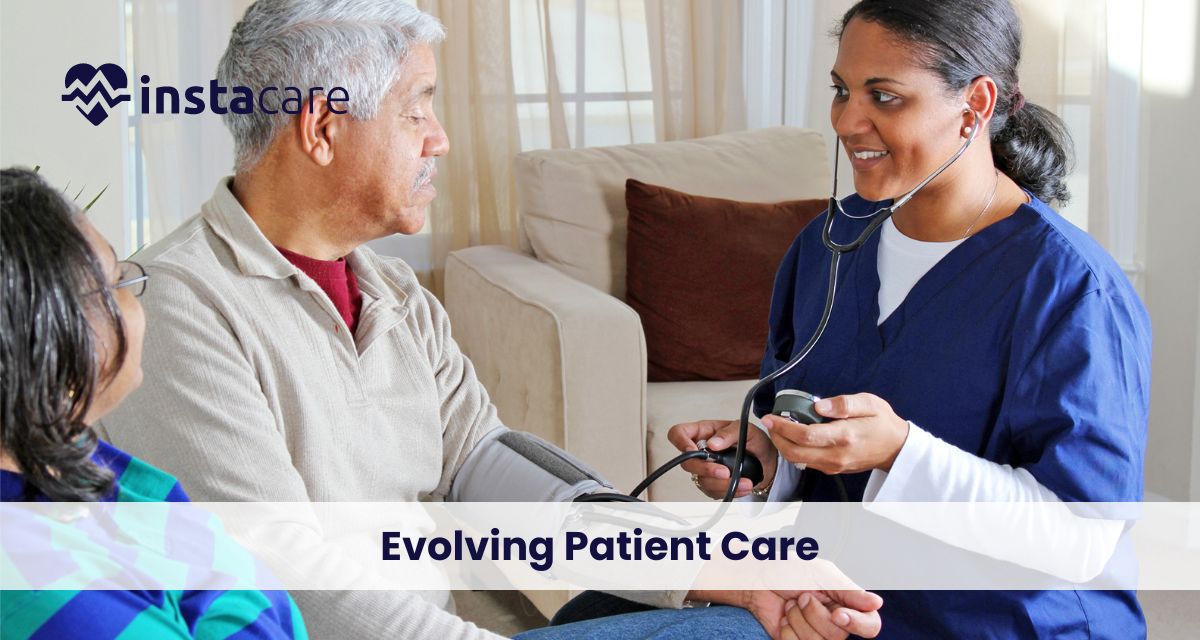
In the changing atmosphere of health care, this shift toward person-centered care seals major overhauls in the various dimensions of care for patients. This only treats the people in general but does not focus on specific diseases or conditions. It is based upon respect, empathy, and primarily active participation of patients regarding their care. This blog is going to highlight the changeability of the patient care process, understanding of concepts, and the benefit of person-centered care. Further, it offers successful strategies on how to implement this within the healthcare setting. Shift to Person-Centered Care By tradition, health care has been disease-centered, focusing on a diagnosis and treatment of the medical condition in opposition to the whole person. No doubt, this had great success in the progress of the science of medicine and tremendous treatment options. Most of the time, it has failed to be sensitive to the experiences and well-being of the patient. A model developed in response to this gap is person-centered, or patient care; more specifically, it lays emphasis on the values, preferences, and needs of a patient in bringing forth a more humane and efficient pattern of health care. At the same time, it is one of the building blocks of value-based care, generally focused on outcomes and satisfaction rather than volume. Core Principles of Person-Centered Care Respect and Dignity: Respect for the perceptions of the patient by health professionals is an important tenet that should be done hand in hand with support of the patient’s autonomy. Patients’ knowledge, values, beliefs, and cultural backgrounds should be integrated into care planning and delivery. Info and Communication: The patient should be given information by the institution in a timely way, to the best of their ability, in full and plain terms reasonably understood by the patient. Effective communication ensures that care decisions are made appropriately. Participation: Encourage and support patients to participate in decision-making at the level they are able. This participation may include decisions related to their own care or organizational policy and procedure decisions. Collaboration: Care needs to be coordinated and integrated among all elements of the healthcare system. Care teams need to work collaboratively with patients, their families, and other health care providers to provide optimal care. Book Free Demo Benefits of Person-Centered Care Improved Patient Satisfaction If a patient feels respected, and his participation in their care is achieved, then his satisfaction with the experience of health care increases, which may be translated into better adherence to treatment plans and ultimately into better health. Improved Health Results It has been evidenced that person-centered care stands in a good position to yield better clinical outcomes. A whole rather emotional and social approach to a person helps the care providers in the development of more effective and comprehensive schemes of care. Lowered Health Care Costs Person-centered care leads to a decrease in the need for more expensive acute care services through prevention and management. The improved adherence to patients’ care plans also meant that there were few or no readmissions to hospitals and emergency visits, thus leading to cost reduction. Higher Satisfaction of Providers This kind of care is also of equal benefit for the providers of health care. It brings out a greater and more satisfying work environment because the providers engage on a much closer level with their patients and are professionally more satisfied. Strategies towards Implementing Person-Centered Care Implementation of activities of person-centered care calls for changes at the strategic levels in health care. Some major strategies involved in the implementation of the same are: Training and Education: Health providers need continual training on issues such as communication, empathy, and cultural proficiency, which will increase their capacity to be engaging effectively and respectfully with their patients. Patient Involvement Engage patients in their care through shared decision-making tools, patient advisory councils, feedback mechanisms, and other initiatives that give the patient reassurance that their voice will be integrated both in care planning and organizational policies. Technology and Innovation: Let technology serve person-centered care. This helps in enhancing communication, coordination, and patient activation by using EHRs, patient portals, and telehealth services. Environment and Culture: Develop a health care environment and culture that promotes person-centred care. This will require the development of a respectful, welcoming atmosphere, and organizational policies that promote patient-centred practices. Future Directions in Person-Centered Care While progress has been made, the journey to full actualization of person-centered care remains ongoing. Future directions toward that end include: Customized Medicine: Genetics and data analytics further open up the way for the tailoring of care. Superior health outcomes can be created alongside increased satisfaction among patients if treatment is custom-tailored to the unique features of every patient. Artificial intelligence and machine learning Artificial intelligence and machine learning could thus be hired to revolutionize person-centred care with more accurate diagnosis, predicting patient outcomes, and personalization in treatment plans. Integrated Care Models: The physical and mental elements of health work hand in hand. The real challenge is in their aggregation to meet the holistic needs of the patient. The integrated care models bring both of these elements together to yield better and more comprehensive care. Empowerment: At the heart of person-centered care is the way it empowers patients with tools and means and resources for self-management. Thus, next steps and subsequent actions entailed to facilitate the examination of health information and self-management tools are simply a support network. Policy and Advocacy: It entitles its widespread adoption will require an advocacy in support of person-centered care policies backing the interest of patient care and supporting collaborative efforts in health care while investing in training and technologies needed. Conclusion Patient-centred approaches present a paradigm shift towards a more humane, effective, and sustainable health care system. This approach not only helps health care providers increase their level of patient satisfaction and health outcomes in a humane way but also help them find better fulfillment in their work through respect, empathy, and engaging the individual on the path to recovery. Wherein successful implementation

5 Ways To Improve Patient Care Quality It’s no secret that quality healthcare is essential for maintaining our overall health and wellbeing. But ensuring consistent high-quality care can be a challenge for many doctors, nurses and other medical professionals. So how can we as individuals strive to improve the quality of patient care? Here are five ways you can help ensure that every individual receives superior attention and treatment in any medical environment. Let’s see improve patient care quality. Create a strong relationship with your patients to improve patient care quality Create a strong relationship with your patients by listening to their concerns and educating them about their condition and treatment. As a healthcare provider, it’s crucial to establish a strong relationship with your patients. One of the best ways to achieve this is by offering them a listening ear and educating them about their condition and treatment. Listening to your patients’ concerns will not only help them feel heard and valued but also enable you to understand their unique needs. It’s also vital to educate your patients about their condition and treatment, empowering them to take charge of their health. Educating patients can improve treatment compliance, resulting in better health outcomes. By establishing a strong relationship with your patients built on trust, communication, and education, you can provide high-quality, patient-centered care. Book Free Demo Ensure your practice is up to date on the latest technology Ensure your practice is up to date on the latest technology, such as electronic medical records and telemedicine. Keeping up with the latest technology in your medical practice is an essential part of providing the best possible care for your patients. With the advent of electronic medical records and telemedicine, there are more opportunities than ever to streamline your practice and improve patient outcomes. Electronic medical records allow you to store and access patient information quickly and easily, while telemedicine allows you to provide remote consultations and care to patients who might not otherwise have access to medical services. By staying up to date on these and other technological advances, you’ll be better equipped to provide the highest level of care to your patients, and stay ahead of the curve in an ever-evolving healthcare landscape. Take the time to review patient notes before appointments Take the time to review patient notes before appointments and consider any questions they may have or special requests they may have in order to provide personalized care. As healthcare providers, it is important to prioritize personalized care for each and every patient that comes through our doors. One simple way to achieve this is by taking the time to review patient notes prior to appointments. By doing so, we can consider any questions or concerns the patient may have, as well as any special requests they may have regarding their care. This allows us to tailor our approach to each patient, taking into account their unique needs and preferences. Ultimately, by providing personalized care, we can build stronger patient-provider relationships and help our patients feel more confident and comfortable in their healthcare journeys. View More: 8 Tips To Attract More Patients To Your Clinics Use right resources for patient follow-up to improve patient care quality Make sure you have the right resources available for patient follow-up, such as nurse call lines, support groups and online support forums. Patient follow-up is a crucial part of providing quality healthcare. It ensures that patients receive appropriate care and support even after they leave the hospital or clinic. To achieve this, having the right resources is essential. Nurse call lines give patients direct access to healthcare professionals, who can answer their questions and provide advice. Support groups offer patients a chance to connect with people who are going through similar experiences, allowing them to share their stories, fears, and successes. Online support forums are a convenient way for patients to access information, ask questions, and communicate with others at any time of the day. By providing these resources, healthcare providers can ensure that their patients have access to the support they need to achieve optimal health outcomes. Utilize social media to stay connected with your patients Utilize social media to stay connected with your patients and spread awareness about your practice’s services. In today’s digital age, social media has become an integral part of our daily lives. As a healthcare provider, utilizing social media can help you stay connected with your patients and spread awareness about your practice’s services. Platforms like Facebook, Instagram, and Twitter are great tools that can be used to share educational content, promotions, and updates about your practice. By engaging with your patients on social media, you can improve patient retention, attract new patients, and ultimately grow your practice. Social media also offers an opportunity to showcase your expertise in your field, establish your practice as a thought leader, and build trust with your patients. So why not take advantage of this powerful tool to enhance your patient communication and grow your practice? Conclusion In conclusion, patient care quality is an essential part of successful healthcare systems. There are a number of different strategies and methods that can be used to improve patient care quality, from increasing the availability of resources to implementing best practices. All of these strategies will help to ensure that patients receive high-quality care and attention. Moreover, it’s important for healthcare organizations to prioritize patient safety and convenience when planning for new initiatives and programs. Investing in to improve patient care quality is an investment in the future health of our communities and should be taken seriously. The goal is always to create a safer, more comfortable environment for both healthcare providers and patients alike so that everyone involved can enjoy the highest possible standard of care. With the right strategies in place, it is absolutely possible to achieve improved outcomes with greater patient satisfaction.