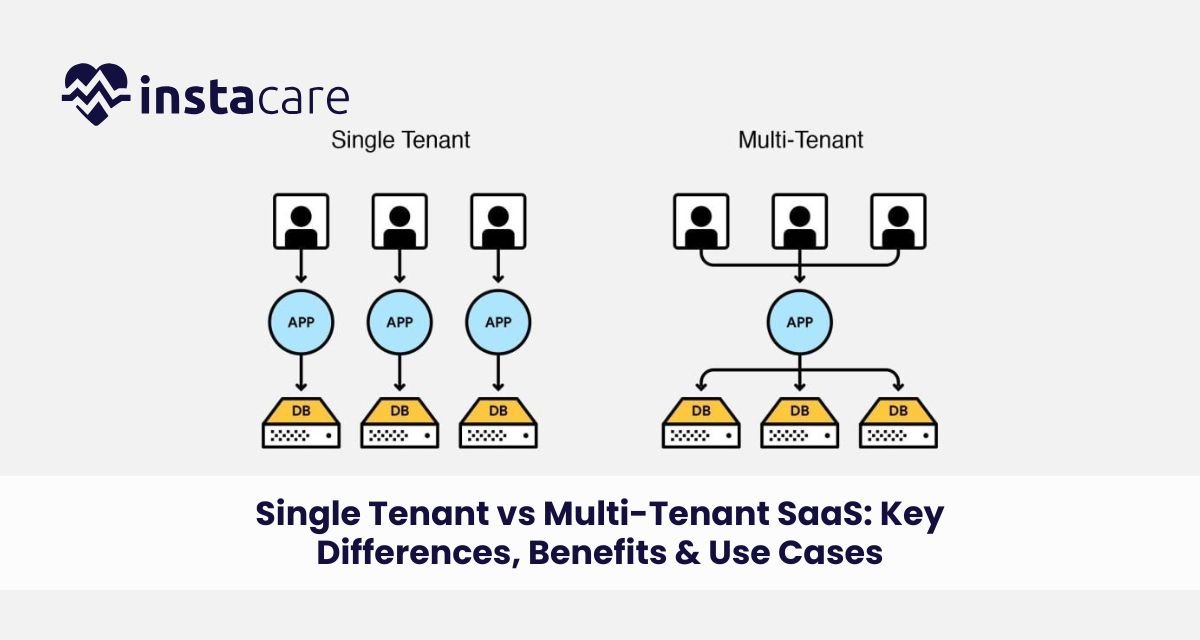
Single-Tenant vs Multi-Tenant SaaS: Key Differences, Benefits & Use Cases For cloud apps, SaaS (Software as a Service) is the dominant model of software delivery at scale. Perhaps the most important design choice for SaaS vendors, and their customers, is to use either a single-tenant or multi-tenant SaaS solution. Each has different advantages, trade-offs, and operational concerns. For IT leaders, product managers, and CTOs, it is worth knowing what is single tenant, what is multi tenant, and single tenant vs. multi tenant. It directly affects performance, security, cost-saving, scalability, and long-term success. What Is SaaS Tenancy? SaaS tenancy is the way the tenants, users or organizations are segregating or sharing software resources within a SaaS application. Here, a “tenant” refers to one customer or group of customers using the software. What is Multi Tenant? Multiple customers are sharing a single instance of an application and database, and data segregation at the application level in a multi-tenant SaaS model. What is Single Tenant? In a single-tenant SaaS, one customer has his or her own dedicated software environment, complete database isolation from all other customers. Multi tenancy in cloud computing is important because it impacts product design, deployment strategy, and operational overhead. What is a Single-Tenant SaaS Model? The solo tenant SaaS definition is in the sole resource dedication: every customer has his or her own isolated software environment. It involves separate databases, application tiers, and infrastructure. That isolation also provides complete customization, greater control over updates, and greater security. This is incredibly reassuring in compliance-heavy industries such as healthcare or finance. Use cases for single tenant saas through Isolation of the tenants is also one of the largest benefits to the model and enables compliance requirements per tenant to some standards and per-tenant performance optimizations. Though it offers independence and flexibility, the cost of single tenant vs multi-tenant tends to be higher because of replicated resources and intricate maintenance. What Is a Multi-Tenant SaaS Model? Multi tenant SaaS model is a method of hosting multiple companies or users within one instance of software. Each tenant has his or her data logically isolated even though they are on the same infrastructure. This style maximizes the use cases for multi tenant saas, its resources, accelerates rollouts, and maintains affordability. It’s the norm for the majority of contemporary SaaS platforms. Organizations that appreciate velocity, scalability, and efficiency in operation like this architecture. However, tenant isolation depends so much on safe application logic that security in single tenant vs multi tenant becomes an issue of utmost priority concern, particularly for organizations dealing with sensitive information. Book Your Free Marketing Consultation Main Differences: Single-Tenant vs Multi-Tenant Let’s analyze the difference between single tenant and multi tenant along major technical and business considerations: Isolation: Complete tenant isolation in saas is available in single-tenant; multi-tenant provides logical isolation. Customization: Simpler in single-tenant because of isolated environments. Cost: Multi-tenant less expensive with shared resources. Upgrades: Simpler to handle in multi-tenant with global upgrades; single-tenant can have specific rollouts. Scalability: Multi-tenant supports high growth, consistent with scalability in SaaS architectural objectives. Performance: Comparison of single-tenant and multi-tenant performance leans in favor of single-tenant when dealing with high workloads, although current multi-tenant systems are very tunable. The differences facilitate groups in matching infrastructure with strategic goals. Advantages of Single-Tenant SaaS Establishing the pros and cons of single tenant begins with its greatest advantages: Increased Security: As every customer is on its silo, it is not open to security breaches by other tenants. On a plus with workload-intensive companies with high compliance needs, security in multiple tenant vs single tenant is a big plus to the latter. Performance Thresholdlessness: There is no noisy neighbor issue. It has consistent performance and is unaffected by other customers, and this is desirable with high-throughput workloads. Customization and Control: Customers may order specific features, integrations, or settings that won’t affect others. This is particularly appropriate in specialized enterprise spaces. Compliance-Friendly: Most regulatory systems (e.g., HIPAA, GDPR) are simpler to comply with in single-tenant systems because of increased audit trails and control. All these characteristics explain why most applications for single tenant SaaS cover sectors such as healthcare, banking, legal technology, and government. Advantages of Multi-Tenant SaaS The pros and cons of multi tenant replicate its excellent efficiency and scalability benefits: Low Cost: Shared infrastructure reduces operational expenses, such that the model is optimal for mid-market and startup SaaS products. Easy Scaling: Centralized administration of resources makes it easy to add new tenants or users, priceless in high-growth situations. This is perfectly in harmony with today’s scalability in SaaS architecture principles. Faster Updates: Centrally pushed updates, patches, and fixes are applied, cutting technical debt and allowing for fast iteration. Simplified DevOps: DevOps is easier to keep simple when working with a single infrastructure and codebase setup. Similarly, typical applications for multi tenant SaaS include eCommerce websites, CRM systems, team collaboration tools, and other high-traffic applications. Challenges of Each Model While both tenancy models have advantages, they each come with trade-offs: Single-Tenant Challenges Higher Cost: More admin, more infrastructure. Complexity of Updates: Multiple instances to update is a time-consuming activity. Reduced Operational Efficiency: Hard to automate and standardize processes across customers. Issues of Multi-Tenanting Security Risks: If not well architected, a weakness in one tenant seeps into others. Customization Limitations: Shared environments limit customized deployment. Performance Instability: Resource-intensive tenants cause system performance instability in general. Organisations must balance these in the single tenant vs multi tenant cost dilemma. New Emerging Trends: Hybrid & Flexible Architectures To accommodate