

How Software Helps Hospitals Pass PHC Inspections in Pakistan Healthcare facilities in Punjab are required to comply with regulations set by the Punjab Healthcare Commission (PHC). These regulations focus on patient safety, documentation accuracy, and operational transparency. PHC inspections evaluate whether hospitals and clinics meet the required Minimum Service Delivery Standards (MSDS). Facilities that fail to maintain proper documentation, staff credentials, and clinical records often struggle during inspections. To address these challenges, many healthcare providers are adopting PHC compliance software to manage operations, maintain records, and prepare for inspections more efficiently. This guide explains how healthcare software helps hospitals meet PHC requirements and improve inspection readiness. Why Hospitals Struggle with PHC Inspections Many healthcare facilities rely on manual or fragmented systems, which create compliance challenges. Common issues include: Incomplete patient records Missing staff credential documentation Unorganized files during inspections Lack of audit trails Inconsistent operational processes These issues make it difficult for hospitals to demonstrate compliance during PHC inspections. What Is PHC Compliance Software? PHC compliance software is a digital healthcare system that helps hospitals manage clinical, administrative, and regulatory processes in a structured way. These systems integrate multiple hospital functions into a centralized platform, allowing healthcare facilities to maintain accurate records and prepare for inspections. PHC compliance software typically includes: Electronic medical records (EMR) Hospital management systems (HMIS) Laboratory information systems Pharmacy management systems Staff credential management How Software Helps Hospitals Meet PHC Requirements 1. Structured Medical Records Management Healthcare software allows hospitals to maintain complete and accurate patient records. Digital systems help store: Patient history Consultation notes Prescriptions Diagnostic reports This ensures that records are organized and easily accessible during inspections. 2. Staff Credential Management Hospitals must maintain documentation of staff qualifications and licenses. Software systems help: Store staff credentials Track license validity Maintain training records This simplifies verification during PHC inspections. 3. Audit Trails and Documentation PHC inspections require traceable records. Healthcare software provides: Activity logs Record update tracking Access history These audit trails help demonstrate compliance and accountability. 4. Integrated Departmental Systems Modern healthcare software integrates multiple hospital departments, including: Outpatient services Laboratory systems Pharmacy operations Inpatient management This ensures consistent data across the organization. 5. Complaint Management Systems Hospitals are required to manage patient complaints effectively. Software systems allow facilities to: Register complaints Track resolution Maintain documentation This improves service quality and regulatory compliance. 6. Infection Control and Safety Tracking Healthcare software helps hospitals track infection control measures and safety protocols. This supports compliance with PHC safety standards. 7. Equipment and Asset Management Hospitals must maintain records of medical equipment and maintenance schedules. Software systems help: Track equipment usage Maintain maintenance logs Monitor calibration schedules Book Your Free Marketing Consultation Benefits of Using PHC Compliance Software Hospitals that implement healthcare software gain several advantages. Improved Inspection Readiness All required documents are organized and easily accessible. Reduced Administrative Work Automation reduces paperwork and manual processes. Better Operational Efficiency Integrated systems improve workflow and coordination. Enhanced Data Accuracy Digital systems reduce errors and improve record consistency. Stronger Regulatory Compliance Hospitals can maintain documentation required by PHC standards. How to Choose PHC-Compliant Software Healthcare facilities should evaluate software solutions based on key requirements. Important factors include: Support for EMR and HMIS systems Integration across hospital departments Secure data management Audit trail capabilities Scalability for future growth Selecting the right system helps hospitals maintain long-term compliance. Preparing for PHC Inspection Using Software Hospitals can improve inspection readiness by using software effectively. Recommended steps include: Digitize patient records Maintain staff credential databases Organize compliance documentation Track operational processes Conduct internal audits using system reports These steps help healthcare facilities prepare for inspections confidently. Future of PHC Compliance and Digital Healthcare Healthcare regulations in Pakistan are increasingly aligned with digital systems. PHC continues to encourage hospitals to adopt: Electronic medical records Integrated hospital systems Data-driven healthcare management Hospitals that invest in digital solutions will be better prepared for future regulatory requirements. Conclusion PHC inspections require healthcare facilities to maintain accurate documentation, structured processes, and transparent operations. Manual systems often fail to meet these requirements, creating challenges for hospitals during inspections. By adopting PHC compliance HIMS software, healthcare facilities can streamline operations, maintain proper records, and improve inspection readiness. Digital healthcare systems are not just tools for efficiency they are essential for regulatory compliance and the future of healthcare in Pakistan.
Unique Patient Identifier in PHC Compliance for Hospitals in Pakistan Accurate patient record management is a critical requirement under the regulatory framework of the Punjab Healthcare Commission (PHC). As healthcare systems move toward digital transformation, maintaining consistent and reliable patient data has become essential for compliance, safety, and operational efficiency. One of the most important components of modern healthcare data management is the use of a Unique Patient Identifier (UPI). This ensures that every patient has a distinct identity within a healthcare system, preventing duplication, improving traceability, and supporting regulatory compliance. This guide explains the role of unique patient identifiers in PHC compliance, why they are important for hospitals and clinics, and how digital systems help implement them effectively. What Is a Unique Patient Identifier? A Unique Patient Identifier (UPI) is a distinct identification number assigned to each patient within a healthcare system. This identifier ensures that all medical records related to a patient are linked to a single, consistent identity. A UPI helps healthcare providers: Avoid duplicate patient records Maintain complete patient histories Ensure accurate medical documentation Improve data consistency across departments In digital healthcare systems, this identifier is automatically generated and remains associated with the patient across all visits and services. Why Unique Patient Identification Is Important for PHC Compliance PHC requires healthcare facilities to maintain accurate, complete, and traceable medical records. Without a proper identification system, hospitals may face several issues: Duplicate patient records Incomplete medical histories Incorrect treatment documentation Difficulty in tracking patient care Challenges during inspections Unique patient identifiers help eliminate these issues by ensuring that all patient data is linked correctly and consistently. This improves both clinical accuracy and regulatory compliance. Problems Caused by Duplicate Patient Records In facilities that rely on manual or poorly structured systems, duplicate patient records are a common issue. This can lead to: Incomplete Medical History Doctors may not have access to a patient’s full treatment history, affecting diagnosis and care decisions. Medication Errors Duplicate records can result in incorrect prescriptions or repeated medications. Delayed Treatment Time may be lost in identifying the correct patient record. Compliance Issues PHC inspections require accurate and traceable patient documentation. Duplicate records can lead to non-compliance findings. How Unique Patient Identifiers Improve Healthcare Operations Implementing a unique patient identification system provides several operational benefits. 1. Accurate Patient Records Each patient is assigned a single identity, ensuring all medical data is linked correctly. This improves documentation accuracy and reduces errors. 2. Better Clinical Decision-Making Doctors can access complete patient histories, allowing them to make informed treatment decisions. 3. Improved Data Consistency All departments within a healthcare facility use the same patient identifier, ensuring consistent data across: OPD laboratory pharmacy radiology inpatient services 4. Faster Patient Registration Digital systems quickly retrieve patient records using unique identifiers, reducing waiting time. 5. Enhanced Regulatory Compliance Hospitals can demonstrate structured and accurate patient record management during PHC inspections. Book Your Free Marketing Consultation Role of Digital Systems in Patient Identification Modern healthcare systems automatically generate and manage unique patient identifiers. Digital platforms help healthcare facilities: Assign unique IDs to patients Link all medical records to a single profile Prevent duplicate entries Maintain audit trails Ensure data consistency across departments This makes patient data management more efficient and compliant with regulatory standards. Key Features of a Patient Identification System Healthcare facilities should ensure their systems support essential identification features. Important capabilities include: Automatic generation of unique patient IDs Duplicate record detection Centralized patient database Integration with clinical departments Secure patient data storage Audit logs and tracking These features help hospitals maintain reliable and structured patient records. How Hospitals Can Implement Unique Patient Identification Hospitals transitioning to structured patient identification systems should follow a clear implementation strategy. Recommended steps include: Review existing patient record systems Identify duplicate record issues Implement a digital patient management system Standardize patient registration processes Train staff on data entry protocols A structured approach ensures a smooth transition to accurate patient identification. Unique Patient Identification and EMR Systems Electronic Medical Record (EMR) systems play a central role in managing patient identification. EMR platforms: Assign unique identifiers to each patient Store complete medical histories Connect patient data across departments Maintain audit trails for regulatory review Hospitals using EMR systems are better equipped to manage patient data and meet PHC compliance requirements. Challenges in Managing Patient Identification Healthcare facilities may face challenges when implementing patient identification systems. Common challenges include: Legacy data with duplicate records Inconsistent data entry practices Lack of standardized processes Staff training requirements Addressing these challenges requires proper planning, system implementation, and staff training. Future of Patient Data Management in Pakistan As healthcare systems continue to digitize, structured patient identification will become increasingly important. Regulatory frameworks like PHC emphasize: Accurate patient documentation Traceability of medical records Integration of healthcare data systems Hospitals that adopt digital patient identification systems will be better prepared for future regulatory requirements and improved healthcare delivery. Conclusion Unique patient identifiers are essential for maintaining accurate, consistent, and traceable patient records in healthcare facilities. For hospitals and clinics operating under PHC regulations, implementing structured patient identification systems is a key step toward compliance and improved patient care. By adopting digital healthcare systems that support unique patient identification, healthcare providers can reduce errors, improve operational efficiency, and ensure readiness for regulatory inspections.

PHC Compliance Timeline and HMIS Implementation Phases in Pakistan Healthcare regulation in Pakistan is evolving as authorities move toward digitization and standardized healthcare practices. The Punjab Healthcare Commission (PHC) has introduced requirements that encourage hospitals to adopt structured digital systems, particularly Hospital Management Information Systems (HMIS). These requirements are not implemented all at once. Instead, PHC promotes a phased approach, allowing healthcare facilities to gradually transition from manual operations to fully integrated digital systems. Understanding the PHC compliance timeline and HMIS implementation phases helps hospitals prepare for regulatory expectations and avoid compliance risks. Why PHC Is Moving Toward Digital Healthcare Systems PHC aims to improve healthcare quality, transparency, and patient safety across healthcare establishments. Traditional healthcare systems often face challenges such as: Incomplete patient records Lack of coordination between departments Limited operational transparency Difficulty in tracking healthcare data To address these issues, PHC encourages hospitals to adopt digital systems that improve documentation, monitoring, and service delivery. PHC Compliance Timeline Overview PHC promotes a structured approach to healthcare digitization through phased implementation of HMIS systems. Hospitals are expected to gradually implement digital systems across different departments rather than adopting everything at once. This phased approach allows: Smoother transition from manual to digital systems Better staff training and system adoption Reduced operational disruption Improved system integration PHC HMIS Implementation Phases PHC encourages healthcare facilities to implement HMIS Software in multiple phases based on operational priorities. Phase 1 – Core Clinical Systems The first phase focuses on essential hospital departments that directly impact patient care. Key modules include: Outpatient Department (OPD) Manages patient registration, consultations, and appointment scheduling. Emergency Department Handles urgent patient cases and maintains emergency treatment records. Laboratory System Supports diagnostic testing, result reporting, and sample tracking. Radiology System Manages imaging services and diagnostic reports. Pharmacy System Handles medication dispensing, inventory management, and prescription tracking. Central Dashboard Provides a real-time overview of hospital operations and patient flow. This phase establishes the foundation for digital healthcare operations. Phase 2 – Advanced Clinical and Administrative Systems After implementing core modules, hospitals expand their systems to include additional departments and operational processes. Inpatient Department (IPD) Manages patient admissions, bed allocation, and inpatient care documentation. Intensive Care Unit (ICU) Supports monitoring and management of critically ill patients. Operation Theatre (OT) Handles surgical procedures and operating room management. Infection Control Systems Tracks infection prevention protocols and healthcare safety measures. Equipment Management Maintains records of medical equipment and maintenance schedules. Complaint Management Tracks patient complaints and feedback. Continuous Quality Improvement (CQI) Monitors healthcare performance and improvement initiatives. Human Resource Management (HRM) Maintains staff records, credentials, and training documentation. This phase improves operational efficiency and regulatory compliance. Phase 3 – System Integration and Emergency Preparedness The final phase focuses on integrating systems and strengthening hospital readiness for emergencies. Hospitals are expected to: Establish emergency response systems Implement disaster management protocols Enhance data reporting and analytics Integrate all hospital departments into a centralized system Advanced dashboards provide healthcare administrators with real-time insights into hospital operations. Book Your Free Marketing Consultation Benefits of Following PHC Implementation Phases Hospitals that follow a phased implementation approach experience several benefits. Smooth Transition Gradual implementation reduces disruption to daily operations. Better Staff Adoption Healthcare staff can adapt to new systems more effectively. Improved System Integration Modules can be integrated step by step, ensuring stability. Stronger Compliance Hospitals can meet PHC requirements progressively and avoid compliance risks. Risks of Delayed HMIS Implementation Hospitals that delay digital transformation may face several challenges. Common risks include: Difficulty in maintaining accurate patient records Inefficiencies in hospital operations Increased risk of non-compliance during inspections Lack of operational transparency Early adoption of HMIS systems helps healthcare facilities avoid these risks. How Healthcare Software Supports PHC Compliance Timeline Modern healthcare software platforms are designed to support phased implementation of hospital systems. These platforms allow hospitals to: Start with core modules Gradually expand system capabilities Integrate departments over time Maintain compliance documentation This makes it easier for healthcare facilities to align with PHC requirements without disrupting operations. Preparing for PHC Digital Compliance Hospitals planning to implement HMIS systems should adopt a structured approach. Recommended steps include: Assess current hospital workflows Identify priority departments Implement core modules first Train staff on digital systems Expand implementation in phases A planned approach ensures successful system adoption and compliance readiness. Future of Healthcare Digitization in Pakistan Healthcare digitization is becoming a central focus of regulatory authorities in Pakistan. PHC’s phased approach reflects a long-term vision of: Integrated healthcare systems Improved patient safety Data-driven healthcare management Enhanced regulatory oversight Hospitals that adopt digital systems early will be better positioned for future healthcare advancements. Conclusion The PHC compliance timeline and HMIS implementation phases provide a structured path for hospitals to transition toward digital healthcare systems. By following a phased approach, healthcare facilities can improve operational efficiency, maintain accurate patient records, and meet regulatory requirements. Hospitals that invest in digital transformation today will be better prepared for the future of healthcare in Pakistan.
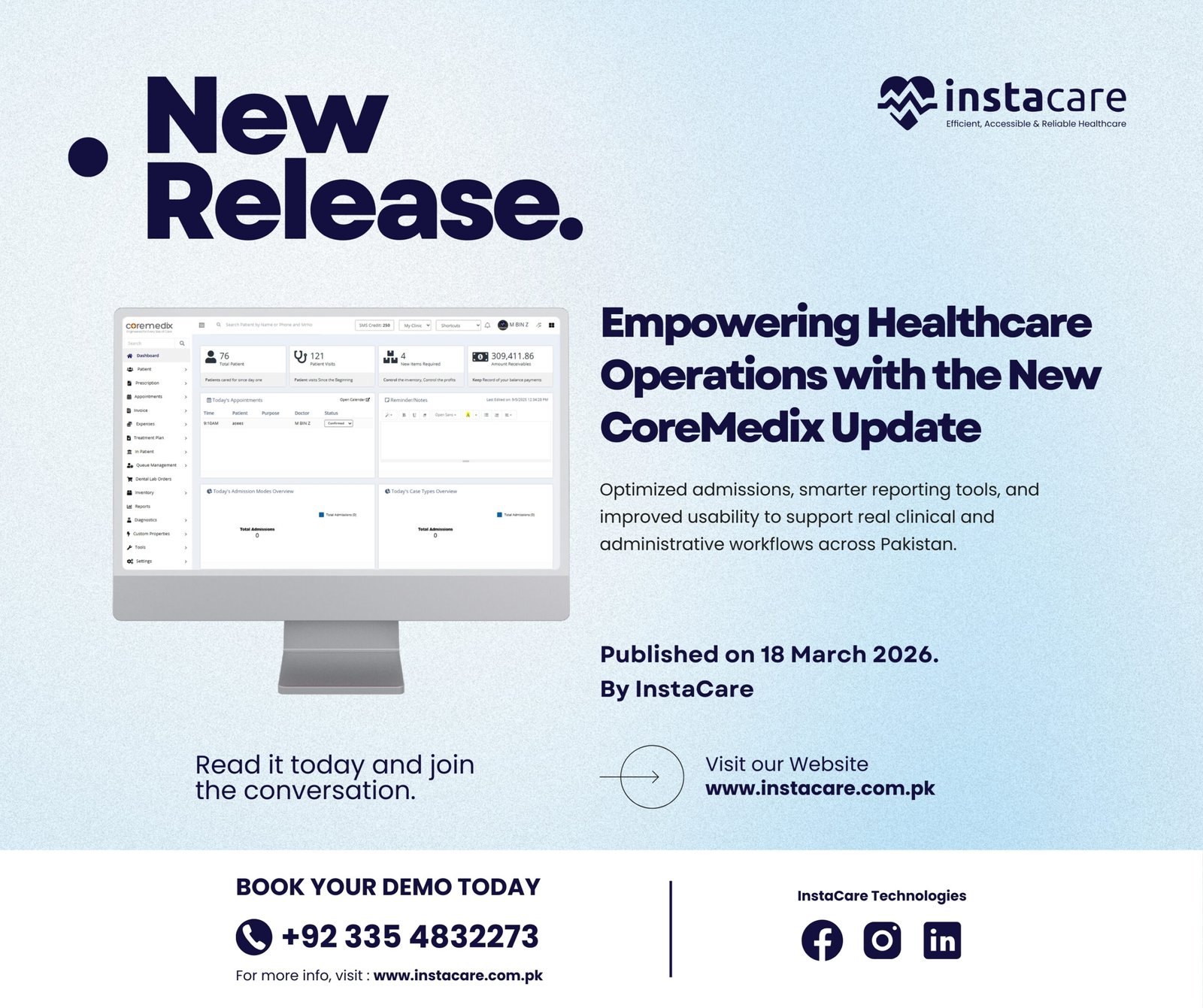
CoreMedix Healthcare Software Update 2026 Healthcare organizations require software that is fast, reliable, and designed for real clinical and administrative workflows. From managing admissions and appointments to generating financial reports and patient records, every module must work smoothly for healthcare teams handling high daily workloads. This latest CoreMedix platform update introduces performance improvements, enhanced reporting capabilities, dynamic dashboard insights, and usability updates across several modules. These updates strengthen CoreMedix as a reliable Healthcare Software in Pakistan built for clinics, hospitals, pharmacies, and diagnostic labs. If you are evaluating clinic management software, hospital management software, pharmacy management software, or lab management software, this update addresses several day-to-day operational challenges faced by healthcare providers. What’s Included in This Healthcare Software Update This release focuses on improving system responsiveness, reporting accuracy, and dashboard visibility across multiple modules. Key highlights include: Faster performance for admission and patient lists Expanded reporting capabilities for clinic administrators Improved financial and appointment reports Dynamic dashboard cards for real-time operational insights Enhanced search field usability across reports Improved visit history data visibility These enhancements help healthcare teams work more efficiently while maintaining accurate patient and operational records. Admission & IPD Workflow Enhancements (For Hospitals & Clinics) Efficient patient admission and discharge management is a critical component of hospital information systems. This update introduces performance and workflow improvements to ensure smoother IPD operations. Optimized system performance for the Live Admissions list, allowing faster loading of active patient admission records. Export and Print options are now available in the IPD Discharged Patients list, enabling hospitals to easily generate records for reporting and documentation. Improved column labeling in the Discharged Patients module, ensuring clearer visibility of available actions. These enhancements help hospital administrators and staff manage inpatient workflows more efficiently. Reporting & Financial Insights Improvements (For Clinics, Hospitals & Finance Teams) Accurate reporting is essential for operational analysis and financial monitoring in healthcare software systems. This release introduces improvements across multiple reporting modules: Added Serial Number (S.No.) column in the Appointment Report for easier data tracking. Serial Number columns are now available across all Checkups Reports, improving report structure and readability. Introduced a Category-Wise Summary Report within financial reports to help administrators better analyze revenue by service category. Improved Invoice Summary service filtering, ensuring invoices appear correctly when filtering by specific services such as Emface Cheeks Applicators. Enhanced responsiveness of the Remaining Amount (Descending) filter to improve financial report performance. These updates provide clinic managers and finance teams with clearer insights into patient services and revenue trends. Book Your Free Marketing Consultation Dynamic Dashboard Visibility Enhancements Modern healthcare software requires quick access to operational insights. This update enhances the CoreMedix dashboard with improved dynamic data cards, allowing administrators to monitor system activity in real time. Dynamic dashboard cards have been enhanced for the following modules: Admissions List Appointments List Visit History Invoices List Prescriptions List Patients List These dashboard improvements provide healthcare teams with a clearer overview of patient activity, financial data, and operational performance from a single interface. System Performance & Interface Updates Several usability and interface improvements have been implemented across the system to improve navigation and clarity. Key improvements include: Visit data in the Edit Visit → Past Visits section now displays correctly, improving access to historical patient records. Added descriptive hover tooltips for Edit and Delete actions within the Visits Form Designer to guide users more clearly. Added search field placeholders to improve usability in: Diagnostic History Report Checkup History Report Account Receivables Report Improved search field layout by removing unnecessary icons that previously appeared inside search inputs in: Checkup Reports (Treatments & Cases) Checkup History Report Diagnostic History Report Corrected text labeling in the Lab → Reports → Sales Report interface to ensure accurate wording. These updates improve everyday usability for doctors, administrators, and support staff working within the system. Why This Update Matters for Healthcare Providers Healthcare organizations increasingly depend on Healthcare Software in Pakistan that supports real clinical workflows and administrative processes. This update strengthens CoreMedix by improving: System performance for patient admission and operational workflows Reporting accuracy for financial and administrative teams Dashboard visibility for management and staff Usability across reporting and clinical modules Whether you operate a clinic, hospital, pharmacy, or diagnostic lab, these enhancements help streamline daily operations and reduce friction in healthcare management. About CoreMedix CoreMedix is an integrated healthcare technology platform offering: Clinic Management Software Hospital Management Software Pharmacy Management Software Lab Management Software Designed specifically for healthcare providers in Pakistan, CoreMedix focuses on reliability, operational efficiency, and real-world usability, helping medical facilities digitize workflows, improve patient care, and manage operations through a unified cloud platform.
Digital Medical Records for PHC Compliance in Pakistan Healthcare systems in Pakistan are rapidly shifting toward digital transformation as regulatory authorities emphasize the importance of structured, accurate, and accessible patient data. The Punjab Healthcare Commission (PHC) requires healthcare establishments to maintain proper medical records as part of its compliance framework. Traditional paper-based systems often fail to meet modern healthcare standards due to issues like incomplete documentation, data loss, and lack of traceability. To address these challenges, hospitals and clinics are increasingly adopting digital medical records systems, also known as Electronic Medical Records (EMR). This guide explains how digital medical records support PHC compliance, patient safety, and operational efficiency in healthcare facilities across Pakistan. What Are Digital Medical Records? Digital medical records, commonly referred to as Electronic Medical Records (EMR), are electronic versions of patient health information stored within a healthcare system. These records typically include: patient demographics medical history consultation notes prescriptions diagnostic reports treatment plans Unlike paper records, digital medical records allow healthcare providers to store, retrieve, and update patient information in a structured and secure format. Why PHC Requires Proper Medical Records PHC places strong emphasis on accurate and complete medical record management as part of its regulatory standards. Medical records are essential for: ensuring continuity of patient care supporting clinical decision-making maintaining legal documentation enabling accountability during inspections improving patient safety Incomplete or missing records are one of the most common reasons healthcare facilities fail PHC inspections. Limitations of Paper-Based Medical Records Many healthcare facilities still rely on manual documentation systems, which create several operational challenges. Common issues include: illegible handwriting missing patient files duplicate patient records delayed access to medical history difficulty in retrieving past records lack of audit trails These limitations make it difficult for hospitals to maintain compliance with PHC standards. How Digital Medical Records Support PHC Compliance Digital systems help healthcare facilities maintain structured and reliable patient records that align with PHC requirements. 1. Accurate Patient Documentation Digital medical records ensure that all patient information is recorded in a structured format. Healthcare providers can maintain: complete consultation notes treatment history medication records diagnostic reports This improves documentation quality and supports compliance during inspections. 2. Unique Patient Identification Digital systems assign a unique identifier to each patient, reducing the risk of duplicate records. This helps healthcare facilities maintain accurate patient histories and ensures data consistency. 3. Easy Access to Patient Records Healthcare providers can quickly access patient records from a centralized system. This improves: clinical decision-making patient care coordination treatment continuity 4. Audit Trails and Data Traceability Digital systems maintain logs of all activities related to patient records. Hospitals can track: who accessed records when changes were made what updates were performed This is critical for regulatory audits and PHC inspections. 5. Secure Data Management Digital medical record systems provide secure data storage and access controls. This helps healthcare facilities: protect patient confidentiality prevent unauthorized access maintain data integrity 6. Integration with Hospital Systems Digital records can be integrated with other hospital systems, including: laboratory systems pharmacy systems radiology systems This creates a connected healthcare environment where patient data flows seamlessly across departments. Role of EMR Systems in Healthcare Facilities Electronic Medical Record systems play a central role in modern healthcare operations. EMR systems help healthcare facilities: Manage patient data efficiently Reduce paperwork Improve workflow efficiency Support regulatory compliance Hospitals using EMR System are better equipped to meet PHC documentation requirements and improve overall service quality. Key Features Required in a PHC-Compliant EMR System Healthcare facilities should ensure that their digital systems support essential features required for compliance. Important features include: Structured patient record management Unique patient identification Secure access controls Audit logs and activity tracking Integration with hospital departments Reporting and analytics These features help healthcare providers maintain accurate records and prepare for regulatory inspections. How Hospitals Can Transition to Digital Medical Records Hospitals planning to move from paper-based systems to digital records should follow a structured approach. Recommended steps include: Assess current documentation practices Identify gaps in record management Select an EMR system aligned with PHC requirements Train staff on digital workflows Gradually digitize patient records A phased transition helps healthcare facilities adopt digital systems without disrupting daily operations. Benefits of Digital Medical Records for Healthcare Providers Healthcare facilities that adopt digital record systems experience several benefits. Improved Patient Care Doctors can access complete patient histories, leading to better diagnosis and treatment decisions. Faster Operations Digital systems reduce time spent on paperwork and improve workflow efficiency. Better Compliance Hospitals can maintain structured records required for PHC inspections. Reduced Errors Digital documentation reduces human errors associated with manual record-keeping. Book Your Free Marketing Consultation Common Challenges in Digital Transformation While digital transformation offers many benefits, healthcare facilities may face challenges during implementation. Common challenges include: Staff resistance to change Training requirements System integration issues Initial setup costs Proper planning and staff training can help overcome these challenges. Future of Digital Healthcare in Pakistan Healthcare systems in Pakistan are moving toward fully digital operations as regulatory authorities emphasize transparency and accountability. Digital medical records will play a key role in: improving healthcare quality enhancing patient safety enabling data-driven healthcare decisions supporting regulatory compliance Hospitals that adopt digital systems early will be better positioned for long-term growth and compliance. Conclusion Digital medical records are becoming essential for healthcare facilities aiming to meet PHC compliance requirements and improve operational efficiency. By replacing manual documentation systems with structured digital solutions, hospitals and clinics can ensure accurate patient records, improve clinical workflows, and prepare for regulatory inspections. Adopting EMR systems is not just a technological upgrade it is a necessary step toward modern, compliant, and patient-centered healthcare delivery in Pakistan.

PHC MSDS Standards Explained for Hospitals and Clinics in Pakistan Healthcare quality and patient safety are central to the regulatory framework established by the Punjab Healthcare Commission (PHC). To ensure healthcare facilities maintain safe clinical practices and consistent service quality, PHC has introduced the Minimum Service Delivery Standards (MSDS). These standards define the minimum operational, administrative, and clinical requirements that hospitals, clinics, and diagnostic centers must follow in order to maintain regulatory compliance. Understanding MSDS standards is essential for healthcare establishments preparing for PHC inspections and long-term compliance with healthcare regulations. This guide explains the PHC MSDS standards, their core categories, and how healthcare facilities can meet these requirements. What Are PHC Minimum Service Delivery Standards (MSDS)? The Minimum Service Delivery Standards (MSDS) are a set of regulatory guidelines developed by PHC to ensure healthcare facilities deliver safe and reliable medical services. These standards define how healthcare establishments should manage: patient care medical records staff qualifications infection control clinical operations healthcare infrastructure MSDS standards help establish uniform healthcare quality across hospitals and clinics operating in Punjab. Healthcare facilities are evaluated against these standards during PHC inspections and licensing processes. Why MSDS Standards Are Important MSDS standards help improve the overall quality of healthcare services by establishing clear expectations for healthcare providers. The primary objectives of MSDS include: improving patient safety standardizing healthcare operations ensuring accountability in healthcare services strengthening regulatory oversight promoting transparency in healthcare delivery Hospitals and clinics that comply with MSDS standards are more likely to maintain consistent service quality and pass PHC inspections successfully. Core Categories of PHC MSDS Standards PHC organizes MSDS standards into several key categories that cover different aspects of healthcare operations. 1. Access and Assessment of Care (AAC) The Access and Assessment of Care standard ensures patients receive appropriate medical attention when they visit healthcare facilities. Hospitals must establish processes that allow patients to receive timely and appropriate clinical assessments. This includes: patient registration procedures initial medical evaluation triage and prioritization of emergency cases documentation of patient history and symptoms These processes ensure patients are assessed accurately before treatment decisions are made. 2. Care of Patients (COP) The Care of Patients standard focuses on how hospitals manage patient treatment and clinical services. Healthcare providers must ensure that patient care follows professional medical guidelines and is properly documented. Hospitals should maintain systems that support: treatment planning medication management ongoing patient monitoring discharge planning and follow-up care Proper patient care management ensures that treatment decisions are safe, effective, and consistent with medical standards. 3. Medication Management (MOM) Medication management standards ensure that healthcare facilities handle medicines safely and responsibly. Hospitals must establish processes for: medication prescribing drug storage and labeling dispensing procedures pharmaceutical inventory tracking Proper medication management reduces the risk of medication errors and improves patient safety. 4. Healthcare-Associated Infection Control (HIC) Infection control is a critical part of healthcare safety. Healthcare facilities must implement policies and procedures that help prevent infections within medical environments. These measures may include: sterilization protocols infection monitoring programs safe waste disposal systems hygiene procedures for healthcare staff Effective infection control protects both patients and healthcare workers. 5. Information Management Systems (IMS) Healthcare facilities must maintain reliable systems for managing clinical and administrative information. Information management standards focus on: patient medical records data security and confidentiality documentation accuracy healthcare data management Digital healthcare systems can help hospitals maintain structured and accessible records. 6. Continuous Quality Improvement (CQI) Healthcare providers are expected to continuously monitor and improve the quality of services they deliver. Continuous quality improvement programs help hospitals identify operational weaknesses and implement improvements. CQI processes may involve: performance monitoring incident reporting systems internal audits quality improvement initiatives These programs help healthcare organizations maintain high service standards. 7. Human Resource Management (HRM) Healthcare facilities must ensure that staff members are properly qualified and capable of performing their responsibilities. Human resource management standards require hospitals to maintain records of: staff credentials training documentation professional certifications employment history Proper staff credential management ensures healthcare services are delivered by qualified professionals. Book Your Free Marketing Consultation How Hospitals Can Meet PHC MSDS Requirements Healthcare facilities can improve compliance with MSDS standards by implementing structured operational systems. Hospitals should focus on: maintaining accurate patient records documenting staff credentials implementing infection control protocols managing pharmaceutical inventory establishing complaint management systems conducting internal compliance audits These steps help hospitals prepare for PHC inspections and maintain regulatory compliance. Role of Digital Healthcare Systems in MSDS Compliance Modern healthcare software systems help hospitals manage compliance more effectively. Digital hospital management platforms support: electronic medical record management staff credential tracking laboratory and pharmacy integration regulatory documentation management quality improvement monitoring These systems help healthcare facilities maintain accurate records and streamline compliance processes. Preparing for PHC MSDS Inspections Healthcare establishments preparing for PHC inspections should regularly review their operational procedures and documentation. Recommended preparation steps include: review MSDS compliance requirements Maintain organized patient medical records Verify staff licensing and training documentation Implement infection control policies Conduct internal compliance audits Regular compliance reviews help healthcare facilities stay prepared for inspections and maintain high standards of patient care. Conclusion The Minimum Service Delivery Standards (MSDS) introduced by the Punjab Healthcare Commission play a critical role in improving healthcare quality and patient safety. Hospitals and clinics that understand and implement MSDS standards are better prepared for regulatory inspections and long-term healthcare compliance. By maintaining proper documentation, implementing structured operational procedures, and adopting digital healthcare management systems, healthcare facilities can ensure they meet PHC requirements while delivering safe and effective patient care.

PHC Inspection Checklist for Hospitals and Clinics in Pakistan Healthcare facilities operating in Punjab must comply with the regulatory standards set by the Punjab Healthcare Commission (PHC). These standards ensure that hospitals, clinics, and diagnostic centers maintain safe healthcare practices, proper patient documentation, and quality medical services. To verify compliance, PHC conducts inspections of healthcare establishments to assess whether they meet the Minimum Service Delivery Standards (MSDS). For many hospitals and clinics, PHC inspections can feel complex because inspectors evaluate multiple areas including patient records, staff credentials, infection control, equipment management, and clinical documentation. This guide provides a complete PHC inspection checklist to help healthcare facilities understand what inspectors evaluate and how they can prepare for regulatory compliance. What Is a PHC Inspection? A PHC inspection is an official evaluation conducted by the Punjab Healthcare Commission to ensure healthcare establishments comply with regulatory standards and patient safety guidelines. During inspections, PHC teams assess: Healthcare service quality Clinical documentation Facility safety standards Infection prevention measures Staff credentials and licensing Patient record management Healthcare facilities that fail to meet compliance standards may receive corrective notices, penalties, or operational restrictions. Healthcare Facilities Subject to PHC Inspection PHC inspections apply to different types of healthcare establishments, including: Private hospitals Specialist clinics General medical clinics Diagnostic laboratories Maternity homes Healthcare centers providing outpatient services Larger hospitals often undergo more comprehensive inspections due to the complexity of their operations and clinical services. PHC Inspection Checklist To prepare for a PHC inspection, healthcare facilities should ensure that the following areas are properly documented and managed. 1. Hospital Licensing and Registration Healthcare facilities must maintain valid documentation confirming their registration and licensing with the relevant regulatory authorities. Inspectors may review: PHC registration certificate Healthcare establishment license Ownership documentation Facility registration records These documents confirm that the facility is legally authorized to provide healthcare services. 2. Staff Credentials and Professional Licensing Healthcare providers must ensure that all medical staff members are properly licensed and qualified to perform their duties. PHC inspectors may verify: Doctor registration with medical councils Nursing staff certifications Specialist qualifications Staff credential documentation Employment and training records Proper credential management helps maintain professional accountability within healthcare facilities. 3. Patient Medical Records Accurate medical records are essential for safe patient care and regulatory compliance. During inspections, PHC teams may examine whether hospitals maintain: Complete patient medical histories Consultation records Treatment documentation Prescription records Diagnostic reports Hospitals should ensure patient records are organized, accessible, and securely stored. Book Your Free Marketing Consultation 4. Infection Prevention and Control Healthcare facilities must implement infection control protocols to protect patients and medical staff. Inspectors may review: Sterilization procedures Sanitation practices Infection control policies Waste disposal systems Use of protective equipment Effective infection prevention programs reduce the risk of hospital-acquired infections. 5. Laboratory and Diagnostic Services Hospitals providing laboratory services must ensure diagnostic processes meet professional standards. PHC inspectors may evaluate: Laboratory test documentation Sample handling procedures Diagnostic reporting accuracy Laboratory equipment maintenance Quality control protocols Proper Laboratory Management Software ensures reliable diagnostic results for patients. 6. Pharmacy Management Hospitals and clinics operating pharmacies must ensure proper medication management and storage. Inspection checks may include: Prescription verification processes Medication inventory management Drug storage standards Pharmaceutical documentation Medication dispensing records These practices help ensure patient safety and medication accountability. 7. Medical Equipment Management Healthcare facilities must maintain medical equipment to ensure patient safety and service reliability. PHC inspectors may assess: Equipment maintenance logs Calibration records Equipment usage documentation Safety inspections Regular equipment monitoring helps prevent operational risks in healthcare facilities. 8. Patient Complaint Management Hospitals must maintain systems for addressing patient complaints and feedback. Inspectors may review: Complaint registration procedures Complaint tracking records Investigation documentation Resolution processes Effective complaint management improves healthcare quality and patient trust. 9. Facility Safety and Emergency Preparedness Healthcare facilities must maintain safety systems for emergency situations. Inspection areas may include: Fire safety equipment Emergency evacuation plans Disaster response procedures Staff emergency training Preparedness ensures healthcare facilities can respond effectively to emergencies. Common Reasons Healthcare Facilities Fail PHC Inspections Healthcare establishments may fail inspections due to several common compliance issues. Typical problems include: Incomplete patient documentation Missing staff credential records Poor infection control practices Lack of equipment maintenance logs Inadequate complaint management systems Healthcare facilities should conduct internal audits regularly to ensure compliance with PHC standards. How Healthcare Software Helps Prepare for PHC Inspections Modern healthcare management systems help hospitals maintain organized records and ensure regulatory readiness. Healthcare software platforms support: Electronic medical records management Digital staff credential tracking Integrated laboratory and pharmacy systems Automated reporting and documentation Compliance audit trails These systems help healthcare facilities maintain accurate documentation and prepare for inspections more efficiently. Preparing Your Healthcare Facility for PHC Inspection Hospitals and clinics can improve their inspection readiness by following several key steps. Recommended actions include: Review PHC compliance standards regularly Maintain accurate patient documentation Verify staff credentials and licensing Implement infection control policies Maintain equipment maintenance records Establish structured complaint management systems Regular compliance reviews help healthcare facilities stay prepared for regulatory inspections. Conclusion PHC inspections play a vital role in ensuring healthcare facilities maintain safe, transparent, and accountable medical practices. Hospitals and clinics that maintain organized documentation, proper staff credential records, infection control procedures, and patient safety protocols are more likely to pass inspections successfully. By adopting structured healthcare management systems and maintaining regulatory awareness, healthcare providers can ensure long-term compliance with PHC standards while delivering high-quality patient care.
PHC HMIS Implementation Guide for Hospitals in Pakistan Healthcare regulation in Pakistan is evolving rapidly as the Punjab Healthcare Commission (PHC) introduces new requirements to improve patient safety, hospital accountability, and healthcare transparency. One of the most important regulatory changes is the mandatory implementation of Hospital Management Information Systems (HMIS) in private hospitals. This shift marks a transition from traditional paper-based hospital operations to digitally integrated healthcare management systems. Hospitals must now implement software solutions that allow them to manage patient records, clinical workflows, pharmacy operations, laboratory reporting, and administrative processes through a centralized digital platform. This guide explains everything hospitals need to know about PHC compliant hospital management software, including implementation, required modules, compliance timelines, and how healthcare software helps meet regulatory standards. What Is PHC HMIS? A Hospital Management Information System (HMIS) is an integrated digital platform designed to manage hospital operations, patient records, and clinical workflows through a centralized system. Under PHC regulations, hospitals must use HMIS to ensure: Accurate patient documentation Integrated hospital departments Real-time clinical data management Regulatory compliance with PHC standards Improved patient safety and service quality An HMIS connects multiple hospital departments, including outpatient services, emergency departments, laboratories, radiology units, pharmacies, and inpatient facilities. By implementing HMIS, hospitals can replace fragmented paper systems with structured digital healthcare records that improve efficiency, reduce errors, and enhance regulatory compliance. Why PHC Requires HMIS in Hospitals PHC has introduced HMIS requirements to strengthen healthcare governance and ensure hospitals maintain reliable clinical documentation. Traditional hospital operations often rely on manual record-keeping, which creates several challenges: Lost or incomplete patient records Duplicate patient files Delayed laboratory reporting Lack of operational transparency Limited traceability during inspections Digital hospital systems help address these problems by providing a secure and auditable platform for managing healthcare information. PHC encourages hospitals to adopt HMIS systems because they support: Accurate medical record management Improved coordination between hospital departments Better monitoring of clinical activities Regulatory transparency during inspections Data-driven healthcare management Hospitals Required to Implement HMIS PHC regulations primarily apply to Category-I private hospitals, which typically include large healthcare facilities with extensive clinical services and inpatient capacity. However, smaller hospitals and clinics are also increasingly adopting HMIS systems to ensure compliance with PHC standards and improve operational efficiency. Hospitals implementing HMIS early gain several advantages: easier compliance during PHC inspections improved operational workflows enhanced patient care coordination long-term digital transformation readiness PHC HMIS Implementation Phases PHC recommends implementing hospital information systems through structured phases to ensure a smooth transition from manual systems to digital healthcare management. Phase 1 – Core Clinical Modules The first phase focuses on essential hospital departments that directly interact with patient care. Key modules include: Outpatient Department (OPD) The OPD module manages: patient registration appointment scheduling consultation documentation prescription management clinical visit records Digital OPD systems allow hospitals to maintain structured patient histories and improve consultation workflows. Emergency Department (ED) Emergency modules enable hospitals to document urgent cases, track treatment timelines, and ensure proper patient documentation during emergency care. This improves clinical accountability and patient safety. Clinical Laboratory Information System Laboratory modules support: diagnostic test management laboratory order tracking result reporting sample traceability integration with patient medical records Laboratory systems reduce reporting delays and ensure diagnostic accuracy. Radiology Management Radiology systems help hospitals manage: imaging requests scan reports digital imaging records radiology documentation These systems allow physicians to access diagnostic imaging reports quickly. Pharmacy Management Pharmacy modules in pharmacy management software for hospitals manage medication dispensing, prescription tracking, and pharmaceutical inventory. They help hospitals maintain medication traceability and improve drug safety. Hospital Dashboard Dashboards provide hospital administrators with a centralized view of hospital operations, patient flow, and departmental performance. This allows leadership teams to monitor hospital performance in real time. Book Your Free Marketing Consultation Phase 2 – Advanced Operational Modules Once core modules are implemented, hospitals expand HMIS functionality to cover additional clinical and administrative operations. Inpatient Department (IPD) IPD systems manage hospitalized patients, including: admission and discharge records bed allocation inpatient treatment documentation nursing documentation These systems help hospitals track patient care across the entire inpatient journey. Operation Theatre (OT) OT modules manage surgical procedures, surgical scheduling, and operating theatre documentation. They support better coordination between surgeons, anesthesiologists, and nursing teams. Intensive Care Unit (ICU) ICU systems allow hospitals to monitor critically ill patients through structured documentation and real-time patient data tracking. Infection Prevention and Control Healthcare facilities must monitor infection control procedures to protect patients and healthcare staff. Digital systems help hospitals track infection incidents and implement prevention protocols. Equipment and Asset Management Hospitals must maintain accurate records of medical equipment, maintenance schedules, and asset tracking. This ensures equipment safety and regulatory compliance. Complaint Management Systems Hospitals are expected to maintain a structured system for managing patient complaints and feedback. Complaint tracking systems help hospitals resolve patient concerns and improve service quality. Continuous Quality Improvement (CQI) Quality improvement modules allow hospitals to monitor clinical performance indicators and implement corrective actions where necessary. These systems help healthcare facilities maintain high standards of care. Human Resource Management Healthcare facilities must maintain accurate records of healthcare professionals, including their credentials, training records, and professional certifications. HR modules support staff credential management and workforce tracking. Phase 3 – Emergency Preparedness and System Integration The final phase of HMIS implementation focuses on hospital emergency preparedness and overall system integration. Hospitals must establish systems to manage emergency events such as: fire incidents disaster response emergency preparedness plans Advanced dashboards allow healthcare administrators to monitor hospital performance and operational risks more effectively. Benefits of Implementing HMIS Hospitals that implement HMIS systems experience major improvements in operational efficiency and healthcare quality. Key benefits include: Improved Patient Record Management Digital systems allow hospitals to maintain accurate and complete medical records for every patient. Better Clinical Coordination Integrated hospital departments improve collaboration between doctors, nurses, laboratories, and pharmacies. Regulatory Compliance Hospitals can easily maintain documentation required during PHC inspections. Operational Transparency Hospital leadership teams gain better visibility into hospital operations and clinical performance. Reduced Administrative Work Automation
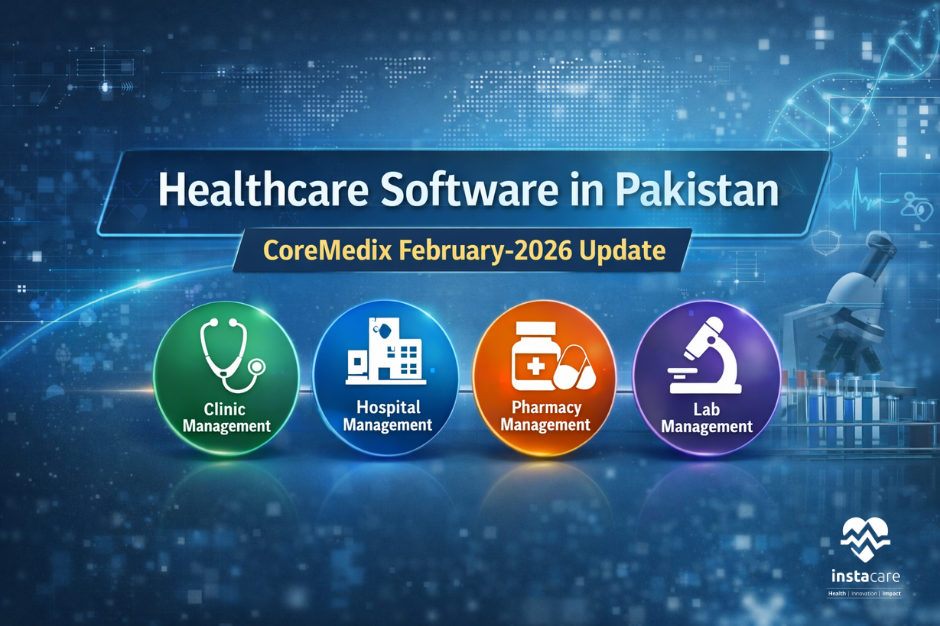
Healthcare operations in Pakistan require software that is accurate, stable, compliant, and scalable. This latest InstaCare platform release introduces critical improvements across clinical documentation, billing, pharmacy workflows, IPD management, lab integrations, and system usability, strengthening InstaCare’s position as a leading Healthcare Software in Pakistan. If you are evaluating clinic management software, hospital management software, pharmacy management software, or lab management software, this update directly addresses real operational challenges faced by healthcare businesses. What’s Included in This Healthcare Software Update This release focuses on: Enhanced clinical and prescription workflows Improved billing accuracy and IPD calculations Streamlined pharmacy and visit operations Clean and compliant medical print layouts Stronger patient intake and admission validations Completed lab reporting integration System-wide usability and reliability improvements Prescription & Clinical Notes Improvements (For Clinics & Hospitals) Clinical documentation is the backbone of any clinic management software and hospital management software. This update improves accuracy and usability: Clinical Notes delete permission enabled for Patient and Inpatient profiles Corrected the system confirmation message on note deletion Fixed Clinical Note edit form reset issue Improved long text wrapping in Clinical Notes UI Resolved Medical History alert saving issue Patient vitals now correctly copy from Visit to Prescription and Print Urdu validation added for mandatory Test Instructions Drag & Drop in Prescription Custom Fields now works across the full prescription, including sections above medicines Removed Edit/Delete buttons from Prescription Print view for clean medical printing Mandatory indicators (*) added to: Test Instructions Instructions fields Treatment Plan (Amount & Services) Placeholder text corrections across: Prescription Custom Fields Treatment Plan Search Consent Form Search Task History SMS Reminder Search Billing & Invoice Stabilization (For Hospitals & Multi-Service Clinics) Billing reliability is critical in hospital management software and enterprise healthcare systems: Fixed decimal formatting inconsistencies in Services Invoice Print Corrected zero-decimal billing scenarios Strengthened Create Invoice validation (no processing with empty fields) Added mandatory indicator for Payment Mode – Name Enabled IPD additional billing while the patient remains admitted Corrected Shift Bed / Room charge calculations (Invoice & Print) Fixed IPD Room billing calculation logic Pharmacy & Visit Workflow Improvements (For Pharmacy Management Software) Medicines added via Edit Visit now correctly sync with Pharmacy Orders Fixed validation message persistence in Add Visit Resolved “E” button issue in New Patient creation These improvements enhance prescription-to-dispensing accuracy in pharmacy management software environments. Need help or want to see these updates in action?👉 Chat with our Healthcare Software Experts on WhatsApp Print Layout & Medical Document Corrections Accurate printing is essential for compliance in healthcare software in Pakistan: Eye Prescription print preview issue resolved Eye Prescription margin corrections implemented Birth Certificate improvements: Blank page issue resolved Proper image sizing defined Improved print formatting Death Form updated Consent Forms updated Services print decimal formatting corrected (Custom section radio button visibility remains under review and will be included once finalized.) IPD & Admission Enhancements (Hospital-Grade Features) Medicine validation is enforced at patient discharge Guardian CNIC validation added in the Admission Creation Form Inpatient profile Excel export cleaned (removed unnecessary “View Profile” text) Intake & Patient Form Validations (Compliance-Focused Improvements) CNIC validation added to Patient Intake Form Mandatory indicators (*) added for Name & CNIC Mandatory task fields are clearly marked in the Patient Profile Lab Module & Integration Updates (Lab Management Software) Lab module permissions stabilized Reporting improvements implemented Chughtai Lab Reports Integration completed and tested end-to-end This strengthens InstaCare as a reliable lab management software solution for diagnostic providers in Pakistan. System & Usability Enhancements Beep sound notification added to task assignment and status updates 250 SMS credits updated for the affected user account Healthcare businesses across the country increasingly rely on Healthcare Software in Pakistan that is built for local workflows, regulatory requirements, and real operational complexity. From appointment handling and clinical documentation to billing, pharmacy dispensing, and diagnostic reporting, a unified system reduces errors and improves efficiency. CoreMedix is designed to serve as a comprehensive clinic management software, hospital management software, pharmacy management software, and lab management software—making it suitable for both small practices and large multi-location healthcare organizations. Why This Update Matters for Healthcare Businesses in Pakistan This release strengthens InstaCare as a unified Healthcare Software in Pakistan by improving: Clinical accuracy for doctors and staff Billing reliability for finance and administration Workflow efficiency across clinics, hospitals, pharmacies, and labs Whether you operate a clinic, hospital, pharmacy, or diagnostic lab, these improvements reduce friction and support scalable healthcare operations. About InstaCare InstaCare is an all-in-one healthcare technology platform offering: Clinic management software Hospital management software Pharmacy management software Lab management software Designed specifically for healthcare businesses in Pakistan, InstaCare focuses on stability, compliance, and real-world usability. Need help or want to see these updates in action?👉 Chat with our Healthcare Software Experts on WhatsApp Choosing the right Healthcare Software in Pakistan is no longer just about digitization; it is about stability, scalability, and day-to-day usability. Medical businesses need software that works seamlessly across OPD, IPD, pharmacy, and laboratory operations. By continuously improving clinical workflows, billing accuracy, pharmacy order management, and lab integrations, CoreMedix strengthens its position as an enterprise-ready hospital management software and clinic management software tailored for Pakistan’s healthcare ecosystem. Modern healthcare operations demand Healthcare Software in Pakistan that connects clinics, hospitals, pharmacies, and labs on a single platform. A tightly integrated pharmacy management software and lab management software ensures accurate dispensing, reporting, and compliance, while reducing manual work and operational delays for medical teams. Healthcare providers across the country are increasingly adopting Healthcare Software in Pakistan that delivers reliability, compliance, and long-term scalability. With continuous improvements across clinical workflows, billing accuracy, pharmacy operations, and laboratory integrations, CoreMedix continues to evolve as a dependable clinic management software, hospital management software, pharmacy management software, and lab management software built specifically for real-world medical operations in Pakistan. This February 2026 update reflects our commitment to delivering stable, production-ready healthcare technology that supports doctors, administrators, and medical staff in their daily work.
Islamabad Healthcare Regulatory Authority (IHRA): Compliance Requirements for Clinics & Hospitals Healthcare quality, safety, and accountability are not optional they are legal requirements in Islamabad. Whether you operate a clinic, diagnostic laboratory, or hospital in the Islamabad Capital Territory (ICT), the Islamabad Healthcare Regulatory Authority (IHRA) defines the standards you must meet to operate legally, ethically, and sustainably. This guide explains IHRA’s compliance requirements in practical terms and shows how IHRA compliance software from Instacare helps healthcare facilities stay audit-ready while reducing operational burden. What Is the Islamabad Healthcare Regulatory Authority (IHRA)? The Islamabad Healthcare Regulatory Authority (IHRA) is an autonomous statutory body established under the Islamabad Health Regulation Act, 2018. Its mandate is to regulate, license, and monitor all healthcare establishments in ICT to ensure safe, standardised, and patient-centred care. IHRA’s core responsibilities include: Registration and licensing of healthcare establishments Enforcement of Quality Healthcare Service Standards (QHSS) Monitoring patient safety, hygiene, and service delivery Conducting inspections and corrective actions Maintaining a public registry of licensed facilities No healthcare establishment can legally operate in ICT without IHRA registration and licensing. Why IHRA Compliance Matters IHRA compliance is a legal obligation, not an administrative formality. Under the Act: Operating without a valid IHRA license may result in fines up to PKR 1,000,000 Facilities may face suspension or sealing Repeated violations lead to reputational damage and loss of patient trust Beyond enforcement, patients increasingly prefer licensed and compliant facilities, making IHRA compliance a competitive advantage as well. IHRA Compliance Requirements Explained IHRA requirements fall into four critical areas. 1. Registration & Licensing All healthcare establishments clinics, hospitals, labs, diagnostic centres, nursing homes, and rehabilitation facilities must register with IHRA before operations. Registration process includes: Online application submission CNICs, affidavits, qualifications, declarations Payment of registration fee If documentation is complete, provisional certification is issued within approximately 15 working days. Licensing: After registration, IHRA conducts inspections against Quality Healthcare Service Standards. A license is issued for five years once compliance is verified. 2. Quality Healthcare Service Standards (QHSS) QHSS define enforceable standards for healthcare delivery across different facility types, including: Hospitals and primary care facilities Dental clinics Clinical laboratories Rehabilitation centres Traditional healthcare establishments QHSS indicators include: Qualified medical staff and supervision Facility safety and hygiene Equipment documentation and maintenance Patient privacy and accessibility Display of license and registration details 3. Minimum Service Delivery Standards (MSDS) MSDS outline minimum operational and clinical expectations, such as: Emergency preparedness Infection prevention and control (IPC) Patient rights and grievance handling Safe equipment use Medical record management IHRA continuously updates MSDS frameworks to align with international safety and workplace standards. 4. Periodic Inspections & Enforcement IHRA conducts: Routine inspections Complaint-based inspections Non-compliance can result in: Corrective action notices Temporary suspension Facility sealing Several enforcement actions in ICT have cited unqualified staff, hygiene failures, and missing registrations making proactive compliance essential. Book Your Free Marketing Consultation How Instacare Helps Facilities Stay IHRA Compliant Manual compliance tracking is time-consuming and error-prone. Instacare’s IHRA compliance software simplifies compliance by digitising documentation, workflows, and audit evidence. 1. Centralised Compliance Tracking Instacare maintains structured records for: License validity and renewals Staff qualifications and registrations Equipment calibration logs EMR documentation standards Inspection audit trails All data is searchable and inspection-ready. 2. EMR & EHR Systems Aligned with IHRA IHRA emphasizes accurate, complete, and secure patient documentation. Instacare ensures: Structured electronic medical records Consistent treatment histories Time-stamped audit logs Secure backups and access control This supports both compliance and clinical quality. 3. Workflow Automation & Operational Control From appointments to billing and reporting, Instacare automates daily workflows to reduce manual errors, a common compliance risk. Clinic Management Software Pakistan centralises operations under one system, improving traceability and reliability during inspections. 4. Inspection-Ready Reporting Instacare generates documentation aligned with IHRA expectations, including: Infection control reports Emergency preparedness records Staff training logs Incident and corrective-action reports These reports ensure facilities remain audit-ready at all times. Conclusion IHRA has transformed healthcare regulation in Islamabad by enforcing clear standards for registration, licensing, safety, and service delivery. Compliance is not merely a legal checkbox it reflects a commitment to patient safety, transparency, and trust. By adopting IHRA compliance software like Instacare, healthcare facilities can reduce compliance stress, minimize legal risk, and focus on delivering quality care with confidence. FAQs 1. Which facilities must register with IHRA? All healthcare establishments in ICT, including clinics, hospitals, labs, dental practices, rehabilitation centres, and mobile healthcare units. 2. What happens if a facility operates without IHRA approval? Penalties include fines, suspension, sealing of premises, and legal action. 3. Is IHRA registration and licensing paid? Yes. Fees vary by facility type, with license renewals required every five years. 4. Does Instacare provide IHRA compliance software? Yes. Instacare offers IHRA-aligned EMR, clinic management, and compliance tracking solutions. 5. How often does IHRA inspect facilities? IHRA conducts routine and complaint-based inspections to ensure ongoing compliance.