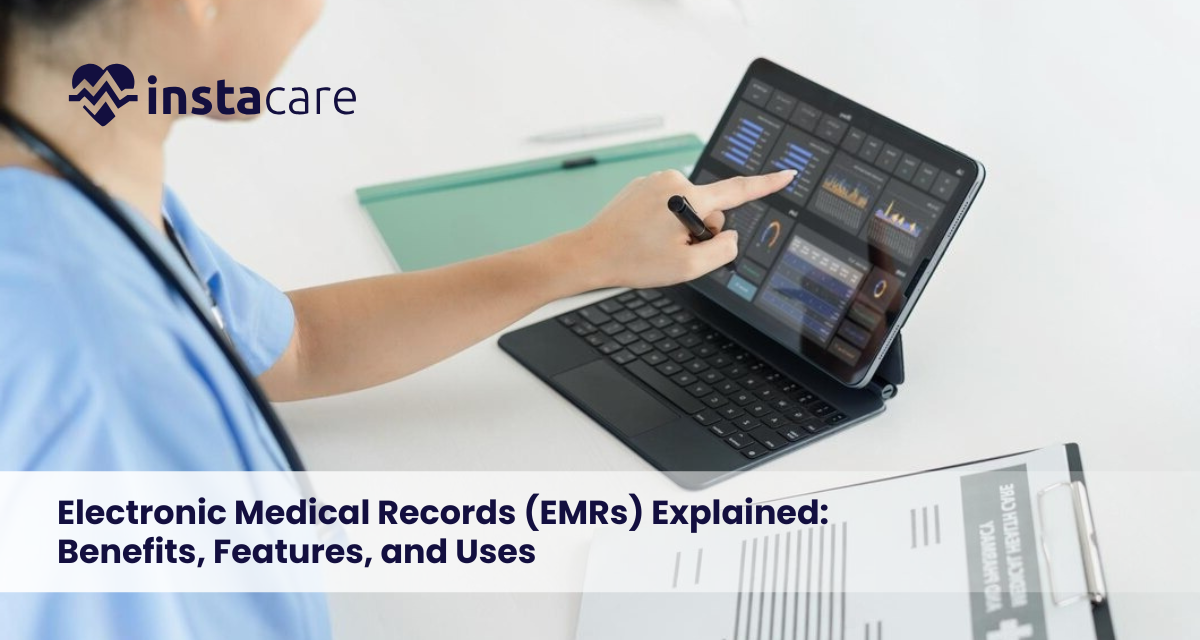
Electronic Medical Records (EMRs) Explained: Benefits, Features, and Uses The global healthcare systems are becoming more digitalized to enhance the medical care and patient records. EMRs are one of the most significant inventions in this sphere. These systems substitute the use of paper files with computerized medical records that enable the healthcare provider to store, retrieve, and process patient records more effectively. The increased adoption of EMR technology in the healthcare sector has changed the manner in which hospitals and clinics process patient data. With EMR software for hospitals, medical workers can enhance the accuracy of the documentation, simplify the work processes, and contribute to enhanced healthcare decision-making. The role of EMR in healthcare today can be emphasized by being aware of how EMRs operate, their advantages, and the role they play in contemporary healthcare. What Are Electronic Medical Records (EMRs)? EMRs are the computerized replicas of the paper charts of patients utilized in hospitals and clinics. These electronic medical records include the comprehensive data on the medical history of a patient, his/her diagnosis, medications, treatment plan, laboratory results, and physician notes. The use of EMRs is aimed at accessing the information required by the healthcare professional who is authorized to access the information in a particular medical facility. They assist in substituting manual records keeping and are critical medical record keeping systems that arrange and store patient information in a safe environment. EMRs enable the medical industry to be more efficient by ensuring that record accuracy is high and that health care information on patients is readily accessed when required. How EMRs Work? The knowledge of how EMR systems operate contributes to the understanding of their popularity in healthcare facilities. EMR systems act as digital repositories of patient information and are centrally located databases in electronic format. When a patient comes to a hospital or clinic, clinical specialists input data into the EMR system, such as medical history, symptoms and diagnoses, prescriptions, and test results. Such data is incorporated into the electronic record of the patient and can be viewed by the personnel. These systems also interconnect with other healthcare data management systems including the laboratory software, pharmacy systems and imaging equipment. It has integrated such that medical professionals can see the entire patient data in a single location to enhance coordination and decision-making. Key Features of Electronic Medical Records Current EMR systems comprise numerous tools that will enhance patient care and medical records. Knowledge on EMR features and functions can assist healthcare organizations be able to utilize their benefits to the fullest extent. Patient Information Management EMRs contain personal information, medical history, allergies, medication history and treatment records in structured electronic records. Clinical Documentation EMR software allows doctors and nurses to document the symptoms, diagnosis, and notes regarding treatment of patients electronically. Laboratory and Test Results Integration EMRs enable healthcare providers to retrieve the laboratory results and imaging reports in real-time with built-in healthcare data management systems. E-Prescribing Physicians are able to transmit prescriptions to the pharmacies electronically and save a lot of mistakes and enhance efficiency. Access control and Data Security The current EMRs have security measures like encryption and restricted access to ensure the safety of patient information. These EMR capabilities and functions contribute to find the way to simplify the medical records and enhance patient care. Benefits of EMRs in Healthcare EMRs have had a great impact on the operations and management of health care. The significance of EMR in healthcare is manifested through some benefits. Improved Accuracy The electronic records minimize the errors of handwriting, and enhance the accuracy of documentation. Quickter access of patients data Digital Medical Records enable healthcare providers to access their digital medical records in a short time, thus saving time when attending to patients. Better Coordination of Care EMRs enable different healthcare providers to access the pertinent information about the patient by integrating with the healthcare data management systems. Enhanced Efficiency Mechanized processes minimize the administration and enhance the productivity of the hospital. Better Data Analysis Patients Hospitals are able to use the data on patients to draw conclusions about trends and better treatment and aid in medical research. These advantages indicate the fact that EMR implementation in hospitals is increasing globally. EMR vs EHR What Is the difference? Electronic Medical Records (EMRs) and Electronic Health Records (EHRs) are the terms that many individuals mix though they are somewhat different. EMRs refer to electronic copies of patient records applied to one healthcare organization. They primarily facilitate medical documentation and clinical processes within a company. EHRs, in their turn, are more universal systems, ensuring the possibility of sharing the patient information with several healthcare organizations. Hospitals, clinics, specialists communicate much better with the help of EHRs. Both systems lead to the better management systems of medical records, but EHRs are more operable among healthcare providers. Book Your Free Marketing Consultation Challenges of Implementing EMRs Despite all the advantages of EMRs, there are some challenges that healthcare organizations can encounter during the implementation of EMRs in hospitals. High Initial Costs The installation of EMR Software is a costly activity in terms of software, hardware, and personnel training. Staff Training The use of EMR software in hospitals may require time and these professionals may need to learn how to operate it. Data Security Concerns EMRs contain delicate information about patients, and therefore hospitals should ensure they have excellent cybersecurity protections against breaches. System Integration Issues At times, combining EMRs with the current healthcare data management systems can bring technical issues. Nonetheless, the benefits of the strategies usually surpass the challenges in the long-term. The Future of Electronic Medical Records It can be predicted that the future of electronic medical records will also be characterized by more sophisticated technologies and better integration on a digital basis. EMR technology in the healthcare sector will probably improve with the help of artificial intelligence, cloud computing, and advanced analytics. The technologies can assist physicians in the more efficient analysis of patients data and aid in
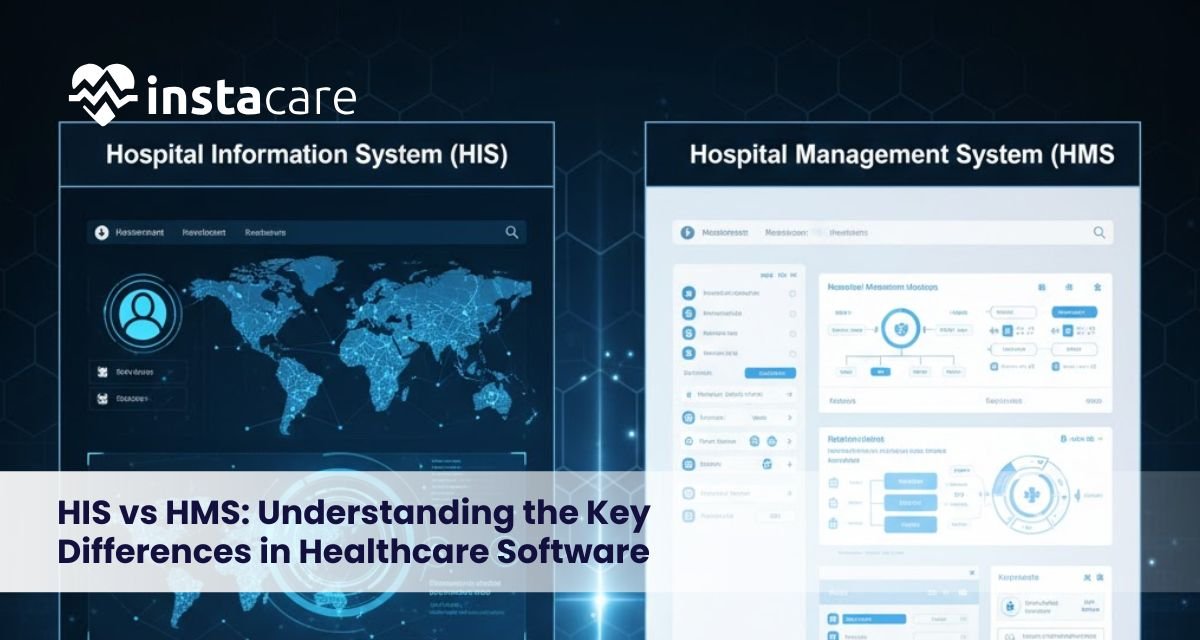
HIS vs HMS: Understanding the Key Differences in Healthcare Software The healthcare organizations have been overly relying on digital systems to facilitate operations, enhance patient care, as well as increase efficiency. The Hospital Information System (HIS) and the Hospital Management System (HMS) are two popular systems of healthcare IT. These terms are used interchangeably though there are some significant differences between the two. The comparison between hospital information system vs hospital management system will help healthcare providers to select the appropriate solution to their problems. This guide elaborates the main characteristics, dissimilarities, and similarities as well as advantages of HIS and HMS. What Is a Hospital Information System (HIS)? A Hospital Information System (HIS) is a software interface comprising of an integrated system used to handle the clinical, administrative, financial, and operational data of a hospital. It pays much attention to the patient data and clinical processes. HIS is integrated with relationship among various departments-laboratory, radiology, pharmacy and billing into one digital hub. In comparison with HIS, HMS is said to be more clinically oriented. What Is a Hospital Management System (HMS)? A Hospital Management System (HMS) is software designed to manage a hospital’s administration and operations. It automates routine procedures and enhances productivity. Although HMS can contain clinical modules, it generally focuses on: Patient registration Appointment scheduling Billing and invoicing Inventory management Staff management Put simply, in HIS vs HMS comparison, HMS is more operational management-centered, whereas HIS is more in-depth in combining both clinical and operational data. Key Features of HIS The HIS software features will help explain its broader scope. Electronic Medical Records (EMR) Integration Keeps patient medical histories electronically. Laboratory Information System (LIS) Tracks lab tests and results efficiently. Radiology Information System (RIS) Manages imaging reports and diagnostic workflows. Pharmacy Management Monitors prescriptions, drug inventory and dispensing. Clinical Decision Support Facilitates doctor treatment plans and alerts. Patient Data Management Enhances through central and safe storage of medical records. Financial & Billing Modules Processes insurances, payments and tracking of revenues. Large hospitals that have many departments may need HIS in order to have a wide integration. Key Features of HMS The HMS software features that are more operational oriented. Appointment Scheduling Books automatically and shortens the waiting of patients. Patient Registration Electronically records the admissions and discharges. Billing & Invoicing Prepares bills and records payments. Inventory & Asset Management Tracks the use of medical supplies and equipment. HR & Payroll Management Administers personnel files and wages. Reporting & Analytics Reports the performance of the administration. HMS is most applicable to small to mid-sized healthcare facilities where administrative efficiency is the primary objective. Book Free Demo Key Differences Between HIS and HMS The scope and functionality of HIS and HMS are the major differences. Regarding a classic comparison between HIS and HMS, HIS focuses on clinical and administrative processes, providing a wide range of patient data management capabilities and sophisticated tools such as EMR, LIS, and RIS. It is extensive in interdepartmental integration and is most applicable to large hospitals and multispecialty health facilities that require deep clinical coordination. Conversely, HMS primarily focuses on administrative and operational activities, such as patient registration, billing, appointment scheduling, and inventory management. It provides a moderate level of integration and is mostly well-suited to small to medium-sized healthcare facilities. The difference between hospital ERP vs HIS is that the HIS is viewed as having more clinical strength than hospital ERP in discussions where HIS is viewed as focusing more on enhancing hospital management processes. Similarities Between HIS and HMS Although they are different, HIS and HMS have a number of similarities: They both digitalize hospital operations. Both enhance efficiency of workflow. Both reduce paperwork Both enhance data accuracy Both favour reporting and analytics. The two systems are the fundamental elements of present-day healthcare IT systems. HMS vs EMR: How Do They Compare? When we are discussing HIS and HMS, it might also be useful to understand HMS vs EMR. EMR (Electronic Medical Record) refers to the computerized medical records of patients. HMS incorporates non-patient record administrative functions. HIS is also the system that typically integrates with EMR. Therefore, EMR is generally part of an HIS rather than an entire hospital management system. Benefits of Implementing Healthcare Software Healthcare organizations also have several advantages regardless of the HIS or HMS selection. Better Operational Efficiency The automation decreases the number of manual jobs and administration. Better Patient Care The centralized data enhances the quality of diagnosis and treatment plan. Enhanced Data Security Digital records are safer as compared to paper based systems. Cost Reduction Automated procedures cut on wasteful costs. Better Hospital Financial Performance Proper billing and revenues recognition enhance profitability. Regulatory Compliance Electronic systems can be used to support healthcare quality and reporting issues. By investing in the appropriate healthcare IT system, one will see a growth in the long run and a better patient outcome. Choosing Between HIS and HMS The choice depends on: Hospital size Budget Clinical complexity Integration requirements Digital transformation long-term objectives. HIS can be more useful to large multi-specialty hospitals, whereas the small facilities can be satisfied with HMS. Conclusion Hospital management system vs hospital information system is vital information that a healthcare decision-maker should understand. Though both HIS and HMS enhance efficiency and digitalize operations, HIS is more deeply integrated clinically, and HMS is rather about the administrative management. An attentive comparison of the HIS and HMS assists the healthcare providers to determine the appropriate solution depending on their size, services, and the long-term goals. Finally, adoption of appropriate healthcare IT system improves patient care, efficiency in operation and financial performance. Frequently Asked Questions How does HIS differ primarily with HMS? HIS concentrates on clinical and administrative operations whereas HM is preoccupied with administrative and operational activities. Is HMS the same as EMR? No. EMR deals with the medical record of patients, whereas HMS has administrative tasks, including billing and scheduling. Which is better: HIS or HMS? It depends on hospital needs. Hospitals that are large
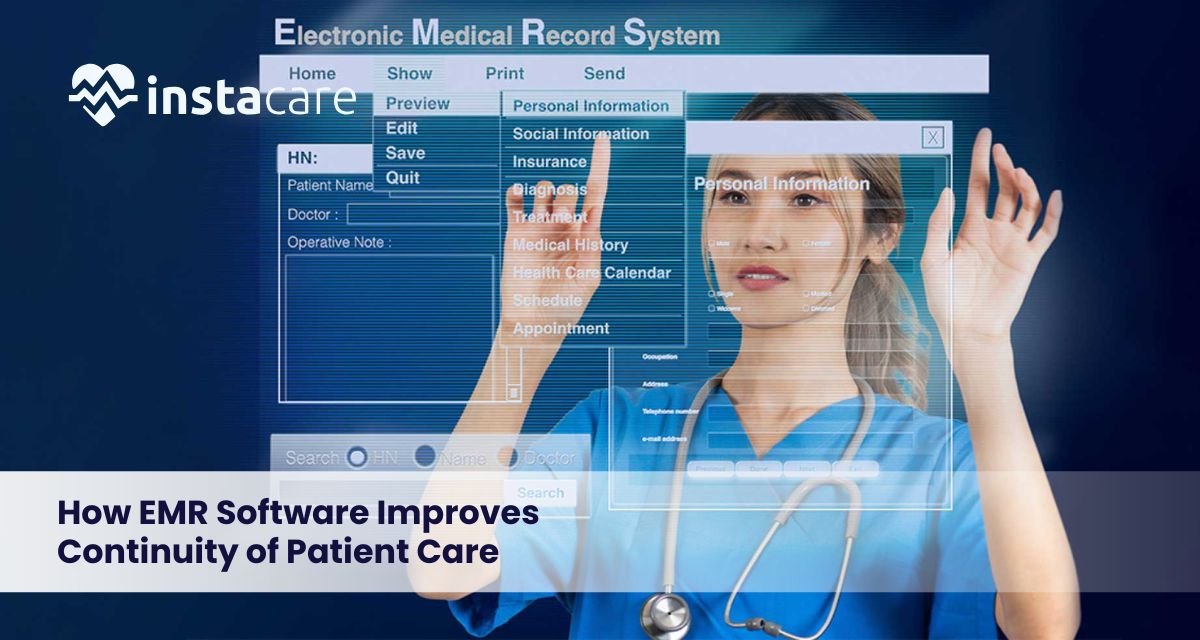
How EMR Software Improves Continuity of Patient Care Patient continuity of care is a critical aspect to provide safe, effective, and patient-centred care. When paper files or disparate systems contain medical information, gaps in care, delays, and errors are more likely to occur. In this respect, electronic medical records in healthcare have a transformative role. EMR software helps providers keep patient records complete, accurate, and accessible, facilitating transfers and improving coordination throughout the care process. What Is EMR Software? EMR (Electronic medical record) software is a system used to store, maintain, and update patient medical records in a medical institution. EMRs provide real-time access to clinical information, unlike paper charts, enabling informed decision-making. EMR software generally consists of: Patient demographics and medical history. Diagnoses and treatment plans. Medications and allergies Lab findings and imaging findings. Advancements and medical records. EMRs are the basis of enhanced patient care continuity through centralization of patient information. How EMR Software Supports Continuity of Patient Care Centralized Patient Records The development of a unique and single patient record is one of the most significant EMR software advantages. Up-to-date information is accessible to all providers involved in a patient’s care. This helps: Eliminate unnecessary tests and procedures. Minimise medical errors through absent data. Ensure there are consistent treatment plans across departments. Improved Care Coordination EMR and care coordination are synonymous. EMRs enable smooth communication in case of two or more healthcare professionals, which include primary care doctors, specialists, nurses, and pharmacists. The benefits of the coordination are: Referral and consultation note access. Real-time communication on treatment change. Improved transfers in an admission or discharge. This cooperation makes the care constant even in a case of change of providers. Better Clinical Decision-Making EMRs support clinical decision-making by providing patients with their full medical history in a short period. Practitioners can consult prior treatment, test results, and findings before making new decisions. This leads to: More accurate diagnoses Individualized care plans. Less risk of adverse drug reactions. Consequently, the EMR effect on the patient outcomes. Enhanced Patient Safety Continuity of care is closely linked with the patient safety. EMRs also contain inbuilt warnings and reminders that prevent clinicians to make errors. Safety features common to them are: Alerts on allergy and medication interaction. Preventive care reminders Unusual lab result reports. These tools assist the providers to provide safer and more reliable care in the long run. Faster Access to Information When there is an emergency or a situation that requires urgent care, time is an issue. EMRs provide the ability to get patient records in real time, even during off clinic hours. Benefits of faster access: Faster treatment and diagnosis. Less time wastage in care provision. Improved performance in the face of crisis. This instant accessibility enhances continuity, particularly in complex cases. Book Free Demo Benefits of EMR Software for Healthcare Providers and Organizations For Healthcare Providers Reduced administration and paperwork. Additional time on direct interaction with the patient. Enhanced interaction with care teams. Increased trust in clinical processes. For Healthcare Organizations Standardized processes of care. Enhanced efficiency of workflow. The improved adherence to regulations. Increased scores on patient satisfaction. Overall, these EMR software advantages can help healthcare systems deliver uninterrupted, high-quality care. Challenges and Best Practices for EMR Implementation Common Challenges Although EMR software benefits are numerous, it can be difficult to implement because it may be associated with the following challenges: Staff resistance to change. First training and training curves. Paper or legacy system data migration. Technical and cost requirements. Best Practices for Successful EMR Implementation In order to benefit the most and enable continuity of care, organizations must: Get clinicians involved in system selection and design. Conduct extensive employee education. Implement EMRs in phases Assure accuracy and security of data. On-going workflow optimization. These best practices enable the healthcare providers to realize the full value of electronic medical records in healthcare. Conclusion EMR software is important for enhancing continuity of patient care through accurate, accessible, and coordinated medical data. EMRs positively impact all phases of the care process by improving care coordination, patient safety, and clinical decision-making. When properly implemented, EMRs can enhance provider efficiency and improve health outcomes, among other benefits. Frequently Asked Questions What advantages does the EMR software have in enhancing continuity of care? EMR software enhances continuity and it offers benefits in that it centralizes patient records so that care coordination is possible between providers and also that it provides a consistent access to accurate medical information throughout the care journey of the patient. How can EMR be used in care coordination? EMR and care coordination collaborate as they enable various healthcare professionals to share real-time updates, referrals, and treatment plans to eliminate communication breakdowns and delays in care. Does EMR software have any effects on patient outcomes? Yes, the EMR impact on patient outcomes is important. EMRs minimize medical errors, assist the making of informed decisions, and improve the safety of patients, resulting in more efficient and consistent care.
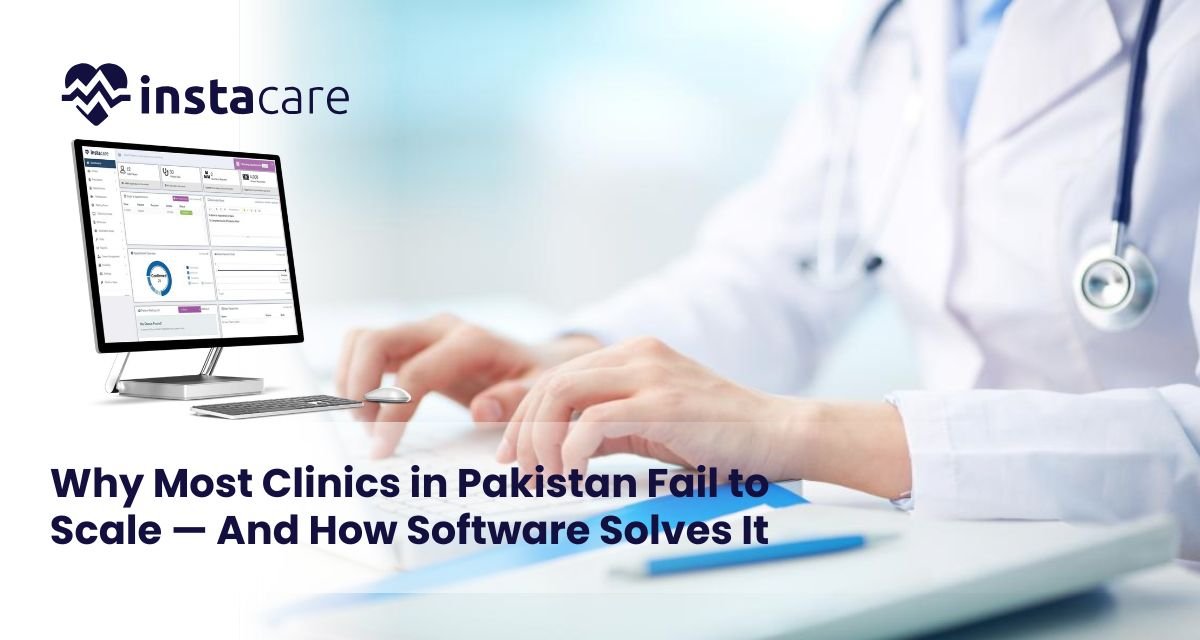
Why Most Clinics in Pakistan Fail to Scale — And How Software Solves It? The rapidly evolving healthcare industry of Pakistan depends heavily on clinics and small medical practices, which provide essential medical care to numerous patients throughout urban and rural areas. These medical facilities treat patients across millions of individuals throughout cities as well as remote areas. Despite performing critical functions, most clinics in Pakistan encounter difficulties expanding their operations past one clinic or doctor location. The expansion of clinics into multi-location healthcare groups remains rare even within densely inhabited areas. Many clinics in Pakistan face growth limitations which leads to a fundamental inquiry about the causes and solutions for this situation. The solution requires an integration of structural problems with business process weaknesses, coupled with weak digital capabilities as the primary reason for growth stagnation. The implementation of digital health record systems and solutions, combined with clinic management software systems, begins to eliminate the barriers that hinder clinic expansion and sustainable scalability. Understanding The Scaling Problem in Pakistani Clinics The objective of scaling a private clinic business exceeds merely extending patient volume across multiple branches. The goal is to develop standardized systems that provide uniform patient care throughout every operational contact point. The majority of clinics in Pakistan battle organizational excellence because of multiple essential factors, and require the best clinic management system in Pakistan 1. Manual Record Keeping and Data Loss Reliable patient documentation records persist on paper at most clinics that operate in the small to mid-sized category. The lack of proper data management produces various problems, which include lost patient history records along with difficult follow-up procedures and increased chances of data loss. Financial expansion through patient data management proves impossible when retrieval capabilities cannot ensure clinical data accessibility. 2. Lack of Operational Visibility The majority of Pakistani clinic owners together with their medical staff operate their clinics without knowing their operational efficiencies. Clinics are effectively making use of the available appointment times. The medical staff manages to follow their scheduled work protocols. What amount of income does the clinic lose through patients who fail to show up and through incorrect inventory management? These important questions remain unanswered because clinics have insufficient monitoring systems. A data-driven strategy is essential for making strategic expansion decisions since the absence of insights will turn important decisions into mere speculation. New clinic branches reflect identical inefficient operational methods from existing facilities, which produce failure instead of growth. 3. Staff Dependency and Lack of Standardization Multiple clinics in Pakistan rely heavily on selected personnel who grasp their operational systems because only these workers enable proper performance. When essential staff members exit, the system fails to function properly. The facilities lack standard operating procedures (SOPs) to train staff and manage flow operations while processing payments. Business expansion depends on standardized operating systems that serve the company beyond individual employees. The absence of automation and enforcement software preserves the fragile and inconsistent operational status of clinics. 4. Financial Leakage and Untracked Expenses Examining monetary movements remains a significant obstacle for businesses trying to expand their medical operations. Several clinics fail to establish proper systems that track both income and expenses, discounts and patient refunds. Petty cash goes unrecorded. Patient payments might be under-reported. The inability to track financial data undermines any possibility of comprehending whether a clinic makes enough profit to grow. The lack of software-backed patient tracking systems results in conflicts about revenue sharing among doctors who share revenue at multi-practitioner clinics. Book Free Demo How Smart Clinic Management Software Solves These Problems? Digital transformation functions across all healthcare institutions, starting from large hospitals to small clinics. A patient management software platform transforms all medical facilities, even in small clinics, through automated operations and improved patient care and data analytics. Here’s how: 1. Automated Appointment Management When patients use clinic software, they can make appointments using a computer or a mobile device options which cuts both telephone congestion and human mistake rates. Software management tools help doctors schedule appointments better so patients obtain their appointments on time, which decreases missed appointments. Real-time updates maintain constant alignment between clinic personnel as well as medical staff. 2. Electronic Medical Records (EMRs) The EMR software for clinics functionality enables clinics to maintain safe storage of patient information including medical records, laboratory reports and clinical prescriptions. The health care quality measures enhance as the system allows patients to keep their medical history accessible across different network doctors or clinics. 3. Centralized Billing and Payments The central billing feature of clinic management software joins all financial operations, including payments and receipt handling together. The software system provides instantaneous transaction recording and report production, and minimises financial loss through cash theft. Seamless payment processing occurs when certain platforms link with POS equipment and digital payment solutions. Benefits of Centralised Billing: Eliminates manual errors Enables transparent revenue-sharing between doctors The software system allows clinic owners to determine their revenue numbers according to service type and department. Patients have better trust in billing processes because items appear separated in statements. 4. Inventory and Pharmacy Management Clinic automation solutions enable clinics with in-house pharmacies to track supply quantities and expiration dates as well as automatically request reorders for consumable materials. The system prevents unnecessary stocking while ensuring essential drugs, together with consumables, remain available during needed. Advantages of inventory automation: Avoids medicine shortages By implementing this measure, expired products cannot reach the market for sale Reduces theft or unaccounted losses The system generates up-to-the-minute evaluations of clinic stock 5. Multi-Branch Management Through software for multi-branch clinics, users can visualise and control various locations through a unified dashboard. Clinic owners gain centralised oversight of all locations’ activities, which include an appointment system along with revenue generation and employee performance tracking, even when they are not physically present. Courting expansion becomes possible for clinics since they gain direct oversight and control across all their new locations. Conclusion Modern medical facilities that will prosper within Pakistan’s changing healthcare environment must begin their

Immunization Tracking through EMR Software Made Easier As healthcare increasingly shifts to digital solutions, Immunization Tracking through EMR software is transforming how we manage and monitor vaccinations. What was once a complex, paper-based process is now a streamlined, efficient system powered by advanced software, giving both practitioners and patients complete control. From flu shots and travel vaccinations to routine pediatric immunizations, EMR systems are essential for ensuring timely doses, minimizing errors, and providing healthcare providers with centralized, easy access to patient records. This is especially valuable in today’s interconnected, networked healthcare landscape. Major Features Of EMR Immunization EMR software provides measurable benefits of much greater value than convenience. Here’s the payoff in its entirety: Real-Time Record Keeping: Eliminates delay and errors associated with manual entry. Reminders and Alerts: Provides automated reminders, reducing the likelihood of dose omissions. Improved Data Sharing: Conveniently shares vaccine history with schools, employers, or other healthcare providers. Compliance Support: Helps clinics meet national vaccination standards and reporting mandates. Time Savings: Freeing up valuable administrative time, enabling providers to devote more time to patient care. All these amount to improved practice, improved patient safety, and improved public health. Application & Benefits Of Immunization Tracking by EMR Software The Value of Accurate Immunization Records Vaccines are a foundation of public health. Vaccines prevent infectious disease spread and save a million lives annually. But vaccines are only effective if there is the schedule and dosing adherence. That is where accurate immunization records come into play. Paper or tainted records, however, have the undesirable consequence of causing missed doses, duplicate injections, and even becoming a health risk. They are misplaced or missing in emergency conditions or patient transfer between providers. These problems are addressed by EMR systems. Monitoring computerized allows all doses administered to be accurately documented, creating an entire lifetime history of immunizations available at any authorized location. Successful Vaccine Management through EMR Systems Core EMR software must have the ability to automate sophisticated clinical workflows. Immunization tracking is now baseline functionality for almost all EMR systems, and this is how it works: If a vaccine is given, it’s entered on the patient’s electronic record. The software captures important information like the type of vaccine, the manufacturer, the lot number, the location where given, and the provider. This information is then stored indefinitely and added to the patient’s entire medical record. Much more importantly, the system tracks follow-up doses and reminds providers and patients of due or past-due immunizations. This automation avoids vaccinating on schedule delays without reminders. Automated Alerts: Provider Safety Net The favorite thing about EMR-based monitoring for immunization is the automated alert. The provider does not have to go on a wild search for patient records to discover upcoming vaccinations. The system uses reason-based scheduling to produce reminders for all patients based on age, medical history, and recommended vaccinations. For example, children are tracked against early child vaccine schedules, and adults are reminded of shingles, pneumonias, or flu vaccines. The predictive alerts prevent failure of vaccination, thus making individuals and populations safe otherwise at risk. Patient Empowerment Through Digital Portals Healthcare today is heading towards the patient-focused direction, and EMRs are at the center of it. By integrating patient portals with EMR systems, now patients can conveniently access from home to see their immunizations, appointment reminders, and even place orders for copies of their records online. This puts patients well-informed and activated. Parents can track vaccination history on children, adults can track booster shots and flu shots, and travelers can track being ready to go at the destination. Second, electronic reminders timed, through SMS, email, or push notification, radically increase rates of compliance. Integration with National and Global Registries Most EMR solutions are also designed to integrate easily into government immunization registries and health information exchanges. This allows clinics to Develop reports needed by national or local health authorities. Use state-wide or nationwide immunization statistics as a reference. Improve disease surveillance and response to outbreaks. The unity strengthens public health infrastructure and facilitates quick response during emergencies like pandemics or disease outbreaks. AI and Predictive Vaccine Management As EMR software matures, artificial intelligence and machine learning are being used to enhance the forecasting of vaccines and activation of patients. For instance, EMRs will be in a position to forecast who will be most likely to miss an upcoming vaccination and automatically schedule follow-ups. They can even use population-level information to inform policymakers where they have to prioritize vaccinations during crisis. This idea of leadership reframes immunization tracking from passive to active, proactive, serving the entire healthcare ecosystem. Best Practices for Optimum EMR Immunization Solutions To aim towards maximum benefits of monitoring immunizations using EMR software, doctors and health practitioners must have the following in place: Train Healthcare Personnel Appropriately: Train all health personnel in recording vaccine information and viewing immunization calendars on the software. Standardize Documentation: Document on the same types of documents across the entire network, avoiding error entries and enhancing the quality of information. Make It Cross-Accessible: Allow sharing immunization records in real-time across departments or even offices within the network of health centers. Audit Records Frequently: Regular audits prevent missed doses, repeated doses, or incorrect recording. Budzing these practices into work on a daily basis, health centers are able to provide more uniform and reliable immunization services. Real-World Impact: Community Health at Scale When EMR immunization software is effectively installed in clinics, schools, pharmacies, and hospitals, the effect quickly scales. Where EMR integration is strong, governments have reported: Improved vaccination coverage Improved speed in ending outbreaks Better vaccine
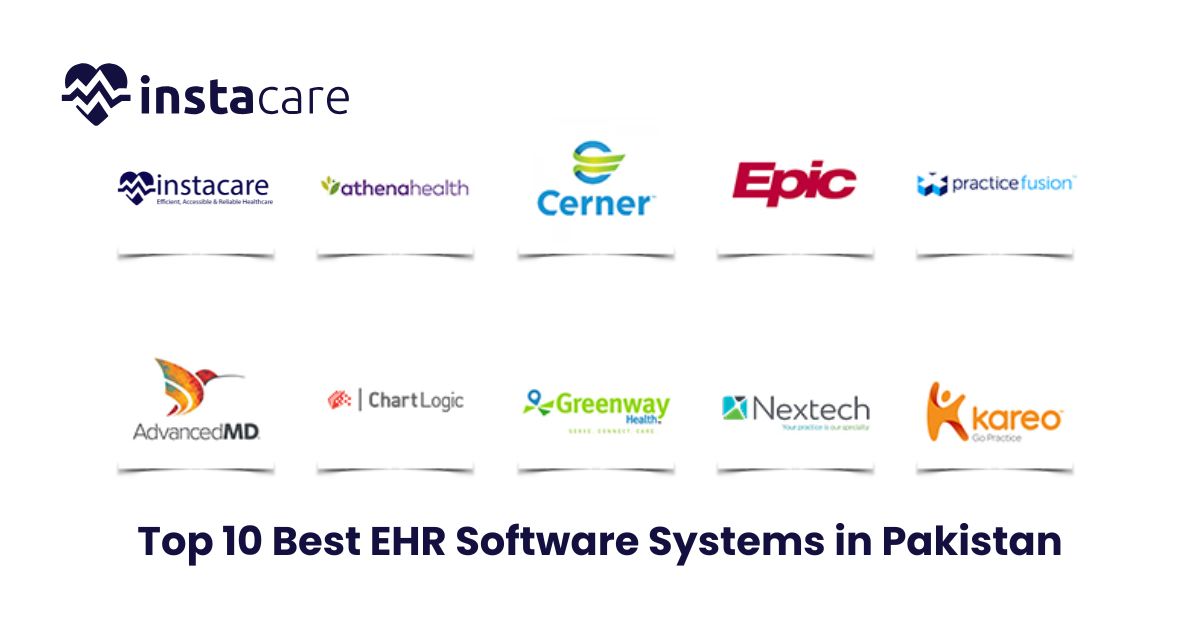
EHR software systems are currently revolutionizing the management of patient data in health care service provision. There is an increasing need for the effective EHR solutions in Pakistan as hospitals and clinics look for ways to improve patient care, streamline clinical management and operations, and improve regulatory compliance. Here is an all-around view of the best 10 EHR software systems in Pakistan, which highlights their features, benefits, and suitability to apply in different scenarios of healthcare sectors. 1- InstaCare InstaCare is the leading EHR solution that has been designed exclusively for the Pakistani healthcare industry. It offers superior patient management and streamlined workflows. Features Patient Management: InstaCare features complete tools to manage the appointments, demographics, and medical history of patients. Clinical Documentation: This module enables flexible creation and editing of the patient documents through the use of templates and voice-to-text functionality. Billing and Insurance Processing: The billing module in InstaCare is comprehensive and streamlines invoicing processes and accepts various types of insurance. Reporting and Analytics: enables the tracking of performance metrics along with sophisticated reporting for patient data analysis. Interoperability: InstaCare seamlessly integrates with other healthcare systems to ensure effective information sharing Benefits: InstaCare will increase patient care efficiency, enhances communication, streamlines billing processes and adds valuable insight for proper-informed decisions-making that makes it perfect for practices of all sizes. 2- Meditech Overview Meditech is very popular EHR solution that most hospitals and clinics use in Pakistan. This software delivers strong capabilities to manage patients efficiently while improving the care quality. Feature Personalized Templates: These can be designed depending on the specific practice of healthcare providers. Interoperability: This ensures effective communication with other healthcare systems. Patient Portal: This enables patients to access their health record, appointment schedule of physicians, and send messages to physicians. Advantages Enhances the productivity of clinical workflows Highly active patients with easily accessible health information Has seamless interoperability with the billing and coding cycles 3- Carecloud Overview CareCloud is a cloud-based EHR system that offers a broad range of features to tackle every healthcare provider’s needs in Pakistan Features Integrated Practice Management: combines the EHR with practice management Mobile Access: allows the care providers to access patient records on the move Analytics and Reporting: offer insight into the performance of practice and patient outcome Benefits User-friendly interface, which allows navigation to be easy. Scalable solution for every practice size Strong financial management 4- eClinical works Overview eClinicalWorks is a comprehensive EHR system that accommodates various types of medical specialties in Pakistan. Book Free Demo Features Telehealth: Supports virtual visit and telehealth consult assistance. Patient Engagement Tools: Provides patient reminders and educational resources. Customizable Dashboards: Personalized patient information and practice metrics. Benefits Enhance the management efficiency of patient care. Empower patients to express their issues by communication. Best reporting and quality improvement 5- Nexus Clinical Overview Nexus Clinical is one of the EHR solutions that were especially created for particularly Pakistan’s health sector. It is featured with different application features mainly to serve the needs of the area. Features Supports Multilingual: It allows multilingual capabilities, thus making it an applicable tool for different populations. Integrated Billing: It automatically facilitates in claim handling and streamlines the whole billing process. Data Security: High level security measures are taken to ensure leakage of information about the patients. Benefits Efficient process flow for the healthcare provider. Increases adherence with the local authority rules and regulations. Proper data management helps in providing better health services for the patients. 6- AI Health What is AI Health? AI Health is a new application for EHR that uses AI for providing quality patient care and organizational efficiency. Features AI-Based Insights: Predictive analytics for outcomes for patients. Automated Documentation: This decreases the burden on the health care provider. Patient Engagement: Personalized communication with the patient. Benefits Decision-making is from data-driven insights. Increased coordination between the health teams. Documentation processes’s efficiency 7- Dr. Appointment Overview Dr. Appointment is a very simplistic EHR application that has mainly been designed to focus more on scheduling appointments and managing patients. Features Appointment Management: Scheduling and management of appointments Patient Health Records : helps providers in managing, accessing, and getting hold of data of patients effectively. Reminders and Notifications: Assist in sending reminders to patients before an approaching appointment. Benefits Patients will be informed thus the no-show rates will be minimal. The patient-to-provider communication will be enhanced. Will be the user-friendly interface which would require a minimal period of training. 8- Healthsoft Introduction HealthSoft is an integrated EHR providing numerous features to Pakistan’s hospitals and clinics. Features Clinical Documentation: Provides ease with logging patient data. Integrated Pharmacy Management: Assists in the management of prescription orders and medication. Reports and Analytics: Tracks more detailed reports of patient care and operational efficacy. Benefits Health providers shall have streamlined operations Management of patients’ drugs would be far better with more safety concerning medication Reporting capabilities improved for better decision making 9- Zydoc Overview ZyDoc is a user-friendly EHR system focusing on the patient experience by being efficient about the management of information. Features User Interface: It is easy to use for healthcare providers. Patient Communication Tools: With this, patients can safely communicate with the providers. Customizable Workflows: Here, the practices of this facility can adapt workflows according to their unique practices. Benefits Improves patient experience due to enhanced communication. The health care records are handled much better. It adapts well to ever-changing requirements of health care. 10- CureMD Overview CureMD is one of the most famous EHR software solutions which offers a wide array of features to the providers in Pakistan. Features Integrated Solutions: This system integrates EHR, practice management, and billing all together. Mobile Access: It gives access to patient records from any device. Customizable Templates: This allows the practice to develop personalized templates of documentation. Benefits Improves the efficiency of the practice by using integrated solutions. Beats the patient care due to complete management of data. Makes the interface less complicated while requiring reduced training. Conclusion The choice of the right
How is Cloud-Based Clinic Management Software is Revolutionizing Healthcare? The healthcare sector has witnessed a transformation in recent years, especially due to technology. Among such innovations is the clinic management software implemented through the cloud game-changer. Overall, by leveraging cloud technology, healthcare providers can refine business processes, improve patient care, and increase efficiency. This blog post addresses the methods through which cloud-based clinic management software is changing healthcare, its benefits, and the future of the technology in medical practice. Understanding Cloud-Based Clinic Management Software Cloud-based clinic management software is a digital solution that enables healthcare providers to manage various administrative chores and patient information from a central, web-accessed platform. It’s not at all similar to the traditional software that could only work on an on-premises basis with maintenance. These systems are housed on secured servers that enable real-time updating as well as remote access. Important Features of Cloud-Based CMS Patient Scheduling: Appointments can be scheduled easily, rescheduled, or even canceled in advance using cloud-based systems which avoid no shows, optimizing the clinician’s workflow. Electronic Health Records: The electronic record provides aggregated information on patient records like medical history, treatment plans, and medications to avoid delays in access of crucial information. Billing and Invoicing: Automated billing processes help in smooth financial transactions; it becomes easy to raise invoices, collect payments, and deal with insurance cases. Telehealth Integration: Most cloud-based CMS systems have telehealth functionalities. Which means that providers can virtually consult and are very important to healthcare providers and patients in the last couple of years. Benefits of Cloud-Based Clinic Management Software 1-Improved Accessibility Access is one of the most beneficial advantages of a cloud-based CMS. Patient data and administrative tools are available anytime, anywhere with an Internet connection on any device. This allows for the following: Remote Work: Health care professionals can work from home and other locations, remotely, to improve work-life balance and continued delivery of health care services. Mobile Accessibility: The health care professional will be able to access the patient’s history or update information from a mobile device on the move, thus leading to quicker decision-making and better patient care. 2-Better Collaboration Cloud computing systems ensure that members of the health care team are collaborating better with each other. Many users can access and update patient information in real-time; thus, redundant data entry is avoided, and communication among departments improves. This collaborative approach leads to: Care Coordinated by Others: Collaboration among different specialists has the ability to be done with much ease, which essentially means a lot in the treatment process. Interdisciplinary Communication: Teams can discuss cases much more efficiently and will have better outcomes with the patient. 3-Cost Efficiences Saving big money on the expenses: Taking the clinic management software through the cloud saves big for health organizations when considering the expenses. With traditional systems, one has to incur high expenditure on hardware and installation costs, in addition to maintenance costs. With cloud solutions, the services can be deployed based on a subscription system, thereby allowing for: A lower initial investment: the providers can start with their minimal upfront expenses, and this makes it friendly to small practices adopting the technology. Lower IT Costs: Upgrades and maintenance are handled by the cloud service providers hence the clinic will save on employing skilled IT staff and other support. 4-Enhanced Data Security In health sectors, security of data is always of great importance since any information in relation to patients are secrets. The CMS solutions based on cloud usually include robust security features such as: Data Encryption: The patient’s data will be encrypted during both transit and storage to minimize unauthorized access. Regular Backups: Automated backups will support saving the data in case a system crashes or in case of cyber-attacks. Compliance with Regulations: Many providers of the cloud hold the compliance as per HIPAA, which helps you ensure patient records and other health data are handled safely. 5-Streamlined Workflow Cloud-based clinic management software automates the majority of administrative tasks, thus managing workflows more efficiently. Features, including appointment reminders and automated billing, enhance workflow for staff and reduce the administrative burden that consequently can enable more time to be spent with patients. Some of the benefits include: Higher Productivity: With routine tasks automated, staff dedicate more time to interacting with the patient and providing care. Lower Errors: The chances of a human making a mistake in billing and data entry are reduced by automation. Book Free Demo Role of Telehealth The rise of telehealth has been perhaps the most impactful trend in healthcare. It really came to a head during the COVID-19 pandemic. Cloud-based clinic management software typically has telehealth capabilities, allowing providers to see patients remotely. Some benefits include the following: Challenges and Considerations Even though cloud-based clinic management software has several benefits, some challenges and considerations should be regarded as essential in its implementation and usage: 1-Implementation and Training Another change required to transition into a cloud-based system may include adjustments in workflow and processes. Staff training and proper support are essential for implementing this transition process. Providers must have considerable blocks of time and resources set aside to train and reduce resistance to change. 2-Internet Connectivity Cloud-based systems require reliable connectivity in terms of the internet. Poor connectivity in areas might be an underlying factor that affects the access of the system to the clinic, which will eventually impact the patient care. Clinics must assess their internet infrastructure before moving to such a system. 3-Data Privacy Issues Cloud technology has its weaknesses, and that is data privacy. Cloud service providers and healthcare providers must ensure that the said provider has complied with the regulatory requirements and ensures the protection of patient information. The Future of Cloud-Based Clinic Management Software Cloud-based clinic management software promises a bright future. As technology evolves, we see the following aspects: Interoperability Coordination of care requires effective communication and easy data exchangeability between various healthcare systems. Future cloud-based CMS solutions will probably highlight interoperability as the core focus of sharing
Investing in Clinic Management Software vs. Traditional Management In the current high-speed healthcare scenario, clinics are constantly looking for avenues through which they can make their operations more efficient, improve patient care, and function smoothly. Managers of such clinics have to often take significant decisions in regards to whether the clinic should embrace management software or invest in traditionally used management practices. It is this cost-benefit analysis that guides clinic managers and owners into understanding the complete advantages and disadvantages of the two management options, thereby enhancing informed decision-making. What is Clinic Management Software? The CMS is otherwise known as Clinic Management Software is an electronic system designed for automating a wide range of management and clinic-level activities in the health facility setting. Such tasks may include appointment scheduling, managing patient records, preparing bills, and reporting. The software integrates well with the Electronic Health Records, thus providing an all-inclusive toolset for clinic operation management. Key features of Clinic Management Software Appointment scheduling: This software allows patients to make an Online Appointment, thus reducing administrative work. Patient management: It can aggregate data about the patient and thus be ready available to healthcare providers. Bill and collect processing: It provides for automated billing, insurance claims, and related payment processing. Reporting and analytics: It provides for analytics of clinic performance and population demographics Telehealth capabilities: It can host virtual consultations and thereby expand patient reach. Conventional Management Methods Most legacy management practices utilize manual methods that involve paper-based documentation, scheduling in person, and billing face-to-face. In so far as these have served for centuries, they are labor intensive and error-prone. Key Characteristics of Legacy Management Paper-Based Patient Records: It takes time to retrieve information on these paper files. In-Person Scheduling: Patients schedule appointment with one another through call or in-person messages. In-Person Billing: The billing is done in person. Limited Data Analysis: Acquiring insight into the performance clinic takes immense efforts if one does it without machines. Cost Analysis Clinic Management Software: The start-up costs for CMS are quite high and range based on the type of features and the scale of software. It may consist of costs for software licensing fees, hardware if needed, and implementation services. An average clinic would expect to pay between $5,000 and $30,000 for a full-fledged solution. Traditional Management: The initial set up for a traditional management system like paper supplies and employees is cheap. Only over time do these costs pile up due to inefficiency. Ongoing Cost CMS: Ongoing costs for traditional systems will include subscription fees for cloud-based options, plus updates and user training on software maintenance. These may range between $200 to $2,000 per month, depending on the clinic, in terms of size and complexity of the software. Traditional Management: Ongoing costs include mostly labour as more people time is needed in a manual process. This can spread over time in payroll expense, mainly when the clinic lacks in real efficiency. Cost Savings Clinic management software brings the possibility of great cost savings. Automated billing and scheduling reduce administrative hours so that staff can tend more time to the patients. Also, the probability of accuracy for collected data reduces the number of billing mistakes and claim denials. Traditional Management: Although traditional methods are the cheapest to set up, inefficiencies usually mean a high cost in the long run. Administrative errors, lost documents, and scheduling conflicts would add up to increased operational costs. Book Free Demo Benefit Analysis Efficiency and Productivity CMS: One of the major advantages of CMS is efficiency. It attempts to reduce the time spent on administration and permits more patients to be seen by health providers and more care to be provided. For example, an appointment schedule can be set through online portals, which minimizes calls over the phone to manage the process, thus, freeing up time for the staff to engage in other work. Traditional Management: This has been described to take much time, hence reducing productivity. Employees are said to spend too much time on tasks that can be automated, thereby diverting from quality care of patients. Patient Experience Clinic Management SoftwareCMS : Features made available to the patients help in the better management of patient expectations, such as online scheduling of appointments, reminders, and access to their medical records. This helps the patient in easy scheduling, on time or even prior to visit the doctor, and transparency of their medical record-in hand which increases the satisfaction level among patients. Traditionally Managed: The patients have a longer wait; frustrations related to scheduling and miscommunications in the process with manual work may lead to errors, and therefore the patient experience, overall is affected. Data Management and Compliance CMS: CMS has robust data management capabilities where all information regarding the patients will be maintained properly, securely, and can be made available in quick time. Most of the systems support compliance with regulatory standards like HIPAA, which requires compliance. Traditional Management: Paper-based records are more vulnerable to human errors, losses, and confidentiality breaches. Compliance is also very resource and time consuming without the automated systems. Scalability CMS: It also scales so easily to meet growing patient volumes and more services added for larger clinics. Most the software, on the other hand, provides different levels of pricing and allows customized options that allow clinics to expand with few adverse dislocations. Traditional Management: Expansion of a traditional management system, however may demand more employees or physical sources. This can be expensive and inefficient. Potential Drawbacks Clinic Management Software Initial Costs: Initial Costs of the software may be a significant barrier to entry for some of the clinics, particularly smaller ones. Training Requirements: The staff would be required to be retrained to effectively use the new software, which would disrupt the operations. Technical System Failure: With reliance on technology, outages or other technical failures make their clinics unable to service clients. Traditional Management Inefficiencies: Labor-intensive, there is a possibility of human error, and it is slow. Limited Data Insights: Clinics may not gain insight
What You Must Know About Cloud-Based EMR Software? In modern health management, EMRs have become an important tool. However, cloud-based EMR software is a huge leap from its on-premise cousin. Cloud-based EMR systems are revolutionizing the way healthcare professionals handle patient data by promising ease of access, scalability, and affordability. Below is a detailed guide to what you need to know about cloud-based EMR software: benefits, challenges, key features, and considerations in advance. Understanding Cloud-Based EMR Software Cloud-based electronic medical record software means it is an electronic medical record system managed over the internet and not necessarily installed on a local basis by a healthcare professional. It is, in some other words, hosted on third-party, remotely run servers. The most compelling advantage of a cloud-based EMR system is allowing healthcare professionals access to records of all patients and all information related to them from any point where the internet is accessible. Key Features of Cloud-Based EMR Software Accessibility and Mobility This is because the Cloud based EMR systems enable the doctors and all other health professionals to access patient’s information from any area and at any given period of time. This is especially helpful where the providers are practicing at several places or may need to refer to the records from a distant location. Data Security and Compliance Most leading cloud-based EMR vendors implement strong security measures, including encryption of data, secure login, and periodic security audits. Besides this, they also maintain health care regulations, such as the HIPAA act, meant for the maintenance of patient information. Scalability The cloud-based solutions are relatively easy to scale up and down to meet the advanced needs of any healthcare practice that is growing in size and/or adding more features. Whether the practice is growing by size or functionalities, a cloud-based solution will adapt without changing a single infrastructure block. Ease of Integration Most of them will offer ease of integration with other healthcare tools and platforms in existence, such as lab systems, billing software, and patient portals. It aids in fully automating the workflow and enhancing overall productivity. Cloud-Based EMR Software: Advantages Cost Efficiency The most impressive advantage of the cloud-based EMR system is its cost efficiency. Conventional on-premise EMRs demand high upfront investments in both hardware and software, besides an IT staff. On the other hand, usually, subscription-based models are offered for cloud-based services, which mostly come with minimal initial costs. This literally diminishes the cost burden from healthcare practices and allows such advanced technology to be more affordable even for small-scale practices or clinics. Improved Collaboration Cloud-based EMR supports better collaboration among the practitioners. Multiple users can view and update patient records simultaneously, which is highly useful for multidisciplinary teams collaborating on patient care. This collaboration makes all the team members on the same page in real time and avoids miscommunication, hence very crucial in improving patient outcomes. Increased Efficiency and Productivity The cloud-based EMR systems drive increased efficiency for a number of administrative tasks, which include appointment setting, billing, and patient management. Automation in these areas saves time for healthcare professionals that was otherwise wasted in paperwork and general administration. In this way, it leads to an increased amount of patient care due to better service delivery. Book Free Demo Advanced Data Analytics Although most of the cloud-based EMR systems are designed with advanced data analytics capability, healthcare providers can make more informed decisions on patient populations and subsequently track health outcomes and trends. In this way, it can be useful in evidence-based clinical decision-making and can also provide valuable information about overall improvement in healthcare services. Challenges of Cloud-Based EMR Software Data Security and Privacy Concerns Although cloud-based systems are for the most part secure, data security and privacy remain a serious concern. Health-care providers should further ascertain that the vendor they choose has met all the requirements for compliance and security. It is necessary to know the methods of data encryption, access controls, and compliance with HIPAA standards. Reliability of Internet Connectivity Cloud-based EMR systems depend on access via the internet. This is considered a disadvantage for areas that have unreliable or slow internet connections. In this regard, health facilities located in such areas may experience difficulties in accessing patient records or relevant information in the absence of internet access. For such situations, one should definitely have a backup plan. Vendor Lock-In Changing to another EMR system is not an easy task; mostly, a change in the vendor is at stake. Data migration is not easy between different cloud-based EMR systems and can be complicated by possible compatibility issues. The flexibility and options available for data export should be analyzed carefully by the healthcare provider while signing the contract with the vendor in order to avoid vendor lock-in. Initial Learning Curve The adoption of a new cloud-based EMR system may be an opportunity for healthcare professionals to learn. Training and support must be available so that the practitioner can use the new system effectively and optimally. A very pertinent consideration in vendor selection would include proper training resources and support. Key Considerations Before Adopting Cloud-Based EMR Software Assess Your Practice’s Needs It is due to this reason that you must analyze certain needs of your practice before choosing a cloud-based EMR system. Consider the size of your practice, the services delivered, and the number of users accessing it. If your requirements are much clear, then you can easily choose a solution as per your goals and workflows. Review Vendor Reputation and Support Research the reputation of potential cloud-based EMR sellers. Use online feedbacks, recommendations, and other case studies as provided by other health care providers. Determine the quality of the customer service offered to the end user by the seller via training material, support and resolve time. Assess Integration Capabilities What is also crucial is the compatibility of EMR system based in the cloud with other instruments and platforms in your facility. The more the System can interface with other health care technologies inclusive of Billing
What is EMR Software? Definition, Benefits, and More Advances in technologies have changed almost every aspect of healthcare and one of the most outstanding innovations is the EMR software. EMR software is primarily developed to cater to the management of efficient patient records and the effectiveness of the health care system. The following article will define EMR software; and discuss additional information about what it does and why it is considered beneficial in the area of healthcare. What You Must Know About EMR Software? EMR software means electronic systems that are utilized by healthcare providers to maintain and document the details of the patients. While traditional paper record-keeping involves the documentation of a patient’s records in writing, EMR software is a computer-based system where records can be written, updated, and shared electronically. Key Features of EMR Software Include: Patient Information Management: Storage of patients’ information and their health status, their previous treatment and diagnosis, results of the tests. Appointment Scheduling: Scheduling of patient’s appointments, and any kind of reminders. Clinical Documentation: Documenting the height and weight of patients / General wellness and observations of patients. Medication Management: Prescription records and medication records. Reporting and Analytics: Reporting and evaluating data to enhance better health cares all over the world. Benefits of EMR Software Improved Efficiency EMR software helps deliver to reduce the overwhelming heath care operation. This way, the healthcare providers will be able to find the patient records without having to search through paper based files. These efficiencies include quicker decision making since there are few documents to flounder and a significant cutting down of paper work together with other administrative work. Enhanced Patient Care Electronic health information ensures that the doctors and other health care practitioners are able to have an up to date record of the patients’ data, for proper treatment. Another aspect is the improvement of the communication between providers as patient’s records can be exchanged between different providers and within different facilities using EMR software. This leads to the right diagnosis of ailments and suitable treatment regimens, which enhances the patients’ results. Less Amount of Mistakes or Errors Made Electronic records cannot be easily misplaces, are not written in messy hand writing and do not contain math entry mistakes. These risks are worked around by most EMR software through the use of templates as well as checklists that are automatically worked on at the background. This eliminates possibilities of mistakes on patients’ records such as wrong prescription or wrong treatment to be given to the patient. Book Free Demo Better Data Security EMR software helps to secure patient’s information through integration of such measures as encryption and access control measures. Compared to conventional paper-bases or records which may be misplaced, stolen or lost easily, records on the computer are well protected. This aid in meeting of legal requirements such as, the HIPAA (Health insurance portability and accountability Act)-protection of patient information. Streamlined Communication A very useful component of EMR systems is the use of communication tools that are integrated into it such as message and alert systems to improve the flow of communication in the provision of care. The coordination of care can be enhanced by integration of patient information across the various channels, meaning all the parties involved will be in apprise of the patient status and probably the planned treatment regimen. Enhanced Patient Engagement Some of the EMR systems allow patients to gain access to their health records, their test results and interact with providers. This makes patients to be fully involved in management of their health hence improving the chances of patients sticking to their planned treatment. Efficient Billing and Coding Some features included in EMR software include medical billing and coding where the software also generates claims and submits those to insurance companies. It also reduces the chances of making billing errors and thus enhances the reimbursement process making the financial side of the health delivery system faster. Here Are Some Additional Insights Integration with Other Systems It was establish that most of EMR systems are developed with built-in interoperability with other related healthcare technologies including EHR systems, laboratory information systems, and imaging systems. It means that through integration it easier to see the comprehensive health of a given patient and how different specialists are able to provide effective treatment. Customization and Scalability Because of its modularity, the EMR software can be adopted to suit the needs of a small and single practitioner’s office, an expansive health facility, or multihospital system. Flexibility allows that ability for the software to expand or expand as the organization grows by having to accommodate more patients or new requirements. Challenges and Considerations The EMR software has lots of advantages and they are also associated with certain difficulties. Its application is quite challenging and may prove to be an expensive affair since a considerable level of training has to be done among the members of staff coupled with the disruption of the traditional systems. Also, there is the element of risks; data leakage and systems failure because of overreliance in technology. Based on the experience of implementing EMR solutions in a number of healthcare organizations, it has been critical to carry out a thorough analysis of various solutions with regard to their cost, functions, and support provided by the vendors. Some Of The Future Trends The future of EMR software is likely to involve further advancements in technology, including: Artificial Intelligence (AI): AI can improve functionality of EMR systems with the help of predictive analytics, decision support tools, and document production. Interoperability: Enhanced information exchange formats will reduce the barriers to Flow of information between the different health care settings. Patient-Centric Features: Mobile elements such as patient communication and participation will remain enlarged together with the individualization of health management elements. Conclusion EMR software is a revolutionary advancement for patient record keeping since it comes with many advantages that make delivery of healthcare more effective, accurate and secure. The use of electronic medical record systems enhances