

E-prescribing can therefore be described as the generation and transfer of prescriptions electronically by prescribers to the pharmacies. Its goal was to be more efficient, safer and reduce the repeated medication errors and at the same time enrich the other aspects of patient care. Nevertheless, concerning virtually any advancement in technology, implications to security are incredibly dire. Thus, this paper explores the safety of electronic prescribing, the benefits and risks, as well as protection for patient information. Understanding Electronic Prescribing What is E-Prescribing? Using electronic prescriptions means the creating of prescriptions by a prescriber electronically or passing of prescriptions between the prescriber and a pharmacist. Telepharmacy or electronic prescribing systems exclude prescriptions on paper all together. This means there will be no inherent errors resulting from handwriting prescriptions. The access to a patient’s medication history also allows the provider to make more informed decisions. Advantages of E-Prescribing There are many benefits associated with e-prescribing, among which are: Improved. E-prescribing reduces the opportunities for medication prescription and dispensing errors as well as misinterpretation due to the absence of handwriting. Efficiency: The prescription reaches the pharmacy immediately. A patient is discharged sooner, and at the same time, streamlines the provider workflow. Access to Patient Records: All the E-prescribing systems are integrated to the EHR that enable the provider get full details about the medications, allergies and additional information about the patient. Medication Management: The e-prescribing systems will be able to alert the providers about the possible interactions, allergies or even duplication of therapy hence increasing patients’ safety. Patient Convenience: Patients will be able to select their desired pharmacy and will even be informed when their prescriptions are ready for collection. Electronic Prescribing Security Issues Even though e-prescribing has its benefits, there are also a number of security issues that arise, and these have to be resolved to protect the patient’s data and ensure safe prescribing practice. 1- Data Privacy Patients’ data about privacy is one of the critical problems related to e-prescribing since the electronic prescription contains sensitive demographics about the patient, medications, and the prescribing doctor. That makes it form a highly probable source of vulnerable access if such protection is not provided, and therefore, threatened with breaches into privacy. 2- Cyber security threats Like any other digital system, there are always risks of hacking, malware and phishing on e-prescribing systems. Cybercrime can affect Health care organizations in two ways; as a way to steal important data or as a way of denying service delivery. A cyber-attack may compromise patient data and disrupt the prescribing process and possibly put patients at risk. 3- System Reliability E-prescribing systems depend on technology; therefore, errors are possible and sometimes inevitable. Technical malfunction or system downtime prevents the view of a patient’s medical history or transmission of prescription to the healthcare provider. In this regard, it is possible to delay treatment to the patients. Thus, reliability as well as uptime of the e-prescribing systems are necessary for the safety of patients. 4- Human Error While e-prescribing minimizes the possibility of mistakes due to illegible writing, it is impossible to avoid making a human error. Providers must be trained on how the electronic prescribing system is correctly used. If the users are sloppy, then they might commit medication or dosing errors. Book Free Demo Steps to Overcome Electronic Prescribing Security Risk The security risk involved with electronic prescribing can be overcome through the following steps. 1- Authenticated Protocols Strong authentication protocols by the healthcare organization ensure that only authorized personnel are able to access e-prescribing systems. Such a protocol could include multi-factor authentication, where one would require various means of identification to access information deemed sensitive. 2- Data Encryption Data encryption for the transmission and storage of information should be part of an e-prescribing system to prevent information falling into the wrong hands concerning patients’ details. The systems of e-prescribing should apply advanced standards of encryption, which would help ensure data protection while at the same time upholding confidentiality. 3- Security Audits Periodically The healthcare organizations should carry out periodic security analyses in the e-prescribing systems. It can help to detect the existing vulnerabilities within the system. Thereby, the healthcare organizations will be able to decide which aspects of the implemented security need improvement in its measures for ensuring the security of the patient’s information. 4- Employee Training Proper education on the proper usage of an e-prescribing system to the healthcare service providers and all the employees must be done. Educating employees with the best practices, recent cyber threats, and how to respond in case any breach is faced must be done up to date. 5- Monitoring System E-prescribing systems should be monitored in real time, and this helps in the identification of suspicious activities and potential security breaches. Organizations can monitor the activity in their system with automated tools, receiving alerts about unusual behavior. 6- Compliance with Regulations The e-prescribing systems are legal in the United States where it is categorized under the Health Insurance Portability and Accountability Act-HIPAA. It ensures that all health care organizations follow standard that would guarantee that patient information and data are safe. Conclusion Electronic prescribing is a great achievement in the health sector. This has improved the efficiency and safety of the prescription process. However, despite various advantages, there are certain security concerns that have to be taken into consideration while adopting e-prescribing to ensure safety of the patient’s data. Proper security measures, training for health care providers, and adherence to the regulations and guidelines may help to minimize the risks associated with e-prescribing. As the landscape of health care is changing, the patient, provider, and organization must continually be vigilant and proactive in preserving the confidentiality of such sensitive information. Health sectors can ensure that technology is utilized properly with best available security features in the protection of patient information and integrity of the prescription by securing electronic prescribing. FAQs 1- Is electronic prescribing safer than a standard paper prescription? Yes, e-prescribing is relatively safer than the
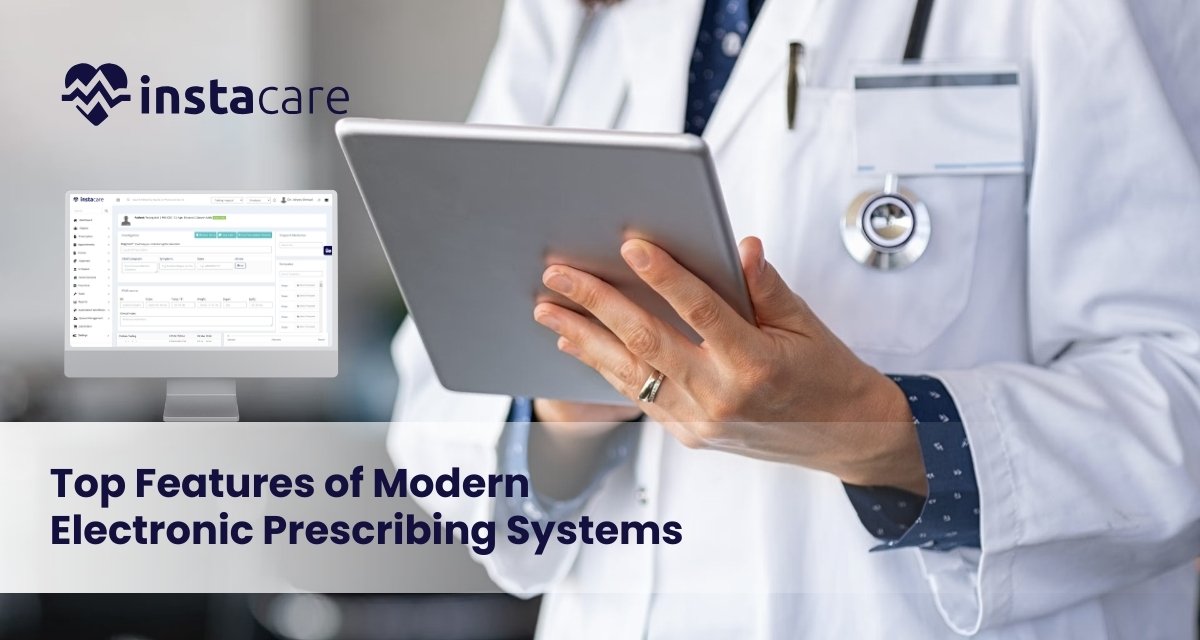
In the health sector, within recent years, electronic prescribing or e-prescribing has emerged. The traditional method of prescribing has been extended through direct electronic communication between healthcare providers at their respective desks or offices and pharmacies. It makes the workflow much easier for health professionals but ensures greater safety and satisfaction of the patient. In this process, which is continuously developing in technology, new systems of electronic prescribing are coming with a host of add-on features intended to make them more functional and usable. Top Features Of Modern Electronic Prescribing Systems!! 1- User-Friendly Interface The advanced e-prescribing system ensures one main feature: an easy-to-use interface. An excellent interface is one that would make it easy for the healthcare provider to navigate without committing a plethora of errors in the prescription process. The main elements of a friendly interface include; Easy navigation: Many sections will be directly accessible, such as patient records, medication lists, and prescription history. Clear Graphics and Color Alerts: Graphics and color coding alerts, warnings, and alerts for important information. In-built search abilities to quickly find medications, allergies, and patient history, so they can find the most critical information within seconds. 2- Integration with Electronic Health Records (EHR) Most current e-prescribing solutions are implemented as interfaces to the EHR so that the clinical data and prescription flows are synchronized. The reasons include: Comprehensive Patient History: The providers can retrieve the full medical history of the patient which encompasses past prescriptions, allergies, and lab results in order to provide effective prescribing decisions based on the comprehensive history. Less Administrative Work: The providers can update the prescriptions along with the patient’s respective record in real-time that eliminates the data entry in the form of duplicates. Optimized Coordination of Care: Synchronization leads to better communication between health care professionals and thereby coordinated patient care is realized. 3- Live Drug Interaction Warnings Creating real-time drug interaction warnings is a feature that e-prescribing systems carry, which keeps away adverse drug events and enhances the safety of a patient. Its features include: Automated Alerts: New drugs prescribed for the patient would be checked in an automated search against the currently ongoing medication, alerting the physician in the event of some form of interaction among the drugs. Customization Options: Providers can have alert configurations tailored to their wishes, which results in appropriate alerts and fewer about fatiguing. 4- Medication Formularies Access Most current e-prescribing systems provide the providers with the real-time updated medication formularies. They are potentially of great importance to the medication-carrying plans of healthcare providers in the treatment of patients. Key features include: Insurance Coverage Information: Prescribers will be informed as to which drugs are covered under a patient’s insurance plan so not to subject a patient to a “surprise.” Low-Cost Substitutions: The system will even provide the substitutable drugs based on their effectiveness and cost for the patient. 5- Prescription Monitoring and History Basic practices, including keeping prescription records and documenting the patient’s history, are important in handling the patient appropriately. Current electronic prescribing systems provide the following components as relatively simpler to implement: Instant Tracking: Real-time tracking will allow the physician to monitor which prescriptions have reached pharmacies and help ensure that medications are dispensed timely to patients. Availability of Prescription History: The provider will be able to view the medication history, filled and unfilled prescriptions for better continuity of care. Book Free Demo 6- Advanced Security Measures Security is an important element in healthcare, especially as patients’ data and prescription information are used. Advanced e-prescribing systems use various robust security measures to prevent information breaches: Encryption: Encryption of data in transit allows the confidentiality and security of patient data. User Authentication: Multi-factor authentication and role-based access control are used so that only access is given to authentic users. Audit Trails: Such systems maintain activity logs of its users, proving accountability and transparency towards the prescribing event. 7- Mobile Accessibility With healthcare slowly turning mobile-friendly, most state-of-the-art e-prescription systems have started developing mobile-specific applications or developing web interfaces based on responsive website designs. Health care providers can: Prescribe on the Go: Providers can access patient records and prescribe medications from their mobile devices, making them more efficient and responsive. Receive Notifications: Mobile alerts for prescription status, refill requests, and patient messages can be received in real time, enhancing communication and care coordination. 8- Patient Education Tools Patient education is a must for adherence and safety. Many modern e-prescribing systems offer patient education tools that include the following: Medication Education: She was face-to-face guided with the patient in regard to dosages, side effects, and the interaction of her medications which were ordered Learning Material: Videos and informative pamphlets might be allowed in order to help educate and learn more. 9- Analytics Reporting An e-prescribing system may hold potential in extracting knowledge through data analytics, regarding improving prescribing health care professionals. It is offering the following feature: Usage Reports: The providers can develop reports regarding their prescribing practice, monitor the trend, and measure the impact of the drug. Quality Improvement Programs: The data may be used to inform quality improvement programs, such as decreasing prescription mistakes or improving compliance with clinical practice guidelines. 10- Telehealth Integration Telehealth is changing the nature of healthcare delivery, and new electronic prescribing systems are addressing these changes. Integration with telehealth enables the providers to Prescribe during Virtual Visits: Providers can give a prescription during virtual visits such that continuity of care for the patient has continuity even in cases where they cannot visit,. Access Remote Patient Monitoring Data: Some systems allow providers to access data coming from remote monitoring devices that aid in decisions on medication management. Conclusion Modern e-prescribing systems help healthcare providers fulfill the most critical needs by bringing a range of features that improve safety, efficiency, and even patient engagement in their care process. From actual time drug-to-drug interactions to mobile support and telemedicine, these modern e-prescribing systems are increasingly crucial for refining the practice of prescribing and indeed, healthcare itself. E-prescribing

Paper prescriptions and electronic prescribing are two contrasting methods of medication management. The healthcare environment continues to morph along with the method of prescription creation. This paper is an attempt to shed light on how the two ways differ from one another, listing the advantages that each mode produces as well as the shortcomings of each in regard to both healthcare providers and patients and health care systems themselves. What are Electronic Prescribing? The term e-prescribing refers to a computer crafted and transmitted prescription except for a printed format. The process can take place with the use of a computer, or a tablet or even a mobile phone. Information of the prescription is captured directly by the prescriber using an electronic health record system. Characteristics of e-prescribing Direct Transference: The E-prescriptions are transmitted to the pharmacy. Thus, a paper prescription that the patient has to carry will be avoided. Real-time Alerts: E-prescribing systems can alert health care providers about real-time interactions of drugs, allergic reactions, and dosing mistakes that increase the safety of a patient. Patient History Access: Access to patient medication history increases the prescribing skills of health care providers. Better Workflow: Apart from the above, e-prescribing with EHRs has streamlined the workflow for the prescribers. What are Paper Prescriptions? The prescriptions that the prescribers complete in paper then hand over to the patient in a hard copy that the patient has to take physically to the pharmacy for dispensing. That was the prescription writing way in the old times for centuries. Traditional Prescription: Important Attributes Paper Prescription on Paper: Prescription is on paper. The prescription has to be taken to a pharmacy by the patients. Handwritten Reconciliation: The pharmacists have to write down the prescription information in their records, and it is one of the major sources of transcriptional errors. Inadequate Medication History: The healthcare providers do not get an instant of a detailed view of a patient’s medication history. Thus, the interactions are hard to identify. Paper prescriptions tend to get misplaced or even stolen. This puts the patient and pharmacies in danger. Electronic Prescribing Vs. Traditional Prescriptions 1- Safety and Accuracy E-Prescribing: The greatest advantage of e-prescribing is patient safety, in my view. Any e-prescribing system, by definition, contains decision support that pop-up reminders to a healthcare provider possible drug interactions, allergies, and contraindications. Real-time feedback from such systems may prevent adverse drug events as well as improve quality care. Electronic prescriptions eliminate the possibilities of misinterpretation via poor handwriting or vague instructions. Old Drugs. The prescription of the old medicine has been there from time immemorial. That is, they have been existing for ages; sometimes the inscriptions inside include unclear writings with imperfections. This leads to errors that often deceive pharmacists in presenting such prescriptions and, therefore leading to drug-related problems with the patient. 2- Efficiency and Inconvenience E-Prescribing: Efficiency comes because of optimizing the process of writing a prescription. The doctor can pen an easy prescription and then email it to a chosen pharmacy in time to spare the patient many hours of delay. Convenience does not stop at the doctor’s office for patients-they do not have to carry paper prescriptions with them very often; theirs is ready upon pickup. Traditional Prescriptions: The traditional prescribes one more step to the patient; that is, the prescription should be handed in personally at the pharmacy. This leads to added wait time and even delay in getting the prescribed medicine. Book Free Demo 3- Cost-Effectiveness E-Prescribing: One advantage in the use of e-prescribing is that it can reduce cost in the long run. For example, if the health care systems lower the medication errors, adverse drug events, hospitalizations and ED visits, then they are cutting their cost. Furthermore, electronic systems may help manage medication therapy better, and this might potentially be more cost-effective. Traditional Prescriptions: The cost of traditional prescription may also include potential costs of prescription error that ultimately might mean increased treatment cost and admission. But when set-up cost of the system might be on higher side of small practice of e-prescribing systems then they would pay up eventually too. 4- Patient Participation and Satisfaction E-Prescribing: E-prescribing supports the enhancement of activation as the patients will automatically receive reminders from the prescribers about the prescriptions that have been issued. The patient also can access his/her medication history and fills through a patient portal included with most EHR systems. This can potentially help enhance patient satisfaction and adherence to therapy. Patients on traditional prescriptions care less about their drug management. Patients in such prescriptions would often request the provider about their history of drugs that can only be retrieved if a patient requested the same. 5- Challenges and Limitations E-Prescribing: While e-prescribing has been treasured for its advantage, there is some disadvantage of undertaking it in practice. Technical constraint may include system breakdown or slow Internet connection hitch may slow down the process of prescribing. Not all pharmacies are e-prescription-capable, so that becomes a problem for the patient. Finally, there is a concern about electronic data transmission being used to ensure that sensitive information of patients does not fall into the wrong hands. Traditional Prescriptions. Traditional paper-based prescriptions are easy to lose, or even be stolen, and worse still, become forged. It takes some reasonable time before most patients get access to drugs simply because pharmacies run on few hours, take long in processing and, in a few cases, communicate other providers inaccurately. Impact on the Healthcare Providers With the introduction of e-prescribing, prescription management becomes different through its integration into the EHRs. Healthcare providers can easily smoothen out their workflows by enhancing quality care delivery. These are a few impacts for the healthcare provider as follows. 1- Simplify Workflow Probably the biggest advantage of such systems is a reduction of the administrative work load associated with prescriptions, thereby lessening the hassle that providers experience while handling prescriptions. Since it’s very easy and fast to input and transmit prescriptions, providers are able to devote much

Telemedicine technology, specifically e-prescribing technology has changed the face of the health system by embracing efficiency, accuracy, and safety. As the e-prescribing advances, several trends are set up to progress into the future. In this article, I will be presenting expectations for the future with regards to precreation, how technology is changing the practice, and the issues that come with change. The Current State of E-Prescribing However, knowing the present status of e-prescribing is vital for further concerns regarding the future trends to be discussed. E-prescribing is defined as the action through which prescriptions are electronically transmitted from prescribing health care practitioners to pharmacies with the purpose of eradicating errors of handwritten prescriptions. This technology has been on the rise across the United States mainly due to regulatory incentives and better patient safety. Advantages of E-Prescribing Error Minimization: E-prescribing removes misinterpretations that occur due to poor handwriting or ambiguity. Streamlined Workflow: Providers can fill prescriptions more easily, hence saving their time and increasing patient flow Medication Management: Many of the E-prescribing systems comprise alerts regarding possible drug interaction or allergies for providers Increased Convenience to Patients: Patients benefit by getting the medications much quicker because their prescriptions can be transmitted directly to a patient’s preferred pharmacy However, even better futures for e-prescribing can be gained. Future Trends in E-Prescribing Technology 1- EHRs Integration The more widespread EHRs are made, the more e-prescribing systems that are integrated with a platform of EHRs. With this, the histories of patients, their allergies, as well as the kind of medications they have administered are available at the service of the healthcare provider. Advantages of Integration A Comprehensive Patient View: The prescriptions can be written by healthcare professionals from the comprehensive view of the patient’s profile. Efficient Workflows: The e-prescribing integrated into EHRs saves providers from sifting through various systems, hence making workflow processes streamlined. Good Communication: The communication among the providers and pharmacies will also help in the instant sharing of information, hence reducing the time gap before prescription fulfillment. 2- Artificial Intelligence and Machine Learning Artificial intelligence and machine learning will revolutionize e-prescribing by enhancing the processes of decision-making. It is possible to analyze tremendous volumes of data, making possible predictions of patient needs, which can lead to the delivery of tailored medication recommendations. Possible Applications: Predictive Analytics: AI can predict the possibility of a patient adhering to medication by past data. That way, providers will know the right time to intervene. Automated Alerts: AI-based systems can alert in real-time about potential drug interactions, allergies, or duplicate therapies to ensure patient safety. Personalized Treatment Plans: Machine learning algorithms will analyze patient responses to medications and tailor future prescriptions to better outcomes. Book Free Demo 3- Integration with Telehealth The process of e-prescribing has received a stimulus from the use of telehealth. Telehealth also means that healthcare providers are now capable of prescribing medicine from across the other side of the screen. There is the likelihood that e-prescribing systems will be connected to telehealth to increase the ease of prescribing with the increased use of telehealth. Telehealth Integration Impact Convenience for Patients: Patients will receive prescriptions during virtual consultations. This reduces in-person visits. Access to Care: Telehealth will allow patients in resource poor settings increased access to care, and the e-prescribing will enable them to obtain their medicines on time. Continuity of Care: A combination of e-prescribing with telehealth ensures continuity in medicine management as well as follow-up treatment. 4- Advanced Engagement Tools for Patients In future versions, sophisticated engagement tools would be common in e-prescribing systems. This means the patient can be involved actively in their care using apps on mobile devices, portal access, and reminders, among others. Reminders for Medication: Alert patients to take medication in due course; hence, increasing compliance rates. Availability of Information: The patient will have easy access to his prescription history, instructions on the intake of medicines, and warnings against the side effects through easily useable apps. Feedback Mechanisms: Patients are able to give their feedback in the prescription process, so that physicians are able to make a suitable adjustment based on them. 5- Blockchain The technology behind blockchain can help enhance some aspects of security and transparency when using e-prescribing systems. Through decentralized ledgers, a healthcare organization could be in a position to guarantee integrity for prescription data, implying it becomes hard for illegal activity execution. Benefits of Blockchain Security: Blockchain has capabilities to encrypt any prone patient information that may subject them to unauthorized access. Transparency: Shared ledgers would mean that providers, pharmacies, and patients would view actual prescriptions in real-time, which would help correct the discrepancies. Chain Supply Integrity: Blockchain means one could trace the chain of the medication, hence reducing the chances of having counterfeit drugs in the market 6- Interoperability Standards With the advancement in interoperability in the health sector, e-prescribing systems must follow standardized protocols for the free flow of data from one platform to another. This will lead to sharing of prescription information from different health settings. Benefits of Interoperability: Enhanced Care Coordination: Providers have the ability to view all medication history of the patient to enhance care coordination between different specialties Reduced Administrative Work: Standardized processes within the e-prescribing technology facilitate workflows, saving time spent on less meaningful administrative tasks Patient Safety Enhancement: Interoperability prevents mistakes from happening by using partial or incomplete prescription information. Limitations of E-Prescribing Technology Even though e-prescribing technology holds much promise for the future, there are still a few challenges in the way: 1- Legal Compliance E-prescribing software possesses all these several kinds of regulatory issues as well as the issues to patient’s right and safety and other among these, so that become a struggle of health organization. 2- Implementation Cost Costs advanced e-prescription system which is for most health in the small part and possibly it lacks money left on hand for everything. 3- Education and Acceptance It is very difficult to ensure that personnel, including health care providers, are adequately educated regarding

Top EHR Trends for 2024 and Beyond: What You Need to Know In the ever-changing healthcare environment, EHRs become prominent considerations in improving patient care, raising efficiency, and innovating healthcare. Entering 2024 and beyond, various EHR trends are in line to shape the future of EHR systems, ready to turn a new leaf in how healthcare providers deliver services and handle information related to their patients. Electronic health records have evolved from simple digital storage of a patient’s information to comprehensive systems that facilitate efficient healthcare delivery. Such systems offer more than just storage for the data of patients: they offer ways through which healthcare providers can make informed decisions, engage patients, and streamline administrative tasks in healthcare organizations. For healthcare providers who want to leverage technology to ensure improved patient outcomes and operational efficiency, Staying Informed On The Latest EHR Trends is Relevant. 1-Artificial Intelligence and Machine Learning Integration One of the gigantic steps in health technology is Artificial Intelligence and Machine Learning that are both integrated into the EHR Trends. Fundamentally, AI algorithms do analysis in blocks of vast amounts of data in EHRs, find patterns in them, and help to predict outcomes, hence acting as decision-supporting systems for the clinician. For example, it will help in disease diagnosis, readmissions, and tailoring treatment plans with respect to historical data tapering to the needs of specific patients. The learning process of ML algorithms never stops; it refines its insight with any new data input to enhance accuracy. One trend that would accelerate in 2024 is empowering health providers for proactive and personalized outpatient care. 2-Interoperability and Data Exchange Interoperability remains a highly critical issue within healthcare, but several developments help in smooth interoperability between different EHRS systems and healthcare providers. Interoperable EHRs allow secure patient information availability and sharing over several healthcare settings, thus enhancing coordination in care and lightening the administrative burden. Standardized protocols and APIs are critical to interoperability; they enable efficient communication across interoperating systems, providing clinicians with a complete view of patient data at the point of clinical decisions. 3-Telehealth and Remote Patient Monitoring The COVID-19 pandemic increased the adoption of telehealth services, clearly bringing into focus the need to integrate telehealth capabilities with the EHR. In 2024 and beyond, EHRs are likely to further facilitate telehealth visits, including virtual consultation, remote patient monitoring, and care for chronic conditions. Connected RPM devices to EHRs allow for the constant monitoring of patients’ vital signs and health metrics, providing data in real-time to the clinicians and truly empowering patients with self-management capability. 4-Blockchain for Data Security Blockchain technology has recently been under extremely widespread attention in healthcare due to its promising capability of strengthening EHR security, promoting data integrity, and ensuring patient privacy. This data is gathered and secured by blockchain through the decentralization of data storage, aided by cryptography. Smart contracts within blockchain networks can facilitate automation of health care transactions, from processing insurance claims to supply chain management. At the same time, this powerful tool was available to safeguard sensitive health information against ever-changing cyber threats and maintaining patient confidence in EHRs. Book Free Demo 5-Patient-centered design of EHR User experience and principles of patient-centered design are increasingly playing their roles in EHR system development. It puts many efforts into enhancing the usability, intuitiveness, and accessibility of the EHR interface in contemporary EHR interfaces. The features are pointed at enhancing the efficiency of clinician workflow with increased patient engagement. For example, using patient portals for the lookup of all personal health records to schedule appointments easily and have real-time communication with health professionals. This can facilitate the better adoption of EHRs among clinicians and can also foster better relations between patients and providers. 6-Data Analytics and Population Health Management Having voluminous data backed by the EHRs offers opportunities concerning the use of analytics to drive population health management ventures. The data analytics tools physically located within EHR systems analyze aggregated patient data to determine trends in population health, assess disease burden, and predict healthcare resource needs. Those health organizations can therefore apply such findings to institute targeted interventions and ensure improved public health and enhanced efficiency in resource allocation as a result. With predictive analytics, EHRs allow proactive healthcare delivery, which will lead to favorable patient outcomes and lesser costs to the healthcare sector. 7-Mobile EHR Applications The areas revolutionizing healthcare delivery include mobile technology; more healthcare providers have started using mobile EHR applications. Mobile EHR applications will help clinicians view patient information on-the-go, supporting flexibility and efficiency in the delivery of care. Some of the functionality that this type of application supports includes the following: electronic prescribing, clinical documentation, and instant messaging among members of health teams. Equipping clinicians with mobile, secure access to EHRs empowers healthcare organizations with care coordination and response time to most significantly enhance the overall state of patient satisfaction. 8-Regulatory Compliance and EHR Standards It remains to be that powerful force for regulatory compliance which turns out to be what many healthcare organizations attain when applying and managing systems of EHRs. In 2024, adherence to such regulatory provisions as the United States’ Health Insurance Portability and Accountability Act, Europe’s General Data Protection Regulation, and other local data protection laws around the world will go on and play a pervasive role in the development and implementation strategies of the EHR. Healthcare professionals should ensure, therefore, that their EHR systems meet industry standards and regulations regarding the safeguard of patient data privacy to avert risks and regulatory penalties. Conclusion The fast-changing technology and healthcare requirement drive the future of Electronic Health Records. These constitute the key trends that healthcare organizations need to adopt and pursue beyond 2024, seeking to unlock this enormous potential of EHRs toward enhancing the quality of care provided to patients, underpinning clinical decision-making, and boosting operational efficiency. Therefore, investing heavily in AI-driven insights, interoperable systems, telehealth capabilities, blockchain security, patient-centered design, data analytics, mobile applications, and regulatory compliance will position the model for a connected,
Importance Of Digital Patient Files In Healthcare Industry 2024 Changing patient files to digital form in today’s healthcare industry is a big deal. It changes how we handle clinical records. Rather than piles of paper, everything is put away digitally. This makes things more straightforward for specialists and patients the same. Through this article, we’ll discuss why Digital Patient Files are significant and how they’re changing medical services in 2024. Go along with us as we investigate the effect of this shift on specialists, patients, and the medical care industry overall. Various Advantages Of Digital Patient Files In HealthCare Sector Digital patient files have numerous advantages, boosting healthcare organizations’ efficiency and enhancing patient care. There are several benefits to switching from paper records to digital ones: Simple And Easy Record Maintenance First, digital records are more straightforward to get to and make due. Nurses and doctors can quickly locate the information they require without having to examine through piles of paper. This recovers time and permits them to zero in additional on patients. Furthermore, advanced documents assist with working on the nature of patient consideration. With all clinical records put away by Digital Ally, medical services suppliers have a thorough perspective on a patient’s well-being history. This considers better determination and treatment choices, prompting further developed results for patients. Thirdly, advanced records smooth out managerial assignments. Undertakings like booking arrangements, handling charging, and overseeing protection claims become more proficient when done carefully. This saves staff time and diminishes the probability of mistakes. Changing to Digital Patient Files is a shared benefit for medical care suppliers and patients. It improves the nature of care while making authoritative cycles smoother and more effective. Book Free Demo Enhanced Efficiency And Accessibility Digital patient files offer healthcare providers a significant advantage in efficiency and accessibility. Not at all like traditional paper-based records that are defenseless to scattering, harm, or even misfortune, computerized documents offer a degree of unwavering quality and openness that is unrivaled. Medical services experts can easily access, update, and provide patient data across different stages with computerized records. This smoothed-out process dispenses with the requirement for lumbering manual care, diminishing the gamble of blunders and defers in getting to crucial clinical information. Besides, Digital Patient Files engages medical services groups to team up flawlessly, empowering them to pursue all-around informed choices quickly and successfully. Also, the openness of advanced patient records rises above geological limits, permitting approved staff to recover relevant data no matter their area. This adaptability upgrades the effectiveness of medical services conveyance and improves work on quiet results. In general, the progress to Digital Patient Files is a critical step in the right direction in modernizing medical services, offering a more dependable, proficient, and open method for overseeing patient data. Improved Patient Care With Digital Patient Files, medical care suppliers gain moment admittance to finish clinical accounts, demonstrative reports, and therapy plans. This entrance permits them to pursue very educated clinical choices and give customized care to patients. This smoothed-out admittance to data prompts better quiet results and higher fulfillment levels. Healthcare professionals can tailor their treatment strategies to meet each patient’s specific needs by having access to all relevant medical data, ultimately improving the quality of care provided. Digital patient files also make it easier for healthcare teams to communicate and work together, which makes the overall patient experience even better. By and large, the utilization of advanced patient records reforms how medical services are conveyed, accentuating effectiveness, precision, and patient-focused care. View More: Maximizing Efficiency with Smart Clinic Software Streamlined Administrative Tasks Carrying out advanced patient documents likewise improves regulatory obligations inside medical services offices. Undertakings like booking arrangements, overseeing charging, and handling protection claims have become more smoothed out through digitalization. This change diminishes desk work, reduces the gamble of mistakes, and paces up regulatory cycles. Accordingly, staff individuals can devote additional time and regard to giving quality consideration to patients. The decrease in authoritative weights upgrades productivity across the association, eventually prompting work on tolerant encounters and results. Security And Patient Privacy Concerns To protect sensitive patient data from indeed unauthorized access or breaches, healthcare organizations must implement strong security measures indeed such as data encryption, access controls, and obedience to regulations. These actions are fundamental for keeping up with patient trust and classification. By focusing on information security, medical care suppliers can relieve the dangers of putting away and getting to computerized patient records, defending patient protection, and guaranteeing the honesty of their clinical data. Integration With Digital Health Records (EHR) The smooth mix of Digital Patient Files with Digital wellbeing records (EHR) is pivotal for keeping up with the progression of care and working with data trade among medical services suppliers. Notwithstanding, interoperability challenges between different EHR frameworks endure, upsetting endeavors to accomplish consistent combinations. Despite these challenges, efforts are being made to address interoperability issues and enhance EHR platform compatibility. Defeating these difficulties is fundamental for improving joint effort and correspondence among medical services suppliers, ultimately helping patient consideration and results. Sustainability And Cost-Effectiveness Digital patient files not only improve operational efficiencies and patient care, but they also offer sustainability and long-term cost-effectiveness advantages. By diminishing dependence on paper records, medical care associations can reduce capacity costs, dispense with the need for actual space, and add to ecological manageability drives. This change not only saves money but also cuts down on waste and saves resources, which is in line with the healthcare industry’s larger goals for sustainability. By and large, the reception of Digital Patient Files offers monetary reserve funds and ecological advantages, making it a mutually beneficial answer for medical care associations and the planet. Conclusion The significance of digital patient records in the healthcare industry cannot be overstated. Organizations like InstaCare are driving the computerized change as we arrange the difficulties of contemporary medical care conveyance by offering state-of-the-art arrangements that empower medical care suppliers to give top-notch therapy, upgrade patient results, and advance functional greatness. FAQs What
Advantages of E-prescription Software Healthcare is constantly evolving, and with that evolution come new technologies focused on improving patient care, with e-prescription software, which has revolutionized how prescription medication can be safely and quickly dispensed to patients. This revolutionary technology offers countless advantages for healthcare providers, from reduced paperwork to an increased level of accuracy in ordering medications. In this blog post, we will discuss the many benefits of e-prescription software and how it can help streamline your medical practice. Get ready to learn about how you can use this helpful tool to make better patient care a reality! Overview of what e-prescription software is and how it works E-prescription software is revolutionizing the way healthcare professionals prescribe medications to their patients. This type of software streamlines the prescription process by allowing doctors to send prescriptions directly to pharmacies, eliminating the need for patients to physically pick up and drop off paper prescriptions. E-prescription software also alerts doctors to any potential prescription errors or drug interactions, increasing patient safety. Overall, this technology has made the prescription process faster, more efficient, and much safer for patients. Book Free Demo Benefits of using electronic prescriptions, such as improved accuracy and safety Electronic prescriptions offer numerous benefits for both patients and healthcare providers. One of the most significant advantages of using eRx software is the improved accuracy and safety of prescriptions. Gone are the days when doctors had to scribble drug names and dosages on a piece of paper, which could easily result in errors and confusion. With electronic prescriptions, healthcare providers can send accurate and legible prescriptions directly to the pharmacy, reducing the risk of misinterpretation and medication errors. Additionally, eRx software helps doctors avoid prescribing potentially harmful drug combinations or doses that might be unsafe for a particular patient. This innovative technology provides significant benefits for patient safety and peace of mind for their healthcare providers. Cost savings associated with e-prescription software vs paper prescriptions In today’s technological world, medical professionals have access to advanced digital prescription management systems that are revolutionizing the healthcare industry? E-prescription software allows doctors to send prescriptions securely and quickly to pharmacies, eliminating the tedious and lengthy process of paper prescriptions. Not only does this save time for both doctors and pharmacists, but more importantly, it can significantly reduce costs associated with errors made with paper prescriptions, leading to a safer and more efficient healthcare system. With e-prescription software, doctors can also view patient medication history and interact with insurance companies to ensure that patients receive the best possible care and cost savings associated with their prescriptions. By eliminating the need for paper and streamlining prescription management, healthcare providers can continue to focus on delivering high-quality care to their patients while keeping costs down. View More: Streamline Your Medical Billing with Medical Billing Software Increased patient satisfaction when using digital solutions for healthcare Modern technology has transformed healthcare as we know it, and one of the latest digital innovations that have accelerated the transformation is the virtual prescription system. This revolutionary tool has been found to significantly increase patient satisfaction in the healthcare industry. By eliminating the hassle of physical prescriptions and waiting in long lines, patients can now receive their prescribed medications online, saving them time, money, and energy. Patients can enjoy more convenience and a systematic, easy-to-follow process that ensures better treatment outcomes than the traditional paper-based prescription system. With a virtual prescription system, patients now feel more confident in their healthcare experience, which ultimately leads to higher satisfaction rates, a healthier patient population, and lower healthcare costs. Improved efficiency and quality of care by automating processes Healthcare professionals are constantly exploring new ways to improve the efficiency and quality of care they provide to their patients. One solution gaining popularity is the use of eHealth prescription tools to automate processes. These innovative tools not only make life easier for physicians and pharmacists, but they also streamline the healthcare process for patients. With eHealth prescription tools, physicians can easily prescribe medications and treatments, which in turn, helps pharmacists more accurately fill prescriptions and ensure patient safety. This automation also reduces errors and administrative stress, freeing up time for healthcare professionals to focus on what matters most: delivering high-quality patient care. Recommendations for selecting the best e-prescription software for your needs In today’s fast-paced world, finding the best e-prescription software is crucial for any healthcare professional. With so many options on the market, it can be overwhelming to sift through each one. However, there are specific criteria to consider when selecting the right software for your needs. The software should have a user-friendly interface, provide access to a comprehensive drug database, allow for easy integration with your current EHR system, and prioritize patient safety with features such as clinical alerts and decision support. Only by carefully evaluating each of these factors will you be able to find the best e-prescription software to suit your unique needs and ensure optimal patient experience and care. Conclusion Overall, e-prescription software can prove to be a valuable tool for increasing patient safety, reducing medication errors, improving communication between healthcare providers and reducing costs. By utilizing this technology, healthcare providers can be sure that they are providing timely and effective care while also mitigating the chances for medical errors. Furthermore, proper instruction and training can help ensure that its features are fully utilized and that its advantages can be realized. Ultimately, an understanding of the diverse possibilities of e-prescription software can help in bringing about positive change in healthcare centers across the country. As technology advances further still, e-prescriptions will continue to become commonplace as they offer a high degree of data security while removing the chance for human error – a clear win/win situation!
How Can Electronic Prescribing Software Improve Your Practice In 2022? In today’s digital world, virtually everything is being phased out in favor of its digital counterparts. Instead of going to a store to buy physical records, we enjoy streaming videos and digital music, and we read e-books in mobile apps rather than going to the library. E-prescriptions are currently prevalent in the healthcare sector in a similar way. E-Prescribing uses Electronic Health Record (EHR) software to send digital medication orders to pharmacies. Electronic prescribing software, whether used as a standalone module or as a component of a fully integrated EHR system, can assist practices in increasing their internal efficiency. Since there is also no paperwork for the pharmacist to interpret or prescriptions to call in, electronic prescribing improves accuracy, patient safety, and healthcare quality. Managing After-Hours Interruptions Many physicians no longer offer after-hours refill services. However, electronic prescribing software enables patient file access from any location with an internet connection for doctors who still provide such services. Before prescribing a new medication or approving refills, doctors can review chart notes and drug interactions or contraindications. The amount of time needed to accurately and completely respond to patient requests is decreased thanks to digital communication. Fewer Callbacks From Pharmacies The administrative staff is burdened, and unnecessary phone calls decrease office productivity. Electronic prescribing software solves issues previously brought on by sloppy handwriting and necessitates calls to the office to clarify dispensing orders. With digital RX orders, pharmacists hardly ever need to contact a doctor or nurse to double-check the prescription’s medication, dosage, or patient instructions. As a result, the practice saves time and money. It may also shorten patient wait times at the pharmacy, increasing patient satisfaction. Book Free Demo Shifting To Innovative Electronic Prescribing While it is true that entering electronic prescribing software takes a little bit longer than writing out a paper one, the time saved overall is significantly more significant when you take into account things like retrieving a digital file as opposed to manually looking for and pulling a paper file, finding the most recent prescription information, and reviewing any contraindications and allergy information. Enhancing Patient Services And Practice Management Our country’s healthcare system becomes more effective and accessible as more facilities, providers, and medical service providers adopt cloud-based technology. There is a push to implement electronic prescribing software and care coordination across the board for all healthcare professionals and support services. Thanks to portable files, patients are guaranteed high-quality care in their communities and whenever they travel for business or also pleasure outside their home country. Physicians face some difficulties and barriers. In the past, implementing a new electronic prescribing software was prohibitive. Numerous free and inexpensive point systems are available today for clinics of all sizes and specialties. Nowadays, more pharmacies than ever use electronic prescribing technology, so there are fewer communication issues preventing the adoption of universal electronic prescribing software policies, with the exception of those that still call for paper prescriptions for some controlled substances. Reducing The Administrative Burden By E-Prescribing Decrease the amount of administrative work with electronic prescribing software. The main issue with paper-based prescriptions is sloppy handwriting, which necessitates a call to the executive office to clarify the dispensing orders. With electronic prescribing software, fewer pointless phone calls are made, and pharmacists hardly ever need to check with a doctor before dispensing medication. E-prescribing reduces paperwork, patient wait times at the pharmacy, and overall costs, which raises satisfaction levels. Today, it is simple to implement e-prescribing in healthcare networks. It’s crucial to switch to digital health records in the modern healthcare sector. Portable files also ensure patients receive high-quality care in their own location and whenever they travel outside of their home region, as providers and the medical sector embrace cloud-based technology. Conclusion Doctors can improve patient experiences and streamline workflows using appropriate e-prescribing software. They can use the top e-prescribing programs offered by InstaCare by visiting the website.