Choosing the right dermatology EMR software for your organization is a bit complex and an arduous task. Before you buy the one, you should know your demands and investment budget. The main purpose of it is that it helps in increasing the overall clinical productivity, thereby enabling you to serve better. Through it, the healthcare providers can work more in a short time. Also, it helps reduce excess workload over them. Using electronic medical record software has many benefits. Not only it saves your time, but it also keeps a detailed record of your patient and organization, which can be accessed in real-time. Considering all these things, you should then choose the right software. However, which software you choose, there are many purposes of electronic medical record software. We have discussed some of them in this article. List of Top 5 Reasons for Choosing Dermatology EMR Software in Pakistan Helps Increase in the Productivity The electronic health record system helps in increasing the overall clinical productivity by automation. It saves all the data about the patient and gives recommendations at every stage of treatment, and rechecks the order of doctors. It will make sure that the right medication is going according to the disease, and there are no previous allergy records with it, and there is no other condition that needs alteration in the dose of a drug, etc. Monitoring all these parameters helps in increasing productivity because they are important and time taking. Increased Patient Satisfaction By using an electronic medical record system, doctors can reduce the time they would spend gathering all the data about a patient. Or in other words, in taking history. Every time a person visits a healthcare provider, they have to give a complete previous history, which is time-taking and annoys them. But with dermatology EMR, healthcare providers do not need to waste time on it, as they can get a complete insight into the patient’s history in just a single click, which eventually helps in serving better and results in increased patient satisfaction. Connects the healthcare providers The dermatology EMR software enables physicians to share information with different healthcare providers. Through it, they can transfer the information about their patient with some other physician. Since people have to visit different healthcare providers for different complaints, all the procedures and treatment plans can be integrated through electronic medical record software. It helps connect the healthcare providers and increases interoperability. Increased Efficiency Dermatology’s electronic medical record system helps increase the efficiency of physicians because it enables them to make the right diagnosis, because of its feature of artificial intelligence. The EMR gives suggestions that a doctor can look upon while making a diagnosis. Also, it checks that the right medicine is going according to the diagnosed condition. All these factors help in eliminating errors and mishaps, hence increasing efficiency. Increase in Revenue Every business aims to increase its revenue. EMRs help in doing that by streamlining the processes. It makes billing, insurance reclaim, receiving payments, and other financial activities easy to perform.
EMR software or electronic medical record software is a robust designed software that keeps the data and manages activities of your organization. The main purpose of it is that it helps in increasing the overall clinical productivity, thereby enabling you to serve better. Through it, the healthcare providers can work more in a quite short time. Also, it helps reduce excess workload over them. Using electronic medical record software has many benefits. Not only it saves your time, but it also keeps a detailed record of your patient and organization, which can be accessed in real-time. Just with a medical record number, you can access all the history of a patient from anywhere at any time. This software has made keeping and managing information about the patient much simple and easy. Thereby, enabling you in increasing overall clinical productivity. The electronic medical record system helps increase the efficiency of physicians because it enables them to make the right diagnosis, because of its feature of artificial intelligence. The EMR gives suggestions that a doctor can look upon while making a diagnosis. Also, it checks that the right medicine is going according to the diagnosed condition. All these factors help in eliminating errors and mishaps, hence increasing efficiency. Moreover, through its use, you can also save the cost you would invest in hiring people for different activities. It will let you store all the details of the patient without any hassle. The EMR software enables you to transform your business activities into digital means. With it, you do not need to create tokens, bills, or documents by yourself. It will create all the documents digitally and you can share them with your clients as well. Hence, making it easy to interconnect with each other. The benefits of using electronic medical records software are: Helps improve the overall operational efficiency Increases the total revenue Smooth and hassle-free workflow Interconnects the departments Help connect healthcare professionals Manage the inventory control Easy to use interface Saves your precious time Keeps the record of the patients safe and secure Contains a feature of electronic prescription Digitizes your clinic or hospital completely Sends reminders to the clients in the form of emails, messages, and calls Prescription of the patients remain safe because of the e-prescription feature Saves from overstocking and understocking Manages day to day activities The electronic medical record software helps you in scheduling and tracking the patient’s appointments. It also alerts the staff via SMS about the appointments, bills, and payments, etc. It helps in improving the overall clinical productivity since it reduces the staff’s workload and manages procedures accurately. Another amazing benefit of the EMR software is that it keeps the records safe and secure. With a paper record system, someone can easily take off papers from the file or mix them in a paper record system. But with an electronic record system, no one can remove or tamper with the data. Not everyone has access to change the records. And whenever the authorities make a change, it will be recorded.
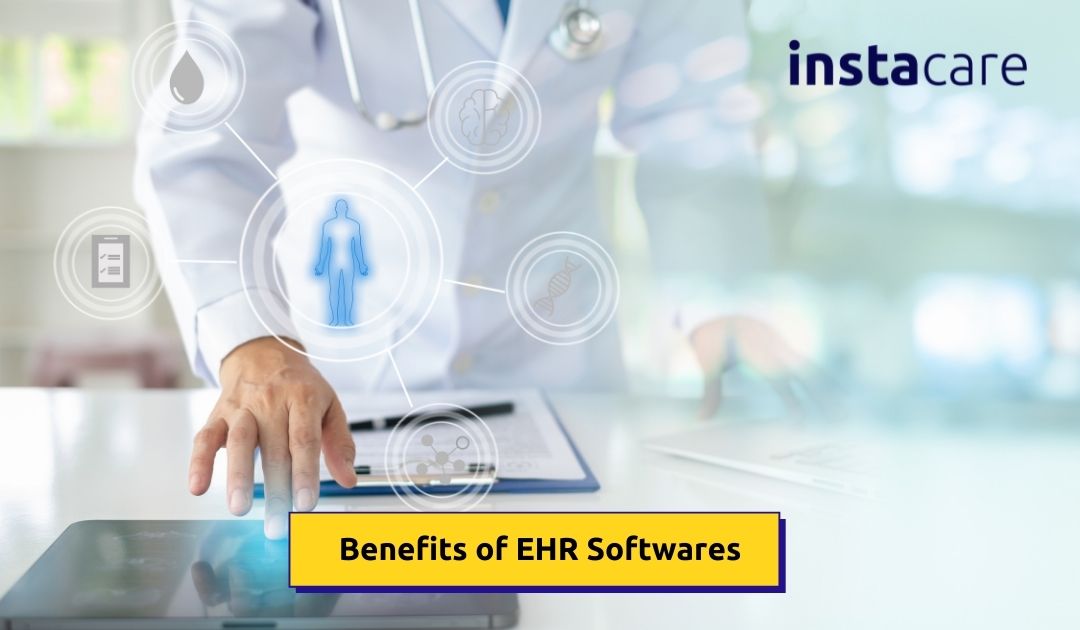
EHR, also known as the electronic health record system, helps in the digitalization of patient records. Through it, healthcare providers can gather all the information in one place, which they can access in real-time. It may contain radiological films, medication history, disease history, allergies, treatment plans, and laboratory results of a patient, all in one place. Five Major Benefits of Using an Electronic Health Record Software Using electronic health record software has many benefits. Through it, doctors can exchange any information regarding the patient’s health with each other remotely. Also, it serves as a complete directory of a patient, which makes it easier for healthcare providers to diagnose the disease and decide a treatment plan for their patients. In this article, we are going to explore the benefits of an electronic health record system that makes it worth using in clinical practice. EHR Helps Increase In the Productivity The electronic health record system helps in increasing the overall clinical productivity by automation. It saves all the data about the patient and gives recommendations at every stage of treatment, and rechecks the order of doctors. It will make sure that the right medication is going according to the disease, and there are no previous allergy records with it, and there is no other condition that needs alteration in the dose of a drug, etc. Monitoring all these parameters helps in increasing productivity because they are important and time taking. Increased Patient Satisfaction By using an electronic health record system, doctors can reduce the time they would spend gathering all the data about a patient. Or in other words, in taking history. Every time a person visits a healthcare provider, they have to give a complete previous history, which is time-taking as well as annoys them. But with EHR, healthcare providers do not need to waste time on it, as they can get a complete insight into the patient’s history in just a single click, which eventually helps in serving better and results in increased patient satisfaction. Moreover, EHRs with the option of a patient portal has made it much easier. Patients can themselves update their health on the system. They can tell how they are feeling with a certain treatment, their records, lab findings, mediation history, etc. Interoperability The EHR enables physicians to share information with different healthcare providers. Through it, they can transfer the information about their patient with some other physician. Since people have to visit different healthcare providers for different complaints, all the procedures and treatment plans can be integrated with each other through electronic medical record software. Increased Efficiency Electronic health record system help increase the efficiency of physicians because it enables them to make the right diagnosis, because of its feature of artificial intelligence. The EHR gives suggestions that a doctor can look upon while making a diagnosis. Also, it checks that the right medicine is going according to the diagnosed condition. All these factors help in eliminating errors and mishaps, hence increasing efficiency. Increase in Revenue Every business aims to increase its revenue. EHRs help in doing that by streamlining the processes. It makes billing, insurance reclaim, receiving payments, and other financial activities easy to perform.
The electronic medical record software is a system that keeps the record of all the ongoing activities and helps with its management. It serves as a complete directory of the patient that contains their name, age, gender, disease history, medication history, documented allergies, and all the other health conditions. With its use, healthcare providers can easily access the records of patients with only a medical record number. This software has made keeping and managing information about the patient much simple and easy. Thereby, enabling you in increasing overall clinical productivity. Moreover, through its use, you can also save the cost you would invest in hiring people for different activities. It will let you store all the details of the patient without any hassle. The EHR software enables you to transform your business activities into digital means. With it, you do not need to create tokens, bills, or documents by yourself. It will create all the documents digitally and you can share them with your clients as well. Hence, making it easy to interconnect with each other. Telemedicine With the feature of telemedicine, healthcare providers can do online consultations. Therefore, they can save time that they would spend on transportation. They do not need to drive to the hospital. Also, they can carry on their clinics from the comfort of their home. If they are not feeling well, they can still serve their patients. They do not need to overexert themselves. Therefore, it eventually helps reduce undue stress over them. Easy diagnosis The electronic medical record software eases the procedure of finalizing the diagnosis for the healthcare providers. Whenever they update the signs and symptoms the patient is suffering from on the software, it gives them suggestions about the disease. This feature makes it easier for them to make and finalize the diagnosis. Easy prescribing Whenever the healthcare providers update the diagnosis of the patient, the EMR software shows the suggestions related to prescribing. It shows the best medicine, keeping in view the allergy history of the patient. Moreover, it shows the right, and adequate dose one needs according to their body mass index and health. These features make it much easier and stress-free for health care providers to work. Accessible data The records of the patient are one of the most essential things in the healthcare industry. The doctors need them in every step of their clinical practice to make any decision. With the help of electronic medical record software, the data remains accessible 24/7 for healthcare providers. They do not wait and search for records. Only they need to get a medical record number to access the data. Easy summarizing Before discharging any patient, healthcare providers need to make a summary of the patient’s case. The electronic health record software makes it much easier to make it. It can create the summary in a short time automatically, thereby, reducing overall stress. Easy to reach the records The records of the patient are one of the most essential things in the healthcare industry. The doctors need them in every step of their clinical practice to make any decision. With the help of electronic medical record software, the data remains accessible 24/7 for healthcare providers. The administrative staff need not search for them and spend hours for that. Only, they need to get a medical record number to access the data. They can easily provide it to healthcare providers. Easy billing Billing is a time taking and difficult thing to do. One has to make sure that they have punched all the services the patient has availed. Through the electronic medical record software, the administrative staff can create the bill with a single click. They only need a medical record number, and they can print the bill, within minutes, without the need for calculations and all. Inventory management The administrative staff has to keep a complete record of all the goods purchased, sell and present, in the organization. It is a time taking and arduous task to do. One has to count the items daily, what they have sold and what they have bought. The electronic medical record system eases with that as well. It can maintain the inventory efficiently. It will also keep them informed about how many stocks are left, how much they have sold, and how many of them were bought. Online payments The EMR software can receive and send online payments as well. Therefore, the staff does not need to do that and keep them in check. They can make payments through it as well, without the need to visit in person. Multi-User Access The electronic health record software enables multiple people to access the same document at a time. SMS Alerts It reminds you via SMS about the patient’s appointments and the payments made so that you do not miss anything important. Conclusion If you want to manage your clinical record then use EMR software because it enables you to transform your business activities into digital.
The dental software in Pakistan is a system that saves patients’ information and manages all the activities going on in the hospital or clinic. It helps in inventory management, bill generation, online payments, appointment scheduling, and many more. The dental software will enable you to keep an eye on your business needs and activities. Through it, you can manage how your business is progressing. Are the customers satisfied or not? Which product is being sold the most? Which product is being sold the least?? And much more. You can also pinpoint and, therefore, work on your institute’s weak points through its use. This software will perform many activities simultaneously for your organization. There are many benefits of using dental software. Some of them are as follows: Helps improve the overall operational efficiency Increases the total revenue Smooth and hassle-free workflow Interconnects the departments Help connect healthcare professionals Manage the inventory control Easy to use interface Saves your precious time Keeps the record of the patients safe and secure Contains a feature of electronic prescription Digitizes your clinic or hospital completely Sends reminders to the clients in the form of emails, messages, and calls Prescription of the patients remain safe because of the e-prescription feature Saves from overstocking and understocking Manages day to day activities More satisfied and happy clients 24/7 access to the records anytime from anywhere Telemedicine With the feature of telemedicine, healthcare providers can do online consultations. Therefore, they can save time that they would spend on transportation. They do not need to drive to the hospital. Also, they can carry on their clinics from the comfort of their home. If they are not feeling well, they can still serve their patients. They do not need to overexert themselves. Therefore, it eventually helps reduce undue stress over them. Easy diagnosis The dental software eases the procedure of finalizing the diagnosis for the healthcare providers. Whenever they update the signs and symptoms the patient is suffering from on the software, it gives them suggestions about the disease. This feature makes it easier for them to make and finalize the diagnosis. Easy prescribing Whenever the healthcare providers update the diagnosis of the patient, the EMR software shows the suggestions related to prescribing. It shows the best medicine, keeping in view the allergy history of the patient. Moreover, it shows the right, and adequate dose one needs according to their body mass index and health. These features make it much easier and stress-free for health care providers to work. Accessible data The records of the patient are one of the most essential things in the healthcare industry. The doctors need them in every step of their clinical practice to make any decision. With the help of dental software, the data remains accessible 24/7 for healthcare providers. They do not wait and search for records. Only they need to get a medical record number to access the data. Easy summarizing Before checking out for any patient, healthcare providers need to make a summary of the patient’s case. The dental record software makes it much easier to make it. It can create the summary in a short time automatically, thereby, reducing overall stress. Conclusion The dental software in Pakistan is a system that saves a patient’s information and manages all the activities going on in the hospital or clinic. It performs many activities simultaneously, eventually reducing your workload. It helps a lot in clinical practice because of its beneficial features.
The patient management software helps you in scheduling and tracking the patient’s appointments. It also alerts the staff via SMS about the appointments, bills, and payments, etc. The patient scheduling software helps in increasing the overall clinical productivity since it reduces the staff’s workload and manages procedures accurately. This patient scheduling software contains a feature of patient record management by which the clinician can manage the patients’ records and store every detail regarding their health. They can easily track and access the patient’s record anytime they need. The appointment management feature enables you to manage the appointments easily and reduces no-show visits. It reminds you via SMS about the patient’s appointments and the payments made so that you do not miss anything important. This feature helps in improving overall clinical productivity. How the patient management software supports your Medical Practice? The patient management software helps in increasing clinical productivity. In many ways, it helps you conduct the clinical practice more effectively. Some of those ways are described below. Patients Management The patient management software contains a feature of patient management by which the clinician can manage the patients’ records and store every detail regarding their health. Medical Billing The staff can create an easy-to-understand, simple and detailed bill of all the services being provided to the patients. They can also customize the bill by using the patient management software. Reporting You can generate a complete detailed report about your income, expenses, payments that are made and received, everything in one place. It will give you a complete insight into the progress of your business. Multi-User Access The patient scheduling software enables multiple people to access the same document at a time. However, this access is in the hands of the administrator, who can restrict it anytime they want. SMS Alerts It reminds you via SMS about the patient’s appointments and the payments made so that you do not miss anything important. Appointments Management The patient scheduling software contains an appointment management feature that enables you to manage the appointments easily and reduces no-show visits. Prescriptions & Health Records You can save the health records and prescriptions so that the physician can easily access history and change the prescription details whenever needed. You need not take complete history again and again. Telemedicine With the help of patient management software, you can consult with your doctor from the comfort of your home via telemedicine. You can talk to them via video chat or a phone call. Queue Management It enables you to manage the processes smoothly and effectively since it contains a queue management system. It helps in generating tokens for each department. One-Click Backups This software contains a feature of one-click backup. It lets you back up all the important data so that you do not lose it. Conclusion The patient management software is a system that saves patients’ information and manages all the activities going on in the hospital or clinic. It performs many activities simultaneously, eventually reducing your workload. Its use will be more common in 2021 day by day because of its beneficial features.
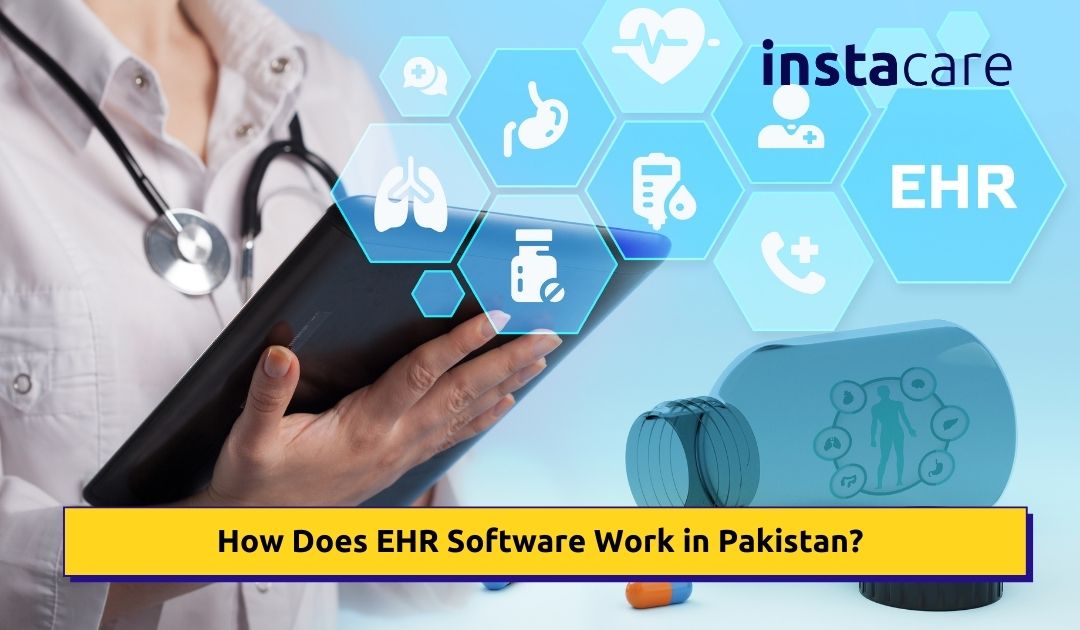
The electronic health record software is a system that saves patients’ information and manages all the activities. It helps in inventory management, bill generation, online payments, appointment scheduling, and many more. Using electronic health record software is so easy because it does not need installation. You can simply start working on it after setting it on your system. Also, you would not need expert IT professionals for its installation and maintenance. It will enable you to keep an eye on your business needs and activities. Through it, can you manage how your business is progressing? Are the customers satisfied or not? Which product is being sold the most? Which product is being sold the least?? And much more. You can also pinpoint and, therefore, work on your institute’s weak points through its use. The electronic health record software would perform many activities simultaneously for your organization. Working of Electronic Health Record Software The electronic health record software has many features. The healthcare providers can keep all the information related to their patients in it. With it, you can also manage many activities of your organization. Some of its features are described below. Patients Management The electronic health record software contains a feature of patient management by which the clinician can manage the patients’ records and store every detail regarding their health. Medical Billing The staff can create an easy-to-understand, simple and detailed bill of all the services being provided to the patients. They can also customize the bill by using electronic health record software. Reporting You can generate a complete detailed report about your income, expenses, payments that are made and received, everything in one place. It will give you a complete insight into the progress of your business. Multi-User Access The electronic health record software enables multiple people to access the same document at a time. However, this access is in the hands of the administrator, who can restrict it anytime they want. SMS Alerts It reminds you via SMS about the patient’s appointments and the payments made so that you do not miss anything important. Appointments Management The electronic health record software contains an appointment management feature that enables you to manage the appointments with ease. Hence, reducing the no-show visits. Prescriptions & Health Records You can save the health records and prescriptions so that the physician can easily access history and change the prescription details whenever needed. You need not take complete history again and again. Telemedicine With the help of electronic health record software, you can consult with your doctor from the comfort of your home via telemedicine. You can talk to them via video chat or a phone call. Queue Management It enables you to manage the processes smoothly and effectively since it contains a queue management system. It helps in generating tokens for each department. One-Click Backups The electronic health record software contains a feature of one-click backup. It lets you back up all the important data so that you do not lose it. Conclusion The electronic health record software is a system that saves patients’ information and manages all the activities. It performs many activities simultaneously, eventually reducing your workload. Its use is getting common in Pakistan day by day because of its beneficial features.

H.E Dr. Arif Alvi Appreciated The Efforts Of Top Digital Health Startup in Pakistan, InstaCare. The honorable President of Pakistan Dr. Arif Alvi, invited the founding team of Pakistan’s fast-growing digital health and Top EMR company ‘InstaCare’ for a one-on-one meeting at the President House, Islamabad. The delegation was lead by the CEO InstaCare, Mr. Bilal Amjad who was accompanied by the CMO Mr. Muhammad Ahmad, and COO Ms. Ayesha Siddiq. Representatives of the Ministry of National Health Services, Regulations & Coordination (NHSR&C), Dr. Sabrina Durrani, and Dr. Samra Mazhar were also invited to attend this productive session. A holistic briefing of the Existing Healthcare System, its challenges & Solutions As success and credibility greatly depend on saving the lives of millions in Pakistan, so the President of Pakistan and the CEO of InstaCare discussed the key challenges including reliability, accessibility, and efficiency of the current healthcare system. H.E. Dr. Arif Alvi and the CEO InstaCare, both shared their views on enabling digital health in Pakistan by creating the right framework to support digital health initiatives including Telemedicine Services, implementation of EMR Systems, and promoting the use of electronic prescriptions. During the one-on-one meeting, the path of growth and focused on the implementation of digital health solutions in the Public sector were also discussed. President of Pakistan expressed his contentment for the efforts being made by team InstaCare to transform Pakistan’s Healthcare Ecosystem to make it Efficient & Accessible. While advising the representatives of the Ministry of NHSR&C, H.E. President of Pakistan said: “These young people are doing great work and the government should explore the possibilities of working together to provide easy access to public healthcare services.” The representatives of NHSR&C showed their interest in working with InstaCare to offer accessible healthcare services to the people of Pakistan. The digital health solution offered by InstaCare has gained great acceptance locally and internationally over the past few months especially during the COVID-19 outbreak. The technology was widely implemented by provincial governments, private organizations including healthcare startups, clinics, medium and large-scale hospitals. InstaCare offers a wide variety of digital health solutions including: Electronic Medical Records (EMR) System Telemedicine System Smart Electronic Prescriptions The honorable President of Pakistan also appreciated the various national & international recognitions and awards received by the team InstaCare that includes The Commonwealth Award, P@SHA ICT Award, Top Foreign Company Award by the Turkish Presidency Office, and many more. InstaCare and The President of Pakistan, Dr. Arif Alvi have a common vision of accessible healthcare in Pakistan. This meeting is a building stone for creating a framework for the implementation of digital health solutions in the country.
A clinic management software is a robust, cloud-based system that manages the operations of your clinic. It can help you in medical billing, online appointments, payments, inventory management, and many more. Through it, you can save the patient’s details safely and securely. The clinic management software would perform all the administrative activities without the need for external help. Also, it would keep your clinic’s data safe and secure. Everyone cannot access the data saved it contains because it will ask the person about password and login identity. If you will store the data on the clinic management software, it will be backed up daily. Therefore, if your data gets damaged due to reasons like theft, fire, or any other cause, you can have a backup plan to access the records. A clinic management software also keeps you updated about when and to whom you have to make the next payment and which of your client has not paid the bills on time, who has gone overdue on bills etc. Moreover, you do not have to invest huge costs in its maintenance. What are the benefits of using a clinic management system? There are many benefits of using a clinic management system. Some of them are as follows: Helps improve the overall operational efficiency Increases the total revenue Smooth and hassle-free workflow Interconnects the departments Help connect healthcare professionals Manage the inventory control Easy to use interface Saves your precious time Keeps the record of the patients safe and secure Contains a feature of electronic prescription Digitizes your clinic or hospital completely Sends reminders to the clients in the form of emails, messages, and calls Prescription of the patients remain safe because of the e-prescription feature Saves from overstocking and understocking Manages day to day activities How does the clinic management software help manage the clinical practice? The clinic management software in Pakistan helps in day to day activities of your clinic. It can help you in conducting the clinical practice efficiently in various ways. Some of them are as follows: Patient record management The clinic management software is a complete hub of patient information. It keeps a complete record of the patient’s detail like name, age, gender, phone number, allergies, blood group, medication history, disease history, previous prescriptions, vitals, doctor’s notes, and other details. Since all these details are important for patient management. The clinic management software helps in the proper and efficient management of patients. By using it, you can perform all the tasks in a well-organized way. Scheduling of appointments It schedules appointments according to the availability and schedule of the doctor. Also, it does not book more than designated patients in a particular time window. Your clients can easily book their appointments online anytime, from anywhere through clinic management software. It also sends appointment reminders through emails, text messages, or phone calls to the patients. In this way, they do not miss their appointments, hence reducing any no-show visits. Inventory management Since inventory management is an essential part of every business, you should keep an eye on its inventory. The clinic management software manages inventory and keeps you informed about stocks. It protects your business from overstocking and under-stocking, which can be lethal for it. It will alarm you if there are few stocks left or if you have bought more than the designated and the needed amount of goods. Easy payment Through clinic management software, your clients can make online payments. Many people nowadays do not carry cash with themselves because most of the transactions are being done through credit or debit cards. Furthermore, it takes a lot of effort and time in counting the money manually for the staff members. Through the software, people can pay readily without any hassle for all the services they have availed. It also makes it easy for them to check out of the clinic. Patient’s reports The clinic management software keeps a complete track of how many beds are vacant and how many beds are available in your institute. It keeps a complete record of how many people are being entertained in a day, how many of them are missing their appointments, and many other tasks. It is an all-in-one system that will keep you updated about every ongoing task in your clinic. Conclusion The clinic management system is a must tool to have nowadays in your organization. It not only reduces the workload over the staff and the healthcare providers but also enables them to work more productively.
An electronic medical record telemedicine software is a system that keeps all the information about the patient and manages it as well. It contains all the records that one would find in the chart of a healthcare provider, like name, age, diagnosis, medication history, disease history, allergy history, and immunization record of the patient. Moreover, it also contains the notes and advice of the doctor. The electronic medical record system serves as a complete directory of patient’s information. Through its use, you can keep data safe and secure. It is a means to digitize your clinic or hospital. This system will enable you to work more productively. It will serve as a complete manager for your institute by booking appointments, generating inventory, managing cash flows, and much more. Also, it will enable you to perform telemedicine consultations. All you need is the medical record number of a patient to reach their records in minutes through this system. Thereby, it saves a lot of your time, money, and effort. What are the benefits of electronic medical record software? There are many benefits to using electronic medical record software. Some of them are as follows: Helps improve the overall operational efficiency Increases the total revenue Smooth and hassle-free workflow Interconnects the departments Help connect healthcare professionals Manage the inventory control Easy to use interface Saves your precious time Keeps the record of the patients safe and secure Contains a feature of electronic prescription Digitizes your clinic or hospital completely Sends reminders to the clients in the form of emails, messages, and calls Prescription of the patients remain safe because of the e-prescription feature Saves from overstocking and understocking Manages day to day activities How EMR helps reduce stress? Electronic medical record software helps reduce stress over administrative staff in many ways. Some of them can be described as follows: Easy to reach the records The records of the patient are one of the most essential things in the healthcare industry. The doctors need them in every step of their clinical practice to make any decision. With the help of electronic medical record software, the data remains accessible 24/7 for healthcare providers. The administrative staff need not search for them and spend hours for that. Only, they need to get a medical record number to access the data. They can easily provide it to healthcare providers. Easy billing Billing is a time taking and difficult thing to do. One has to make sure that they have punched all the services the patient has availed. Through the electronic medical record software, the administrative staff can create the bill with a single click. They only need a medical record number, and they can print the bill, within minutes, without the need for calculations and all. Inventory management The administrative staff has to keep a complete record of all the goods purchased, sell and present, in the organization. It is a time taking and arduous task to do. One has to count the items daily, what they have sold and what they have bought. The electronic medical record system eases with that as well. It can maintain the inventory efficiently. It will also keep them informed about how many stocks are left, how much they have sold, and how many of them were bought. Online payments The EMR software can receive and send online payments as well. Therefore, the staff does not need to do that and keep them in check. They can make payments through it as well, without the need to visit in person. Conclusion Electronic medical record software has many benefits. Along with that, it helps reduce the workload of the staff members. Therefore, it eventually reduces stress over them too. With its use, they can serve better and be more productive.